

10 Things Olive Garden Employees Know That Diners Don't
It doesn't matter if you're a brand new Olive Garden customer or someone who has frequented the restaurant for decades; it never hurts to learn a little bit more about the behind-the-scenes of the company (especially if it can enhance your experience or help you have a better sense of how things work). I worked at Olive Garden for a bit over a year, starting as a host (the person who greets you at the door) and then transitioning to a server, so I have first-hand knowledge of what it's like to go from customer to employee, and then back to a customer.
Below, I have a selection of insights you may not know as a customer, but employees do. These are useful tidbits that can make your dining affair better, more streamlined, or at the very least help you understand how some things in the restaurant operate — it's not willy-nilly, and things happen for a reason. Next time you visit Olive Garden armed with your new knowledge, you might feel a little more in the know. Just keep in mind that things may vary by region, location, or even by the manager or server, so don't take my insights as hard-and-fast rules. You're bound to find these pasta-tively fascinating!
The Parmesan is endless
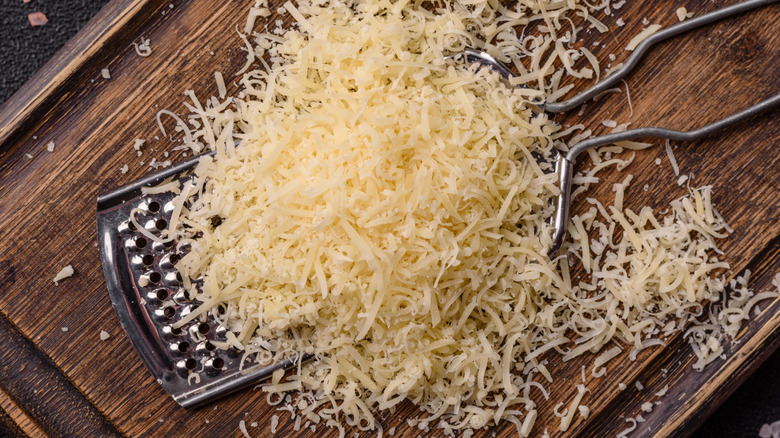
You may recall that one notable aspect of Olive Garden is that the server brings out your food and asks if you want any freshly grated Parmesan on top. Some people skip the cheese entirely, while others load up on it. And to be honest, if your server can grate it, you can have it on your plate. That's not to say that you can request the block of cheese outright, but you can certainly create a mound of fromage on top of your dish if you want.
You don't have to feel shy because you're likely not the only person who's ever wanted a lot of cheese on their dish. That little grater is pretty strong, so it's not too difficult for the server to do, it's more about the repetitive motion. I guess I should note that if you're on your second block of mountain-high cheese and your server has been grating cheese for 15 minutes, they may cut you off. But for the average person, don't feel sheepish about the amount of cheese you genuinely want on your meal; feel free to load up.
Get there earlier for fewer crowds

There are crowds for a reason, and it usually has to do with popular times to eat for patrons. Olive Garden has many retired and elderly customers, so they tend to come for lunch or very early dinner — why do you think the dinner menu starts at 3 p.m.? Families often come later in the evening for dinner because it aligns with after-school, getting out of work, and the like. Then, of course, weekends are somewhat busy throughout the day because many people are off. Sundays around 12 p.m. get packed because that's when church usually lets out.
To avoid long wait times or crowds, get to the restaurant around opening time, which is typically 11 a.m, but this can vary by your specific location. If you're okay with waiting, you can streamline the experience by using the waitlist feature on the Olive Garden website, as long as your table has six people or fewer. Any more than that and you need to call the store. Even with all of this in mind, things can fluctuate: a random Monday lunch might get incredibly busy while a Friday night dinner is empty. I've seen it all.
Valentine's Day and Mother's Day are popular dates
When you close your eyes and visualize where to take someone on Mother's Day or Valentine's Day, does Olive Garden come to mind? It doesn't matter, actually, because a lot of the population brings their loved ones on these particular holidays. Sometimes it's a small Valentine's date night for two, but other times the entire extended family of aunts, uncles, and cousins bands together for Mother's Day (usually to celebrate grandma).
This surprised me when I first started working there because I didn't exactly find it a fine dining or romantic spot, but people go to OG because of the comfort and familiarity. They have specific dishes they want to get, and they very likely even have a favorite table or server (more on that later). And conceivably, it's not the person taking their loved one to the restaurant but the other way around: Perhaps the mother/Valentine requests to go there for the holiday. So just keep that as a consideration if you want to skip crafting a homemade Mother's Day brunch; you're not the only one with that mindset, and you can expect a long wait.
You can customize a lot of your meal
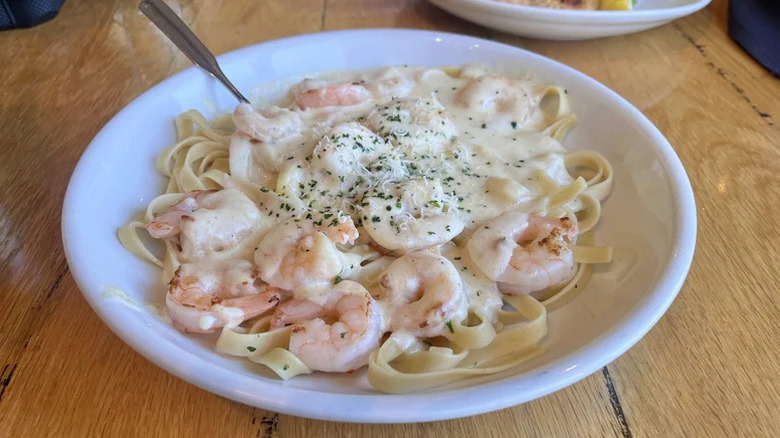
If you've ever noticed a popular pasta dish on the menu but didn't order it because it didn't sound to your liking, you might want to ask if it can be customized. You can usually customize things like your pasta or even the salad to your liking. For example, you can add things like chicken, shrimp, broccoli, or mushrooms at a cost or even get extra. You could also switch out the pasta type entirely. Pick from fettuccine, shells, bucatini, angel hair, and spaghetti. You'll want to confirm with your server if it's possible for your specific dish. For your salad, you can omit tomato, onion, olives, pepperoncini, or croutons, or ask for extra of anything.
The house salad typically comes with Italian dressing, but you can get low-fat Italian dressing or oil and vinegar if you'd like. Alternatively, ask for light dressing or to have it brought out on the side if you want to customize how much you put on your salad. Again, inquire with your server, as they will need to add a note to your order in the POS.
Your dining experience is timed

Ready, set, go! You're being timed while you eat. When I talk about a timer, I don't mean that you have a time limit or they're tracking how quickly you inhaled your dish — don't worry. Instead, when your host greets you, they input the table you'll sit at, and a timer starts for your table through the POS. It doesn't mean they're going to kick you out if you have a long lunch or anything like that. It's merely so the staff and managers can see how quickly or slowly things are moving along for the whole restaurant. That said, if the restaurant is actually closed, they may use subtle tactics to get you to wrap up, or the server or manager may literally tell you it's closed and give you a few minutes to head out.
Most of the time, the timer also helps space things out in case they want to give your server another table; they can comfortably do so by knowing how long the rest of their customers have been in their section. That way, they're not seating three tables back-to-back in their area, causing a delay and unhappy customers.
The host and servers know and love regulars
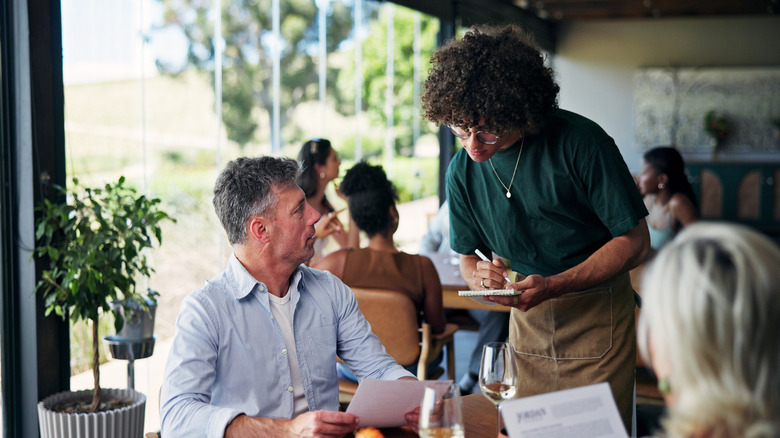
You know, sometimes you want to go to a place where everybody knows your name. That's why people frequent certain places until they become what's known as a "regular." The longer I worked at Olive Garden as a host, the more I started to recognize the frequent patrons; I knew which server they wanted and potentially, which table they wanted, too. I even saw customers wait to be seated so they could get their requested server. They were always friendly and patient, and it really elevated the shift, especially among the other customers who got mad at you for things out of your control (wait times, running out of an item, etc. — sorry, I can't control those!).
When I became a server, I started seeing regulars on the server side, too. It was a joy to get a regular or have someone specifically ask to be seated in your section because they wanted you to take care of them. Some servers had been at Olive Garden for well over a decade, and they likely had those customers for just as long. They were their customers before my time at OG, and very likely, well after I left, too. The server typically knows a regular's order, how they like their drink (water with three lemons on the side), and it's a mutually wholesome experience that can make a shift more pleasant or, at the very least, easier to navigate.
Employees get to try the food
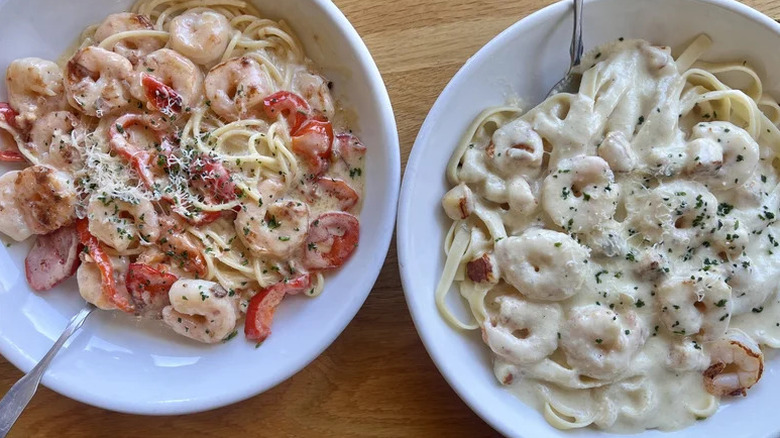
Have you ever been to a restaurant and asked for a recommendation, only to have the server seem to have no thoughts on any of the dishes? Or worse yet, you ask if a certain entree is good and they respond, "I'm not sure." It almost makes you question whether you should stay or leave. Plus, the indifference can make figuring out what to get especially difficult. But at Olive Garden, there's usually a team meeting when new food is introduced (whether it's seasonal or simply a new dish), and employees can try a few bites (or perhaps a singular bite, depending on how many people are there for the meeting).
This helps them make better recommendations and suggestions. Even if they haven't tried a dish or weren't clocked in on the day of the taste test, these roundtables help the server at least make a recommendation to the effect of, "Yes, customers really like this dish," or "We tried that last week, and everyone loved it." Everyone's personal tastes are different, of course, but seeing what other employees think about a meal can trickle down and benefit the guest experience, too.
The staff knows when you're trying to finesse the system
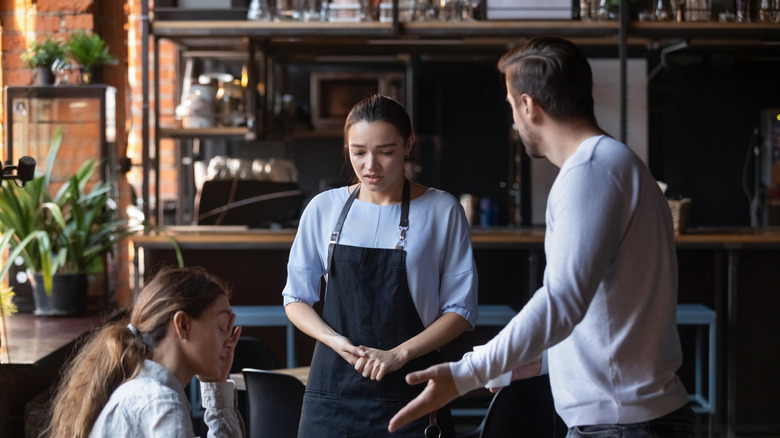
To be fair, this doesn't apply to most customers, but there's a tiny, tiny percentage who want to maximize their experience by abusing the system. There used to be a select few — probably two parties among the thousands of tables I sat as a host — who would always ask to speak with the manager at the end of their meal. They complained virtually every single time about the food being cold, hot, overcooked, undercooked, or tasting bad, or perhaps about service being too slow or too fast — do you see a pattern here? They'd simply make up an issue of the day.
And guess what? They usually get something comped and a gift card "for the trouble" on top of that. It made you ask yourself if they had so many problems each time, why keep coming back? They finessed the system and won, that's why. On top of that, the above-mentioned customers were incredibly demanding with their requests, such as literally snapping at you to get a manager rather than merely asking for one. Being polite with issues is always welcome, but treating employees like garbage is certainly not an effective method to get better service. But they were regulars who did it every visit, and they were notorious for it.
Servers were aware and weren't too pleased to have that table since they're so demanding and "disliked" everything (even though they finished the whole meal). As a host, I recall servers begging me not to seat them in their section.
There's a reason why you might be sitting next to others in a seemingly empty restaurant
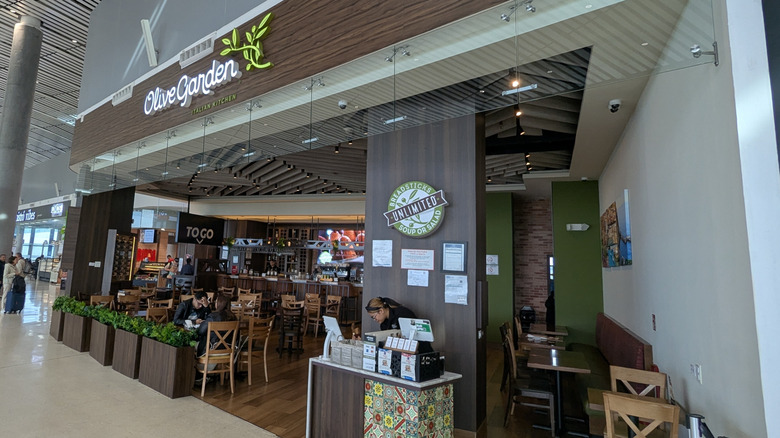
Before I was a server, I of course had no idea how a restaurant operated. I remember going to places and wondering why I was seated next to a bunch of people when there were clearly open booths and tables in other areas. Ah, well, you live, and you learn, and I learned fast. There's a clear reason for this, even if it seems like they just plop everyone together.
Servers have designated sections, and at Olive Garden, that means specific tables — usually three tables, but more experienced, fast servers may have four or five-ish. While you might want a certain booth on the other side of the restaurant, your server's section is in an exact area. That table/section may not even be open, or it might be a different server's area. It isn't logistically feasible for the server to effectively look after their section in one place and then walk all the way to another closed wing to serve a customer who wanted to be seated in a galaxy far, far away.
Wait times are usually exaggerated
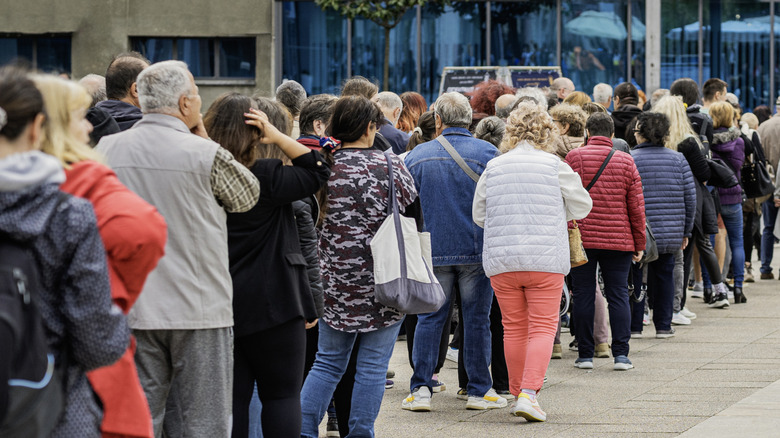
On the plus side, the wait times that the host tells you usually include a buffer. For example, if the employee sees via the POS system that the anticipated wait time is 15 minutes, they might say 20 to 25, or if it's an estimated 45-minute wait, they might say an hour. That is because it allows a little bit of wiggle room in case it goes over. Think about it. You're already coming to the restaurant, and you're hungry; waiting starts to feel like a chore. If it goes over that designated time, say, you've been waiting 17 minutes when they told you 15, you start to get antsy.
However, if the wait time is shorter than anticipated (17 minutes instead of 25), it almost feels like a win. You probably even head to your table all gleeful and smiley at how fast the wait was. That's not to say it's exact, and it can occasionally go over the estimated wait time. That's because it has to do with the guests ahead of you: how fast they eat, whether they're lingering and chatting for 20 minutes after getting their check on a busy night, or if it's a packed evening with every table occupied. If you simply can't wait, see if there's room at the bar and order one of OG's cocktails there — usually the bartender can place food orders, too; it doesn't hurt to ask.