

5 Safe And Effective Ways To Use Charcoal In Your Vegetable Garden
We may receive a commission on purchases made from links.
Charcoal has been used as a way to improve soil quality for around 2,000 years, and even now can be found as an ingredient in many specialty potting mixes. So you might be eyeing off the leftovers from your grill with the idea of saving some money, but the charcoal from your barbecue is unfortunately full of additives that can harm your plants.
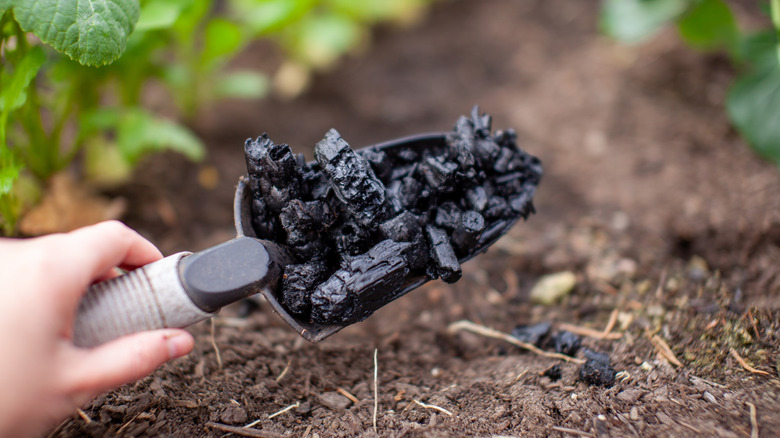
What you should be looking for is horticultural charcoal or biochar. Some manufacturers use these terms interchangeably, while others use them to distinguish differences in the way they're created or the level of porosity. Either way, this type of charcoal has been manufactured specifically for the garden and will be free of any chemicals. It consists of organic material that's heated quickly at very high temperatures without oxygen, creating a highly porous product that will improve soil aeration and act as a water and microbe reservoir. Activated charcoal can also be safely used in the garden, but it's often a more expensive option, and can be too porous for some uses.
One very important thing to note is that even horticultural charcoal is not in itself a fertilizer. It will initially pull nutrients from its surroundings and then release them over time. If you're mixing charcoal into soil, it's advised that you soak it in compost tea first — a process known as charging. Taking this step will prevent any nutrient dilution as it's first added.
Improve soil structure
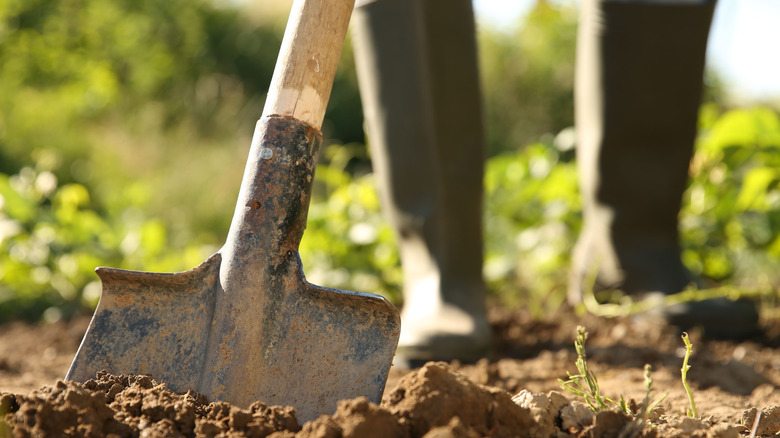
When we think about improving the quality of the soil in our garden, we often consider which nutrients we can add to ensure a healthy vegetable harvest. And while a good fertilizer is important, the structure of the soil plays a vital role in how well the plants grow. If you hear of vegetables needing well-draining soil (which is the case for most vegetables), it's the structure that's referred to.
You might live in an area with what's known as heavy soil, meaning it contains a lot of clay. Clay retains water well, but to a point where the plants can become waterlogged and fail to thrive. The dense texture of clay can even make it hard for roots to grow. By mixing in 10% charcoal, you can physically loosen the structure, adding pockets of air that improve the flow of water through the soil.
In what might seem like a contradiction, charcoal can be used to improve sandy soil. Sandy soil has the problem of draining too well, which means plants often don't receive enough water or nutrients. While charcoal maintains the aeration, it holds on to moisture, which is then released gradually back into the soil, along with dissolved nutrients.
In this instance, you'd want to consider charging your charcoal before use or at least mixing it with compost to ensure there are plenty of nutrients from the get-go. Alternatively, you can buy ready-charged biochar like this Foop Organic Innoculated Biochar.
Speed up composting
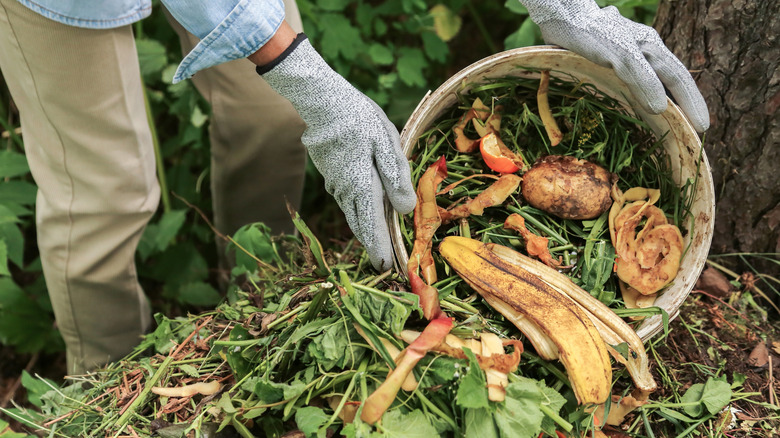
Composting isn't just a good way to create your own fertilizer. It's a productive way to avoid all of those kitchen scraps going to the landfill. And though you are essentially just adding your organic trash to it, the compost heap does require a little care in order to break down your waste into something usable.
Successful composting relies on a balance of carbon, nitrogen, oxygen, and water. Nitrogen will come from the food scraps and garden waste, but charcoal can help with the other three requirements. The microorganisms that break down the organic matter require oxygen to breathe, which is why you need to turn your compost regularly. Adding biochar to compost creates oxygen-rich environments where these microbes can thrive, even in between turning.
Compost needs to be kept moist, but not wet. Excess water will fill air pockets, essentially cutting off the oxygen supply. Charcoal helps here by soaking up excess water, but without drying the compost out. And of course, charcoal is itself a source of carbon, helping to maintain the balance with nitrogen.
A fine texture of charcoal works best for adding compost, as it offers more surface area for the microbes. Add at a ratio of 10-20% of the overall volume of compost. As an added bonus, the application of charcoal can help reduce some of the smells that come from the composting process.
Reduce soil acidity
One of the most common mistakes a gardener can make is overlooking soil acidity. Most vegetables prefer neutral to slightly acidic soil, but the U.S. has such a varied terrain and climate that your backyard soil could be anything from a highly acidic pH 4 to very alkaline pH 8.5.
Biochar has what's known as a liming effect on soil, meaning it reduces the acidity. This is partly due to charcoal being a mild alkaline substance, but also through altering the soil chemistry to maintain lower acidity levels in the long term.
Soil acidity is directly tied to the plants' ability to absorb nutrients, so if you notice signs like yellowing leaves and stunted growth, it could be time to adjust the soil. A home soil test like this Dewilde PH Paper Test Kit will give you results in around a minute.
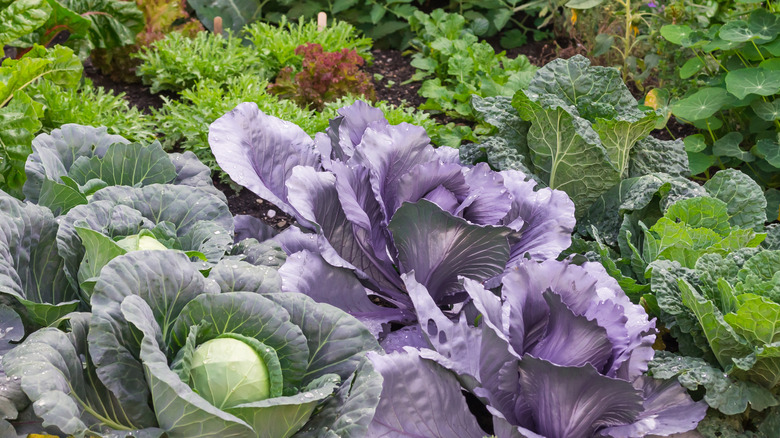
Even if your soil is in the pH sweet spot, some vegetables prefer an alkaline soil, which is why acidic coffee grounds can't be used as a universal fertilizer. Crops like cauliflower, cabbage, and asparagus prefer a pH level of 7.5 to 8, and could benefit from charcoal mixed into their patch of soil.
Protect your plants
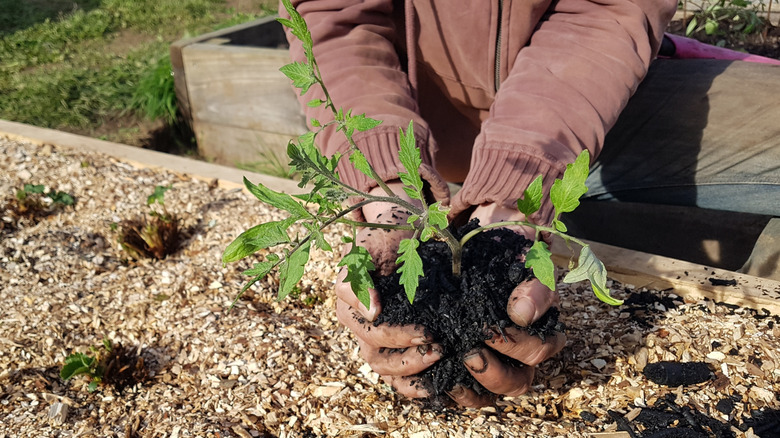
Most of charcoal's benefits in the garden work below the surface, but it can also be used as a top dressing around your plants to prevent the growth of weeds. When used as a mulch, it blocks out light that emerging weeds need to grow, as well as creating a dry barrier on the top layer of soil. Unlike other organic mulches, biochar can also change the chemical signals in the soil, making it less attractive to some weeds and even pests.
To work as an effective barrier and prevent weeds from growing through any gaps, you'll need to use fine-grade horticultural charcoal, like this Olivette Horticultural Biochar. Alternatively, you can crush up chunkier charcoal if that's what you have on hand. You can use straight biochar or mix it into other mulch options, such as corn husks, for a more cost-effective solution.
While mixing charcoal into soil is something that only needs to be done once, you may find that, as a weed barrier, you might need to reapply after heavy rains. Just be careful of overuse, particularly with plants that prefer acidic soils.
Prevent root rot
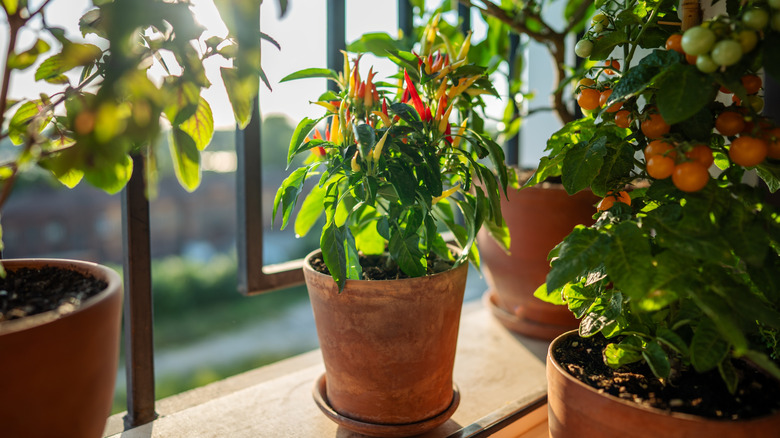
As many city dwellers will know, not all vegetable gardens are created in the yard. When ground space is limited (or nonexistent), then you might find yourself growing tomatoes, peppers, or beans in pots instead. You can create a thriving garden indoors, but you need to be wary of root rot.
Root rot occurs when there's not sufficient drainage in the pots. The roots of the plant sit in water and are deprived of oxygen, which leads them to decay. Even if the plants are drained, the rot can continue spreading. Charcoal won't cure root rot that's already set in, but it can prevent it from developing in the first place.
While you can mix charcoal into the soil for more aeration, for plants in pots, a better option is to add a layer of charcoal to the base. While drainage holes are still a good idea, the charcoal will prevent water pooling at the bottom of the pot and increase air flow around the roots.
For this application, look for charcoal with a chunky texture, like this Toypopor Horticultural Charcoal. Using large pieces rather than fine charcoal will offer better air circulation and prevent any charcoal from coming out of the drainage hole. Add a two-inch layer at the bottom of the pot before adding your regular potting mix.