

12 Iconic Maine Eats Everyone Should Try Once
Whether it's funky accents, unique attire, or breathtaking landscapes, each state is famous for something — including cuisine. Although some recipes are famous nationwide, others vary by geographic lines. On that note, Maine is known for its fresh seafood, specifically lobster. But there are many other foods either native to Maine, or so ingrained in its culinary culture that the tie is unbreakable.
These iconic Maine eats are so good, everyone should try them at least once. If you're not in the mood to whip them up at home, you can take a little road trip to the most northeastern state in the contiguous U.S. (don't forget to your lobster crackers and hearty appetite). As a New England-born recipe designer and chef, I'd been targeting Portland, Maine, since I graduated from college. In fact, it was a self-led, downtown food tour that locked in my decision to sign a lease, and my taste buds and I never looked back.
Maine has a rich history of culinary traditions, dating back to well before the pioneers set foot on American soil. Influence also trickles down from the French Canadian, and of course, the open ocean driving the seafood industry. If you're not ready to plan a trip to Vacationland just yet, let me take you on a culinary journey. From Maine lobster to wild Maine blueberries, it's worth it to sample all that Maine offers.
Wild Maine blueberries
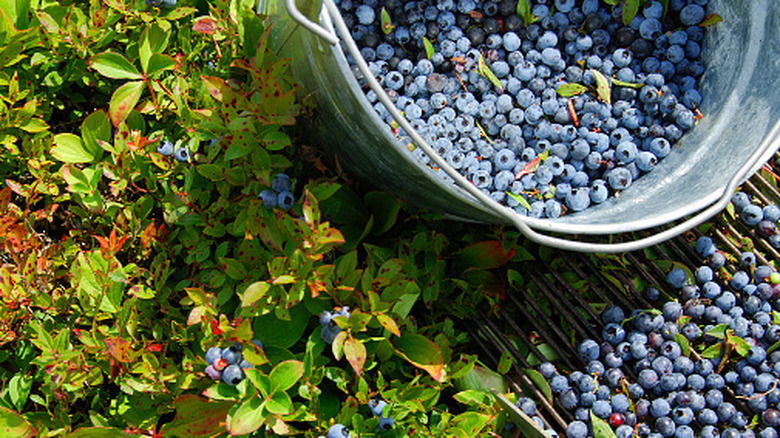
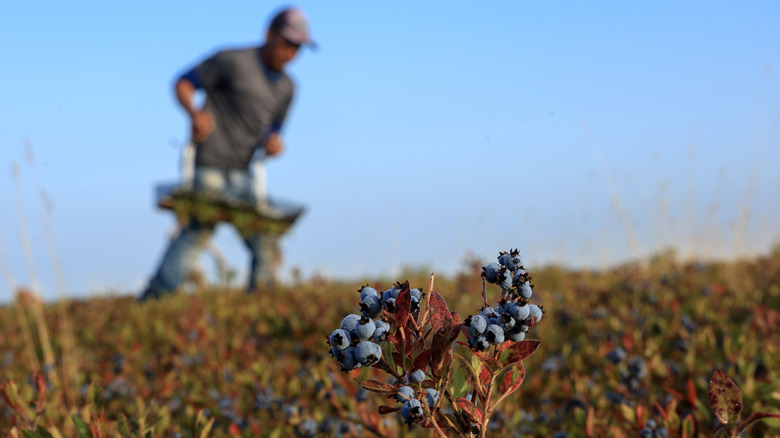
Even if you're not from the northeast, you've likely stumbled upon wild Maine blueberries. Perhaps you've seen them in the freezer section of a grocery store, or maybe at a gourmet restaurant in the form of freshly baked pie paired with vanilla bean ice cream. You'd recognize them by their small size and deep blue coloring. They're often more flavorful than standard blueberries and contain a higher nutrient concentration.
These grow on ground bushes in the wild, and can be found all over Maine along hiking trails, islands, or even the woods behind a neighborhood. The reason you'll find so many wild blueberries in Maine is due to the post-glacial sandy and acidic soil, which is just what those low blueberry-producing shrubs love. Because these little berries are so popular, you can find them pressed into juice or wine, made into ice cream, mashed into barbecue sauce or dressing, and always folded into baked goods. In fact, it's hard to find a restaurant along the coast that doesn't offer wild Maine blueberry pie come harvest season. This peaks around July to September, depending on how north you're picking, and the varying weather patterns.
The Wabanaki native people were the first to grow and harvest wild Maine blueberries on a large scale, with the English settlers showing a quick interest upon arrival. Wild Maine blueberries are perhaps the most iconic Maine food, and should make the top of your list of foods to try at least once.
Peekytoe crab
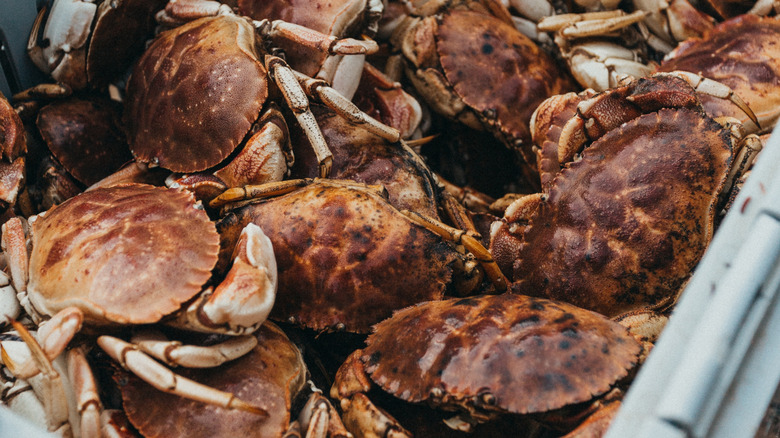
You can't talk about Maine eats without dabbling ... well, diving headfirst into the topic of seafood. People travel to Maine just for the fresh fish, mollusks, and crustaceans. You can see the fish harvest being pulled from the water in downtown Portland, and there are mountains of lobster cages lining yards as locals prepare to set traps for the season. This includes peekytoe crab, found in Down East Maine, which was originally tossed back and considered a pest that ate lobster bait.
They were referred to as "picked-toe" crabs, but the name developed along with strong Mainer accents to become "peekytoe". After their rebrand from being strictly a "throw-away" catch, these crabs have spiked in popularity and found their market. These rock crabs are harvested in Penobscot Bay and are one of the most delicate and sweetest crab meats out there.
Because Peekytoe crabs are too fragile to ship alive, they're usually cooked immediately. This is what bonds these native crabs so deeply to Maine, and is a major reason you should try them while visiting. Peekytoe crabmeat can be enjoyed just like any other crab, but is especially good over salad, in soup, in crab cakes, or enjoyed whole. You'll find it on menus across the state, or you can buy it canned if you're not taking a trip to the northeast anytime soon. However, enjoying Peekytoe fresh and locally is the best way to do this rebranded crab justice.
Whoopie pies
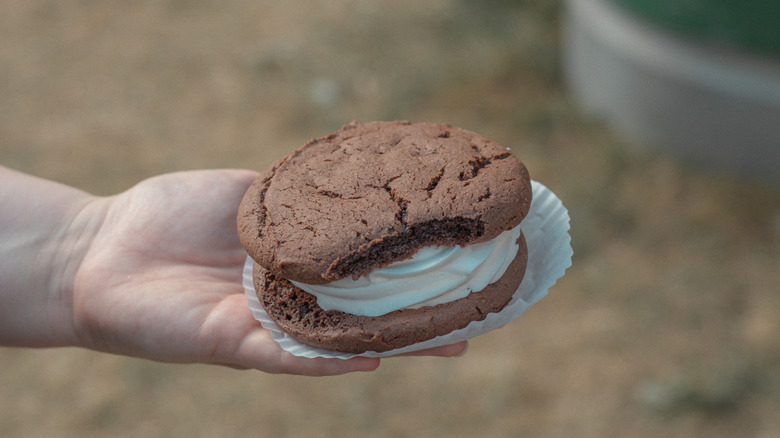
One of the most popular desserts up here in Maine just so happens to be the whoopie pie. If you're from the northeast, you've likely enjoyed a whoopie pie or two, and may have even heard of them outside of New England. For first-timers, this ingenious dessert is essentially an inside-out cupcake. Imagine two cupcake tops, made into a sandwich, with a creamy icing-like filling.
They are deeply tied to Maine culture, adoring menus and available everywhere you turn. However, there is a disputed history regarding whoopie pies. Pennsylvania, Maine, and Massachusetts all claim to have invented the mouth-watering dessert. Whether it was in fact the Amish, Maine farmers' wives, or someone else who first created them from leftover batter and icing, we are just glad they are here to tantalize our taste buds.
Almost every bakery carries various flavors, with the most popular being chocolate with vanilla filling. You can also find wild blueberry pancake stuffed with a maple syrup-flavored filling, red velvet with cream cheese, and pumpkin in the autumn. Look for whoopie pies at farmer's markets, the grocery store, on dessert menus, at coffee shops, and of course, in bakeries all over the state. Of course, you can go ahead and make your own whoopie pies at home.
Red Snapper hot dog

So, you thought red snapper was a kind of fish, ayuh? Well, you're not wrong, but it's also a kind of hot dog. Hot dogs are a popular Maine eat, believe it or not. But this doesn't extend to just any old dog. No, up here in the frigid northeast, we eat neon red hot dogs called red snappers.
Red Snapper hot dogs have a casing that is dyed with red #40 food coloring and gives a pleasing snap when bitten into. The surprising part is that they don't taste much different from your standard pork and beef hot dog. These iconic dogs are made exclusively by the local company, W.A. Bean & Sons, which distributes them all over New England. However, it's most likely that you'll come across this iconic hot dog right here in Maine, whether it be in the grocery store, at a hot dog stand, or at a restaurant.
It's up to you how you load it up, but locals enjoy it with a toasted and buttered bun, much like our lobster rolls. The crispy crunch of the bun pairs nicely with the pleasing snap of the casing. Double-check that your restaurant of choice is serving the iconic Maine dogs before you dine out, or grab a pack at the grocery store to bring back to your rental place.
Bean-hole beans
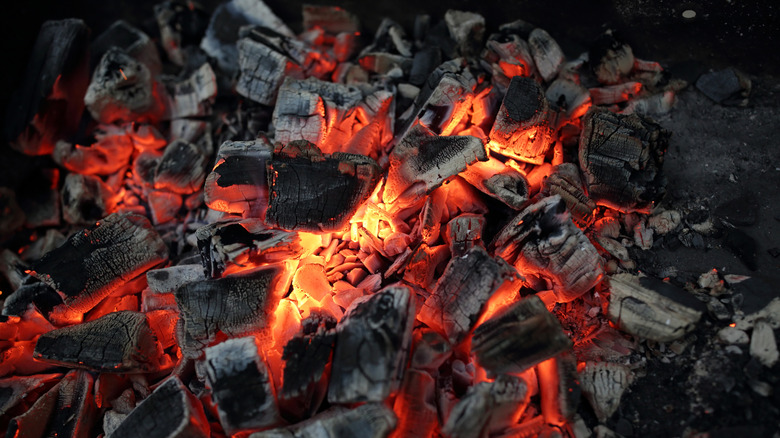
Some iconic Maine eats have been developed more recently, but others have a much longer history. Before settlers arrived in the northeast, Native American folks were enjoying life across the rocky and sandy landscape that we now call Maine. Four main tribes – the Penobscot Nation, the Passamaquoddy Tribe, the Houlton Band of Maliseet Indians, and the Mi'kmaq Nation — inhabited the land and cultivated tradition. While Maine lumberjacks have been associated with bean-hold beans, they adapted this practice from the native Mainers.
These beans were named after the method used to cook them: a hole in the ground. Beans were loaded into clay pots with bear grease and maple syrup, and lowered into the ground where they were covered by coals to bake. You can still get these beans at local Maine fairs or historical societies, but if you're planning on cooking them at home be sure to follow an indigenous recipe. Yellow Eye dried beans are the most commonly used variety, but other Maine varieties will do.
For the lumber-jack style bean-hole beans, you can use a cast-iron pot above a fire or coals, but your slow cooker or stovetop pan could work if you don't have a backyard. When replicating a traditional recipe, it's always a good idea to learn about the traditions surrounding the culture you're borrowing from. While visiting Maine, take a side trip to one of the many historical societies that highlight the local lives of original Mainers, before the arrival of settlers.
Potato donuts
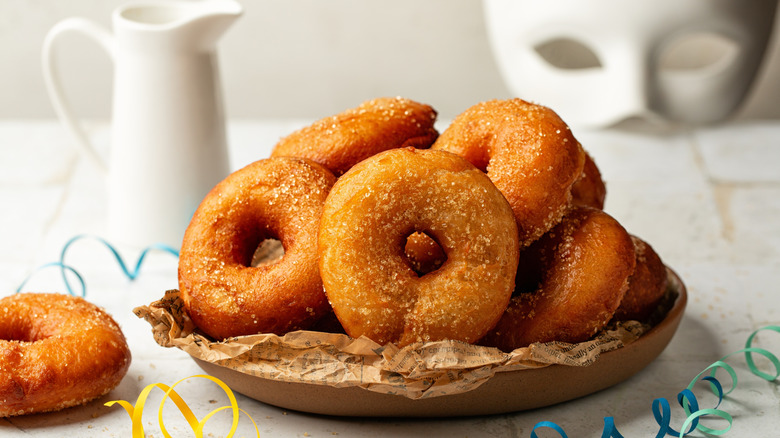
While driving around Maine, you may see a few donut shops called The Holy Donut. And if you do, please stop what you're doing and grab a potato donut. Yes, you heard me: potato donut. While vegetables and donuts don't often mix, Mainers have used this starchy root to their advantage and are enjoying a lighter-than-average donut. They use loads of potato starch, which creates a fluffy texture that's irresistible.
Although the chain and potato-based donuts are deeply tied to Maine culture, these unique donuts originated elsewhere. In fact, it was in the 1940s and 1950s that potato donuts took off with the Utah-chain Spudnuts. And while we all know that Utah is famous for its potatoes, Maine is famous for its high-quality Maine potatoes, which are ultra starchy. Perhaps this is the reason Mainers like to use potatoes whenever they can to enhance a recipe. And even though they may not have been invented in the northeast, folks around here are culturally tied to the spuddy donuts.
The Holy Donut has made them easily accessible to locals across the state, with gluten-free and vegan options available. The unexpected vegetable that makes these donuts so irresistibly moist and fluffy, just so happens to be a Maine favorite. Enjoy a potato-based donut next time you visit Maine, order them online from The Holy Donut, or check out a recipe from a local and make them at home.
Needhams
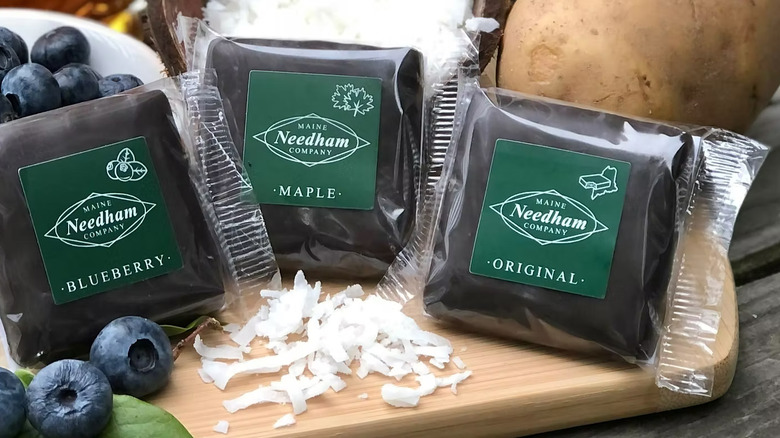
As you may know, Mainers love their potatoes. You can find them in just about anything from donuts to candies. Well, if you're a fan of Mounds, then you might enjoy the Maine version called Needhams. It's tough to walk through a local market, grocery store, or boutique shop without spotting Needham candies. Needhams is Maine's beloved chocolate potato candy, which we just can't seem to get enough of.
These date back to 1872 (or so the story goes), and the basic ingredients include chocolate, coconut, and mashed potato. However, Needham sells endless variations, leaning into other local ingredients like wild Maine blueberries. The business itself has gone through some changes over the years, but the ownership is respectful of the tradition and has made sure to recognize the long history of Needham.
While it ships all over the United States, Needhams are one of those local staples that you just have to enjoy with a chilled salty breeze and sandy toes. This is the perfect treat to bring home to friends, family, and the dog sitter after a weekend away in Maine.
Amato's Italian sandwich
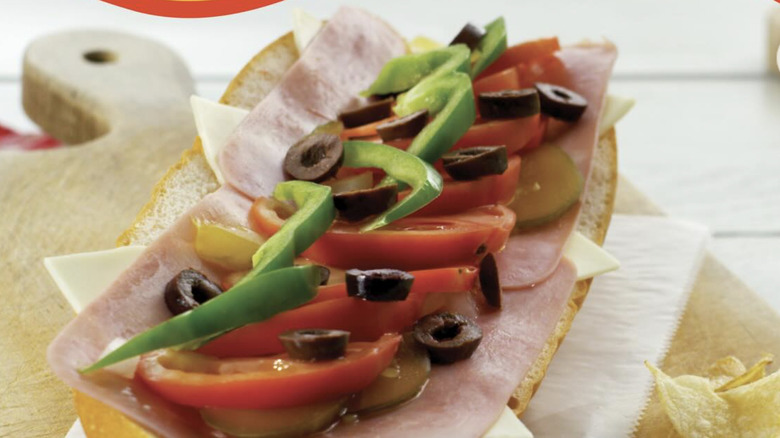
When I first moved to Maine, I saw the chain Amato's everywhere and figured it was simply a grab-and-go Italian chain with nothing to write home about. As it turns out, it's been around in Maine since 1902 and is likely responsible for inventing the original Italian sandwich. Italian Immigrant, Giovanni Amato, started his business in Portland, selling Italian Sandwiches down by the fishing docks, and his legacy has been alive ever since.
It's essential that while visiting Maine, you try an Amato's Original Real Italian, based on the first of its kind. This sandwich includes ham, cheese, and all the veggies, including green pepper, pickles, olives, onions, and tomato, along with salt, pepper, and oil. You can, of course, customize the sandwich to your liking, with a vegetarian option available as well.
While lobster rolls and steamers likely come to mind before Italian subs, it's worth noting that immigrants played an incredible role in the food culture of Maine — and still do to this day. So before you head off to a day at the beach, swing by Amato's to grab an Original Real Italian to go, and enjoy it beachside (if you haven't devoured it before you get there).
Maine lobster roll
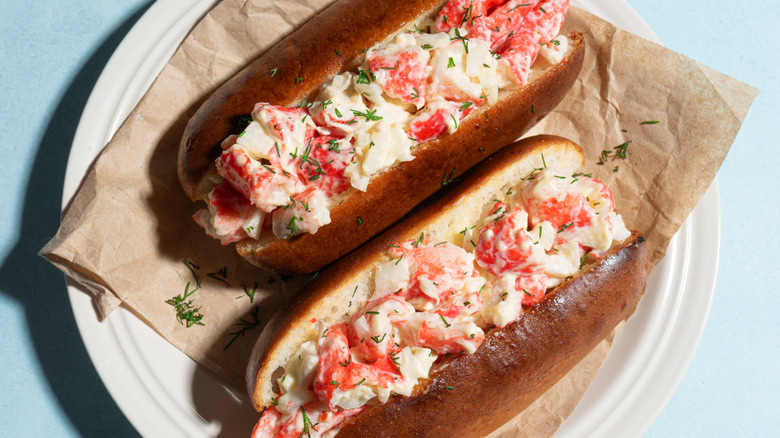
Perhaps more than any other food, Maine is known for its fresh lobster. Maine's cold waters make an incredible habitat for lobsters, which have been an essential element of Maine's fishing industry and economy. One of Maine's most iconic eats is the Maine lobster roll. Now, you can certainly find lobster elsewhere, and even lobster rolls, so what makes a Maine lobster roll unique? It's two-fold.
The first element that makes a Maine lobster roll especially desirable is the use of Maine lobster meat. Because lobster is local, you're likely getting a fresh catch of premium lobster meat (like what's caught in Rockland). As any foodie knows, when it comes to seafood, fresher is always better. The second thing that makes these rolls unique is the way they are prepared. Depending on where you are along the coast, each area has its own idea of periphery ingredients to flavor the lobster.
In Maine, we enjoy lobster rolls on a split, buttered, and toasted hot dog bun. The meat is stuffed in the bun, cold, and mixed with mayonnaise and sometimes chives or chopped celery. This Maine-style lobster roll differs from others, which typically are served warm, and uses melted butter instead of mayo. Many Maine restaurants are known for their lobster rolls, so you'll just have to travel the state to test them for yourself.
Steamers
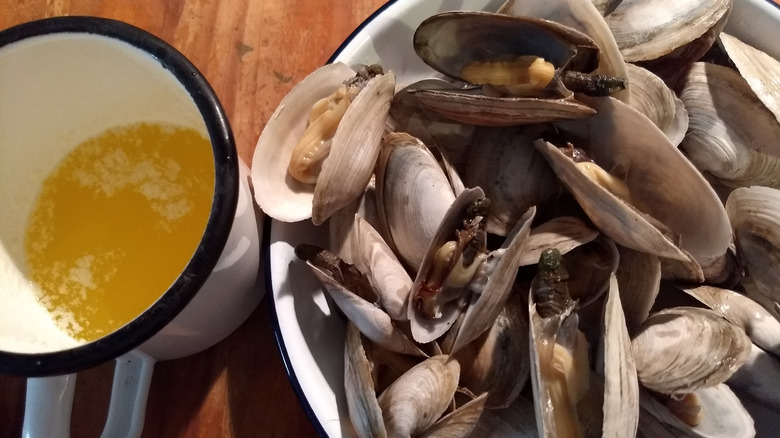
Steamers aren't just a hand-held appliance that removes wrinkles from clothes. Up here in Maine, they reference steamed soft-shell clams. Clamming along the Maine coast is something the Indigenous folks have been doing for thousands of years. Today, you can still see people poking around the mud flats, filling buckets with fresh clams. The soft shell clams are great for steaming with water or even beer. This is how they've adopted the name, "steamers".
It's back-breaking work, but wading out in the mud in high waters is a Maine tradition that puts you in touch with nature. You can see clammers lining the marsh, coves, and the flats at low tide. You'll find steamers on menus across the state, but folks also enjoy making them at home. You can flavor the broth in a variety of ways, but butter, white wine, beer, and shallots tend to be popular enhancements. Look out for fresh clams from the local mud flats being sold in the seafood shops or farmers' markets. You can even grab them in grocery stores or straight from the docks.
Maine potatoes
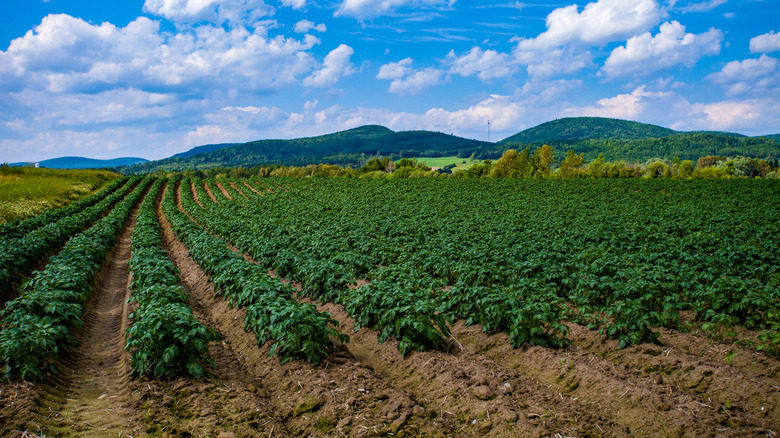
Although Maine is popularly known for its seafood, there is another specialty that often goes overlooked by folks "from away" (as locals call outsiders). Potatoes are Maine's prized produce and number one crop, especially those grown in Aroostook County. These potatoes are of a high quality, extra starchy, and have a rich flavor.
The grade of these potatoes is due to the soil and temperatures. The potato industry is so ingrained in Maine culture that some high schools still have a potato recess during the harvest, where students hand-dig potatoes for several weeks instead of sitting in the classroom.
Because of the love of potatoes in Maine, it's no wonder they find themselves in just about everything from donuts to candy. We're one of the top 10 potato-producing states in the country, and proud of it. So grab a bag of spuds, or find them made into fries, chips, hash browns, or simply roasted on local menus across the state.