

For The Juiciest Prime Rib, Treat It Like A Chicken And Throw It On The Rotisserie
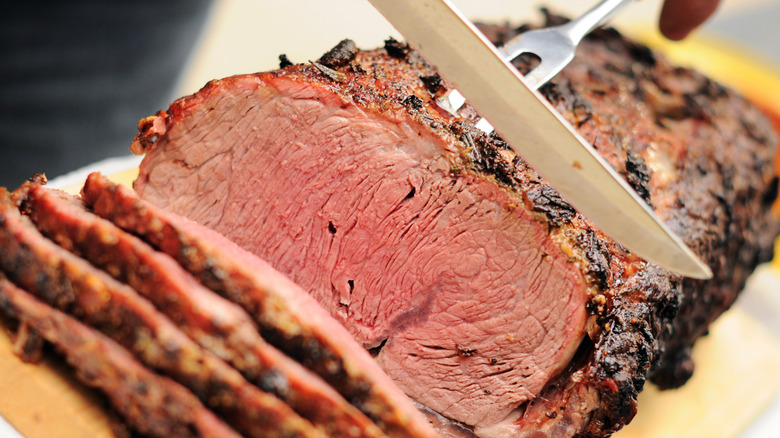
While we went the oven route with our slow-roasted prime rib to seal in the juices, we consulted an expert who thinks that a rotisserie will render the juiciest prime rib. We spoke to Robbie Shoults, celebrity chef and third-generation owner of Bear Creek Smokehouse, who tells us that "cooking a prime rib on a rotisserie is a great option because it lets the meat self-baste as it slowly turns, locking in flavor and cooking it nice and even." While traditional grill or oven pan recipes require you to baste the prime rib every 20 to 30 minutes over the 2 to 4 hours it takes to cook, a rotisserie saves you the trouble.
Furthermore, Shoults adds, "That steady rotation builds a beautiful crust on the outside while keeping the inside tender and juicy." Part of the reason basting is so important is to facilitate the Maillard reaction to brown the outside of the roast, thereby enhancing the crust and bringing a nice crispy exterior to contrast the juicy, melt-in-your-mouth interior. If you really want to up your game with a complete prime rib dinner, the chef recommends that you "place a drip pan underneath and add some vegetables, as they'll soak up all those rich flavors and turn into a pretty great side dish on their own." Hearty root and cruciferous veggies would pair well with prime rib.
More chef approved prime rib cooking methods and tips
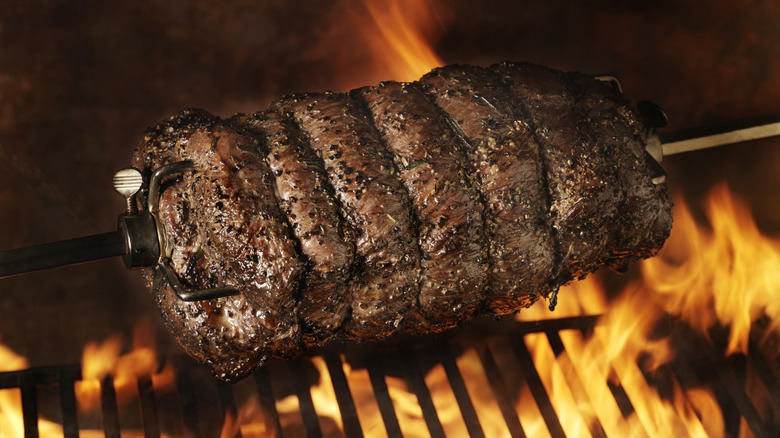
Unless you have a rotisserie oven at home, most rotisserie spits are attachments that are placed over the grill. Fortunately, according to our staff, grilling tastes better than cooking prime rib in the oven. While the rotisserie method self-bastes, you can bring even more flavor and moisture to the mix by finishing the roast with an herb and aromatic-infused butter baste during the last 20 minutes of its time on the spit. Of course, you'll want to use a dry rub on prime rib for a delicate, flavorful crust that the rotisserie will only enhance as it self-bastes. If you're not sure what flavors you want in your dry rub, we consulted 5 chefs for the best seasonings for prime rib.
Experts also weighed in on how to buy the best prime rib by checking the grade. USDA Choice or Prime grade are the best options for the juiciest, most flavorful prime ribs. The higher the grade, the higher the price, but the highest priced prime ribs are harder to screw up during the cooking process. While the rotisserie is a more hands-off method with tender results, another expert thinks that the absolute best way to cook prime rib is with a reverse sear. No matter how you decide to cook prime rib, a crucial flavor and texture tip is to rest prime rib in the fridge for a few days before cooking it.