

11 Italian Liqueurs That Deserve A Spot On Your Bar Cart
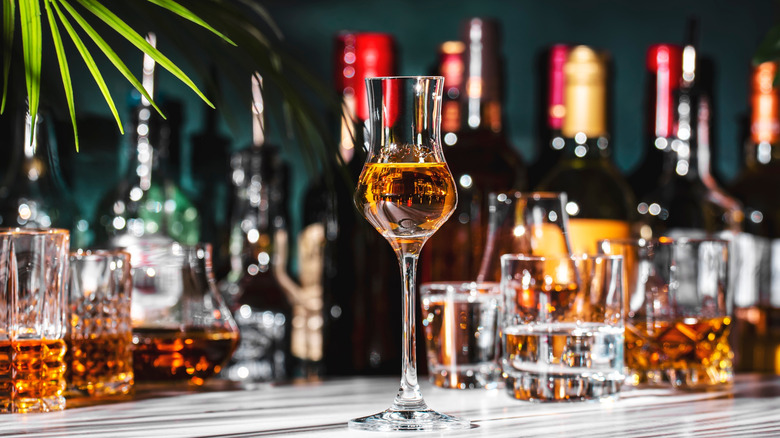
Italian liqueurs occupy a world of their own, one where centuries of generational knowledge, botanical ingredients, and regional drinking traditions converge in the glass. From bright aperitivo bitters designed to awaken the palate to deeply herbal digestivi meant to close a meal, Italian liqueurs span an extraordinary spectrum of flavor, intensity, and purpose. After spending a decade behind the bar, particularly in Italian wine bars and amaro-focused programs, I've come to see these bottles not just as stand-out after-dinner sippers but as some of the most versatile and culturally rich ingredients available.
Combining my experience and passion for the world of Italian spirits, I've compiled a list of 11 bottles of Italian liqueur that I believe are deserving of a permanent place on your bar cart. These selections range from globally recognized to hyper-regional expressions of amari, herbal and fruit-infused liqueurs, as well as spirits built on grappa and brandy bases. While each earns its spot for different reasons pertaining to the inherent quality of the liquid itself, its versatility in cocktails and culinary applications, and its stature within its category, every bottle has made its own lasting imprint on drink culture.
So, if you're struggling to fill a few vacancies on your bar cart, why not enter a whole new world? Some of these Italian liqueurs are international superstars, others are quieter icons. All, however, represent the craftsmanship, complexity of flavor, and longstanding tradition that make Italian liqueurs endlessly compelling to bartenders, chefs, and curious drinkers alike.
Aperol
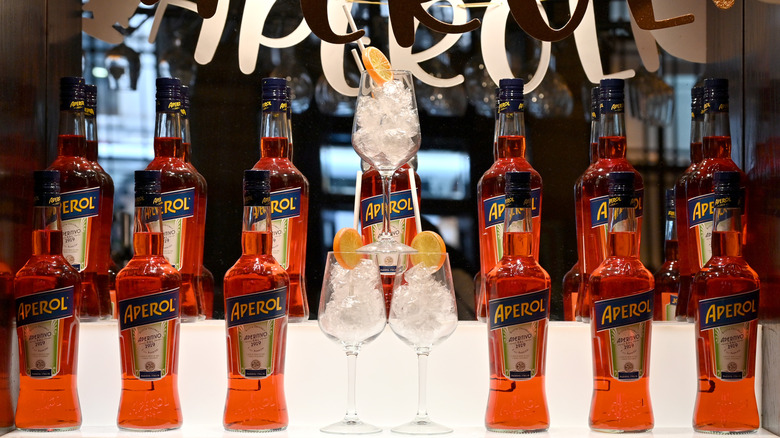
This light, bright aperitivo-style amaro blends rhubarb and gentian, among other botanicals, into a citrus-forward liqueur that's dominated drink culture since its introduction. First created in 1919 by the Barbieri brothers in the Veneto region of Northern Italy, at a modest 11% alcohol by volume, Aperol's closely guarded ingredients include a variety of fruits, flowers, roots, and herbs. The result is a mild, bright, and bittersweet liqueur, touted for its ability to encourage conviviality and stimulate the appetite before a meal.
Few drinks capture the spirit of modern cocktail culture quite like Aperol. The drink most responsible for its global fame is the titular Aperol Spritz, a simple and refreshing cocktail typically built with Prosecco, Aperol, and soda water. While a spritz can be made with a more assertively bitter amari and any style of sparkling wine, Aperol makes the best spritz because of its balance. This balance is beautifully achieved through its flavor profile of bright citrus and subtle sweetness. And with its lower alcohol level, when Aperol is paired with prosecco's sharp acidity, the result is a perfectly calibrated aperitivo — light, bubbly, and unmistakably Italian.
While the spritz itself dates back to the 19th century in northern Italy, when Austro-Hungarian soldiers diluted strong local wines with sparkling water, bartenders began pairing the format with Aperol in the 1950s, creating the now-iconic orange cocktail we all know and love. Wherever you are, Aperol is a quintessential aperitivo amari that deserves a spot on your bar cart.
Maraschino
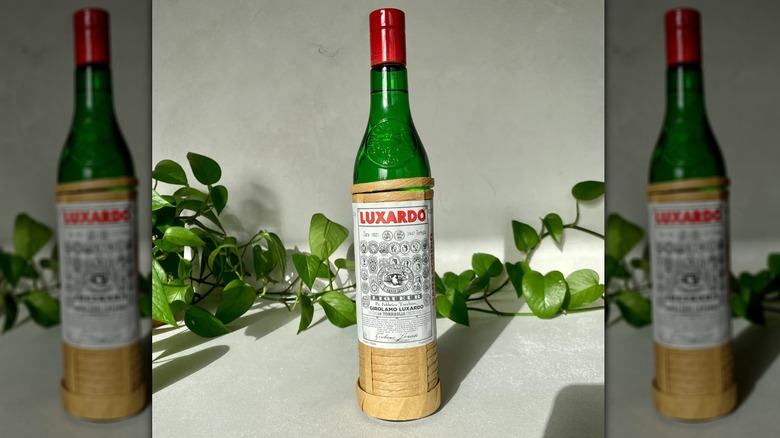
Few bottles signal cocktail literacy quite like Luxardo Maraschino. The historic Italian distillery produces one of the world's definitive cherry liqueurs, distilled from tart marasca cherries, a fruit native to the Dalmatian coast, but unlike overly cloying and viscous cherry cordials, Luxardo Maraschino is made from the entire fruit — including pits, leaves, and stems. The process results in a crystal-clear spirit with floral, nutty, and subtly bitter cherry aromas, both slightly sweet and spicy on the palate with a layered mouthfeel and herbal, dry finish.
The flavor complexity of this distinct cherry liqueur has made it an indispensable ingredient in classic cocktail culture. Drinks such as the Aviation, the Last Word, and the Martinez rely on small doses of maraschino to add aromatic sweetness and impart structure. At 32% ABV, the strong alcohol spirit has sharp undertones of roasted nuttiness that are smoothed out by hints of chocolate and orange marmalade. Beyond the bar, Luxardo Maraschino is a go-to ingredient in gastronomy, often drizzled over fruit, folded into pastries, and used as a flavoring agent for ice cream and confectionery.
Luxardo has long stood a cut above the rest, thanks to the brand's fidelity to tradition, although part of its enduring charm lies in its unmistakable packaging — the tall green bottle wrapped in hand-plaited straw is a visual icon of the back bar. In cocktails or desserts, Luxardo Maraschino remains the benchmark — proof that this Italian liqueur deserves its place on your bar cart.
Strega
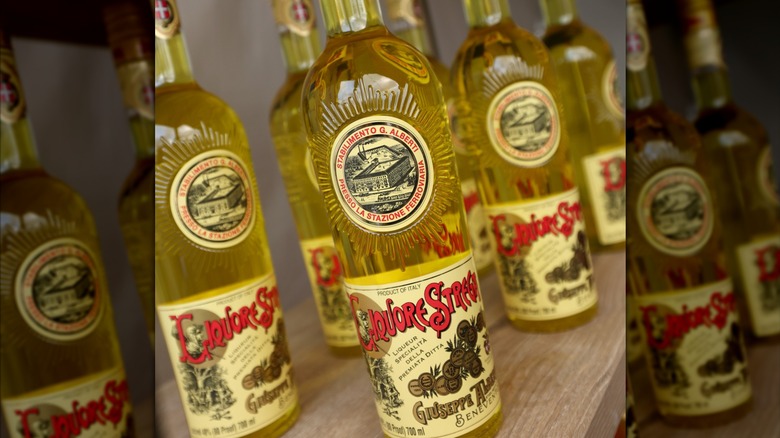
Among Italy's vast landscape of herbal liqueurs, Strega stands apart for both its flavor and mystique. Produced since 1860 by Strega Alberti Benevento, the bright golden spirit is named after the Italian word for "witch" in reference to local folklore that the region was a gathering place for witches. While Strega occupies a singular position in the world of Italian liqueurs for its striking color and unique heritage, its cult reputation among bartenders has everything to do with what's inside the bottle. Simply put, Strega may be unmistakable in color, but more importantly, it remains unmatched in flavor.
The herbal liqueur's natural color is derived from saffron, just one of roughly 70 botanicals used in its recipe, with mint, fennel, and juniper dominating the profile. Not quite fit for the amaro category, which is typically known for darker and more bitter digestifs, Strega is often likened to alpine-style liqueurs such as Chartreuse. Either way, it's a balance of sweetness and spice and cooling herbal notes that make it an unusually versatile ingredient that's prized by bartenders and chefs alike.
Its floral-tinged, saffron sweetness plays extraordinarily well in desserts like the Amalfi specialty, Lemon Delight. Among bartenders, Strega is the unsung hero of Italian liqueurs and a distinctive herbal spirit for adding aromatic complexity to cocktails. While every bar is in need of a few herbal expressions of liqueur, Strega deserves all its flowers — and a spot on your bar cart – when it comes to Italian-made offerings.
Montenegro
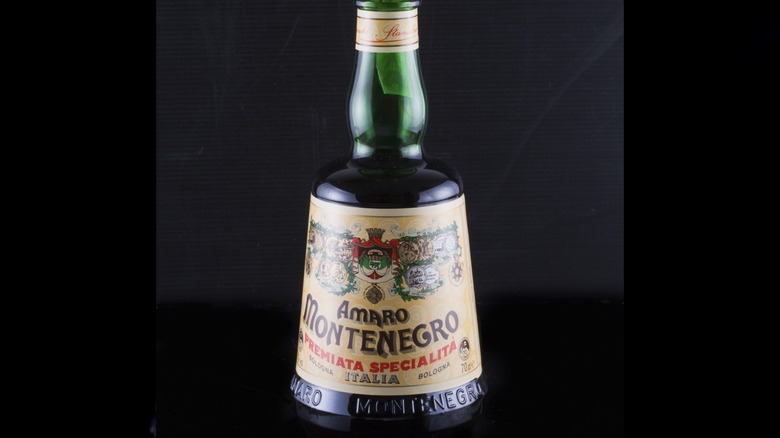
Among Italy's many liqueur traditions, amaro occupies a central place. These bittersweet herbal spirits are typically infused with roots, citrus peel, spices, and botanicals, then consumed either before a meal as an aperitivo or afterward as a digestivo. Within this category, Amaro Montenegro stands out for its accessibility and balance, which is precisely why it should display pride of place on your bar cart, too.
Widely recognized as the gateway amaro, Montenegro is typically classified as light-to-medium intensity on the amaro spectrum. Sweet at first, it becomes bitter as more botanicals emerge on the palate, evolving into a jammy citrus sweetness that finishes moderately bittersweet. Compared with darker, more bitter amari, it offers gentle tannic balance and bright sweetness, making it versatile for both sipping neat and mixing in cocktails. Bartenders often use it to add complexity to drinks like modern highballs or twists on classics, while its approachable profile also makes it ideal served over ice with an orange twist.
Whether enjoyed as a pre-dinner appetite stimulant or a post-meal digestif, Amaro Montenegro demonstrates the elegance of lighter amari. The bottled result is proof that bitterness, when balanced with citrus and spice, can be both sophisticated and remarkably approachable. If you have only one spot reserved for lighter-style amari, Amaro Montenegro is a worthy selection.
Averna
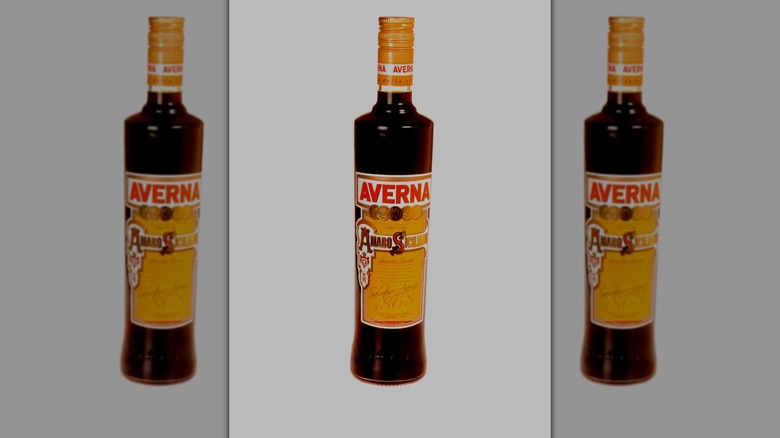
With deep roots in Sicily's sun-kissed terroir, Averna Amaro stands out as a medium intensity amaro known for its velvety texture and deeply caramelized flavors. Originally created by Benedictine monks, the recipe was gifted to local merchant Don Salvatore Averna in the 1860s, after which the Averna family maintained the formula and production for generations. The recipe, which, like many on here, is tightly protected, produces layered notes of caramel, cola, orange peel, chocolate, and licorice. Evincing a signature sweetness in perfect harmony with its gentle bitterness, Averna's botanical profile is a reflection of Sicilian terroir and one of Italy's best-known exports.
That richness, along with its balance and approachability, has also made Averna a favorite among bartenders. Dark and sweet, Averna's soft edges work beautifully in modern cocktails such as The Black Manhattan or in simple highballs with soda and citrus. For the purist, Averna remains a traditional digestivo in Sicily, where it is often enjoyed neat after a meal.
Beyond its distinctive profile, its versatility as a mixer has helped Averna become a foundational bottle on contemporary back bars. Of course, you, too, can bridge old-world amaro tradition with modern mixology — simply begin by stocking the Sicilian-made Italian liqueur on your bar cart.
Nonino Quintessentia
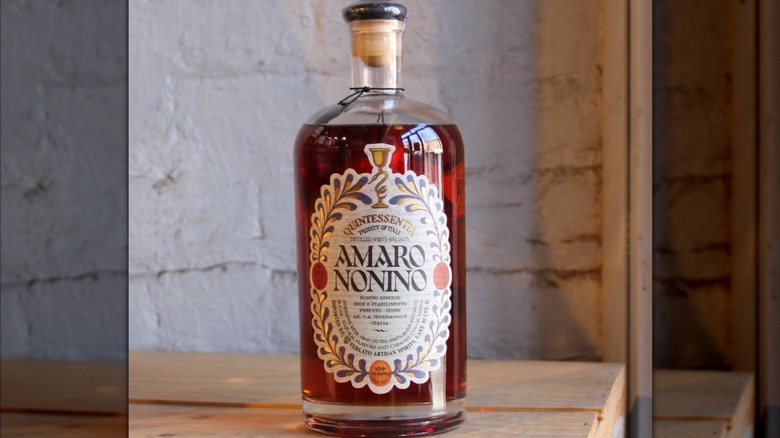
In the vast world of modern amari, few bottles have shaped contemporary cocktail culture quite like Amaro Nonino Quintessentia. Produced by the historic Nonino Distillatori in Friuli-Venezia Giulia, the spirit reflects the distillery's long heritage in grappa production. First released in 1992 by the Nonino family, Quintessentia is made by infusing herbs, spices, roots, and citrus into a base of aged grappa, then maturing the blend in small oak casks. The result is an amaro that balances bitterness with warm notes of caramel, orange peel, alpine herbs, and baking spice.
Typically considered medium-bodied on the amaro spectrum, it's less aggressively bitter than darker amari yet richer and more structured than lighter aperitivo styles. This balance has made it a favorite among bartenders, particularly after it became the defining ingredient in the Paper Plane, created in 2008 by bartender Sam Ross. Brimming with aromas of orange peel and peppercorn, Nonino is a choice after-dinner digestivo by its own merit, but the global popularity of the Paper Plane helped propel the grappa-based amaro from regional speciality to an international bar staple.
The grappa base lends depth and vinous character, imparting an elegance that allows Nonino to stand out among similarly weighted amari, while the restrained bitterness keeps the spirit versatile enough to layer into cocktails. However you enjoy it, Nonino remains a benchmark for balance and refinement within the amaro category. If it's missing on your bar cart, then perhaps you don't deserve such an exceptional Italian liqueur.
Sambuca
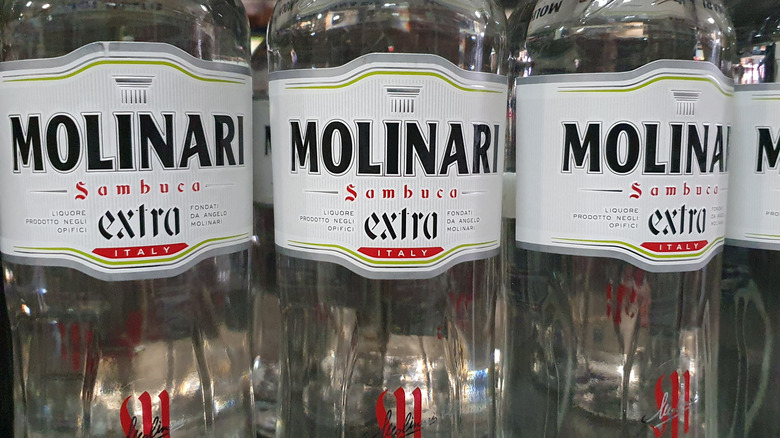
Among Italy's many liqueurs, sambuca represents one of the country's most recognizable and culturally significant styles. Sambuca is a sweet, anise-flavored liqueur typically distilled with star anise and other aromatics, then sweetened to create its characteristic licorice essence. While it sits outside of the amaro category of bittersweet herbal liqueurs, sambuca occupies an equally important niche in Italian drinking culture as a celebratory digestivo. One of the most famous drinking traditions in Italy is known as "con la mosca" – sambuca served with three coffee beans to symbolize health, wealth, and happiness.
The modern benchmark for the style is Sambuca Molinari Extra. Produced by Molinari, the brand helped popularize sambuca across Italy and internationally, and the recipe results in a smooth and aromatic expression built on a high-quality star anise distillate and carefully controlled sugar content. While chefs have been known to incorporate the Italian liqueur into pastries, biscotti, and custards where its anise character complements flavors like chocolate, citrus, and almond, bartenders similarly use sambuca to add complex, aromatic sweetness to coffee drinks and cocktails.
That balance of tradition, clarity of flavor, and versatility as an ingredient explains why Molinari is one of the most reputable names in the world of sambuca. So, the next time a celebration is in order, make sambuca your after-dinner sipper — and don't forget the beans. As the most notorious of the Italian liqueurs, sambuca deserves a forever spot on your bar cart.
Tuaca
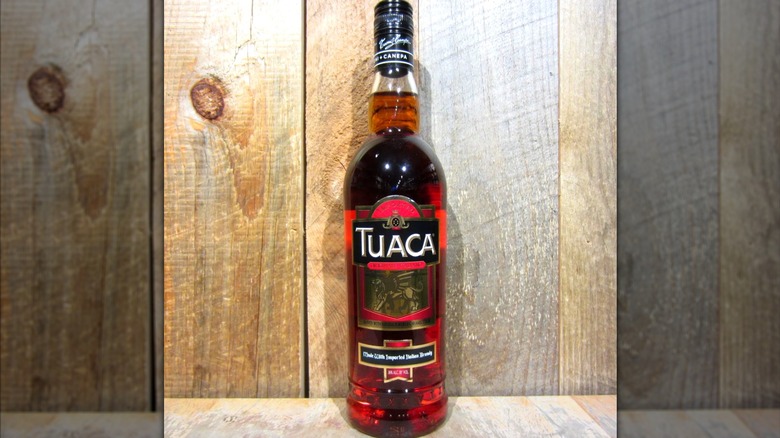
Tuaca is a brandy-based spirit that occupies a distinctive niche among Italy's diverse liqueur traditions. Unlike herbal amari, Tuaca offers comforting flavors of vanilla and orange layered over subtle spices and a balanced brandy base. Bottled at 35% ABV, the result is a golden-brown, citrus-kissed liqueur with a warm, dessert-like profile.
Often likened to Galliano, another Italian-born, vanilla-forward liqueur, Tuaca's distinct spice blend, while part of a proprietary recipe, does not feature anise — a prominent flavor of Galliano. Similarly, Tuaca's sweetness, while generally similar to that of the Spanish-born Licor 43, offers stronger caramel and toffee notes as opposed to the latter's brighter, herbal profile.
While these differences may seem small, it's precisely these nuances that have positioned Tuaca as a distinctive style of vanilla liqueur that's defined by warm spices and the essence of Mediterranean citrus. Whether used as a substitute for other vanilla liqueurs in cocktail recipes or served chilled and straight up, Tuaca is delicious in citrus-forward drinks that benefit from its warmth and added sweetness. If the season calls for it, it can also serve as a quick and easy upgrade to a hot toddy, coffee, or apple cider cocktail.
Fernet-Branca
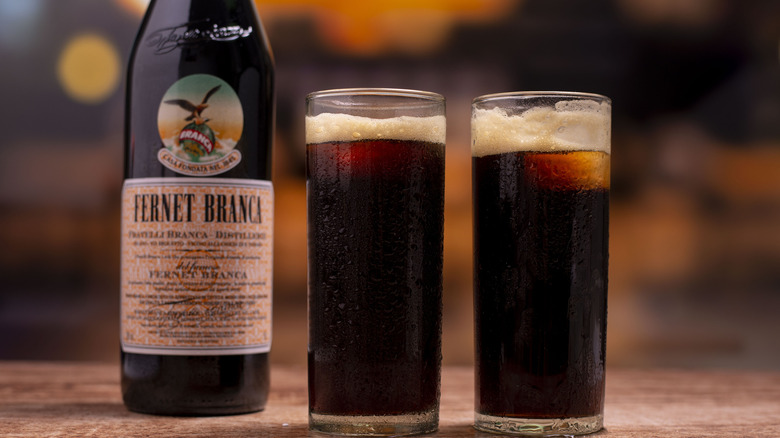
Among the many styles of Italian amaro, fernet represents the category's most intense and uncompromising expression. The benchmark of the style is Fernet-Branca, a deeply bitter herbal spirit that has become a cult staple in global bar culture. Produced since 1845, Fernet-Branca is made from a secret recipe said to include more than two dozen botanicals such as myrrh, saffron, chamomile, and aloe.
Its intensely herbal, mentholated, and medicinal profile distinguishes it from softer, sweeter amari, and on the amaro spectrum, Fernet-Branca sits firmly at the extreme bitter end, placing it in the fernet subcategory known for powerful bitterness and digestive qualities. Despite its extreme intensity, Fernet-Branca has historically been consumed as a post-meal digestif, and today it's one of the most recognizable amari in contemporary drink culture.
Bartenders in particular have embraced Fernet-Branca as both a mixing ingredient and an industry symbol. Often shared as a quick shot among colleagues after a shift, Fernet-Branca's folklore runs deep in barrooms the world over, and more and more American distilleries seem to be producing their own styles of fernet with native botanical bills that showcase their local terroir. That combination of tradition and intensity has helped to cement its status as one of the most influential amari ever produced. If that isn't convincing enough to win a spot on your bar cart, then this list is too intense for you.
Campari
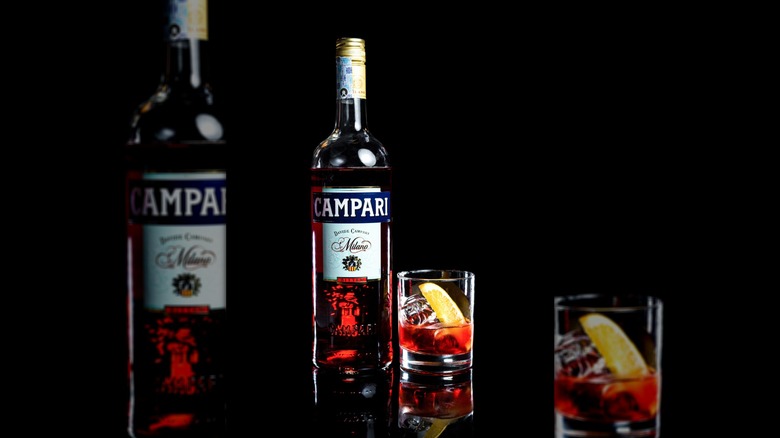
Few Italian liqueurs have shaped global cocktail culture as profoundly as Campari. Not only does the crimson red spirit form the backbone of several of the most famous cocktails ever created, as a close relative to amaro, Campari also helped define the category of Italian bitters known as aperitivo liqueurs. Heavier and more intense than Aperol, Campari sits in the middle of the bitterness spectrum, while emphasizing bright citrus peel, rhubarb, and herbal notes.
Inseparable from contemporary drink history, Campari's cultural influence runs deep in the Italian aperitivo tradition. As its unmistakable color and balanced bitterness have made it one of the most recognizable liqueurs in the world, its presence in cocktails such as the Negroni, the Americano, and the Boulevardier has helped establish the aperitivo ritual overseas — further cementing Campari's presence during social hours everywhere.
Campari's bittersweet profile continues to influence bartenders seeking harmony among sweet and bitter components in mixed drinks. Its versatility as a balancing agent makes it equally compelling with an array of spirits — from gin to whiskey, vermouth, and even soda — all of which ensures its place as a foundational ingredient behind the bar. Campari may well be the defining spirit of Italian drinking culture, but regardless of the stats, it is definitely worth checking out.
Braulio
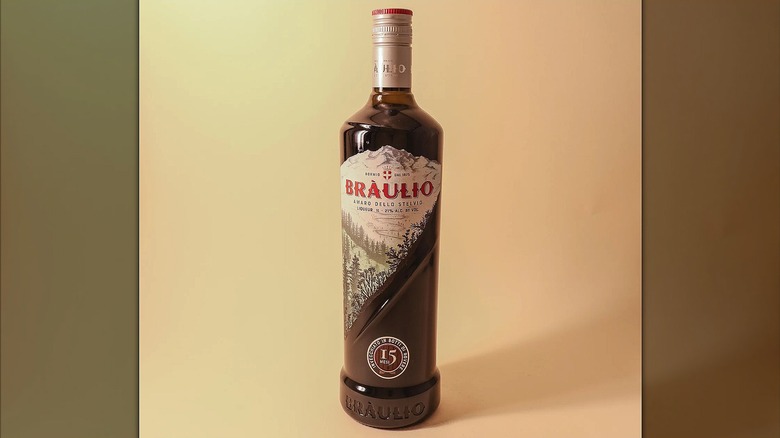
A standout expression of alpine amaro, Amaro Braulio reflects its deep connection to mountain terroir and traditional herbalism. Produced in Bormio near the Swiss border, the liqueur takes its name from nearby Mount Braulio and centers on botanicals native to the region. First created in 1875 by pharmacist Francesco Peloni, the recipe includes gentian root, juniper, wormwood, and yarrow, among others, giving the spirit a distinctly resinous character that reflects its high-altitude origins.
Typically classified as medium-to-robust in bitterness on the amaro spectrum, Braulio is not as intensely bitter as fernet-style amari, but deeper and more herbaceous than lighter, citrus-forward examples. The bitterness associated with the liqueur's forested character is softened further as it ages in large Slavonian oak casks, adding complex spice and helping to balance woody notes.
Braulio's alpine identity has made it an enduring digestivo in northern Italy, and in modern drink culture, bartenders have increasingly embraced it as a distinctive mixing ingredient. In stirred cocktails and amaro-forward variations on classics, its piney, herbal complexity enhances the depth of flabby drinks and lengthens nicely when paired with soda. While every bar cart should have at least a few spots dedicated to various styles of Italian amari, be sure to have a bottle of Braulio in the mix — one of Italy's most distinctive and deserving alpine amari.