

This Historic Baltimore-Born Cocktail Takes Just 3 Ingredients (And Packs A Punch)
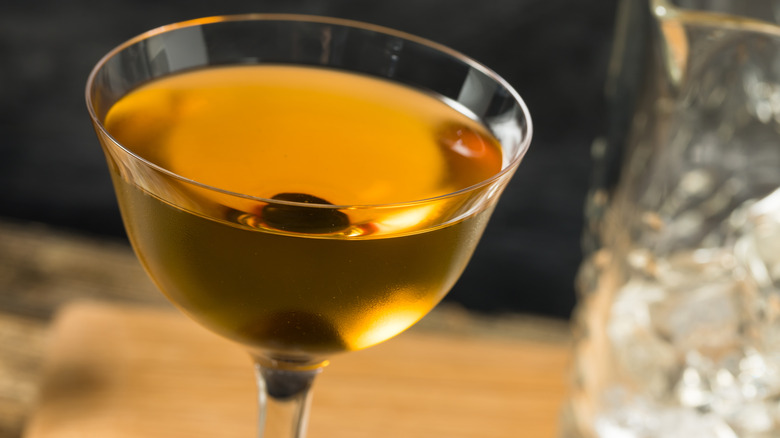
America has played a huge role in the evolution of cocktails. From cobblers, flips, and toddies in 18th-century taverns to Manhattans and martinis in social clubs a century later, many of the most beloved cocktails were invented in the United States. Within the American cocktail canon, there are also dozens of region-specific tipples — nearly every state has its own iconic drink. But Maryland, it seems, has proven fertile ground for cocktail innovation. The state not only claims the original orange crush before Delaware adopted it, but the black-eyed Susan, the whiskey sour riff called a Baltimore bang, and a lesser-known tipple worth talking about called the diamondback.
You're going to want to get to know the diamondback. This beverage calls for just three ingredients, making it a snap to whip together, but the flavor profile is fascinatingly complex and delicious. With rye whiskey, green Chartreuse, and applejack or apple brandy, it mingles notes of spicy grain, honey, apple pie, and bittersweet herbaceousness. Because the recipe consists of two spirits and a liqueur with no mixers, the diamondback is ideal for fans of strong, spirit-forward cocktails. But one is all you need to experience a flavor combination like no other.
The diamondback's history and ingredients
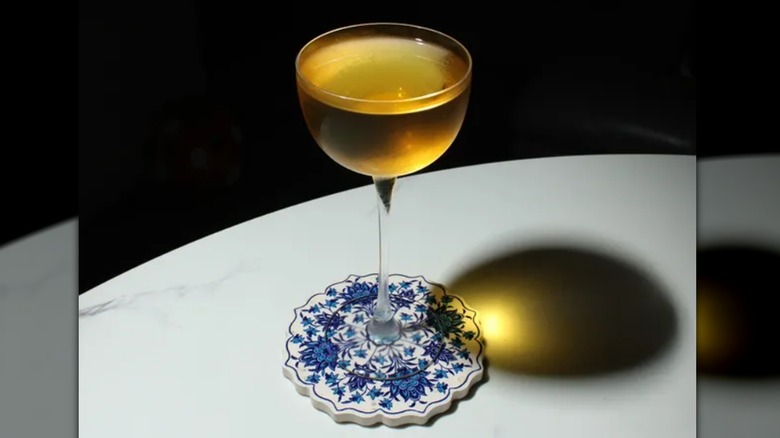
The diamondback is named for its site of invention, the Diamondback Lounge at the Lord Baltimore Hotel. The lounge itself was dubbed as such for the diamondback terrapin turtle, Maryland's state reptile. Unfortunately, the name of the bartender who created the first diamondback cocktail has been lost to history, but the recipe appeared in Ted Saucier's book "Bottoms Up" in 1951.
A diamondback starts with 1½ ounces of rye whiskey. Traditionally, this would be Maryland rye whiskey. You may not think of Maryland when you think of the best rye whiskeys, but the state was one of America's top rye producer pre-Prohibition. Maryland rye may have mysteriously nearly disappeared in later decades, but it's made a comeback in today's craft distilling scene. Its slightly sweeter grain would bring a touch more sweetness to the diamondback — though, as one of the tastiest rye cocktails in general, the diamondback would work with whatever rye you favor.
The cocktail then calls for ¾ of applejack, which is a type of apple brandy with its own distinctive American roots. People made it as long as ago as the 1600s by freezing apple cider to drive up the alcohol content. Finally, the diamondback uses a ½ ounce of green Chartreuse — this was originally yellow Chartreuse, but more modern versions use green. The difference between green and yellow Chartreuse is that the former is more intensely herbaceous and complex. If you prefer a subtle, sweeter finish, try yellow. Whatever your Chartreuse or rye preferences are, the diamondback is a home bartender's new best friend.