

12 Flavorful Herbs That Thrive Inside Hanging Baskets
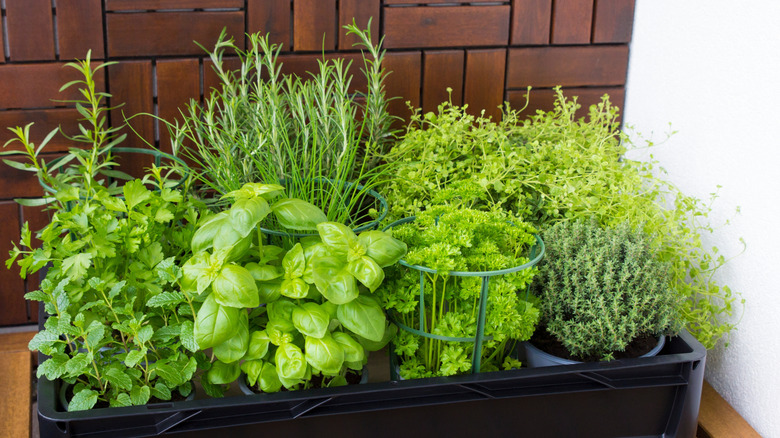
As soon as the days start warming up, garden shops fill up with hanging baskets brimming with multicolored blooms. They make attractive additions to your patio or terrace, creating a lush environment even in a small balcony, as they add the visual interest of a vertical garden in a short amount of space. If you like to plant your own hanging baskets, don't limit yourself to flowers alone — you can add different textures, aromas, and usefulness by also planting herbs.
Most herbs can be grown in containers, keeping them in a manageable size by consistently pruning and using them in the kitchen. Choosing the right basket is important for a successful hanging herb garden, as they come in different sizes and shapes. A wire basket with coconut coir liner offers good drainage and airflow, both of which are important for growing healthy herbs. You can also get creative and transform an old colander into a cute and clever hanging pot.
Mixing herbs of different growing habits adds interest, since you can plant taller varieties that grow upward in the middle of the container, surrounded by trailing plants that will hang down over the rim. When planting them together, select herbs that complement each other as far as water and sunlight requirements go, too. Make sure you use a well-draining medium, such as a mix of compost and sand, which will provide nutrition and prevent waterlogging.
If you don't have a very sunny spot, look for herbs that will grow in shade so you can still enjoy a little hanging herb garden. Here are some suggestions for some of the best herbs to grow in hanging containers, but remember to secure them during storms and strong winds so they don't fall and break.
Rosemary — the trailing variety
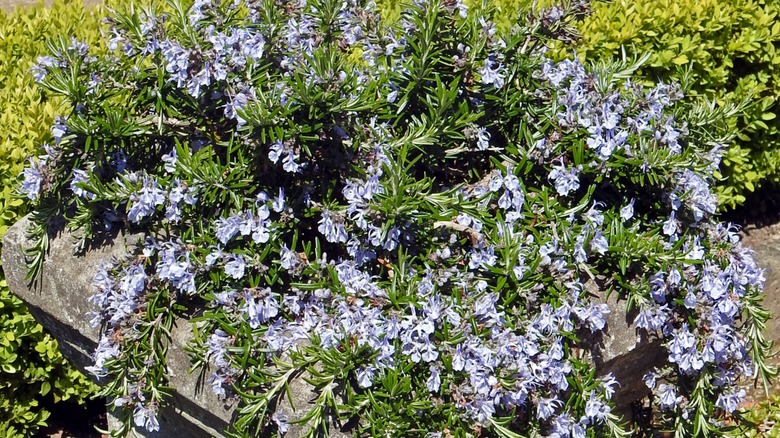
Perennial herbs like rosemary, which grows upright into large shrubs with woody stems, are best suited to medium or large pots, but here's an exception — look for the trailing variety, Rosmarinus offinalis 'Prostratus,' also known as prostrate rosemary. It's smaller than most varieties, with a sprawling shape that makes it excellent for tumbling over a container. In spring and summer, it gets covered with lovely blue flowers that attract bees and butterflies, and it's one of the herbs that can also grow in the winter.
Mint is lovely and easy to grow
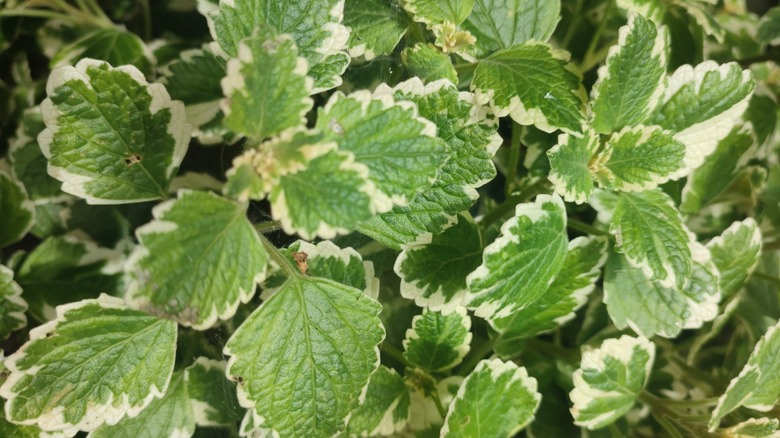
Mint is such a fabulous herb with dozens of applications, and it's one of the easiest herbs to grow in the kitchen. It thrives in shady spots, is a fast grower, and you can start it from a cutting from the grocery store. Even better, there are dozens of varieties of mint beyond peppermint and spearmint, with different scents, tastes, and shapes. Look for pineapple mint with its green-and-white variegated leaves, orange mint, or chocolate mint, among many others.
Basil in its many colors and textures
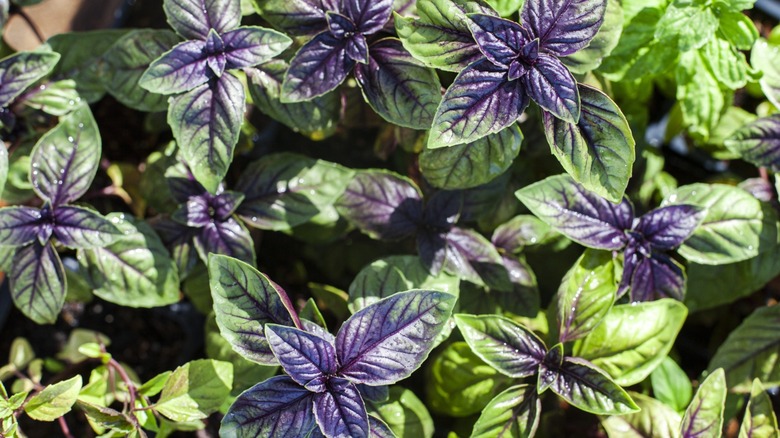
Perhaps no other herb has such a diverse range as basil. Within the genus Ocimum, there are around 60 species and even more varieties and cultivars, boasting different scents, tastes, colors, and shapes. That's because basil cross-pollinates easily, creating hybrids—experts recommend not planting different cultivars close together to avoid this effect. For your hanging basket, look for lemon basil, Thai basil, 'Dark Opal,' 'Spicy Globe,' and 'Purple Ruffles,' all excellent culinary herbs with leaves and blossoms in different shapes and colors.
Oregano, to help you repel mosquitoes
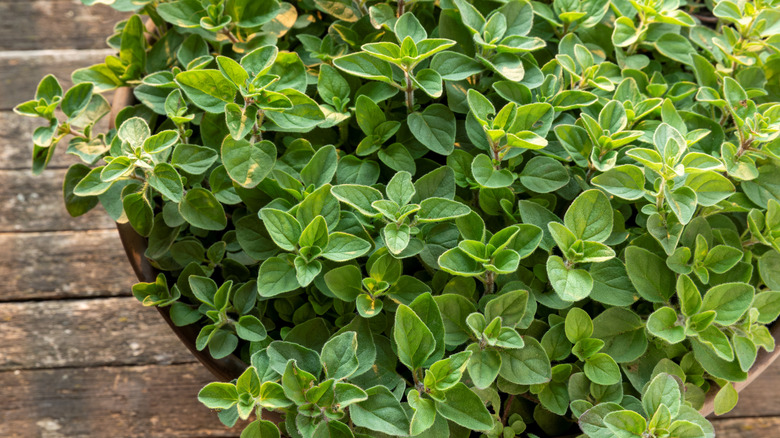
It's practically impossible to cook Mediterranean cuisine without oregano. This lovely low-growing herb needs very little maintenance to thrive, and in the right conditions, it will gift you a profusion of delicate blooms which bees adore—and mosquitoes hate. They are nice plants with many varieties, from the classic Greek and Italian to golden-leaved and variegated types that will work in a hanging basket. Although they are attractive in the garden, Cuban and Mexican oregano are not oregano at all.
Marjoram — oregano's forgotten cousin
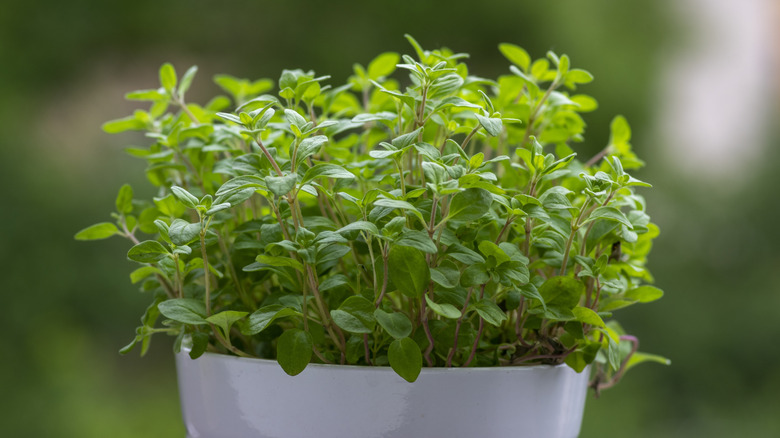
Because both oregano and marjoram come from the genus origanum, they are often mistaken for one another. And while you can swap them in certain recipes, their flavor profiles are not exactly alike. However, their growing habits are the same—low-growing, trailing, and heavily scented, bearing loads of lovely tiny blooms in summer. And since hanging baskets dry out relatively fast and will need to be watered frequently, Mediterranean herbs that don't need a lot of water, such as marjoram, will work a treat.
Thyme, in its many pretty varieties
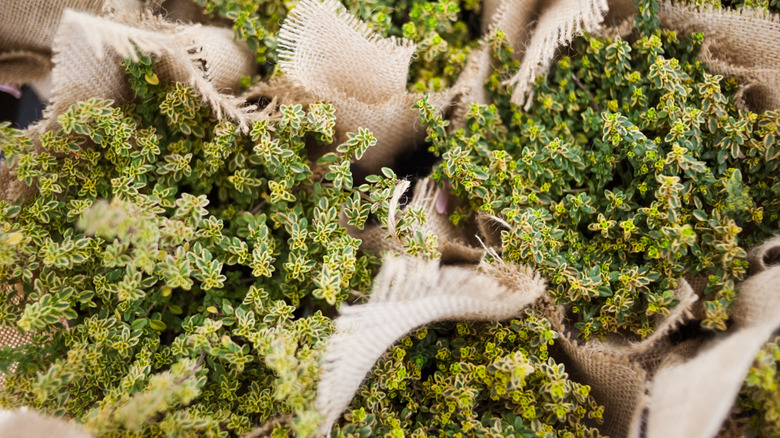
Thyme is a workhorse of the spice rack, a staple of the bouquet garni with myriad applications in cuisines around the world. There are many kinds of thyme, each with its own dainty leaf shape, color, and flavor, with tiny white to pink blossoms attracting beneficial insects galore. They all have a trailing growing habit and prefer dry, sandy soils, thriving in the company of other Mediterranean herbs. Plant lemon thyme, as you won't find that in the spice section of the supermarket.
Dill attracts beneficial insects
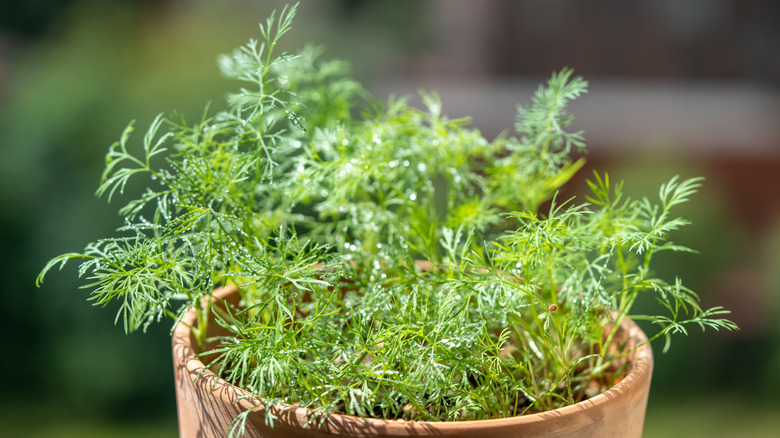
Even if you don't love the anise-like flavor of dill, it's a fantastic herb to grow in the garden. It not only attracts beneficial insects, but its feathery foliage and striking seedheads add a serene, almost artsy feel to the garden. Easy to grow in pots, look for dwarf varieties that will stay compact in the center of your hanging basket, or let the stems of standard varieties drape over the edge. Plant with 'Purple Ruffles' basil for a striking combination.
Salad burnet — underutilized and lovely
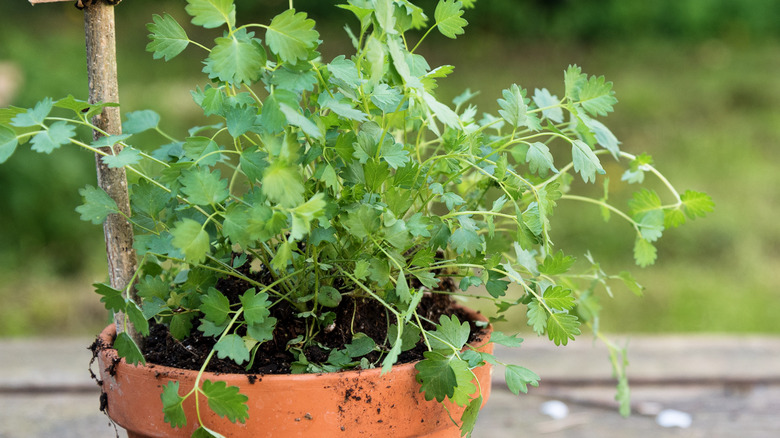
Unless you are an avid gardener, chances are you've never heard of Sanguisorba minor, better known as salad burnet. This lovely herb with lacy serrated leaves and an outward cascading shape is easy to grow and very attractive. Its fresh cucumber-like flavor makes it a nice gin and tonic garnish, or simply pluck the leaves and add to a salad. Plant it in the middle of the pot and sow some nasturtium seeds on the edges for a pretty presentation.
Nasturtiums add interest and color
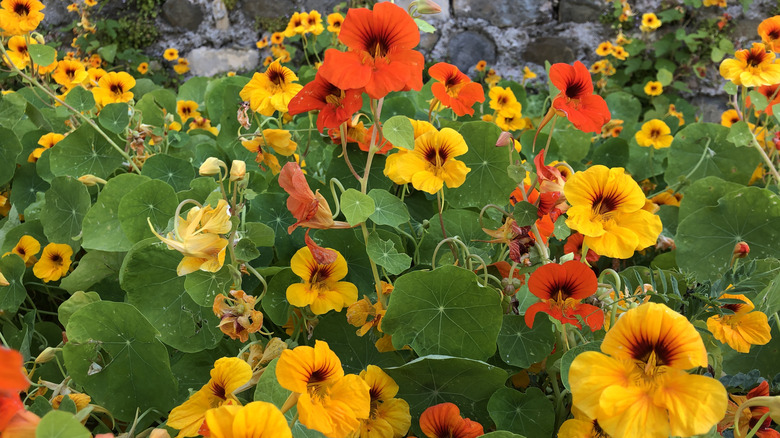
Although not a herb, nasturtiums have uses in the kitchen, and they are super pretty and easy to grow. They come in dwarf and trailing varieties, with blossoms ranging from pale peach to fiery red, and round leaves that can also be variegated. Both leaves and flowers are edible, with a mild peppery taste, and the green seeds can be pickled like capers. Sow them around the edges of the herb hanging basket and let them cascade over the sides.
Scented geraniums for incredible fragrance
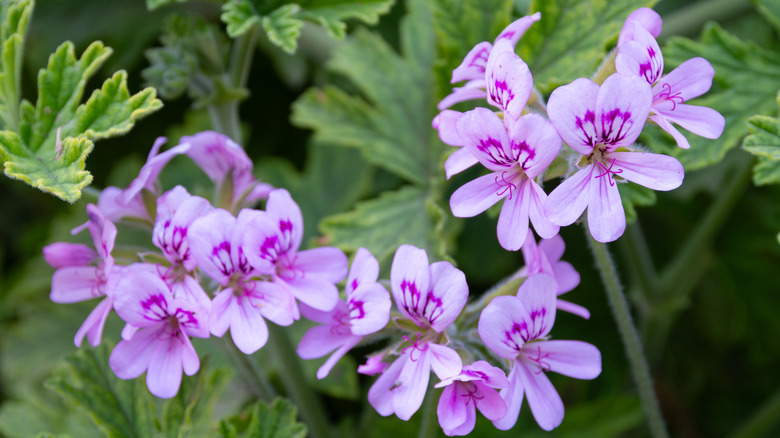
Gorgeous scented geraniums are not just prized for their blooms but for their leaves, which emit amazing aromas when lightly bruised. The leaves range from round to lacy, and from gray-green to lime green, with scents resembling chocolate, cinnamon, mint, apple, and the most popular lemon and rose. In fact, lemon-scented geraniums are often mislabeled as citronella, which is a different plant. Both leaves and flowers have been used in the kitchen since Victorian times.
Lemon balm makes a wonderful tea
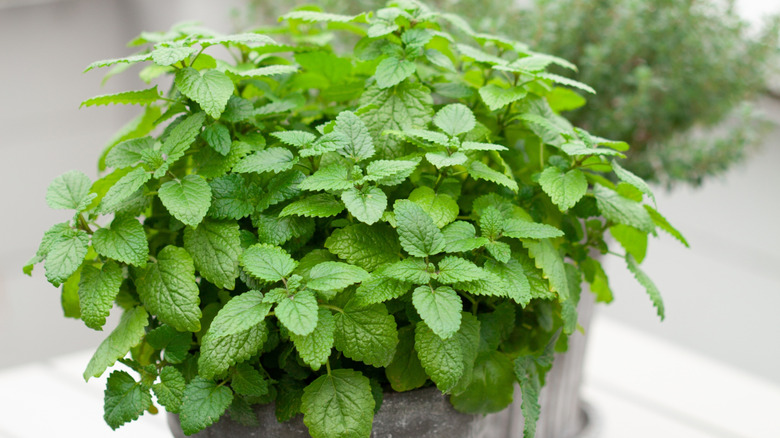
Melissa officinalis, also known as lemon balm, is a relative of mint with a refreshing lemony fragrance and flavor. It's used in desserts and to make a tea that aids digestion and has a sedative and calming effect. It grows slightly differently from mint, forming clumps rather than runners, and bears dainty flowers which bees love. In fact, the word Melissa derives from the Greek for honeybee. Grow alongside basil or dill for a hanging basket with plenty of useful beauty.
Curly parsley
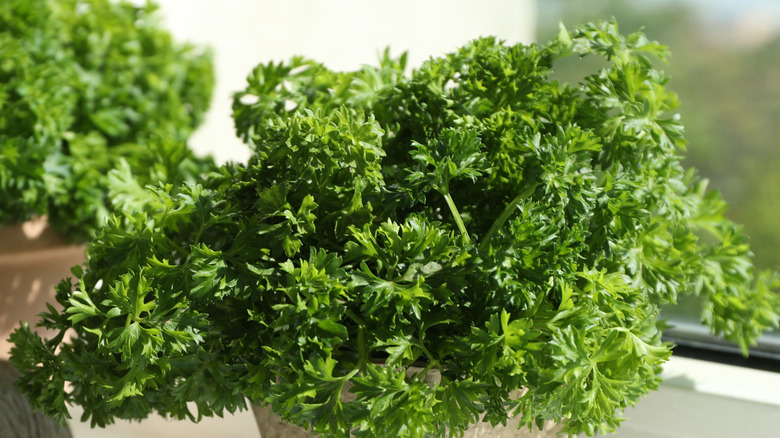
What can we say about parsley that you don't already know? Perhaps it's not the easiest herb to grow from seed, so find a starter at your favorite garden store instead. Curly parsley might not be as flavorful as its Italian counterpart, but it's highly ornamental and can be grown as the focal point or on the side to cascade over the edge. Harvest often to keep it in shape and make plenty of chimichurri to go with your next steak dinner.