

How To Buy The Best Prime Rib, According To Experts

There's always something special about a prime rib dinner. Maybe that's because there's always enough to feed a large group, or because it's often served on holidays. But even when it's not related to a special occasion, making a prime rib is an event.
To impress your guests and give the dish the respect it deserves, you want your prime rib to come out as tender, flavorful, and decadent as possible. And while there are thousands of great prime rib recipes out there, the truth is that the path to a perfect prime rib starts not in the kitchen, but in the grocery store.
But unless you're a seasoned prime rib expert, it can be difficult to know what to look for in the meat aisle, or what to ask for at the butcher counter. So we consulted with a group of chefs, butchers, and other meat experts, including Melissa Cookston, owner of Memphis BBQ Company; Katie Flannery, COO of online butcher shop Flannery Beef; Dennis Turcinovic, owner and managing partner of Delmonico's steakhouse in New York; Erica Blaire Roby, champion of Food Network's "Master of Cue"; and Sam Hazen, executive chef at Palladino's Steakhouse in New York, to find out what they look for in a cut of prime rib.
Check the USDA grade
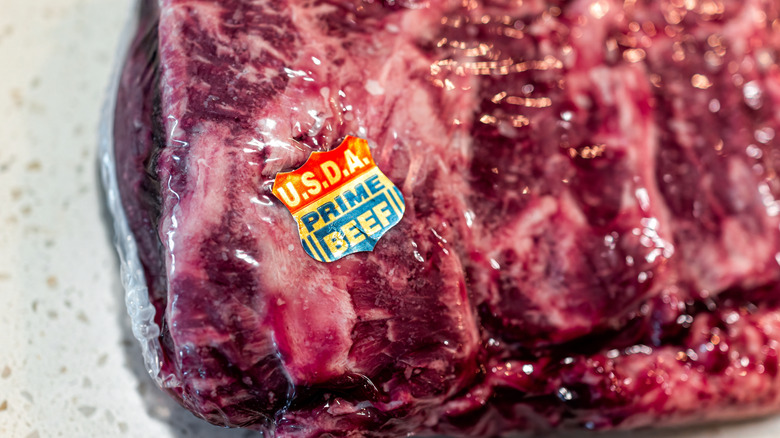
According to Memphis BBQ Company's Melissa Cookston, the first thing you want to do when looking for a piece of prime rib is to "start with the grade." Most beef sold in the U.S. is labeled with a grade given to it by the United States Department of Agriculture. The USDA scores meat based on source, uniformity, and marbling.
From highest to lowest, USDA-graded beef is ranked on a scale from Prime to Choice to Select. Prime always represents the highest quality of any cut, but when cooking prime rib especially, it's a risk to buy anything lower. "Really, you only want to purchase Choice grade or Prime grade," Cookston continues. "The Select grade will be too lean, and even if it's on sale, you won't enjoy it as prime rib."
Of course, the better the grade, the higher the price; you'll almost certainly pay a premium for real Prime beef. But it's worth the extra cost, and not just because of its superior taste and texture. As Flannery Beef COO Katie Flannery explains, "Higher-grade beef is more forgiving if you run into any issues on the cooking side. Prime will have a higher price point, but think of it like buying insurance... The better the piece of meat, the harder you have to work to screw it up."
Pay attention to size

For most home cooks, prime rib isn't a regular weeknight dinner – you're likely cooking it because you have a special occasion on the horizon. Once you've identified a good piece of prime USDA beef, you'll want to make sure there's enough for all your guests to enjoy. That requires a little bit of calculation.
Melissa Cookston has the equation down to a science. "Most people order ½ to ¾ of a pound of raw, boneless prime rib per person, or one pound per person for bone-in," she says. Of course, there's a little bit of room for variation, depending on your guests' appetites. As Cookston puts it, "I always ask the question, 'Are you feeding linebackers or cheerleaders?'"
In case you're not sure, it's always better to err on the larger side. Don't be scared of making too much; there are lots of creative ways to use your leftover prime rib, and your guests aren't likely to complain about taking home the extras.
If you're having trouble finding the right size prime rib in the meat aisle, just ask the butcher. Tell them exactly how many people you're expecting, and they'll cut your prime rib to the perfect size.
Consistent marbling makes a tender roast
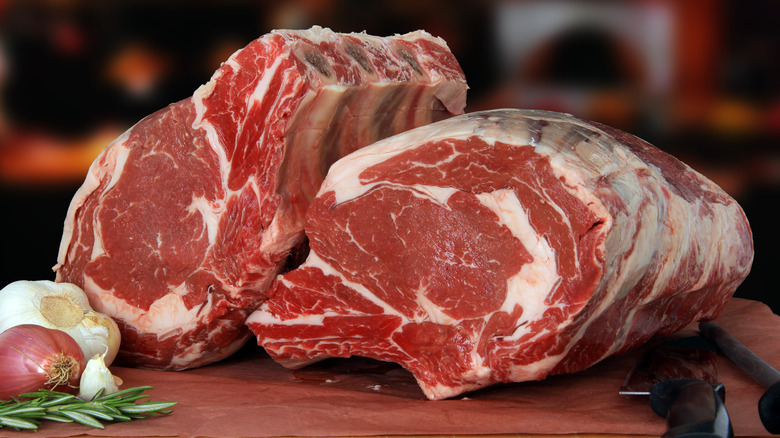
Next, you'll want to look beyond the label and start paying attention to the meat itself. The first thing to look for is marbling, the distribution of white streaks throughout the rib's surface. What you're actually looking at here is intramuscular fat. The amount of intramuscular fat throughout a piece of beef is affected by a cow's breeding and diet, but it's not just visually appealing: Good marbling is key to a good roast.
When you're shopping for a piece of prime rib, Delmonico's Dennis Turcinovic advises, "Look for generous, evenly distributed marbling, with fine white streaks of fat running throughout the meat. As the roast cooks, this fat melts and bastes the meat from within, delivering prime rib's signature rich, buttery flavor and exceptionally juicy texture."
USDA grade is one potential indicator of good marbling: One of the criteria for Prime and Choice certification is more intramuscular fat than the relatively lean Select grade. But even if the meat has a Prime certification on its label, it's best to check the marbling for yourself just to make sure.
Look for a bright red color and fresh smell

Once you've verified that you've found a quality piece of meat, the next step is to make sure it's fresh. The color of your prime rib is a dead giveaway for freshness, and the fresher the beef, the better the roast will turn out. According to Katie Flannery, "Bright cherry-red is normal when it's exposed to oxygen, and purplish red in vacuum packaging is completely normal." In other words, when it's in the butcher's case, look for pure, bright red, but on the shelves, a little more of a purple hue is perfectly fine.
Don't be embarrassed to give the beef a little sniff, either. It's natural for raw beef to have a faint metallic odor, even if it is fresh, but if you smell anything more intense or unpleasant, look for a fresher piece. "What you don't want," says Flannery, "is brown or gray coloring and a sour or sulfurous smell."
Just because a piece of beef has a slightly browner coloring or a stronger odor, it doesn't necessarily mean the meat is spoiled or unfit for consumption. It does, however, suggest it might've been sitting around on the shelf for a while. If you want your prime rib to turn out as flavorful and tender as possible, you'll want to avoid those older cuts.
Check for firmness
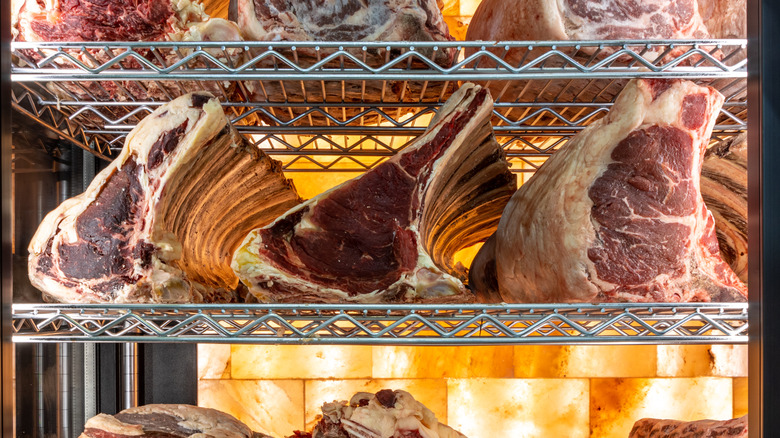
It can be a little confusing, but for a perfect prime rib, you want a piece that's not only fresh but is also properly aged. Once beef is butchered, it's usually not sent directly to the shelves; a good piece of beef is kept under carefully monitored conditions for an aging period of at least 21 days. During this time, the dry environment gradually leaches moisture from the beef, which enhances its flavor. Meanwhile, naturally occurring enzymes break down the meat, which will increase tenderness once it's cooked.
The best way to confirm a piece of prime rib was properly aged, according to Dennis Turcinovic, is to observe its firmness. This is a two-part process: First, poke it gently (don't pierce the packaging) with a finger; Turcinovic says it should be "firm yet slightly springy to the touch." He advises that once this is done, you should "shake the roast lightly ... If it jiggles a lot, skip it for one that holds firm."
Look for dry-aged beef
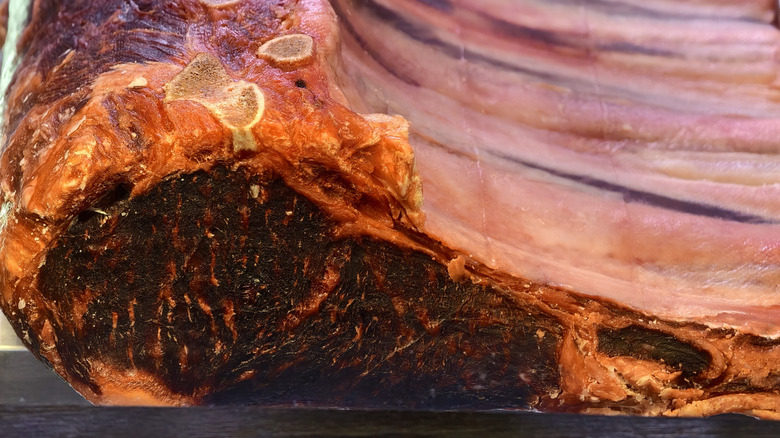
It's not enough just to verify that the beef is aged; it's also important to understand how it was done. There are two common methods: wet aging and dry aging. Wet-aged beef is vacuum-sealed and left to marinate in its own juices for a period of up to 21 days, while dry-aged beef, as described above, is kept in a low-temperature, low-humidity environment for a longer duration.
In a pinch, either method will do. But according to Melissa Cookston, though, dry-aged is always better for prime rib. "Dry-aged is a completely different process," she explains. "This gives a noticeably more tender piece of beef, with a richer beef flavor."
That comes at a cost, as Cookston warns. "Dry-aged beef can be significantly more expensive due to the cost of aging the loins in special chambers," she says. However, when it's done right, the beef can be spectacular. Specifically, Katie Flannery adds, dry-aged beef can be especially flavorful: "Because of the inherent character imparted by dry aging, the meat needs very little intervention from marinades and rubs."
In case you can't find dry-aged prime rib at your grocery store or butcher, Cookston suggests aging it yourself. "Dry-age your own piece by opening it, placing it on a wire rack over a sheet pan, and storing it in the fridge for five to seven days," she advises. "I generally cover mine with a cheesecloth when doing this."
Bone-in is better than boneless
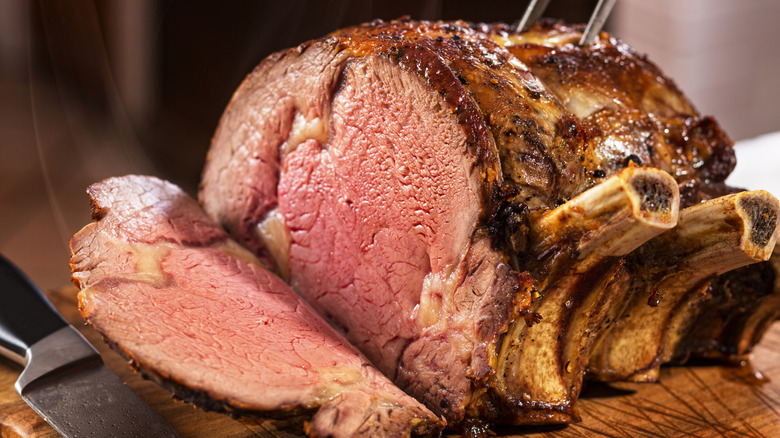
While a boneless rib roast may be easier to deal with, you'll usually get a better prime rib with a bone-in cut. "For recipes that call for roasting, I suggest a bone-in prime rib," says Erica Blaire Roby from "Master of Cue." "This will help ensure even cooking and moistness throughout the cut."
There are a few reasons for this: For one, the bones will absorb excess heat as the roast cooks, ensuring an even temperature throughout. This helps prevent the roast from overcooking or drying out in the process. At the same time, the bone actually imparts a rich, savory flavor to the surrounding meat, making for a delicious final product.
If you want all the benefits of a bone-in prime rib without the hassle, Palladino's Steakhouse executive chef Sam Hazen suggests, "You should request to remove the backbone ... and [have the roast] trussed for even cooking and carving." This way, the butcher will cut the bone away from the meat and tie it back on. This saves you the difficult job of deboning the roast yourself later, but still allows you to get all the benefits of a bone-in roast.
Choose chuck end over loin end
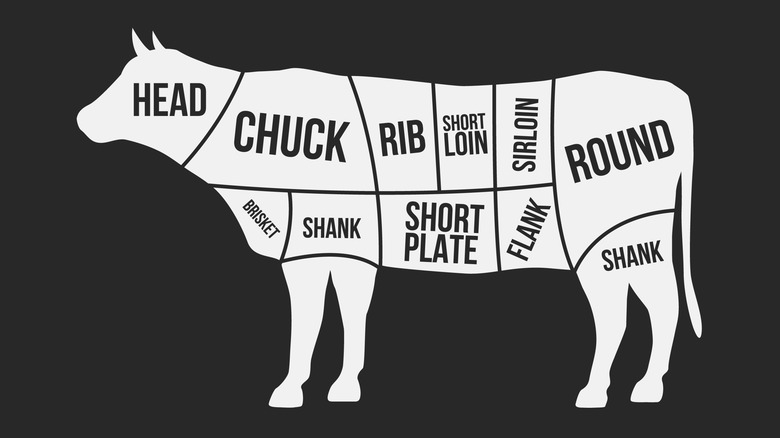
If you're buying your prime rib directly from the butcher counter, you'll have the benefit of their professional experience to help you choose a good piece of beef. One of the most important things you can ask your butcher to clarify is whether the meat comes from the chuck end or the loin end. This is a subtle distinction that can make all the difference for your prime rib.
As the name implies, a rib roast is cut from a cow's ribs, which run from its shoulder (or chuck) to its short loin. The anatomy of the beef differs from one end or another, and the part you choose, with more fat and connective tissue towards the chuck end.
Katie Flannery prefers the chuck end, advising, "If you love rich, fatty, intensely flavored beef, the chuck end is your friend." There's an anatomical reason for that: "The chuck end has a thicker spinalis dorsi, that cap muscle that wraps around the outside," says Flannery. "In my opinion, it's the most flavorful part of the whole roast."
The loin end of the rib has its uses, though. Although it has less marbling overall, loin end rib tends to have a more even distribution of fat, which means the finished product will be more tender throughout. With proper preparation, it can be just as delicious. "If you prefer something leaner, go for the loin end," Flannery explains, "It actually looks quite similar to a New York strip."
Ask your butcher about the fat cap
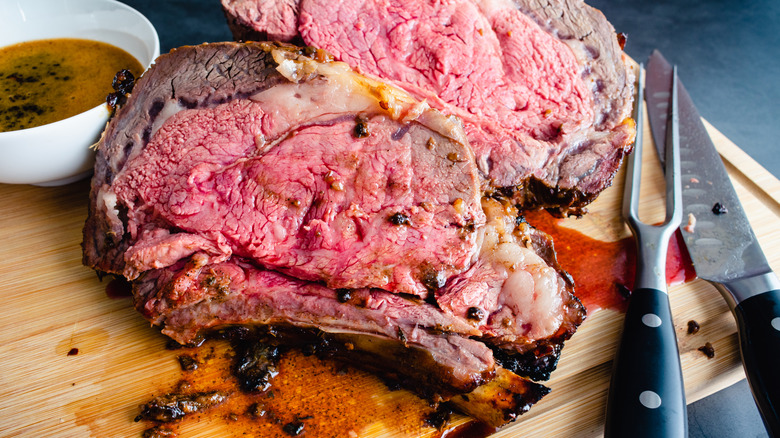
Finally, before your rib roast is wrapped and ready to go, you should ask your butcher to make sure it has a sufficient fat cap. The fat cap is exactly what it sounds like: A layer of white fat that sits on top of the "eye" (the red part of the rib). Much like the intramuscular marbling, this fat cap melts as the roast cooks, basting the meat for greater moisture and intense flavor. However, the fat cap is a delicate balance. Too little, and your prime rib could turn out dry; too much, and it'll have a thick, chewy layer of unrendered fat on top.
"A ½ to ¼-inch fat cap on the outside is important because it allows for slow rendering, protecting the meat from drying out while developing a beautifully browned crust," suggests Dennis Turcinovic. That crust adds more than just flavor and texture; it also makes for an attractive presentation when your prime rib finally makes it to the table.