

The Glenlivet 12-Year: The Ultimate Bottle Guide
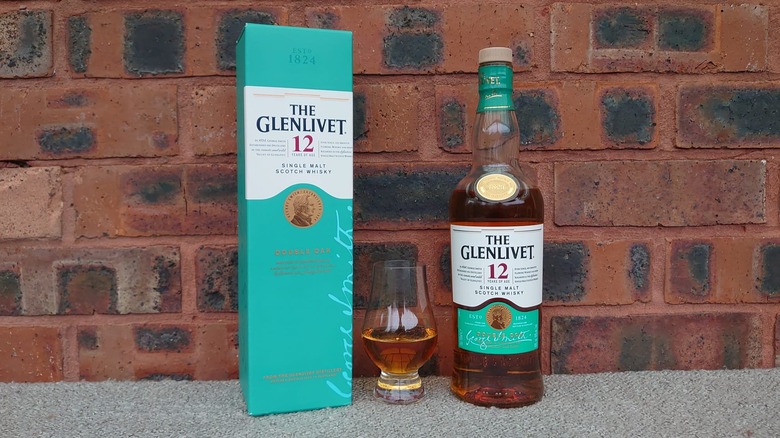
The Glenlivet 12-year is one of the most recognizable bottles of Scotch, and it's fair to view it as one of the great bottles of Scotch for beginners, especially for anyone interested in single malt. However, that label could do a disservice to a whisky with such impressive craftsmanship and heritage. I've spent many years tasting, studying, and writing about all whisky styles. This has given me great insight and a trained palate so I can objectively analyze what makes a good whisky and whether or not it's worth your money. I've enjoyed The Glenlivet 12-year countless times over the years, but memory alone is not enough for this article. Rest assured, this review comes from the tasting experience of a freshly opened bottle.
The Glenlivet is a smooth whisky with flavors that aren't bold but are elegantly developed — delivering a lovely tasting experience. I'll go into greater detail about its flavor profile, but I'll also list the reasons why The Glenlivet is such a legendary brand in the world of Scottish single malts. The result will be a review you can trust when deciding whether this is a Scotch for you.
History of The Glenlivet 12-year
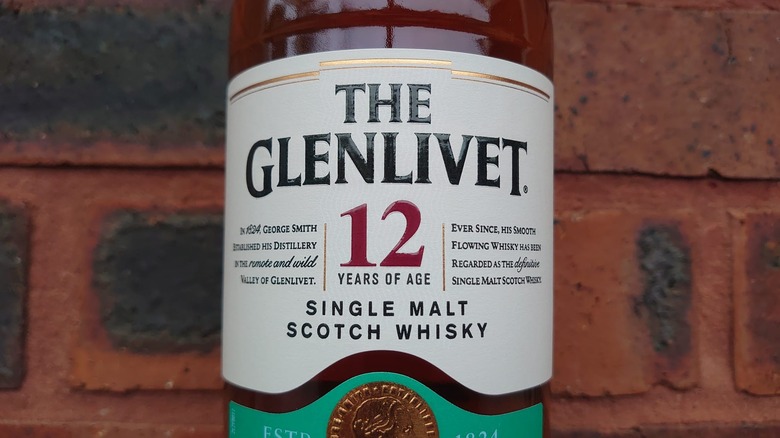
The Glenlivet story started with the founder George Smith distilling whisky in the Livet valley before it was officially licensed in 1824. The whisky had already started gaining a reputation for its quality, and by 1839, the distillery could generate more than 200 gallons per week. There was a great change in the 1850s, when another distillery was built to increase capacity. However, in 1958, the original distillery burned down, and a year later, the second distillery closed. The new, third distillery was built in Minmore, which still stands today.
Smith died in 1871, leaving behind a lasting legacy. The business was then taken over by his youngest son, John Gordon Smith. A landmark moment for the distillery happened in 1884. With pretenders looking to piggyback on the name Glenlivet, the company won the rights to be called The Glenlivet, clearly demonstrating that it's the original distillery. Over the coming decades, The Glenlivet would continue to thrive, especially in the periods following Prohibition and World War II. In 1952, it consolidated with Glen Grant before being taken over by Seagram in 1977.
12-year first appeared in the 1970s, and it's been a mainstay ever since. After Seagram's downfall, The Glenlivet finally came under the ownership of Pernod Ricard and its subsidiary, Chivas Brothers Holdings, in 2001. The brand is still operated by the same company. Despite these changes, The Glenlivet has remained remarkably consistent and a humongous name in the world of whisky.
What does The Glenlivet 12-year taste like?

The Glenlivet 12-year is a classic Scotch single malt that focuses on balance and clarity rather than intensity. You notice that immediately on the nose as you're met with a burst of fresh citrus and pineapple. You also get orchard fruits, mainly in the form of pear and apple. The sweetness comes from soft vanilla and a hint of caramel. There is no smoke, only a very faint sense of oak and cinnamon. The pleasant nature of this whisky doesn't stop there. The sweetness from the nose carries strongly to the palate, dominated by vanilla and caramel. As you continue to take sips, you get apple, pear, and peach, all coming through along with a soft malty quality.
Perhaps the most notable part of The Glenlivet 12-year-old is what it lacks, along with what it does. You'll immediately notice the clarity and the fact that every flavor is clean and precise. This comes with a complete absence of alcohol burn or sharpness. If you can place any whisky on a scale of elegant to robust, this sits firmly on the former end. In fairness, that won't appeal to everyone. I love whisky on both sides of the scale, but if you only like Scotches that deliver raw power, this may not be for you. The finish lingers nicely and flows over your tongue with beautiful waves of warmth. Especially considering it's a 12-year-old spirit, it's a brilliantly crafted Scotch.
How is The Glenlivet 12-year made?
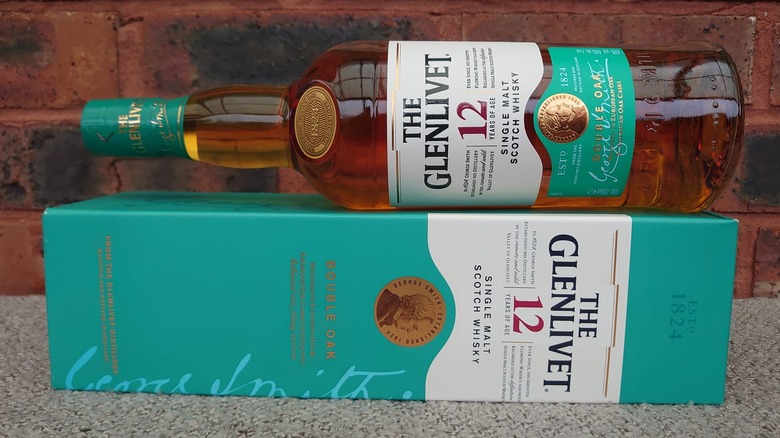
There is nothing particularly unique about how The Glenlivet produces its whisky, but, as every other distillery, it has its own way of doing things. It all starts with the water being drawn from the nearby Josie's Well. As is common with Speyside whisky, this soft and mineral water plays a key role in The Glenlivet's gentle profile. The barley is sourced from the coastal Speyside village of Portgordon, and it's fermented in wooden washbacks. Though stainless steel has become common, using wood helps with extra flavors, especially enhancing those floral and fruity notes.
The Glenlivet produces around 10.5 million liters of whisky per year which is distilled in one of its 14 tall copper pot stills. These allow any heavier compounds to fall back, which results in a more refined whisky compared to one that may be heavier in texture. After this comes the 12 years of maturation. This includes both European and American oak to embrace the flavors of both barrel types before it's eventually sent for bottling.
How to drink The Glenlivet 12-year
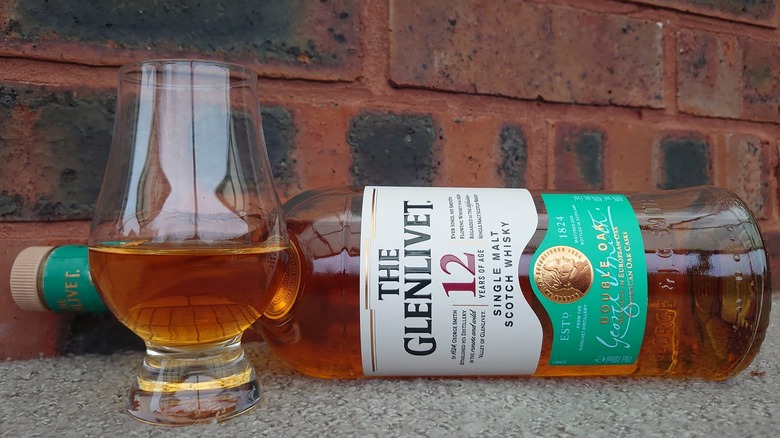
The Glenlivet 12-year is a clean and subtle whisky. Most of the time I recommend drinking single malts neat as it's the best way to truly appreciate these nuance spirits. The same applies here — this expression would easily get lost if used as part of a mixed drink or a cocktail. For such drinks, it's better to use a whisky with a bold character, so it can be more prominent when mixed with other flavors. Adding a few drops of water can be useful, but due to this whisky's gentle nature, it's not really required.
Because of its subtlety, it's recommended to use a suitable tasting glass to drink The Glenlivet 12-year-old – specifically, a tulip-shaped Glencairn glass gives you the best opportunity to appreciate its light yet elegant nose. It also helps to take small sips that are ideal for truly appreciating a single malt. Essentially, you can enjoy The Glenlivet 12-year-old anyway you like, but its nature lends itself to being solely drunk neat, perhaps more so than other single malts. You could also serve it on the rocks.
Is The Glenlivet 12-year expensive?

For a 12-year-old single malt Scotch whisky, I'd say this bottle of The Glenlivet is reasonably priced. It generally sits around the $50 mark. This places it in the lower-to-mid range of single malts, but it's still more expensive than many other whisky labels. As always, when I review a bottle, I consider the cost, but the value for money is perhaps even more important. This can depend on the overall tasting experience and how it compares to similarly priced rivals.
I feel that the quality of this Glenlivet label is more than good enough to justify the price. That's probably assisted by the large-scale production that helps to keep costs down. When compared to its rivals, it competes well. There are several Scotches around the $50 price point that are equally impressive, but there are also more expensive labels that aren't necessarily that much better. It's not a budget bottle, but it's also not a premium purchase. This is great as many drinkers like to have options in the middle ground that are polished enough to drink neat, but without having to worry about savoring the bottle. Personally, I'd find it extremely surprising if anyone bought this bottle and felt the money was wasted. In that respect, it represents excellent value.
The Glenlivet 12-year vs The Glenlivet Founder's Reserve
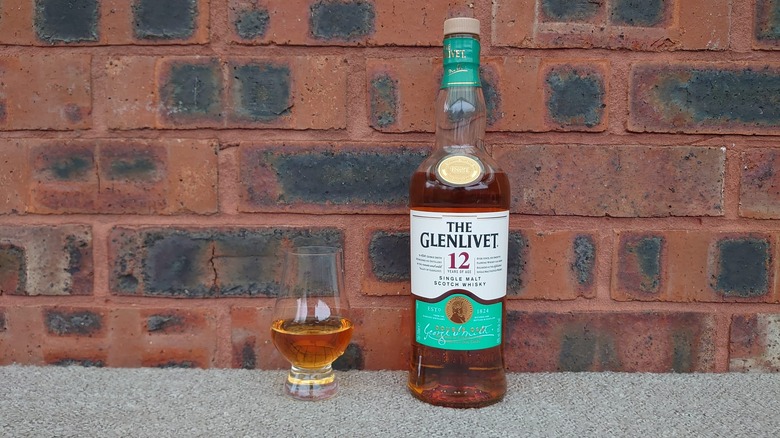
For those who like the sounds of The Glenlivet but are looking for something a little cheaper, there is The Glenlivet Founder's Reserve. This bottle is usually around the $40 mark. It is now part of the base lineup, but it's fairly new in the context of whisky, having been introduced in 2015. It fits the space as the brand's entry-level non-age statement bottle, which many brands now have. The Founder's Reserve is a tribute to the distillery's founder George Smith. It's matured using two types of casks that helped develop some sweeter notes. There is no defined age. However, going by my experience with similar whisky styles, it feels like it is around seven or eight years old.
The lower maturity is evident as the 12-year-old is a little cleaner. It has greater clarity and more rounded flavors. In terms of specific tasting notes, there isn't a big difference between them. The Founder's Reserve is a little sweeter and creamier, with a more pronounced oak presence. Yet, it doesn't have the range of fruity notes the 12-year delivers. In comparison, I'd say the 12-year-old is a clear winner, but the Founder's Reserve has its own merits. If you want a sweeter and creamier single malt that also happens to be a little cheaper, The Glenlivet Founder's Reserve is also a great option.
The Glenlivet 12-year vs Aberlour 12-year
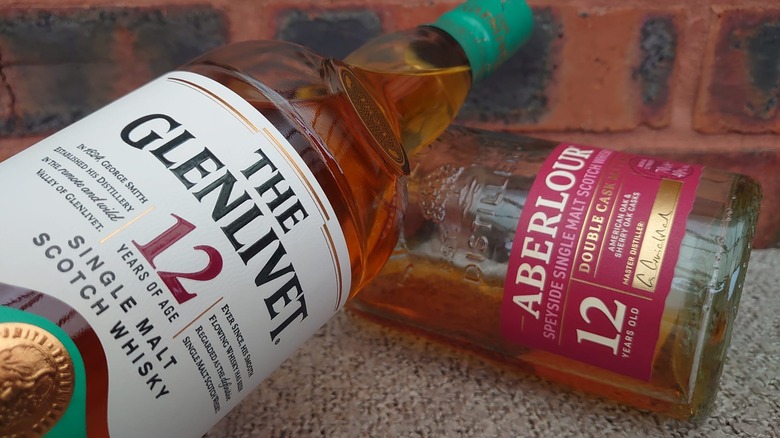
In terms of flavor notes, these two Scotches are very similar. They have a lot in common commercially, too. They are both Speyside whiskies, matured for 12 years, finished in European casks and owned by Pernod Ricard. This is why it's important to look beyond a simple list of flavors and consider the composition of the whisky. But let me first speak of the subtle differences in flavor. The Aberlour 12-year's sweet notes are also reminiscent of caramel, but they're paired with richer toffee nuances instead of soft vanilla. Although it does have orchard fruits on the palate, these fruity notes are more notable with The Glenlivet. Aside from that, they both have no smoke, minimal oak, and only a hint of spice.
As for the composition, the differences aren't vast, but they are clear. The Glenlivet is lighter, more elegant, and cleaner. By contrast, Aberlour 12-year is richer, a little deeper, and warmer. It's important to note that none of those descriptors are distinctly positive or negative; they just help explain the differences. Objectively, I'd say both are equally well made and choosing the best would depend on your preference. With that extra bit of depth and warmth, my preference would be Aberlour. However, my choice of whisky can ultimately change depending on my mood — I would also often appreciate the pristine clarity of The Glenlivet. Simply put, you can't go wrong with either.
The Glenlivet had illegal beginnings
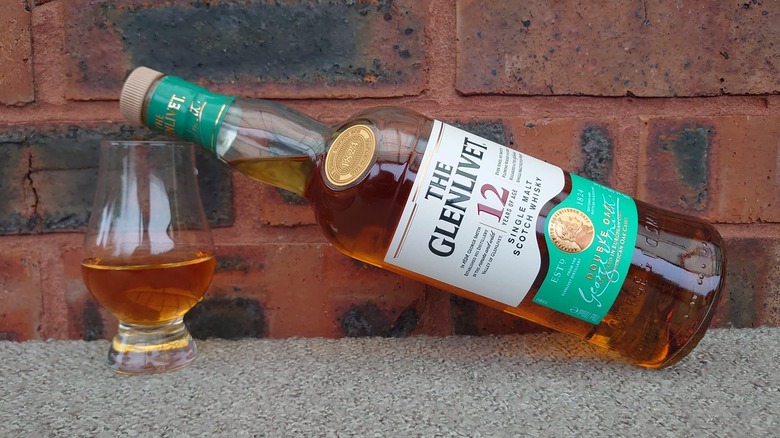
As with many early Scotch whiskies, The Glenlivet was born out of illegal distilling. After taxes were introduced in 1644, there were only a select few legal distilleries in Scotland. This caused a rise in illicit whisky distilling, with The Glenlivet's founder, George Smith, among them. That need for deception changed in 1823 with the introduction of the Excise Act. This made it easier for once-illegal distilleries to gain a license while also making life more difficult for illicit distillers.
It was an opportunity George Smith took, but it wasn't without consequences. Other distillers in the area weren't too happy about having to get a license, which made Smith a target. This came with death threats, which caused Smith to start carrying pistols with him for protection. Thankfully, there are no reports of him needing to use one. Given how The Glenlivet was already gaining a solid reputation for high quality whisky, it undoubtedly allowed Smith to perfect his craft in peace once the threat of retaliation passed.
The name has a romantic Gaelic meaning
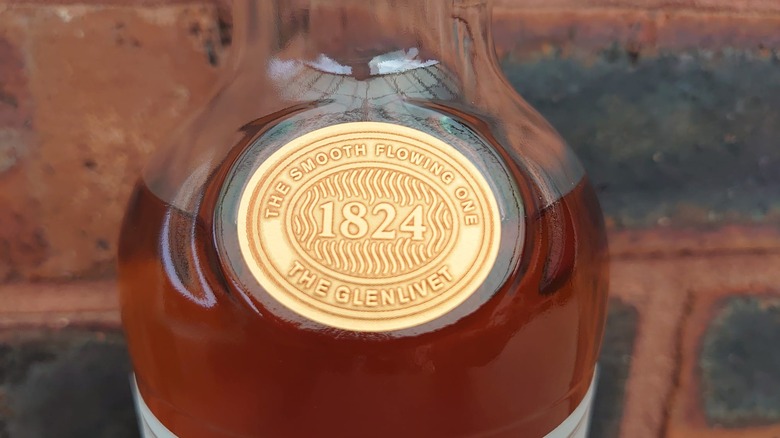
Much of Scotch whisky culture is rooted in the Gaelic language, and many distilleries have names relating to the surrounding landscape. The Glenlivet is no different — the name translates as "valley of the smooth-flowing one". This is proudly displayed on the bottle and is a reference to the River Livet which runs right past the distillery, and it's the one you need to cross to get to The Glenlivet. The river is fairly narrow and gentle, which suits its romantic name. This romance is aptly connected to the gentle and elegant whisky that is ultimately made from its water. Other whiskies with "glen" in the name have a similar story, such as Glenmorangie being "the glen of tranquility".
Sometimes these names are bluntly descriptive with very little in the way of romance. Some examples include Auchentoshan being "corner of the field" and Tormore being "big hill". Gaelic may not be widely used in Scotland anymore, yet it still has a key place in its history, including the entire whisky tradition. Learning to pronounce some of these names, such as Caol Ila and the legendary Lagavulin, is just part of the charm. These names that were once solely practical have now entered a new life as beautiful branding tools. While there are many charming distillery names, perhaps there is none more fitting than The Glenlivet's.
It is the epitome of Speyside Scotch

The words I've used to describe The Glenlivet, such as elegant, smooth, and approachable, are all synonymous with Speyside Scotch. In many ways, The Glenlivet is the epitome of this regional expression. If you were to describe all the expected qualities of a whisky from this region, you'd almost be describing this 12-year-old label. The area gets its name from the River Spey. This legendary river runs right through northeast Scotland with almost all distilleries either taking water directly from it or one of its tributaries. For example, the River Livet runs into the River Avon, which then feeds into the River Spey.
The water from these rivers is especially soft with the mild climate also aiding in gentle maturation. Peat is also rare in Speyside — whisky often has a pleasant sweetness with bright fruit and floral notes. Contrary to one of the popular Scotch whisky myths, not all Scotch is smoky, and Speyside is usually characterized by the absence of smoke. With several external factors that affect it, the craftsmanship needs to be faultless for a bottle to stand out.
Speyside is actually a part of the Highlands but due to the quality and quantity of whiskies that come from here, it's seen as its own separate whisky region. The region may be quaint and beautiful, but it's a powerhouse in the world of whisky. If you want to sample what whiskies from this region are like, the Glenlivet 12-year will tell you.
The Glenlivet was recommended by Charles Dickens
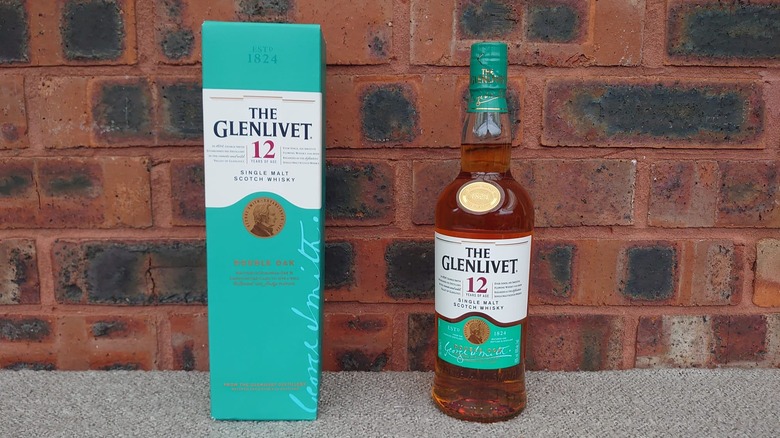
When it comes to modern-day spirits, celebrity endorsements are common. These days, there are even many celebrity-owned liquors of questionable quality. Back in the 19th century, such celebrity endorsements were rare, but The Glenlivet got a glowing review from one of the most famous men to have ever lived. In an 1852 letter to his friend, Charles Dickens suggested he should try the "rare old Glenlivet". Whether or not his friend took on this advice is unknown. If not, he'd have been missing out on a great whisky at a time when quality greatly varied.
Dickens wasn't the only famous man to try the whisky, as King George IV asked to try it during a trip to Scotland in 1822. Given the timing, the King seemingly didn't care that the whisky was technically illegal. The approval from both of these characters highlights that early Glenlivet already had a reputation for high quality. It also shows how the word spread beyond the hidden glens of Speyside. These days, countless people speak about The Glenlivet's quality. I am one of them and, after you taste it, you're likely to also become a fan.