

5 Possible Reasons Your Homemade Pesto Has A Bitter Taste
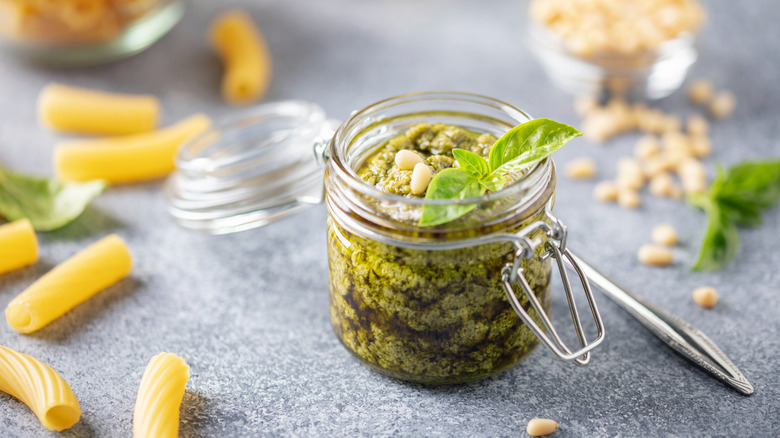
Pesto is like all of the flavors of summer combined into a spreadable form. This versatile condiment is excellent on everything from pasta to pizza, where it adds depth, brightness, and the perfect medley of umami, herbal, and salty flavors. Its ingredient list is relatively simple, and includes pantry and fridge staples like oil, lemon juice, cheese, salt, garlic, and, of course, fresh basil.
While there are numerous store-bought pesto brands out there worth buying, it's an easy enough recipe to make yourself. However, if you're not careful, you could end up with a particularly bitter spread that, quite literally, leaves a bad taste in your mouth. To try and circumvent common pesto-making woes, we spoke to Jamie Kenyon, chef at 'ino and Bottino. He shared not only some of the most common causes of bitter pesto, but also how to remedy them and ensure that your batch comes out perfect every time.
1. The basil is over-processed
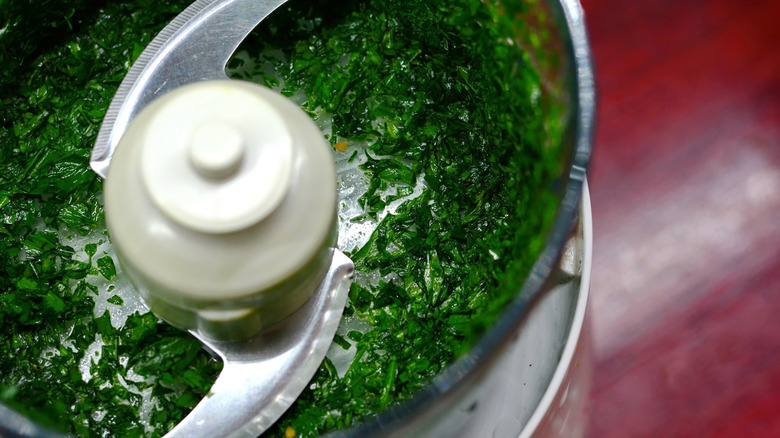
One of the most important steps in making a high-quality homemade pesto is to blend those leaves down. While you want them to be smooth enough not to leave behind any basil flecks in your teeth, over-processing your basil can have numerous negative consequences on its texture. Chef Jamie Kenyon shares that blending the leaves for too long can bruise them and release bitter compounds. He notes that this is especially the case with a high-speed blender. The speed of this appliance, while helpful in breaking down the leaves, causes them to release phenolic compounds and polyphenol oxidase (PPO) enzymes, which, when exposed to air, make it taste bitter and discolor it. Plus, the blender or food processor generates heat, which will further dull those aromatic and flavor compounds that make pesto so delicious in the first place.
To avoid making this homemade pesto mistake, you'll want to add enough oil to your recipe. The oil will coat the basil pieces and slow the compounds from being released as the herbs break down. You could also use frozen basil leaves, which will help to stave off oxidation for as long as possible.
2. You used poor-quality oil
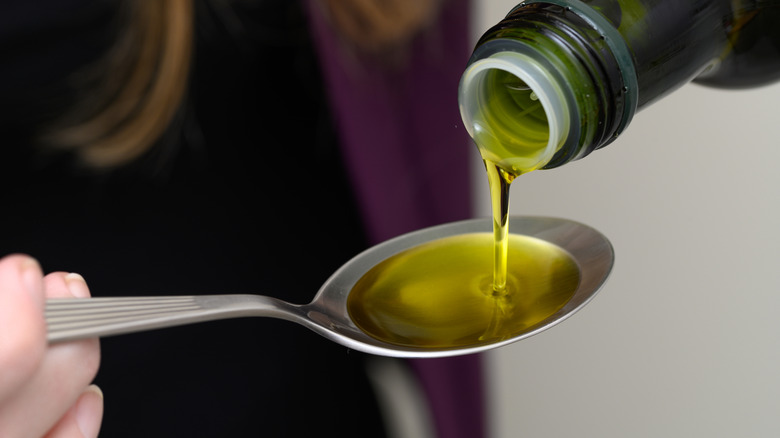
Fat is flavor — it's something home cooks have been told time and time again. Since the basil isn't cooked in a pesto, consider it an opportunity to experiment with different high-quality, flavorful, and compatible extra virgin olive oils (EVOOs) that you can really taste in every bite of the pesto. "Compatible" is the word of the day here, as some oils will not work in your recipe.
"Strong or low-quality extra-virgin olive oil is another culprit, as some varieties are naturally quite peppery or bitter," says Jamie Kenyon. The basil is not strong enough to hide the taste of a particularly poor olive oil, and ingredients like garlic will only serve to heighten this bitterness.
The easiest way to circumvent this issue is, of course, to taste the oil before you add it to your pesto. Look for a balanced, grassy flavor that accentuates the natural notes of the herbs. Some of our favorite store-brand olive oils include Trader Joe's EVOO, and you may want to look at our roundup of finishing oils for inspiration as well.
3. You added too much garlic
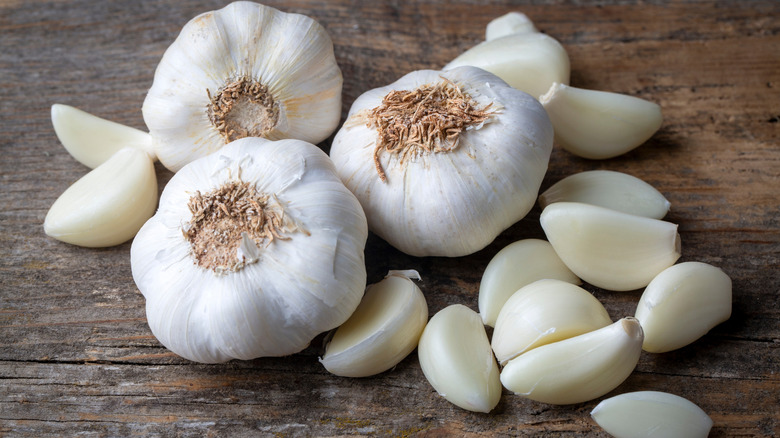
Did you know that garlic becomes more pungent the more that you chop it? This is because the allium releases allicin as it's broken down — so pureed (like the garlic in pesto) and minced garlic can taste more bitter than coarsely chopped garlic or whole cloves.
As such, you need to be careful about the amount of fresh garlic you add to your homemade pesto. "Using too much raw garlic, particularly older garlic with the green germ intact, can also create harsh flavors," says Jamie Kenyon. Even if, in most recipes, you're under the guise that "there's never too much garlic," you may want to rethink that approach here. "Go easy on the garlic — you can always add more," says Kenyon.
Per Kenyon's advice, you may also want to check the age of your garlic when you're at the store. For one, you should always squeeze garlic before buying it; fresher heads will have less give than ones that are old.
4. The pine nuts are a little too toasty
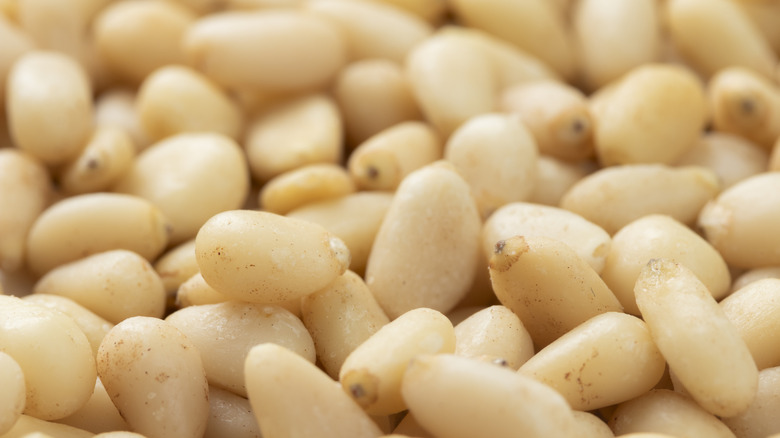
Pine nuts are one of our favorite parts of a good pesto, and we think it's one that doesn't get enough attention. Most pine nuts are sold raw, then toasted before they are added to the pesto. This toasting process adds a nutty depth, which complements other ingredients — namely, the umami cheese.
However, there comes a point where too much toasting is bad. Jamie Kenyon explains that over-toasted nuts are one of the reasons why your pesto may be turning out bitter. Luckily, this pesto faux pas is easy to correct; just don't over-toast your nuts. Kenyon suggests only toasting them until they're lightly golden — which is about three or four minutes on the stovetop. Carryover cooking is also a thing, so you'll want to remove the nuts from the pan after they're done to avoid burning them.
After your nuts are toasted, you'll also want to cool them before adding them to your blender or food processor. Remember, heat and fragile basil leaves don't get along well.
5. The basil leaves are too old
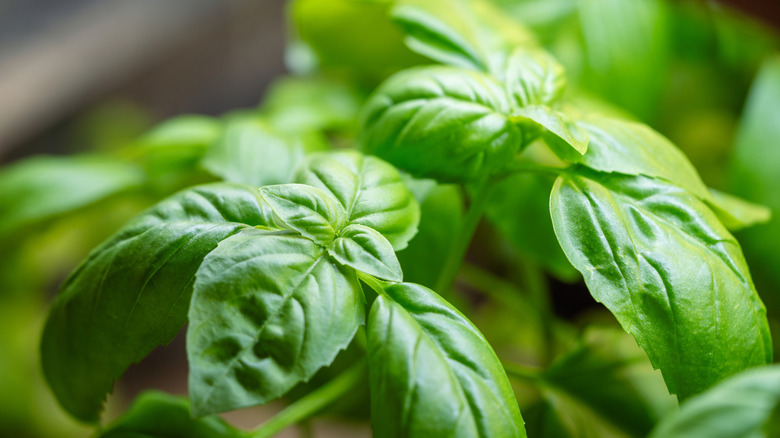
We are usually of the mindset that age is just a number, but that is not an approach that should be followed when making pesto. Besides using high-quality and fresh pine nuts, you'll also want to make sure your basil leaves are as fresh as they can be.
"Mature or damaged basil leaves tend to taste more bitter than young, tender ones," says Jamie Kenyon. If you're buying basil from the grocery store, you may be at the mercy of the herb suppliers, though you can express a little more control if you are growing your own basil plant. Pick the tender leaves and prune your plant regularly to get rid of those ones that look a little worse for wear (try adding them to your tomato sauce or use them in another recipe where their flavor won't be as front-and-center). If you only have a little bit of quality basil for your pesto, you could also try to stretch it by adding another green, like spinach, to your recipe to add bulk without diluting its flavor.