

8 Facts About Jose Cuervo Every Fan Should Know
Make your way to just about any bar in the U.S. (and many other parts of the world), and you'll see a bottle of Jose Cuervo tequila behind the bar. It's one of the most widely recognized alcohol brands in the industry, and if you're a tequila drinker, you've almost certainly tasted it before. But even if you're the kind of person who always asks for Cuervo in your margarita, there's a good chance that you still don't know everything about the brand, how it was formed, and the impact it has on the global tequila scene.
We've done some digging to unearth some of the most interesting and unexpected Jose Cuervo facts out there. We'll cover the basics of the brand, as well as some factoids that you may not come across with a simple Google search of Jose Cuervo. Learning more about this iconic tequila brand may make you an even bigger fan than you already are ... or it may inspire you to check out other, smaller brands for a more local taste.
It's the first commercially produced tequila

There's a reason basically everyone who drinks tequila knows the name Jose Cuervo. It's not just a popular tequila brand — it's actually the very first commercially produced tequila in history. Of course, it wasn't the first tequila, period. Historians have found evidence of tequila production as far back as 1000 B.C., far before Jose Cuervo started building its empire. But it wasn't until 1758 that José Antonio de Cuervo y Valdés received permission from the King of Spain to plant agave for the production of tequila, and it took until 1795 for his grandson, José María Guadalupe de Cuervo, to get the go-ahead from the king to actually produce and commercially distribute the spirit. This isn't just the beginning of the Cuervo brand — it's the beginning of global commercial tequila production.
But the Aztecs, native to Mexico before the Spanish arrived, were making pulque far before the Cuervos ever landed on modern-day Mexican soil. Pulque is similar to tequila but is undistilled and requires a longer fermentation process.
The first margarita was made with Jose Cuervo
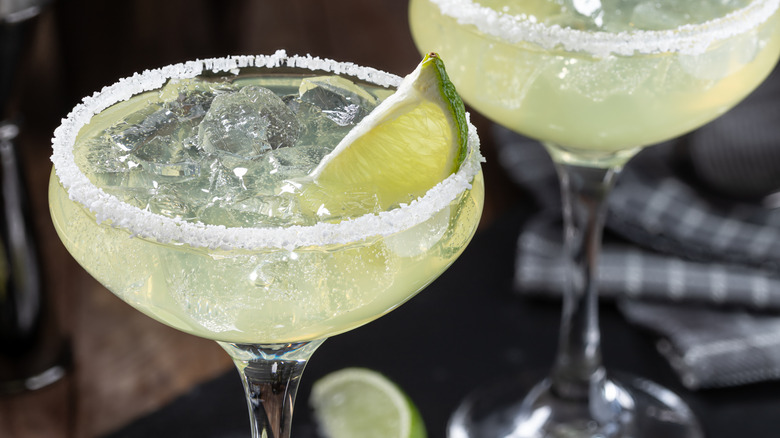
The margarita is perhaps the most famous cocktail to be made with tequila. Tequila is the star of the show, but orange liqueur, lime juice, and an optional sweetener (usually agave syrup) bring the drink together. It's light, refreshing, and boldly acidic, making it the ideal beverage to sip on warm days in the sun, at the beach, or on a restaurant's patio. These days, you have a countless number of tequilas to choose from when you order a margarita at the bar, but the very first margarita was made with none other than Jose Cuervo.
The margarita was invented in 1938, just a few years after the repeal of Prohibition. A bartender named Johnny Durlesser was working at a Los Angeles bar. Sitting at the bar was a woman he wanted to impress, so he got creative and whipped up the very first margarita, pouring in some Jose Cuervo. It seems to have been a hit, since it's still a beloved cocktail to this day.
It's the world's best-selling tequila brand
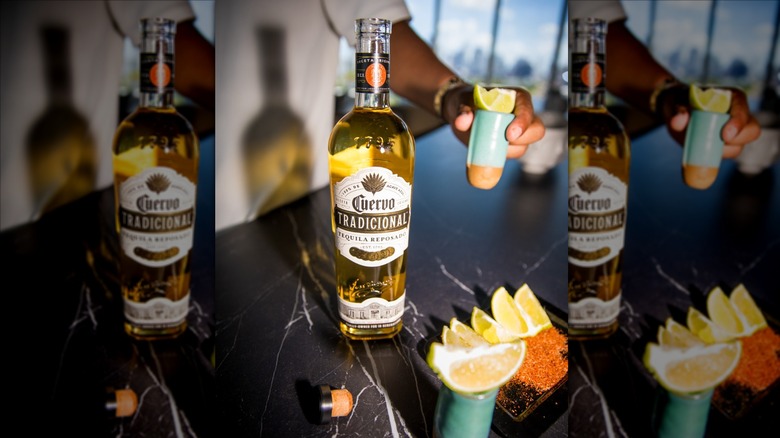
We love browsing through liquor store aisles, checking out the different tequilas and mezcals on display, trying to figure out which one will be best in whatever drink we're making (or, on its own, when we want to drink it neat). If you're at a solid bottle shop, you'll have many different options to choose from — there might even be a whole aisle that only contains tequila. But out of all of those varied brands, one stands above the rest in terms of sales numbers: Jose Cuervo, of course.
It's known as the best-selling tequila brand in the world, making it instantly recognizable to basically anyone who enjoys tequila or tequila-based cocktails. The fact that it's the top-selling brand doesn't guarantee that it's the best in terms of quality or flavor, of course, since that's highly subjective, but it does mean that you're likely to find Jose Cuervo at just about any establishment that sells tequila.
Jose Cuervo was the first producer to put its tequila in glass bottles instead of barrels

Today, when you buy a bottle of tequila at a liquor store, it's almost always going to come in a glass bottle. That may seem like a no-brainer — what else would you store and transport tequila in, anyway? But glass bottles weren't always the norm for tequila. Long ago, tequila producers would store their product in barrels. This wasn't very convenient for selling small quantities of tequila, though, which is why Jose Cuervo decided to start using the glass bottles, becoming the very first brand to do so.
Yes, those glass bottles look nice, but that's not the primary reason they were used. Instead, it was so that bottles of tequila could easily be sold individually. It also made the transport of tequila much simpler. This tequila bottling legacy is still in existence today, whether Jose Cuervo is your go-to tequila for sipping and stirring into margaritas or you prefer another brand of tequila entirely.
It plants more agave than any other company in the world
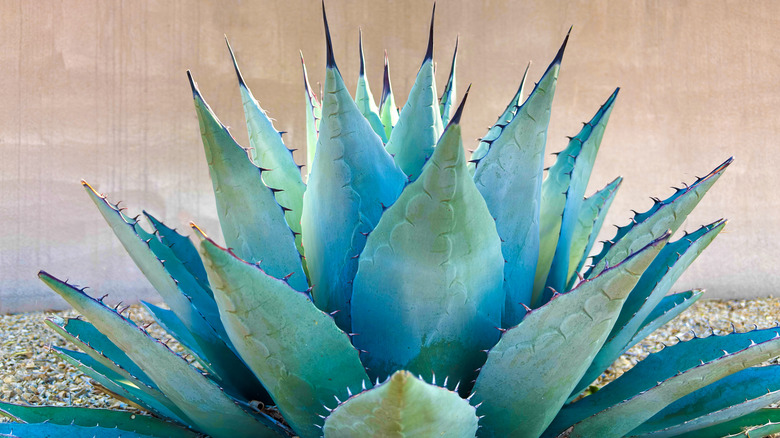
If you get into tequila, likely the first fact you'll learn about the beverage is that it's made from the agave plant. Not just any kind of agave, though — it's specifically made with blue agave, also known as A. tequilana Weber agave. So, of course, any company that's producing tequila and taking it from agave to bottling is growing a lot of the plant. No company is growing more agave, though, than Jose Cuervo. The company plants the most agave of any in the world, boasting over 25,000 hectares of agave.
All of these plants are responsible for producing the Jose Cuervo you put in your glass, but the company isn't only making tequila. It also sells its own branded agave nectar, also known as agave syrup, which can be used in a variety of cocktails along with the tequila or utilized on its own in other types of recipes — for example, you can use agave syrup with drinks such as coffee.
The company was a pioneer in tequila aging
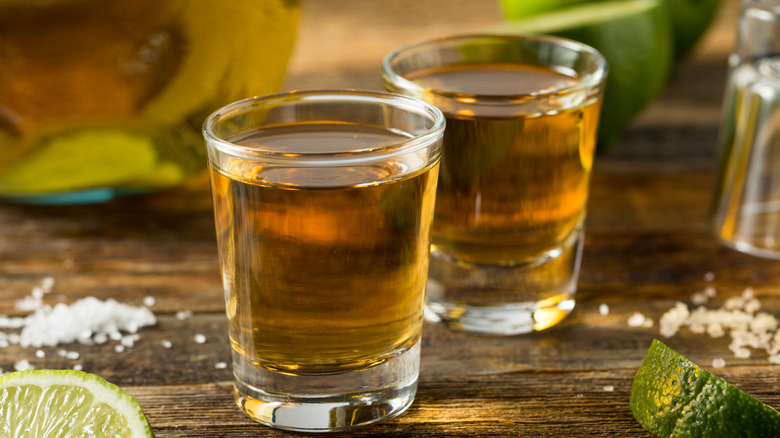
If you like a light, fresh, and vegetal tequila, then blanco is probably your style. On the other hand, if you prefer more complex flavor notes, like caramel, dried fruit, and vanilla, you're probably going to want to look into aged tequila. Those who fall into the latter camp have Jose Cuervo to thank, because the brand is a pioneer in tequila aging. The company has been agiing its tequila for over 200 years, so it knows what it's doing in this arena.
Jose Cuervo's aged tequila is stored in new oak barrels, which largely impart that bold, complex flavor you might expect from such a spirit. The amount and type of flavor you'll notice in the tequila are partially determined by how toasted the barrels are
If you're looking for an aged tequila from Jose Cuervo, stick with varieties like reposado, añejo, and extra añejo. These tequilas must be aged for a minimum of two months, one year, and three years, respectively.
Jose Cuervo has been in the same family for 11 generations
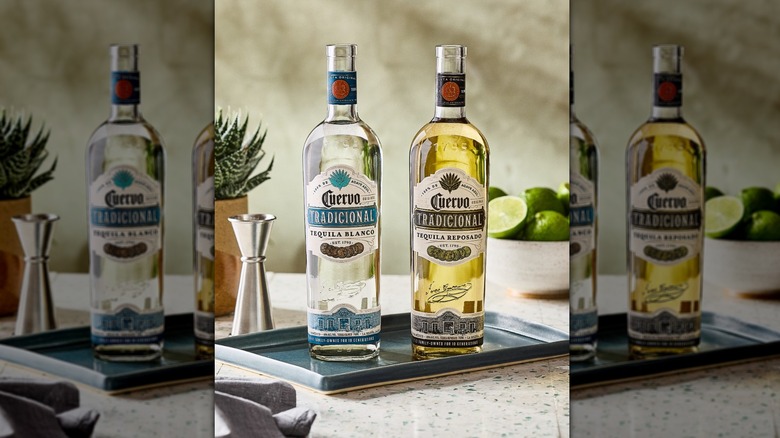
The alcohol industry is full of companies that have been passed down through multiple generations of the same families. For example, Glenfarclas Distillery has been owned by the same family since 1865, flowing through five generations. Marchesi Antinori, a Tuscan wine producer, has been in the same family for a whole 26 generations — that goes all the way back to 1385.
Admittedly, Jose Cuervo hasn't been around for quite as long as Antinori, but it still has a long family legacy that sets it apart from many younger, less prominent brands. Jose Cuervo has been in the same family for 11 generations – an incredibly long family history. In that time, the company has managed to build a tequila empire, champion many firsts in the tequila industry, and become a household name in much of the world (if people in your household drink, that is). Next time you open up a bottle of Jose Cuervo, you might just remember how much history went into that beverage.
The company has pushed back on claims that tequila additives are harmful
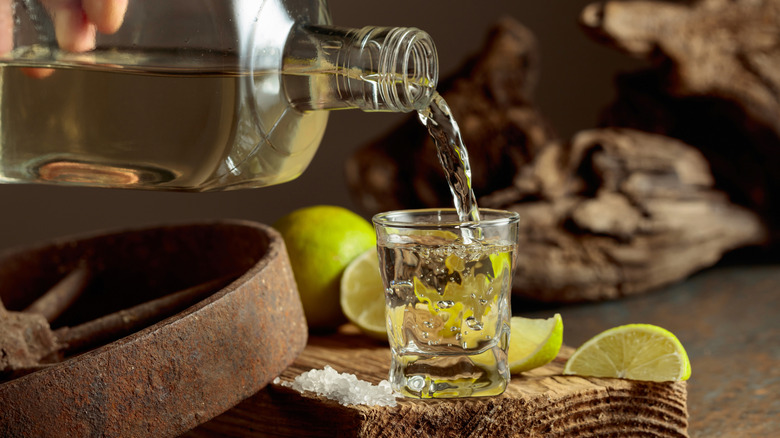
The tequila industry is changing, and one hot topic the industry is currently grappling with is whether or not to use additives in the beverage. Although 99% of a bottle of tequila must be just that — tequila — it's technically legal for producers to mix in 1% of additives, like artificial flavors and colors, to give their tequila a certain flavor or look. Recently, there's been a rise in interest in additive-free tequilas, with some producers advocating for nixing the additives in favor of a more natural and expressive product. Some even claim that additives can be harmful to your health.
Jose Cuervo does use additives in some of its bottlings, and it's starting to push back against the additive-free messaging. The company posits that additives aren't necessarily a bad thing in tequila, and they help to standardize the product in question. Whether consumers will continue to embrace large brands like Jose Cuervo that use additives or start to move over to brands that proudly produce additive-free tequila en masse is yet to be seen.