

6 Things Coffee Drinkers Misunderstand About Espresso
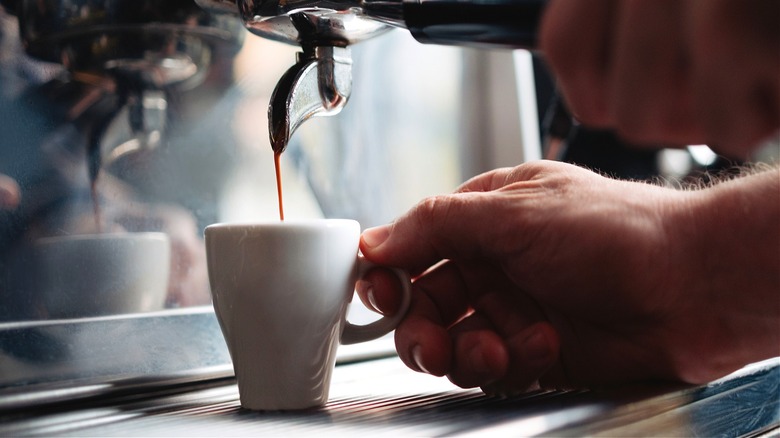
Americans love coffee. We've been consuming our favorite caffeinated bean juice since this country was founded — we can thank the British and their tax on tea for forging our love affair with the drink, starting as far back as 1773. But back then, coffee was a luxury. These days, it's a staple in almost every American morning routine, with café stops built into countless commutes and brewers in nearly every kitchen.
But modern coffee looks a lot different than the coffee of 1773, and even the coffee of most of the 20th century. Espresso has dominated the coffee scene in recent years, shifting from a bougie, exotic treat into a quick latte or cortado we snag from a chain on the go. Since espresso has only been as ubiquitous as it is now for a couple of decades, there are quite a few misconceptions about it — and not just the fact that it's really pronounced "uh-spreh-so" and not "ex-press-oh."
I've been a barista and coffee fanatic for over 10 years, and during that time I've learned the ins and outs of espresso — from its humble beginnings as a cherry on a plant to the refined brewing process that transforms it into the rich, potent drink we can't get enough of. Along the way, I've seen just how much misinformation surrounds this tiny but mighty beverage. For this list, I've rounded up some of the most common misconceptions about espresso, clearing up the confusion so you can better appreciate it for what it really is.
Espresso is a brewing method, not a type of coffee bean
The most common misconception about espresso, by far, is that the drink is completely different from standard drip coffee — as in, the beans that produce drip coffee couldn't produce espresso, and vice versa. But espresso isn't a type of coffee: It's a brewing method. If you buy whole beans to grind fresh coffee for a drip brewer, French press, or pourover brewer, those same beans can also be brewed into espresso if you have the proper equipment.
That being said, not all coffee beans are ideal for brewing espresso. Although it's possible to brew espresso with any beans, certain varieties, origins, and roast levels make the small shot of coffee with the chocolatey, complex notes that we know and love. Meanwhile, other types of coffee are known to brew acrid, sour shots. The best coffee beans for espresso vary, but medium-roasted Arabica beans from the most popular coffee-growing regions — like Colombia, Mexico, and Central America — are ideal.
Most coffee roasters offer espresso blends, which are coffees from different regions selected to create shots with a specific flavor profile. You'll often see blends featuring notes of chocolate, caramel, and nuts. These blends are most likely what you're drinking when you order a latte or cappuccino at a café, while coffees from only one region (called single-origins) are usually reserved for more experimental brewing.
Lighter roasts are often preferred by coffee aficionados
Some people assume that — when it comes to espresso — the darker the roast, the better. Considering how robust a shot of espresso is, it's obvious why this misconception is so prevalent. It's true, to a degree, that darker roasts brew better shots for some applications. Most coffee shops, especially chains like Starbucks and Dunkin', apply this concept to their espresso. Darker roasts are preferred when coffee isn't the highest quality, since long roasting times are able to mask flaws and cover up some unwanted characteristics in the coffee. It also infuses coffee with the iconic smoky, chocolatey flavor that we all associate with espresso.
When experienced baristas work with high-quality coffee, lighter roasts are often preferred for espresso. The lighter the roast, the more intricate characteristics are apparent in the coffee, which is why so many specialty coffee brands offer light roasts and mass-market companies don't. When baristas experiment with single-origin beans for espresso, they'll often opt for no darker than a medium roast in order to get a full, clear picture of the beans' nuances.
Although a light roast for espresso might not have that quintessential flavor that tastes so good in a milky latte with plenty of caramel or vanilla, it makes sipping straight espresso much more enjoyable. Light roasts tend to have fruity and floral characteristics, highlighted by more acidity than darker ones. Essentially, you're tasting more of the bean itself and getting less of the flavor that the roasting process produces.
Espresso shots don't die after 30 seconds
The "dead espresso shot" myth is a persistent fallacy in the coffee world, and we (probably) have Starbucks to thank for it. Ask any current or former Starbucks employee, and they'll likely tell you that shots are considered "dead" at the chain after just 10 seconds. Allegedly, oxidation occurs, rendering the coffee stale and undrinkable after just a few seconds of sitting on the counter. In reality, the exact opposite is true. It's unclear exactly why Starbucks perpetuates the dead espresso shot myth, but it's thought that it's used to encourage employees to work faster.
When espresso has a chance to cool down, oxidation actually causes flavors to develop. Therefore, you want to let a good espresso made with high-quality coffee sit for a minute before knocking it back — who can gulp down a piping hot shot immediately after it's been pulled anyway? Ouch. On the contrary, less-than-high-quality coffee becomes even more bitter and burnt-tasting when it's cool enough to be able to discern specific flavor notes.
That being said, espresso can still taste stale if it's been left out for too long, but it takes much longer than 10 measly seconds. I recommend finishing your drink in five minutes or less after it's been pulled, but don't rush — espresso is meant to be sipped and enjoyed, not gulped down in a hurry.
A standard espresso drink doesn't necessarily contain more caffeine than drip coffee
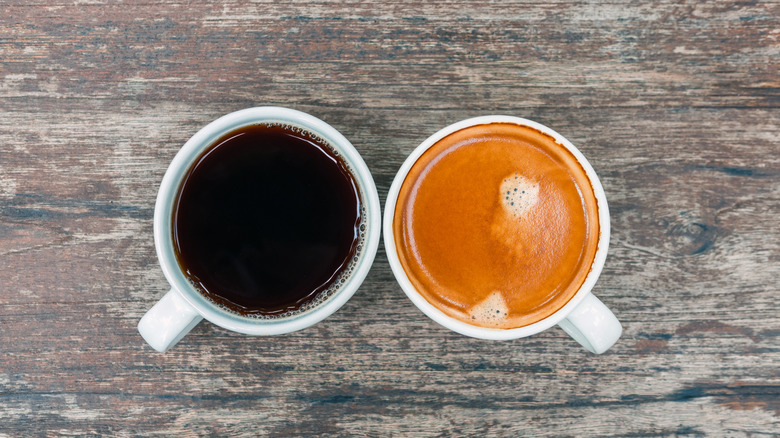
It's easy to assume that a latte or cappuccino packs a more prominent punch of caffeine than a regular old cup of joe. The espresso in these drinks gives them a heavier body and richer flavor than plain drip coffee, which is often mistaken for a higher caffeine content — much like how dark roasts are thought to contain more caffeine than light roasts, when really, the opposite is true.
However, it's true that espresso has much more caffeine per ounce than coffee, but that doesn't always mean a latte will have you pulling an all-nighter, no problem. Let's break it down: A single 1-ounce shot of espresso contains roughly 63 milligrams of caffeine. Meanwhile, an 8-ounce cup of drip coffee contains anywhere from 95 to 165 milligrams of caffeine — that's about 11.9 to 20.6 milligrams per ounce. Caffeine content varies for both espresso and drip coffee based on the brewing method or amount of pressure used to brew, type of coffee, and roast level.
So, if a standard café drink contains two shots of espresso, that drink contains about 126 milligrams of caffeine. At the same time, a typical cup of coffee from a café is between 12 and 16 ounces, making a standard cup of drip clock in at about 195 to 260 milligrams, give or take. That means that a single cup of regular coffee can have the caffeine content of four espresso shots. If you thought you needed a latte because standard coffee wouldn't cut it for that long drive, think again.
It can showcase a wide range of flavor profiles
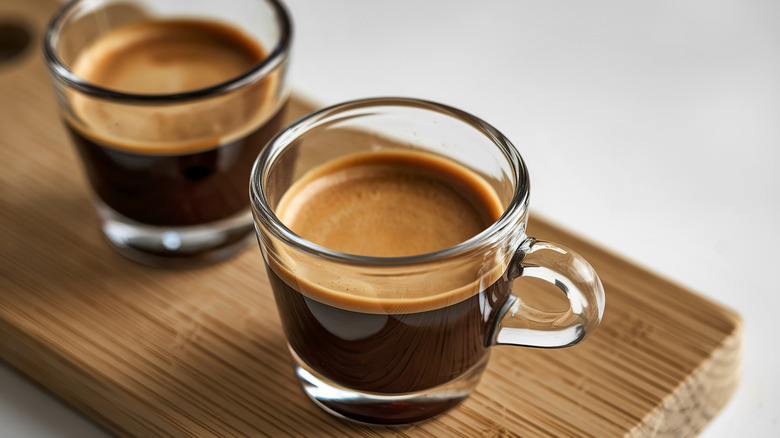
Espresso is known for its flavor and texture — that's why people choose it over drip coffee, after all. Unlike drip, espresso is rich and naturally creamy, usually with notes of chocolate, caramel, and nuts. These dessert-like flavors are highlighted by milk, which is why it's so delicious in creamy drinks like lattes or cortados. But, despite popular belief, espresso doesn't always have those iconic, sweet notes. Roasters blend beans to achieve that flavor, since most coffee drinkers prefer it. But once you get into the nitty-gritty of espresso, it can take on a wide range of profiles.
Coffee hobbyists, experts, and novice baristas love to experiment with different beans for espresso, especially single-origin, to uncover some obscure flavors in coffee. Single-origin coffees are made up of one type of bean from one specific coffee-growing region as opposed to a blend of beans curated by a roaster. In that sense, coffee is more true to form when it's a single-origin, and espresso is a great way to highlight those naturally nuanced, complex notes.
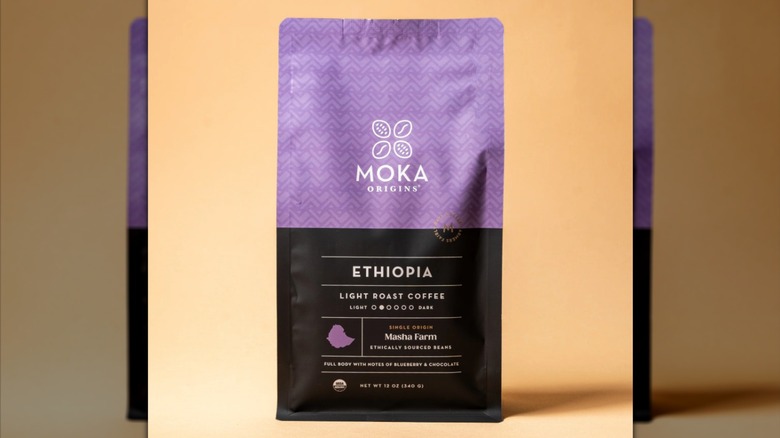
Single-origins are often higher in acidity and more fruity and floral than espresso blends. Take beans from Ethiopia (my personal favorite coffee-growing region), for example: Coffees from this country have bold blueberry notes highlighted by delicate florals that make one of the most unique shots you'll ever sip. Yemeni coffee is another unconventional but worthwhile coffee to brew as espresso. It's famous for a deep, earthy flavor with smoky and jammy notes — very unlike the chocolate and caramel-like flavor that we know and love.
A Nespresso machine doesn't brew espresso
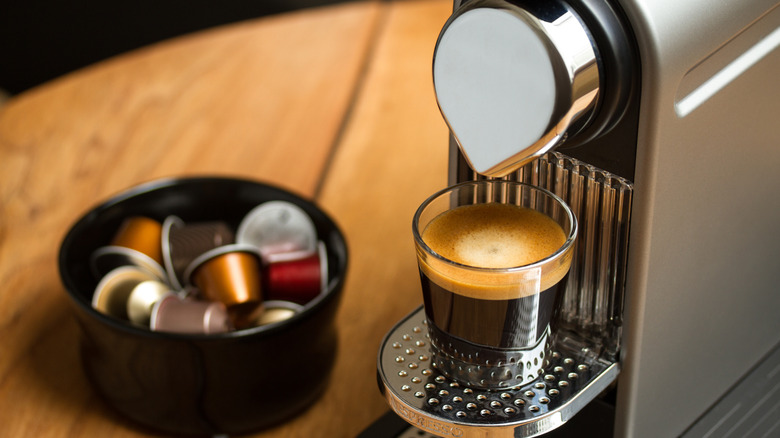
I hate to be the bearer of bad brew news, but your Nespresso machine — specifically, the popular Vertuo line — doesn't actually brew espresso. Still, Nestlé claims that these machines are capable of producing espresso, which means the company may be a bit guilty of false advertising, if you ask me. But, hey — that's no reason to give up your single-serve pod machine if you love it. Still, you deserve to know exactly what it is you're drinking without being deceived.
There are a variety of reasons why a Nespresso machine can't brew authentic espresso — or anything besides drip coffee, for that matter. The most significant is that it isn't capable of producing the amount of pressure necessary to pull a genuine shot. A typical espresso machine produces about 9 bars of pressure, forcing water through finely ground beans. The Nespresso Vertuo does something completely different: Instead of using pressure to extract coffee, water and ground beans are spun at 7,000 RPM. The spinning motion is what creates the foamy layer on top of the coffee — the Nespresso Vertuo machine's way of mimicking perfect crema.
Along with the brewing method, a Nespresso machine's water temperature isn't conducive to espresso-making. Vertuo machines reach temperatures of roughly 175 degrees Fahrenheit, while espresso machines brew at about 200 degrees Fahrenheit. It might not seem like a big difference, but when it comes to making coffee, even the most seemingly insignificant details can make or break your brew.