

Don't Toss Your Eggshells — Use Them On Your Cookware For Sparkling Results
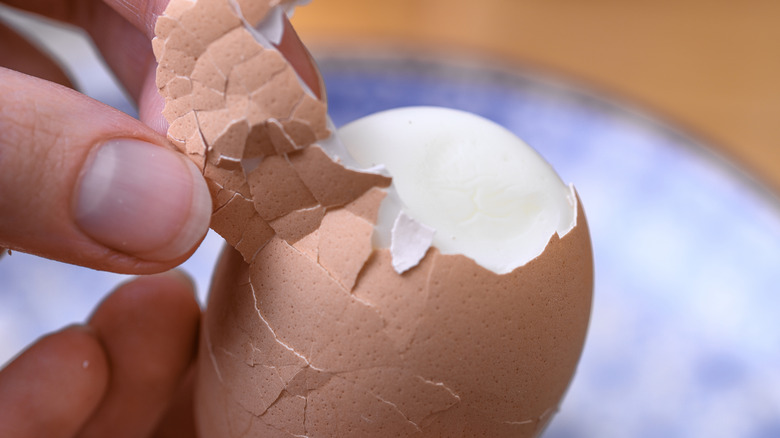
When you're dealing with a baking sheet that's gone from "well-loved" to scorched and encrusted, you probably start to run through the inventory of big guns in your cleaning arsenal. If elbow grease plus a shake of the usual scouring powder isn't working, you might be open to trying something new, and you'll be surprised to learn that it's something you usually throw in the compost: eggshells.
Every tool has a purpose. Soap lifts grease, soaking softens, and a light abrasive, like baking soda, can help buff off tarnish and light staining. But once food has carbonized and bonded to metal, the issue is mechanical, and you need something to physically break the residue apart. Eggshells are mostly composed of calcium carbonate, the same mineral found in chalk and limestone — you've probably encountered it in your toothpaste, too. When crushed into a powder, these shells become a mild abrasive, which can gently sand down the grime.
In this context, eggshell powder sits in the same kitchen cleaning essentials category as traditional scouring powders that are designed to bring back shine without gouging. The small fragments of shell are hard enough to scrape away baked-on gunk, but softer than steel wool, which can permanently scratch some cookware, particularly more sensitive enameled cast iron cookware. The idea might feel novel, because eggshells are usually seen as useless, biodegradable waste (unless you're adding them into your smoothies for extra calcium). But from a materials standpoint, they're well suited for the job because, once pulverized, they're capable of cutting through stubborn buildup.
An a-peeling cleaning solution
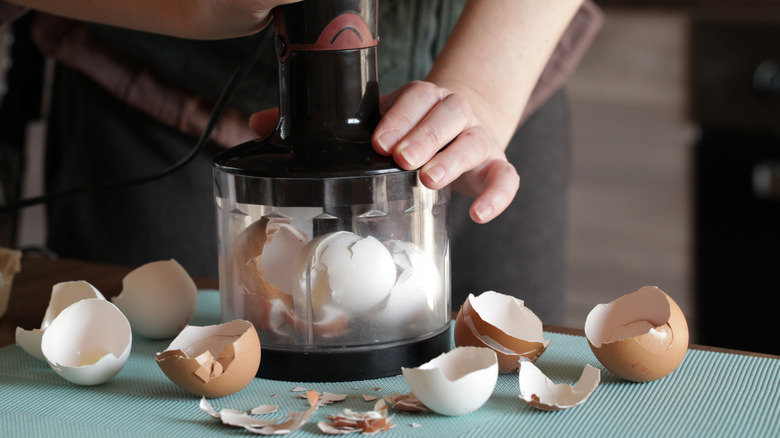
The method for making an eggshell scouring powder might seem a bit tedious at first, but each step serves a specific purpose. You obviously need to crack a few eggs, and accumulating a clutch of them may take some time. Rinsing and boiling then removes any bacteria and leftover egg white residue, which also helps prevent odor and spoilage if you plan to store the mixture for an extended period. Baking the shells afterward further sterilizes and dries them completely, so they're brittle enough to grind into a cohesive powder — if they're a bit damp, they'll clump in your food processor or blender. Then, of course, comes the fun, pulverizing part.
The texture of the grind is where the cleaner's effectiveness will be tested. The more finely ground, the gentler the scrub. Coarser pieces might increase abrasion, which can speed up cleaning, but they also raise the risk of scratching sensitive surfaces, so consider your intended use as you repeatedly press "pulse".
Most versions of this cleaning method also combine the eggshell powder with baking soda and "washing powder" (think: powdered laundry or dishwasher detergent), adding alkalinity and surfactants to help lift the grease and buff away the grit while the shells do their scrubbing. Both of those additions will improve performance, but if you want to go totally au natural, go for it. The eggshells are doing the bulk of the work anyway by physically breaking up the stuck-on food.
The benefits (and drawbacks) of working with eggshells
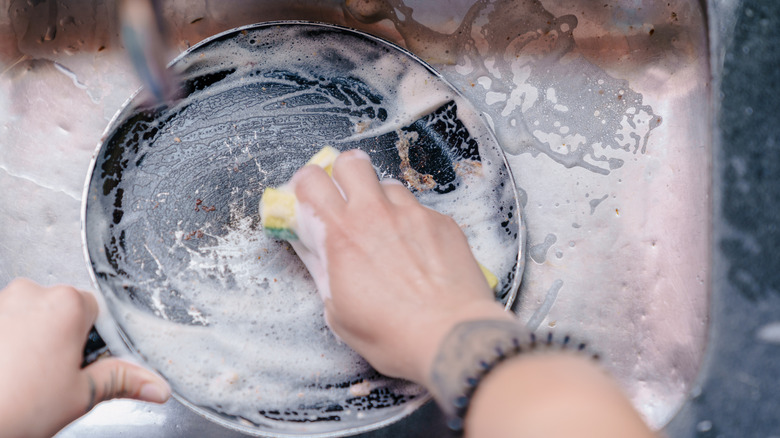
Making a cleaning powder like this begs the questions: do you value your time, and is the payoff worth it? Collecting eggshells is a simple matter of storage — definitely don't seal them in an airtight jar before they're been sterilized (unless you're trying to do a different kind of science experiment). Even if fairly straightforward, sterilizing and drying them takes time, effort, and space. For many cooks, spending a few bucks on a ready-made cleaner is easier than committing to the prep required for this project. For others, namely those who are looking for ways to cut back on plastic disposable sponge and chemical cleaners, or who are already in the swing of using pantry staples as cleaning solutions, the process can fit into a low-waste routine, seamlessly.
Eggshell scouring powder can be especially useful in situations where abrasion is necessary but harsh chemicals or tools feel risky, like on uncoated cast iron, ceramic, or sturdy stainless steel cookware. If you've ground the shells very finely, it could be safe to gently apply on aluminum, but be careful, because scratches can risk dulling and contamination. It's also no good for glass cookware, anything with delicate finishes, and nonstick surfaces as minuscule scratches can develop and leach toxins into your food over time. As with any abrasive scouring powder, restraint and awareness are essential.
One practical advantage of eggshell scouring powder is longevity. Once prepared, it keeps for months, and can be stored in a dry container and used repeatedly. There's a certain satisfaction in seeing something boast long-term use that might have otherwise just gone to the landfill. Eggshell scouring powder is not a miracle or a mandate, but it is a clever, cheap way to reuse a common byproduct.