

8 Whiskey Trends To Look Out For In 2026
Whiskey lovers, rejoice: 2026 is your year. Grab a glass, pour yourself some of the best bourbon in your home bar, and get ready to bask in the whiskey trends that are coming in hotter than an August afternoon in Kentucky.
As 2026 kicks off in the newest of fashions, there's a lot to say about what's happening with whiskey. From favorable bourbon prices and unique heirloom grains to sustainability and new whiskey categories, the whiskey world is changing to the benefit of tipplers everywhere. To get the best possible insight on the latest trends taking place in the whiskey world for 2026 and beyond, we talked to four absolute experts in the industry: Ari Sussman, whiskey maker at Whiskey JYPSI; Hudson Austin of Wine Merchant; Jim McCourt of Prohibition Charleston; and Thomas Stevens of Fearless Restaurants.
"We're at a pivotal point, an exciting point in the whiskey industry," notes Sussman. Out with the old, dusty playbook, and in with the new. Whiskey brands are refocusing on quality over quantity, transparency about production practices, and relying on data to connect with consumers. Stay thirsty as you read on to get fully educated on the whiskey trends to look forward to in 2026. You're not going to want to miss out on any of these.
An oversupply of bourbon means mature spirits at affordable prices
If you want good quality bourbon, you've got to pay for it — a necessary truth for any bourbon drinker who only wants to invest in the good stuff. According to Ari Sussman, that may no longer be the case — at least for the next few years. You know the saying, "There's no such thing as too much of a good thing." Well, in this case, there is too much of a good thing, and that good thing is about to get sold for impressively affordable prices.
According to Sussman, the bourbon boom in the 2010s brought in a wave of capital from private equity and others who looked at bourbon like a financial asset. Distillers overproduced bourbon to keep up with the demand, believing it would continue to climb. Now, that slow-aging overproduction of bourbon is ready to bottle and sell, just as the demand for bourbon has settled from that earlier high.
"It's no secret that large distilleries are cutting production in 2026 to balance their inventories," notes Sussman. "They have to. Everyone has to figure out a way to sell this high-quality whiskey in volume, and that means consumers can expect prices to come down." In the simplest terms? Bourbon that has been aged five, six, or even seven years will cost the same price as a bourbon that has only been aged four or five years.
This oversupply of bourbon means that more people can appreciate this spirit, and for Thomas Stevens, that's a good thing. He's seen a shift from consumers strictly caring about age statements and proof to more interest in flavor nuance and production. "People still love it, but they're asking better questions," said Stevens. "They're asking about mash bills, barrel programs, and how it fits into cocktails and sipping occasions."
The whiskey industry is moving online, and using data to connect to consumers

As a data-driven guy, Ari Sussman has been waiting for this latest trend to come to fruition: The whiskey industry is moving online. As other consumer industries have shifted a majority of sales from in-person to online, whiskey is finally moving in that direction, too, shifting from conventional wholesale and retail distribution to, as Sussman describes it, "hybrid physical-digital." It's all about the data, and now that whiskey brands can see what their consumers want, it's easier to give them just that.
"The consumer level data that DTC [direct-to-consumer] gives brands unlocks efficiencies that conventional, traditional distribution has never allowed," said Sussman. "Customer level data, like when do people buy, why do they buy, what is adjacent in their cart. This is information that brands could never get from a distributor."
So what does this mean for the year ahead? It means whiskey brands can see who is buying their product and why, and then create products just for them. For Sussman, this transformation of whiskey sales and the direct-to-consumer relationship means big things for the industry. An ability to collaborate with large groups of people allows a whiskey brand to create its own consumer database, to measure loyalty and conversion rates, and ultimately create products for those customers.
"DTC as a channel opens up opportunities for brands, for consumers, and for distributors that never existed before," notes Sussman. "In 2026, the smart companies will take advantage of the data and the synergy between DTC data and distributor data. We're all data companies now. Some of us know it, and some of us don't."
Heirloom grains to create premium whiskey
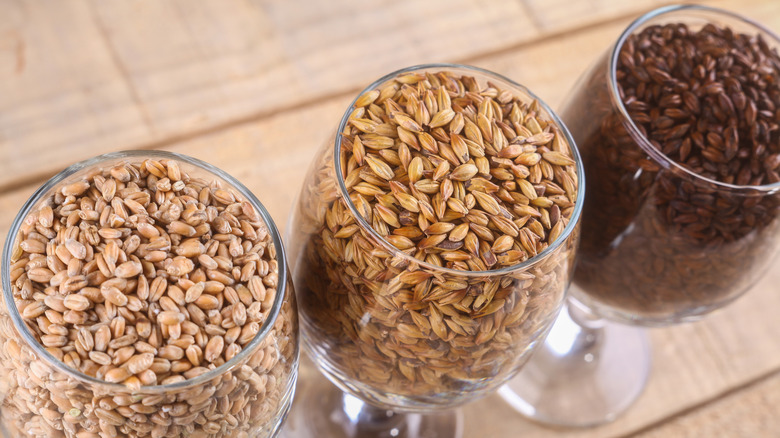
In wine making, grape varietal is everything — the type of grape and where it's grown tells the story of the characteristics to expect in the glass. Slowly but surely, the whiskey industry is moving in the same direction, prioritizing grain selection over scale. Ari Sussman has seen distilleries, big and small, invest in quality grains while also reaching consumers who are interested in the story. This is the year that whiskey and wine can find common terroir, as distillers prioritize quality over quantity by way of varietal grains.
"Increasingly, we're seeing, first craft distillers but now larger distilleries, begin to experiment with using full-flavored varietal statement grains, and we're seeing those whiskies do very well in blind tastings," said Sussman. "When the added narrative layer is added, we're seeing that consumers are ready for greater transparency and greater standards around whiskey inputs."
Rather than knowing a whiskey is made with corn, you'll know that it's made using Cherokee White Eagle corn or Jimmy Red corn. Instead of a rye being made with at least 51% rye, as it legally must be, you'll know that a rye is made with at least 51% Abruzzi rye, or Rosen rye.
"It should not be a revolutionary idea to use better ingredients for a better product, but the whiskey industry has trained the consumer that the inputs don't necessarily matter," continues Sussman. "We're seeing a number of distilleries challenge that, and the audience is responding very favorably."
Whiskey blending as a way to elevate, instead of dilute
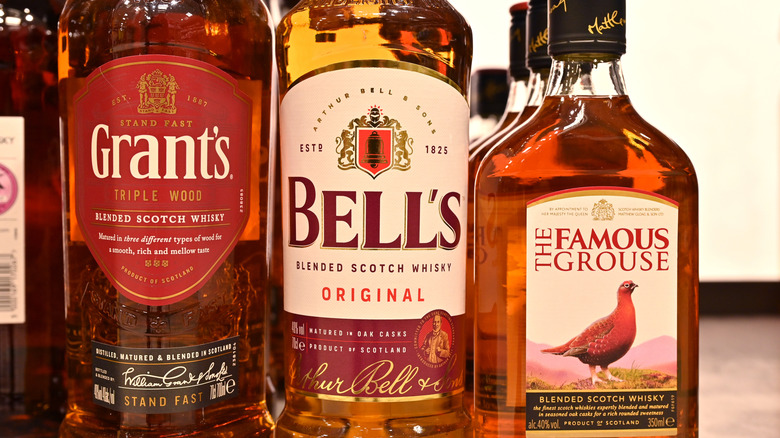
If you're of the mindset that you shouldn't judge a book by its cover, you should also agree not to judge a whiskey if it has the word "blended" on the label. It's true — blended whiskies tend to get a bad rap, being seen as diluted or lesser than. Hudson Austin disagrees with this view, and in 2026, he's seeing the blended whiskey category rebrand itself as simply a different product, rather than a lesser-quality one.
"Blended Scotch is still Scotland's most popular whiskey type; that certainly says a lot," notes Austin. "I don't believe anyone can doubt the quality of what high-end producers do with their products ... single malt will highlight specific tones and certain characteristics, while blended Scotch tends to showcase a 'House Style' consistently over time. It's not a 'quality' thing, it's just a different product."
For Thomas Stevens, who has seen blended whiskey often described as a "workhorse spirit," he looks forward to consumers seeing it as an art form and a skill, while brands are working to redefine the category.
Ari Sussman agrees, seeing a surge in blended whiskies as distillers tap into a bartender's mindset, understanding how layering base spirits can create complexity. "For a long time, whiskey blending sort of meant diluting character; that's now changing," notes Sussman. "Whiskey makers and consumers are discovering that whiskey blends can elevate an expression relative to a single source distiller. By blending bottle-ready spirits from different distilleries, whiskey makers are able to achieve depth and complexity that you can't get from a single source."
An embrace of a new category: American single malt
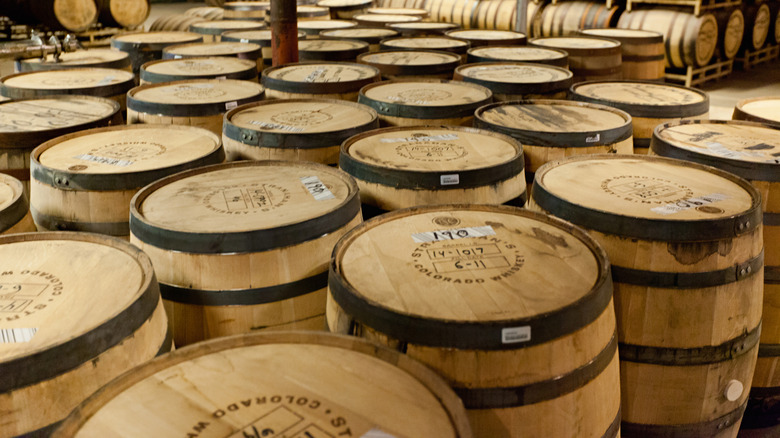
At the end of 2024, a new type of American whiskey entered the zeitgeist: American single malt. Once the Alcohol and Tobacco Tax and Trade Bureau (TTB) gave it an official standard of identity, brands were off to the races to create American single malt whiskies to join the category. American single malt as a category is still in its infancy, but Thomas Stevens has seen how it's started to carve out a niche among curious drinkers. It's less of an explosion in the industry, but rather an interest, he notes. An intrigue. "Where it does work well is as a way to introduce consumers to malt-forward whisky profiles outside of Scotch," he says.
Despite being a still-growing category, it's hard to miss seeing a bottle of American single malt everywhere you go, with craft distilleries like Stranahan's, Virginia Distillery Co., and Westward Whisky releasing their own American single malts, just as large distilleries like Jack Daniel's and Jim Beam do the same.
"The American public seems to be interested in where this American single malt category goes," said Ari Sussman. "Increasingly, some of the expressions of American single malt sit absolutely shoulder to shoulder with any American spirit out there in terms of quality ... it has a character you can't get from bourbon or rye. Any good home bar ought to have bourbon, rye, and American single malt."
Whiskey tourism as an inclusive, transparent experience
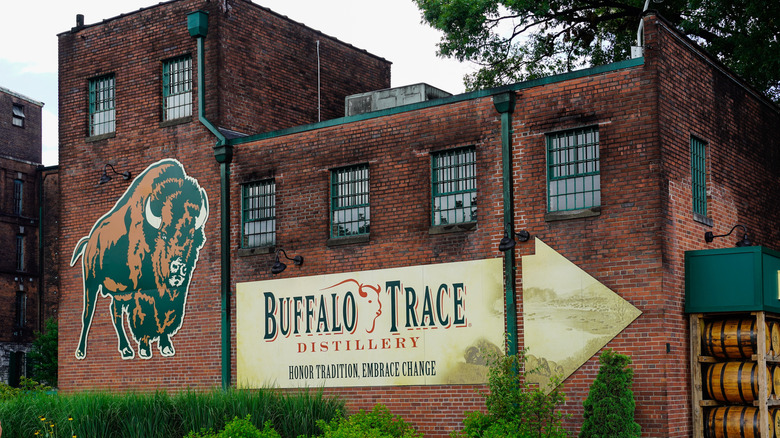
Having an appreciation for whiskey isn't just about liking the taste of it. It's about enjoying the entire experience. Whiskey tells a story, and there's so much more happening outside the bottle that's worth knowing and understanding. The best way to get the full picture? Visit a whiskey distillery, take a tour, and be immersed in it first-hand.
For Thomas Stevens, whiskey tourism may have started out as a destination-driven trend, but it has transformed into more of an experience for whiskey enthusiasts and casual drinkers alike. He sees this continuing to grow and develop in 2026, as guests seek out meaningful tastings, storytelling, and connections to beloved brands.
For distilleries that used to keep their secrets close to the chest, whiskey tourism is an opportunity to connect and be transparent with consumers, especially for those who want more than just to pick up a bottle from their local liquor store. A dream whiskey tour lies in a visit to the Kentucky Bourbon Trail, which features over 40 of the most important bourbon producers in the country. A visit to one (or all, if you have the time) of these iconic distilleries is more than worth it.
"An increasing number of distilleries are seeing the benefit of allowing their customers entry, [showing] where they make the spirits and how ... brands are learning to identify their most loyal customers [and] ambassadors," said Ari Sussman. "They need to cultivate and invest in those relationships, and tourism is one way to do that."
Creativity is expanding with new wood and aging techniques
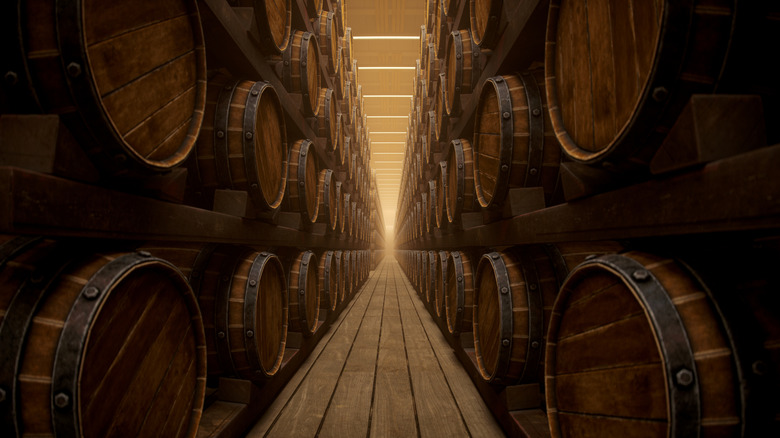
Just like in any industry, the best way to keep up with competition is to lean into the new and different. And guess what? Whiskey is no different. This year and looking ahead, the trend for many whiskey producers is to do just that — embrace new wood and aging techniques to keep up with innovation.
Rocky Mountain Barrel Company, a seller of used barrels in Colorado, offers a wide variety of wooden barrels, including the most common for whiskey aging: oak. While oak is the most traditional wood utilized for whiskey aging, there's a certain allure to using other woods, like cherry, maple, and birch, to impart new and innovative flavors. Whiskey production comes with a lot of rules regarding barrel aging, so distillers use these alternative woods as "adjuncts" in the oak barrels, as a way to circumvent the rules without breaking them.
Within the trend, Thomas Stevens is seeing distillers focus more on aging smarter, not necessarily for longer. "Distillers are focusing more on wood selection, seasoning time, toast profiles, and warehouse management rather than simply focusing on age statements," notes Stevens. "We're also seeing finishing become more refined, with fewer novelty barrels and more emphasis on longer, better-integrated secondary aging."
In addition to distillers working smarter, not harder, consumers are becoming smarter in the whiskey category, too, asking more questions and getting more informed. "People are drinking less overall, but they're far more curious," notes Stevens. "Instead of asking only how old a whiskey is, they're increasingly interested in how it was matured and why it tastes the way it does."
Sustainability and transparency are at the forefront of production

Caring deeply about the environment and how the products we purchase and consume impact the world around us is more important now than ever before. In 2026, the whiskey industry is welcoming this move towards sustainability and transparency in production with open arms.
"As more people pay closer attention to what they're drinking, distilleries are increasingly embracing sustainability and being more open about their ingredients and practices," says Jim McCourt. With decades of experience in the bar and alcohol industry, McCourt has been able to watch this new trend play out in real time, as more whiskey brands work towards important goals like becoming net zero, using better wastewater treatment, and upcycling for packaging and labeling.
Maker's Mark is the first distillery in the world to receive Regenified Tier 3 Certification for its regenerative agriculture, and it's a certified B Corp. Heaven Hill Distillery received an EPA Energy Star Certification for superior energy efficiency. Woodford Reserve is dedicated to using local corn and rye and pledged to practice 100% sustainable farming by 2030. Frey Ranch Distillery is a 100% farm-to-glass distillery, sustainably growing all of its whiskey grains onsite. Thankfully, this list barely scratches the surface, as distilleries big and small realize the importance of sustainable practices not just for their own products, but for the consumers.