

This Old-Fashioned Seafood Breakfast Has All But Disappeared — But It's Not Gone For Good
We may receive a commission on purchases made from links.
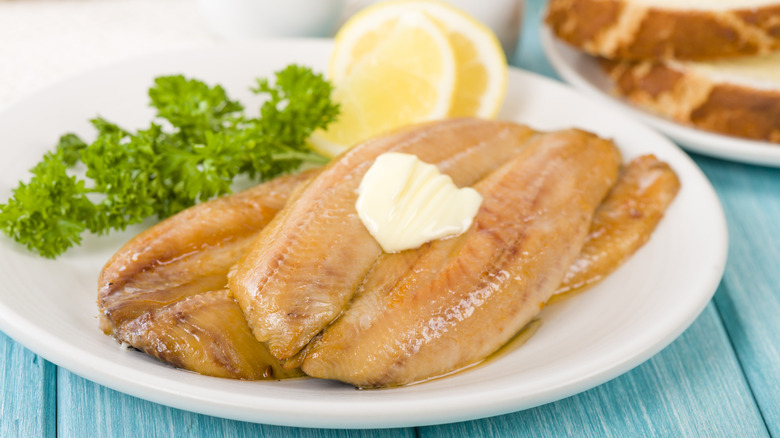
Seafood for breakfast? Other old-fashioned breakfast staples like orange marmalade and Grape Nuts have adapted to join the morning meals of the modern age. But, on the whole, the Boomer generation ate a lot of fish growing up – substantially more than contemporary foodies — and today, we're shining the spotlight on poached kippers, a once-popular vintage seafood dish that has quietly vanished from mainstream breakfasts. In fact, many Millennials' closest semblance to familiarity with "kippers" is probably "Kipper the Dog," a late-'90s children's cartoon starring a pup (not a fish) who speaks with a British accent (we digress...).
Poached kippers are an old-school British breakfast icon. Specifically, they hail from Northern England, the Isle of Man between Britain and Ireland, and also have a historically popular following in Scotland, especially during the Edwardian and Victorian eras. Across the pond, kippers remain as popular as American staple meats like sausage or bacon. Although stateside, tinned fish has been having a moment, after all...so kippers, rise up.
Kippers are a type of fatty, cured, cold-smoked herring. Herring is itself associated with the culinary styles of Eastern Europe, Scandinavia, Germany, and England, but kippers are a distinctly British institution. Their specific type of curing process ("kippering") is where the fish gets its name. In kippering, fresh herring is butterflied, cleaned, salted, and cold-smoked, creating full-bodied, boldly concentrated flavor. These rich, oily beauties deliver a distinctive, smoky, savory, umami funk on the palate. Texturally, herring's fattiness lends a hearty mouthfeel with luxuriously soft flakiness.
Smoky, pungent kippers deserve a comeback
To prepare, those pungent, oily kippers are traditionally simmered in water in a skillet for just a few minutes. Recently, Tasting Table sat down with a Michelin-starred chef to discuss the five best ways to prepare herring, and (shocker) poaching was not among them. But this cooking method helps tame kippers' famously strong fishiness (unlike grilling, which can concentrate the flavor even more). To serve, poached kippers are customarily enjoyed with butter, toast, and lemon wedges, and topped with a poached egg.
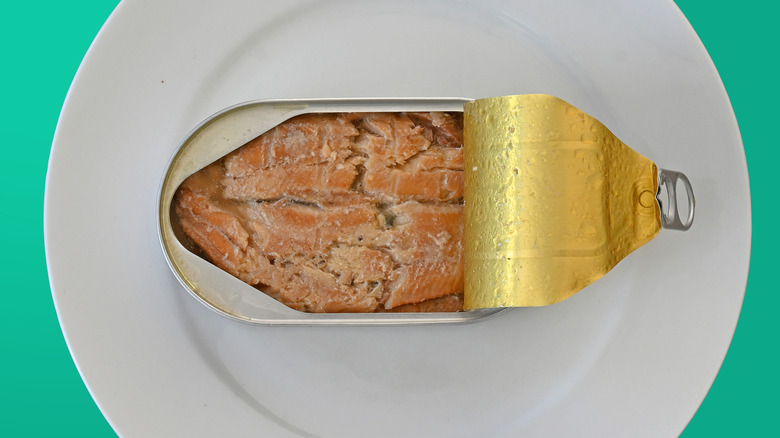
In the UK, fresh kippers are available in peak season from May to September. On the U.S. market, however, kippers are most often found canned. On Amazon, a 3.53-ounce tin of smoky Brunswick brand Boneless Kipper-Style Herring Fillets currently costs just $1.82 — far budget-friendlier than many popular gourmet tinned fish offerings, like the cult-favorite, aesthetically-packaged Fishwife (which rules, but costs upwards of $7 per can). Customer reviews rave, "Good tasting smoked kippers, not bad for canned," and "I decided to cook mine by frying in a smidge of olive oil, with salt, pepper, a shake of Old Bay seasoning, and a few tablespoons of finely chopped red onion. Then I served it with eggs (hard-boiled, in this case)." To complete the meal, we recommend pairing butter-and-lemon-dressed, egg-topped kippers with a side of zesty, old-school orange marmalade toast, fried red skin potatoes with rosemary, and a mug of black Irish breakfast tea with cream.