

Boomers Ate A Lot Of Fish Growing Up – Why Was It So Popular?

Like any generation, major events and historical transitions in the lives of Baby Boomers have helped shape their ideas, outlooks, and even their palates. As of 2024, Boomers comprise just under 20% of the total U.S. population, according to data analytics firm Statista. As a whole, foodies belonging to the Baby Boomer generation (born from 1946 to 1964) tend to cater their diets toward traditional flavors and protein-forward meals. According to Gordon Food Service, members of this generation are most likely to select familiar beef, pork, and seafood dishes from restaurant menus, and name seafood and fish among their favorite meals to eat on repeat — a preference largely influenced by their diets growing up.
The "Baby Boom" nickname refers to the spike in the American birthrate following World War II. For the many households raising multiple children, this boom necessitated that meals be cheap and easily prepared, which often meant convenience-based ingredients like tinned sardines, canned tuna noodle casserole, and frozen fish sticks. Then-abundant fish gained further popularity as an affordable protein source when meat was rationed in World War II — a period that young people of the Boomer generation experienced during their formative years. Even before their birth, fish fries were gaining popularity among Boomers' parents, as Fish Fry Fridays emerged as a weekly tradition for Catholics during the 1860s.
Fish Fry Fridays set the scene for regular fish-eating in the 1860s
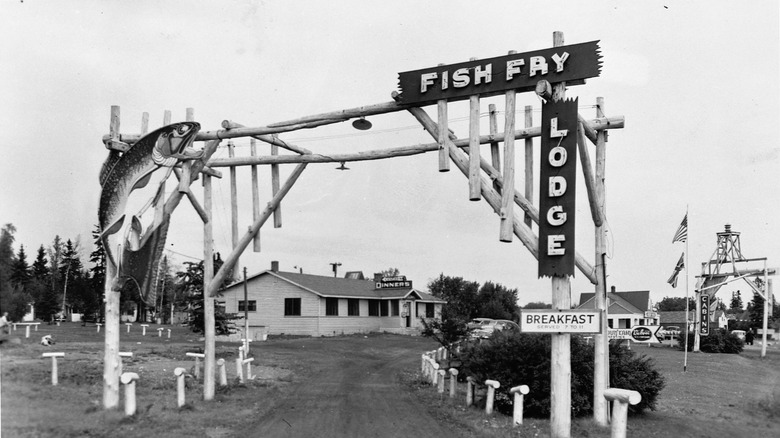
At the turn of the century, Boomers' parents were whetting their appetites for fish as an everyday staple. Affordable dining establishments in New York City began regularly serving fish on Fridays when, in 1860s America, one in seven citizens identified as Catholic (for whom eating meat is forbidden on Fridays during lent, and fish isn't considered meat. Fish Fry Fridays expanded to foodies of all creeds, especially in the Midwest. Childs — then the largest eatery chain in America — was serving fried fish on its everyday menu by the 1920s.
Apparently, parents and their kiddos never grew tired of it. In 1962, when a single McDonald's location debuted its Filet-O-Fish sandwich, it sold 2,324 in the first month alone, so popular that it became a permanent menu item in 1965 — just before Boomers' Summer of Love in 1967. Call it a love to last a lifetime: In 2013, Smithsonian Magazine reported that Mickey D's sells approximately 300 million Filet-O-Fish sandos every single year, 23% of which are sold during Lent.
But, for now, we're still looking at the turn of the 1800s into the 1900s. Here, canned tuna became a favorite convenience-centric ingredient in American home kitchens, spurring the birth of the tuna salad sandwich. Canned tuna's popularity continued to grow during World War I, with the U.S. eventually emerging as the largest world tuna producer and consumer by 1954.
Fish replaced meat rations during World War II

World War II ended in 1945, marking the beginning of the Boomer generation. But, during wartime, meat was rationed, and households turned to fish even more than before. Appropriately, a page on the official AARP website details the food sacrifices that Americans on the homefront made during World War II. Meat became highly restricted on the domestic consumer market, remaining on the ration list from March 1943 through November 1945. New York City Mayor LaGuardia instituted Meatless Tuesdays in 1942. Boomers growing up during the immediate post-war era would have likely been more accustomed to fish dinners than previous generations. Beyond fish, households nationwide also turned to other alternative proteins like offal, SPAM, and "emergency" steak (ground beef molded into a T-bone-shaped meatloaf).
Crucial to this moment in food history is the fact that fish was once abundant and cheap with no overhead. Before chicken and pork replaced seafood as "the poor man's meat," fish were a relatively self-sustaining cultivar pertaining to both food and environment (unlike pigs and chickens, which require feed and spacious grazing land). Today, adversaries like the pollution of once-populated rivers, environmental destruction as the fallout of human war, and the physical manipulation and restructuring of natural waterways during the late 1800s due to industrial expansion (thereby displacing many different aquatic species) have largely depleted fish as the plentiful, cheap resource it once was.