

14 Plants That Will Survive Living In Your Low-Light Kitchen
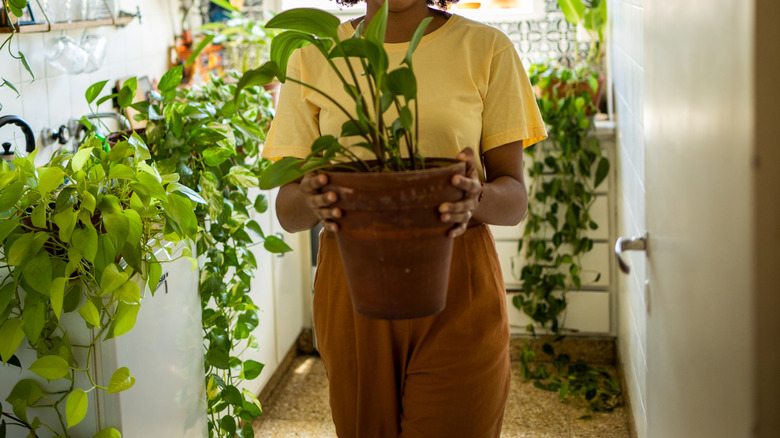
Cultivating kitchen plants and herbs can boost your mood, improve ambience, and offer practical benefits like better indoor air quality and access to fresh, organic cooking ingredients. Unfortunately, not all kitchens get a ton of natural light, especially those in apartment buildings. If you want to keep plants in your kitchen but are worried about whether they will thrive in low-light conditions, you do have options.
Some of the best houseplants to add to your kitchen will still grow healthy and beautiful in indirect sun, filtered light, or full shade. Others actually can't handle direct sunlight at all and only survive in partial or full shade. Whether you have a small kitchen window or your space doesn't really get any natural light at all, these 14 houseplants and herbs will survive. Though you will have to commit to watering them regularly and maintaining optimal temperature and humidity levels, they are all relatively low-maintenance — and none of them require supplementary light from a grow lamp, either.
Prayer plant
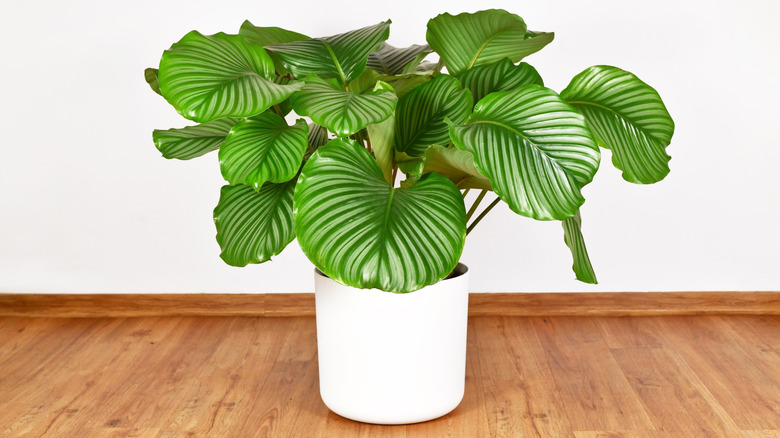
This tropical houseplant is native to Brazil. It has oval-shaped, vibrant green leaves, and got its name because its leaves fold upwards at night and look like two hands clasped in prayer. It should be placed in a shady spot or one that only gets indirect light, as direct or bright light could burn the leaves. It needs consistently moist soil, warmth, and high humidity, so consider placing it near your kitchen sink.
Garlic greens
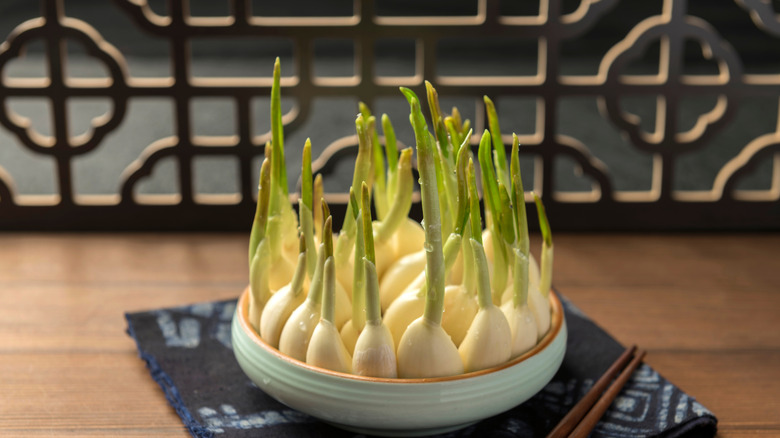
While garlic bulbs grow best in full sun, green garlic and garlic scapes can thrive in low light. Separate the cloves of a sprouted garlic bulb and place them root-side down in a glass of water. The sprouts will continue to grow, and you can harvest them and use them as you would green onions – in stir fries, soups, or omelets or to make flavored oils.
Nerve plant
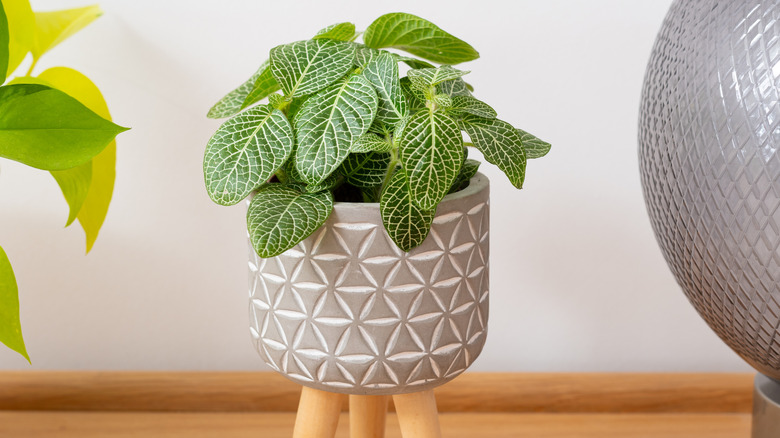
Native to South America, this tropical houseplant thrives in high humidity, making your kitchen the perfect spot. It has dark green leaves with dramatic red, pink, and white veining. Harsh sunlight will scorch its leaves, so keep it in shade or low light. Make sure the soil is moist but not soggy, and keep the temperature between 65-80 degrees Fahrenheit for optimal growth. These are beautiful houseplants that can improve indoor air quality.
Chives
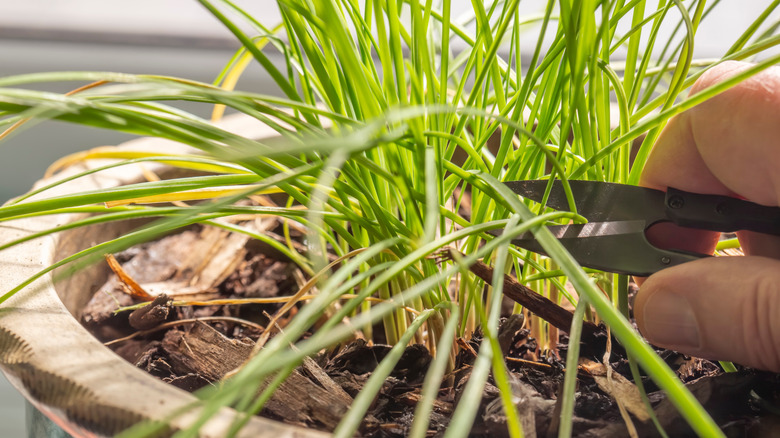
Chives add zest and flavor to soups, sauces, dips, and stir fries. They are also one of the best toppings for a loaded baked potato. You can grow chives indoors even in shade or low light. Try to maintain temperatures between 60-70 degrees Fahrenheit, and water it any time it feels dry. While chives are hardy, they should be protected from cold drafts. Harvest the stalks near the base whenever you want fresh chives.
Wax plant
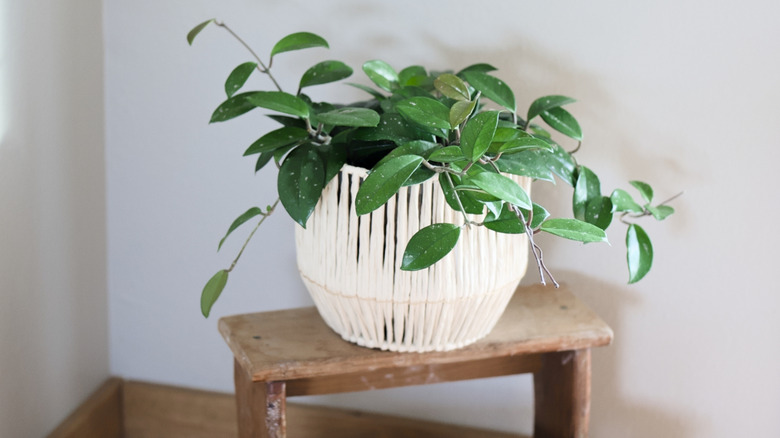
Also called a Hoya, this tropical vine is native to Asia, Australia, and the Pacific islands. It has thick, waxy leaves and blooms in clusters of pink, star-shaped flowers that have a sweet scent. It can tolerate low light, and direct light can damage the leaves. Water it whenever the soil feels dry to the touch. Because it has waxy leaves, it can thrive in standard indoor humidity, but prefers higher humidity levels.
Mint
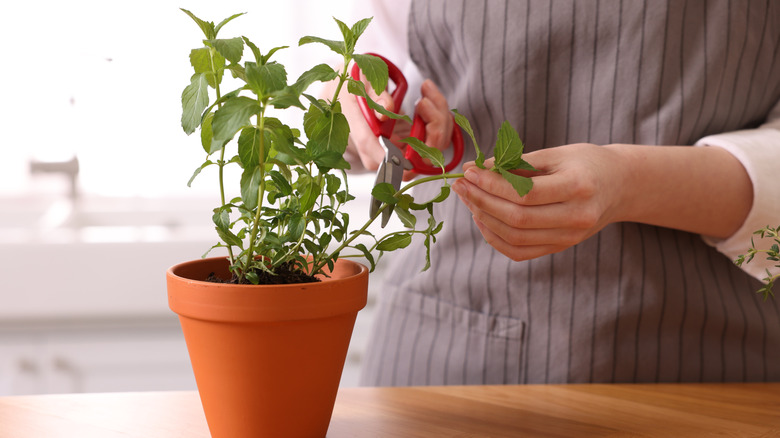
Mint is one of the easiest and fastest herbs to grow in the kitchen, adding bright color and flavor to foods, beverages, and desserts. It can thrive in low light, though it will grow faster if it gets some indirect light each day. It also needs consistent watering so the soil is always moist. Regularly rotate the pot and prune the plant to encourage even growth, and use a pebble tray to increase humidity.
Pothos
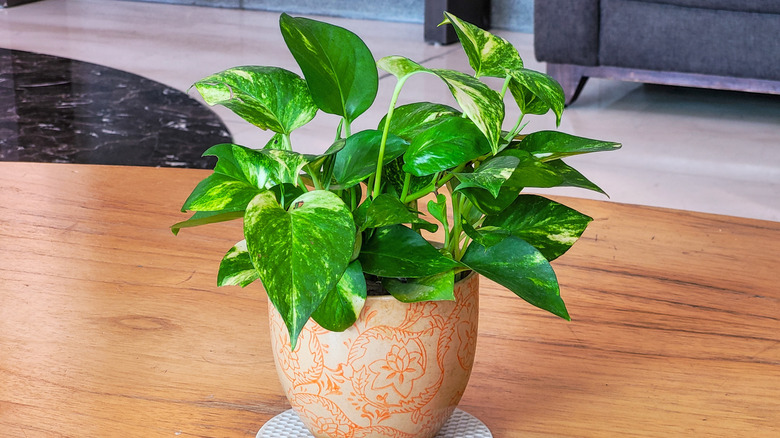
This hardy houseplant can thrive in low light, and can reduce indoor air pollution and improve air quality. You can train it to grow in trailing vines, so consider hanging it over a window or above your cabinets for better Feng Shui. Its heart-shaped leaves range in color from dark green to yellow to white depending on the variety. It is drought-tolerant, but should be watered when the soil gets completely dry.
Dill
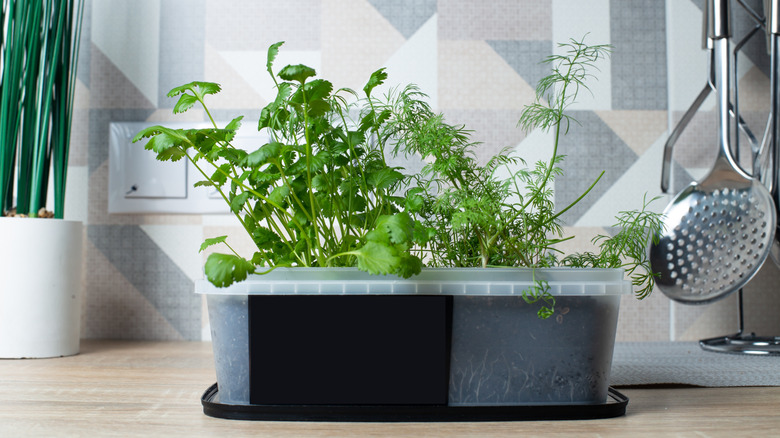
Dill is a fragrant herb with a slightly sweet and spicy flavor. It's one of the best herbs to have in your kitchen as its leaves can be used to flavor various dishes. It will grow in low light but will grow faster in indirect sunlight. Keep the soil moist and try to maintain temps between 60-75 degrees Fahrenheit to encourage growth. Once the plant grows to six inches, harvest the lower, outer leaves.
Staghorn fern
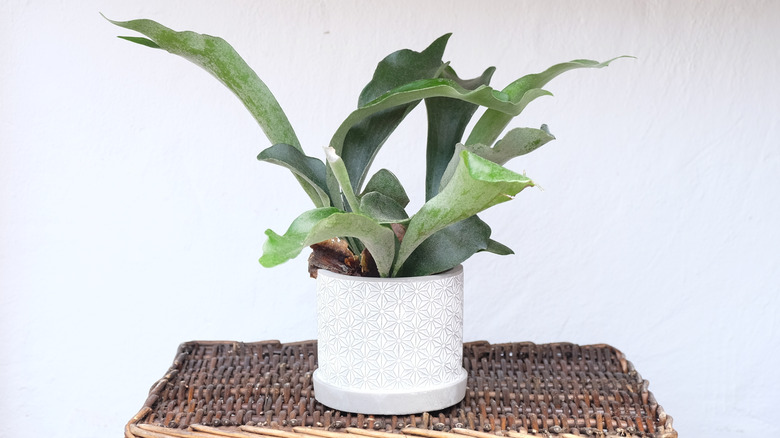
This tropical fern prefers low light and should not be exposed to direct sunlight. It gets its name from the unusual shape of its forked fronds, which resemble antlers. It grows naturally on trees and rocks, and will do best if planted in a hanging basket with moss and bark, or it can be mounted on wood. It should be watered weekly or whenever the mount or growing medium is fully dry.
Parsley
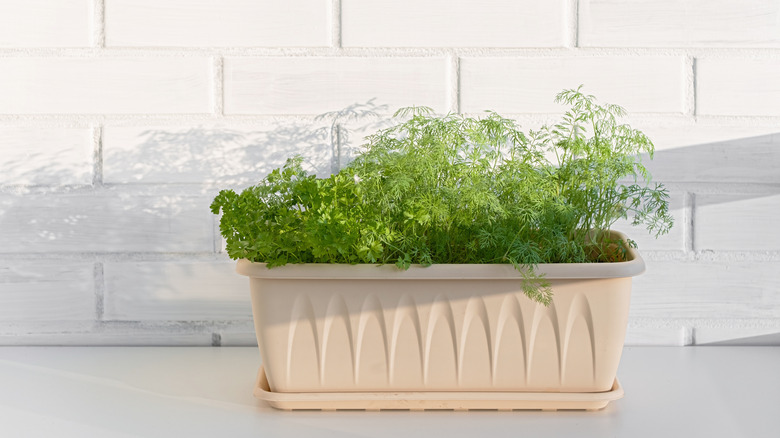
Parsley is a nutrient-rich, versatile herb that can star in all your dishes as a garnish or add flavor to pasta, salads, and soups. It prefers direct sunlight but will still grow in shade or low light. The soil should be kept moist, and you should feed it with a liquid fertilizer once a month. Harvest no more than one-third of the plant at a time, starting with the outer stalks near the base.
Peace lily
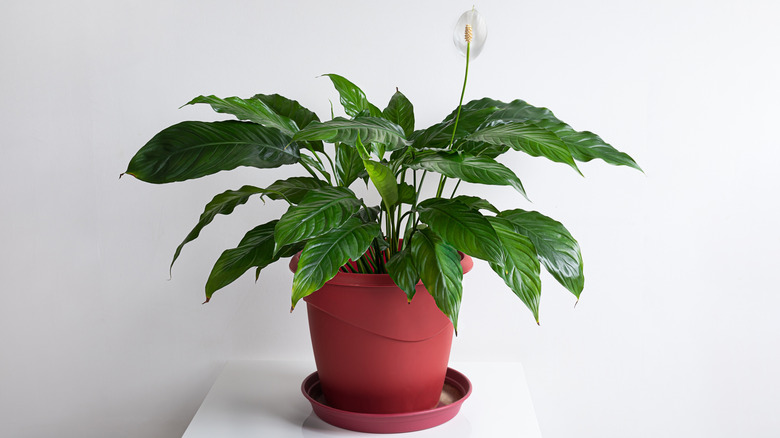
Another tropical houseplant, the peace lily is incredibly low-maintenance. It grows glossy, thick green leaves and blooms in large, white flowers. It prefers low light or indirect light. It can be very effective at removing pollutants from indoor air, so it's perfect for people with allergies. While it prefers high humidity, it will still thrive in normal indoor humidity. Water your plant when the soil is dry at an inch deep.
Maidenhair fern
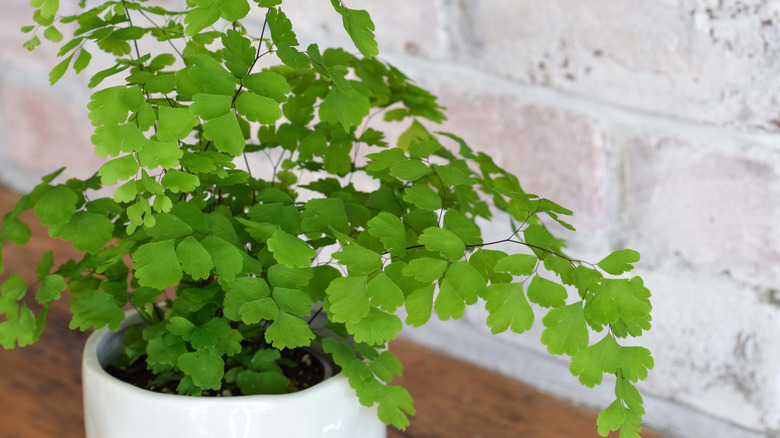
This species of fern includes North American and tropical varieties. It grows long, delicate fronds with complex foliage. It prefers low light or indirect light, and doesn't do well in bright sun. It needs consistent moisture and warmth and will thrive in high humidity environments. Keep it near the kitchen sink or put it in a mini terrarium to increase humidity levels.
Microgreens
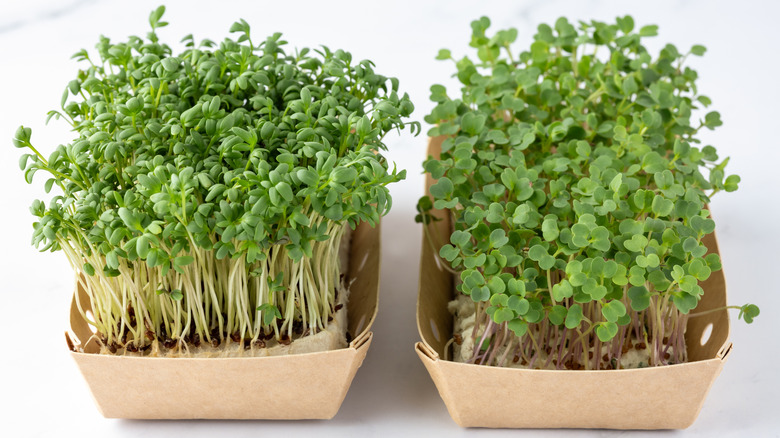
Microgreens are the seedlings of vegetables and herbs that are harvested right after they develop their initial leaves. They can add intense flavor, color, and nutrients to salads, soups, sandwiches, and smoothies. You can grow nutrient-packed microgreens using items you'd normally toss, like empty cardboard milk or juice cartons, egg cartons, paper cups, and takeout containers. They are germinated in the dark and can be grown indoors in low-to-indirect sunlight until they're ready to harvest.
Arrowhead vine
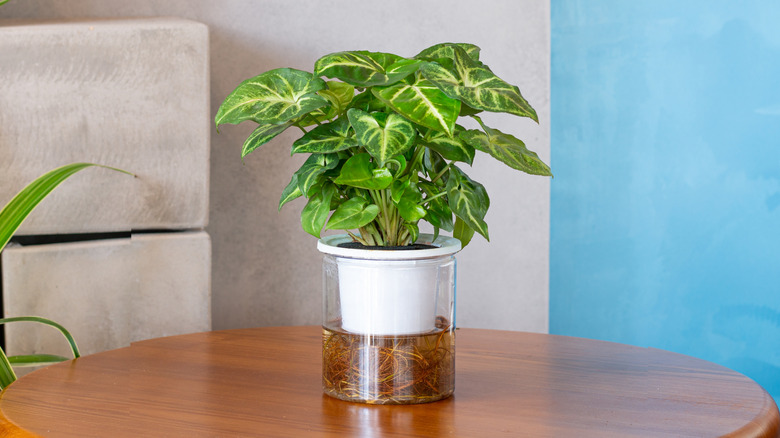
This tropical plant grows in trailing vines with heart-shaped leaves. It can tolerate low light, and its leaves may actually be damaged by direct sunlight. You should keep the soil slightly moist. It can thrive in normal home humidity but prefers a high humidity environment. Be aware that it has a medium poison severity to humans and pets, so consider planting it in a hanging basket over your sink.