

Why This Feng Shui Kitchen Tip Suggests Placing Plants Above Your Cabinets
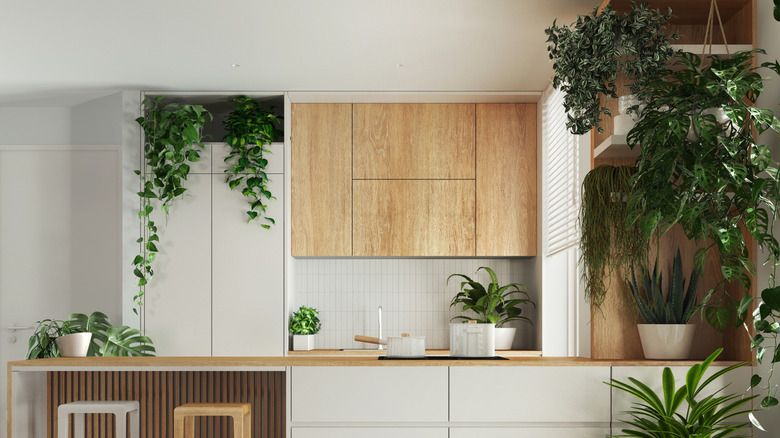
Most kitchens share an architectural gray area in the band of space between the upper cabinets and the ceiling. It's too narrow for storage, too visible to ignore, and often ends up just collecting gunky dust and lesser-used pots and appliances. In feng shui, gaps are considered significant and worthy of intention and care because they mark a place where movement and energy stall, like how dust bunnies form under furniture or a coffee table accumulates a stratum of old newspapers and half-finished books.
We spoke with interior designer Brandy Rinehart of Rinehart Design Group Inc. about why one should add plants above their cabinets. "In feng shui, the kitchen represents health, nourishment, and prosperity, making it vital that energy (chi) flows smoothly," he explains. "One of the simplest and most effective ways to enhance this flow is by introducing plants around or near cabinetry." The edges of a room, similar to the kitchen backsplash, are easy to overlook, so they often become places where visual and emotional residue collect. Giving that space care and definition by adding something growing (alive rather than inert), elemental completeness comes together.
"Plants bring life and upward energy," Rinehart adds, "softening hard lines and bridging the gap between cabinetry and ceiling—often a stagnant zone where energy can become trapped and feel void. Greenery helps to lift chi and circulate vitality throughout the space." The idea is that every surface, given intention, can support the next layer of calm and functional flow in the household below it.
Let it grow, let it flow
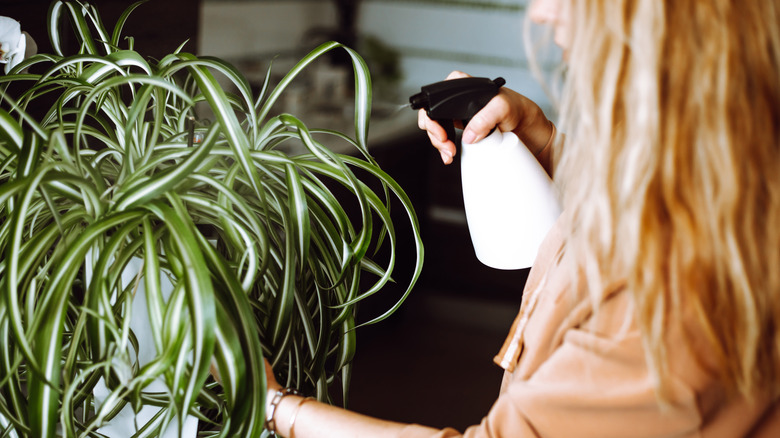
Feng shui seeks to recreate elemental balance that is reflected in the natural world, and plants above cabinets refresh stagnant air, break up corners, and subtly change the room's mood. There are a number of lovely houseplants you can choose from that will thrive in the above-cabinet area. Rinehart recommends plant varieties that are both low-maintenance and symbolically gentle, including pothos, which are "easy to maintain" and "trail gracefully." Likewise, spider plants are recommended due to being "excellent air purifiers," and Rinehart notes that ZZ plants or philodendrons are "tolerant of low light," perfect for that dimmer zone.
Pothos and spider plants tolerate high shelves with limited sunlight, their trailing vines softening the hard cabinet edge. A small row of ZZ plants can bring a steady vertical rhythm without requiring constant watering. The key is to leave space around each plant so it looks intentional rather than crammed, allowing both air and sight lines to pass through easily. In a functional kitchen, this band of greenery becomes the room's living, breathing margin, lifting energy and rounding a geometry that can otherwise feel abrupt.
The act of tending to these plants becomes part of the household rhythm. Watering and rotating them, training a vine, or noticing new growth brings the eye upward and keeps the kitchen from feeling purely utilitarian. It's the interaction, the introduction of energy, that restores reciprocity; you care for the space, and the space, in turn, feels more supportive of the routine of your life. Additionally, Rinehart adds that feng shui "does not recommend utilizing artificial plants or spiky varieties like cacti, as they introduce 'sharp energy' that can feel aggressive in a nurturing space."
The daily grind, refined
Once the plants are in place, a few habits sustain their flow. Rinehart offers simple priorities that double as practical housekeeping, including "keeping the stove clean and functional, as it symbolizes wealth and opportunity. Ensuring balanced lighting—layered illumination with warm tones to encourage comfort. Avoiding clutter on counters to allow chi to circulate freely, and always help spaces feel more spacious too." Each of her suggestions ties in to how a kitchen actually works; a clean stove and surfaces signal readiness and care, as layered light keeps the room inviting. With these guidelines, maintenance becomes multi-functional mindfulness.
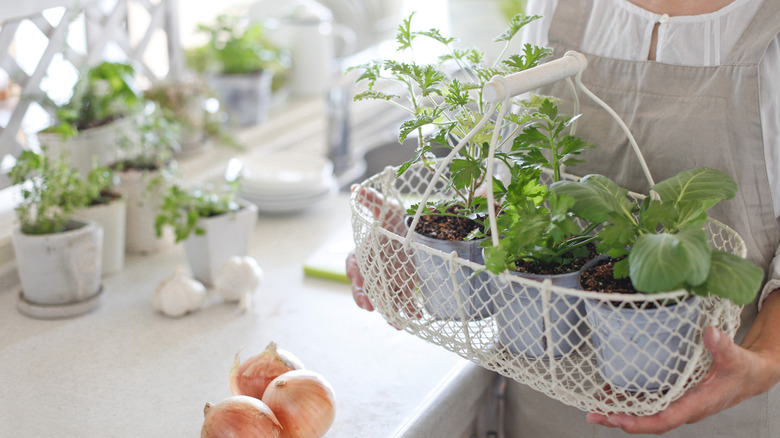
Another way to keep energy alive in a kitchen is by growing cooking herbs within reach of the stove or sink. A small container herb garden will invite motion and scent into the room, because you interact with it every time you harvest. Hardy herbs like thyme, oregano, and rosemary tolerate modest light and irregular watering, while mint, chives, or parsley will thrive near a window with a few hours of direct sun. Even a narrow ledge or hanging planter can work, provided there's airflow. These herbs extend the same principle as the greenery above the cabinets: fresh growth that keeps chi circulating where warmth and nourishment converge.
Feng shui works best when it becomes routine. The goal isn't to stage untouchable perfection but to keep regular, healthy energy circulating through repeatable actions. Even pausing for a few seconds to straighten a towel or open a window shifts the current in the room. Over time, those gestures will accumulate into a lifestyle that feels steady and an atmosphere where care is visible but unforced, and every task has space to unfold.