

What You Need To Know Before Refreshing Your Countertops With Contact Paper
If your counters are stained, damaged, or just outdated, you don't necessarily need to invest in a costly kitchen countertop upgrade. There is actually a cheap trick to protect your kitchen cabinets and countertops, making it easy to temporarily cover up ugly counters until you have the time and money to find a permanent solution. Contact paper is a DIY-friendly way to hide unsightly stains and blemishes, revitalize your kitchen, and try out different countertop styles and colors before making a commitment.
With plenty of social media pages offering affordable, simple ways to put your own personal spin on your home or apartment's interior décor, you can find a lot of tips for using contact paper in the kitchen. You can even find ideas for renter-friendly home improvements. Yet there are a few things to keep in mind before you grab a roll of contact paper from the dollar store and start applying it to your counters. For one, peel-and-stick countertops are a temporary, removable solution, not a long-term kitchen upgrade. It isn't incredibly durable, and it can rip and stain or get scorched or burned by hot pots and pans. It could also potentially damage your countertops if it's not applied correctly. Before you try out this budget-friendly kitchen refresh, here are some things you should know about using contact paper on countertops.
The brand and design you choose really matters

Even though contact paper is a temporary fix, you'll be looking at the design you choose for a while, unless you decide to immediately remove the paper, of course. Try to pick a color that echoes others used in your kitchen, such as one that complements the color of your flooring, backsplash, curtains, or even the artwork on the walls. If you prefer patterns or designs, make sure the one you choose isn't so busy that it will overwhelm the kitchen. If you already have installed kitchen wallpaper in a fun retro pattern, you might want to choose a more neutral, solid color for your counters.
The brand and type of contact paper you choose is also really important. Cheap, low-quality paper, like the kind you'd find at the dollar store, isn't meant to be used on surfaces like countertops, which get a lot of wear and tear. If you install inexpensive paper, it may be more likely to rip or become water damaged right away. You might also encounter frustrating installation challenges like the paper ripping, folding over, or wrinkling as you install it. Instead, spend some time researching quality brands and reading customer reviews. Take a look at blogs and social media posts to get pro recommendations for the best contact paper for kitchen countertops. You want a brand that can withstand friction from pots, pans, cutting boards, and kitchen appliances, and that is resistant to water damage and scratches. It should also be easy to clean. FunStick countertop contact paper is often recommended by DIY bloggers, and it's a waterproof, renter-friendly option.
Take the time to prepare your counter and measure the contact paper
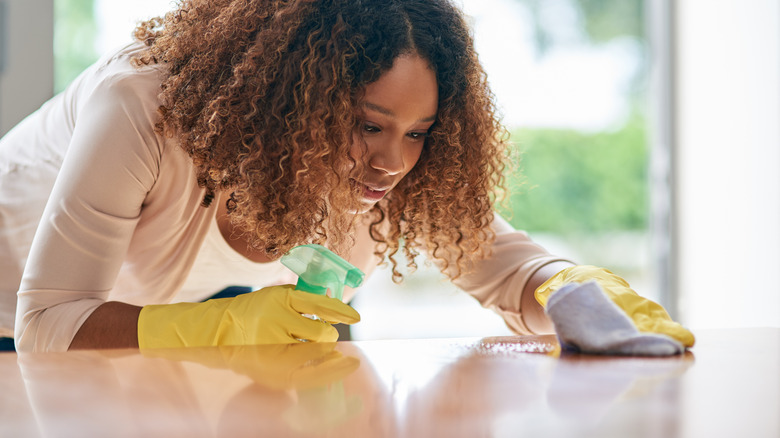
Like any other DIY project, you'll have better success if you take your time and properly prep your surface before you begin. Oily residue, sticky spots, dirt, and other debris can prevent the contact paper from adhering properly to your counters. Even minor cracks and damage can also influence how easy it is to install the paper, and how good it looks when you're done. Start by dusting your counters and using mild soap and water to clean them. If any gunk remains, use a kitchen countertop cleaner or a household cleaner and degreaser that is safe for your countertop material. You can also use a plastic pot scraper to get rid of stubborn residue. Make sure the counters are completely dry before you begin installing the paper.
For the best results when cutting your paper to size, start by rolling it out on your counters with the grid side up. You will want to cut a big enough piece that the paper overhangs the edge of the counter so that you can fold it underneath. Mark the places where you want to cut, including around the sink or other built-in features, and then turn the paper over. If it has a pattern, take note of how it looks against your wall, backsplash, and kitchen hardware. Now is your last chance to make sure you like it! If the paper isn't long enough to cover the whole counter, this is the time to determine the best place for seams so that they won't be as noticeable.
You may need to take some extra steps if you're a renter
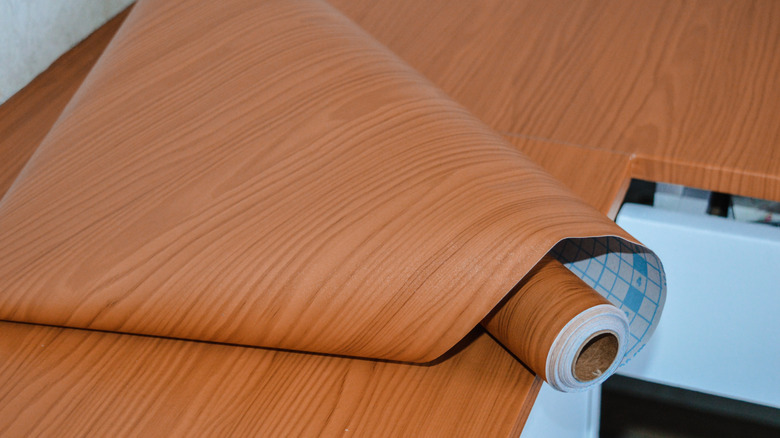
Though contact paper is designed to be easily removed, it may still leave residue behind. It also might not be safe to use on certain countertop materials as it could damage the finish over time. If you have laminate counters, the adhesive could pull up sections of the top layer of laminate if contact paper is in place for a long period of time. If the paper is damaged by heat or water, the underlying counters could also suffer damage. If you're a renter, these risks could affect your security deposit and your relationship with your landlord. Read your lease before you begin any DIY project and make sure the changes you want to make aren't prohibited. If there is any doubt, talk to your landlord before you begin.
Once you get the go-ahead, do some research on the best type of peel-and-stick paper to use in kitchens. Two brands that are often recommended on social media and DIY blogs are Stickyart contact paper for countertops and d-c-fix self-adhesive peel and stick contact paper. You can also take some extra steps to protect the counters before applying the paper. Covering the counters in painter's tape before using contact paper can ensure they don't suffer any long-term damage from the strong adhesive. Painter's tape is a special type of masking tape that is designed to be only lightly adhesive so it peels off easily and is less likely to damage surfaces.
You'll need to protect the contact paper from heat and moisture
Even high-quality contact paper is susceptible to damage from heat and moisture. Try to avoid spills, and if they do happen, clean them up right away. When cleaning your counters, don't use chemical cleaners or abrasive tools. You also shouldn't get the paper super wet to clean it. Instead, dust counters or use a small vacuum to remove crumbs and debris. Then make your own all-purpose cleaner using natural and gentle ingredients, or put a drop of mild dish soap on a damp cloth and wipe up any sticky areas or spills.
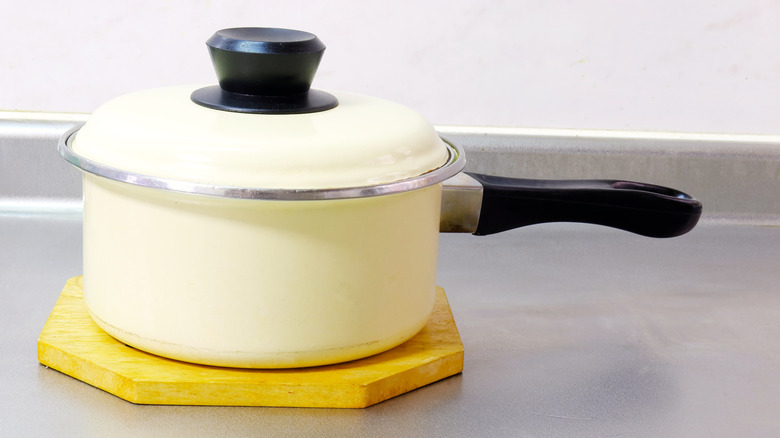
Always use a cutting board for food prep, and use trivets or kitchen towels to protect your counters from hot pans and dishes. If you have appliances or décor on your counters, consider using a small placemat, mouse pad, or desk pad to keep the items from scratching or damaging the contact paper. These tips will extend the lifespan of the paper and make sure it stays pretty for as long as possible.
You might want to consider adhesive vinyl instead of contact paper
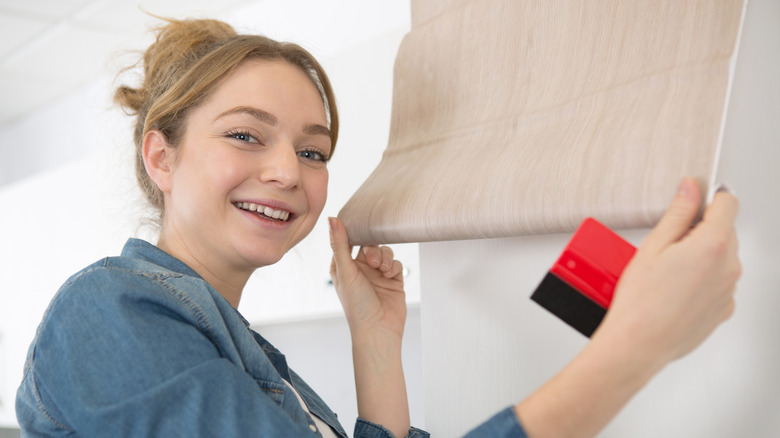
Some countertop surfaces may be too damaged for contact paper to adhere properly. Certain countertop materials, like wood, may not be smooth enough for thin contact paper to be a logical option. Plus, contact paper isn't incredibly heavy-duty or durable, and many brands aren't water-resistant or designed for long-term use in a high-traffic area. If you have doubts about how the results will look or how long they will last, you might want to explore alternatives. Adhesive vinyl, also called architectural vinyl or vinyl wrap, is thick adhesive that has a printed design on one side. It is more flexible during installation and can be stretched to fit in awkward spaces or around corners or rounded edges.
While contact paper is thin and can be hard to position properly, vinyl is a durable option that offers better adherence and better control over the outcome while still being temporary and renter-friendly. It is easier to clean and maintain, and can handle more wear and tear than paper. Like contact paper, vinyl wrap is available in a range of styles and patterns, including ones that look like wood and natural stone. If you want to be able to remove vinyl easily in the future, choose one that specifies that it is a removable, acrylic-based adhesive, and protect the underlying counter with protection film or painter's tape. EZ Faux Décor vinyl countertop wrap has great reviews on Amazon and comes in a range of colors and designs.