

Why Spinach Soufflé Is No Longer Common In Home Kitchens
We may receive a commission on purchases made from links.
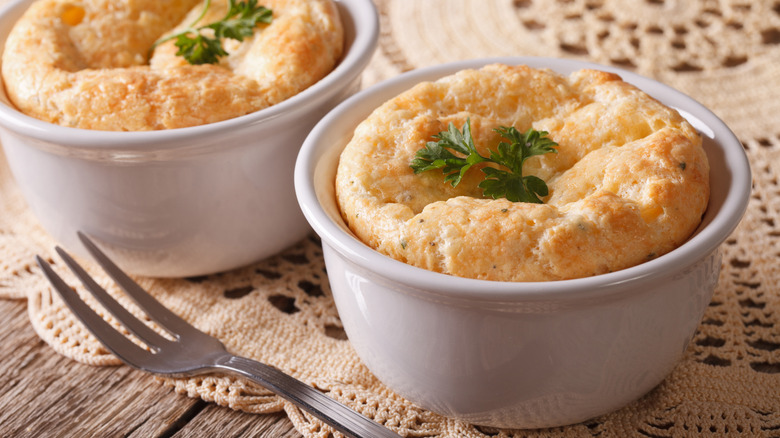
On the unofficial Egg Difficulty Spectrum, fried egg sits below omelet, and omelet sits below soufflé. "To this day, when I see a soufflé rising, I'm mesmerized," Michelin-starred French chef Eric Ripert tells The New York Times. "I'm just like a kid again." Indeed, beyond its delicate, airy texture and rich flavor, the hallmark of this old school dish is its theatrical impressivo. Soufflés comprise a crème patisserie (egg yolk base) beaten into a meringue and baked in individual ramekins, a once-popular side dish that has fallen out of favor due in part to its daunting reputation among unacquainted home cooks. More specifically, the elegant, somewhat retro spinach soufflé receded from a mid-20th-century status-symbol dish to a relic of elevated dinners past.
The dish's conception traces back to early-1700s France. Indeed, the word "soufflé" itself comes from the French "souffler," meaning "to puff," and the dish remained popular in France throughout the 1800s. In the early through mid-1900s, soufflés emerged in the U.S. as a fashionable fixture of the fine dining scene, appearing on menus at revered New York City establishments like the Biltmore and the Waldorf Astoria Hotel. Spinach soufflé remained a common fixture on holiday dinner tables through the 1950s and 1970s, but somewhere around the late '70s, the dish seems to have eventually left the stage to easier-to-prepare dishes that prioritized stress-free hosting.
Vogue soufflés became overshadowed by easier-to-prepare side dishes
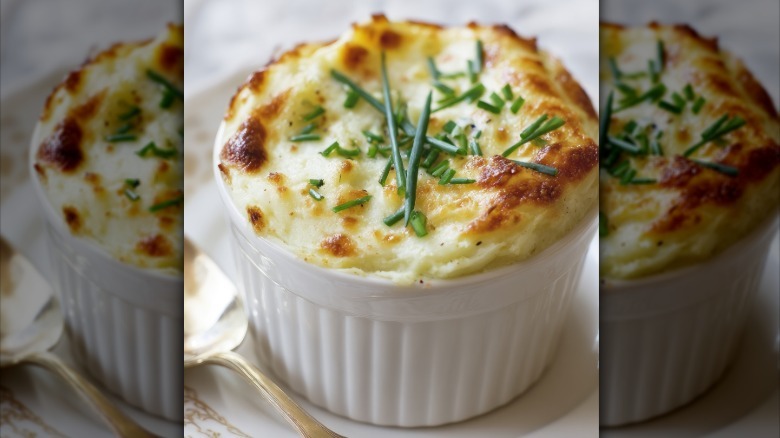
Befitting their inherent luxury status, soufflés are notoriously difficult to make. Those delicate egg whites must be held at room temperature and cannot be overbeaten or underbeaten. A cook's whipping technique must be honed, and post-whip, those whites must be expertly folded, another harrowing technique that can spell doom for a fragile soufflé. Soufflés can (and do) sink, fall, and rise unevenly. It can be discouraging for learners.
Although spinach soufflés have largely gone out of style, they can still be a delightful part of contemporary meals — and have even garnered support from modern-day chefs. In an exclusive interview, celebrity chef Geoffrey Zakarian cued Tasting Table into his beginner tips for making soufflés, encouraging, "It's not hard [...] It's so inexpensive to do. I don't know why people don't do it more often." Indeed, whipping up a soufflé for a dinner party or brunch is as impressive as it is affordable. The base of any soufflé is a low-cost ingredients trio: Eggs, milk, and a little cheese. Some recipes include flour (another low-cost element), which effectively creates a simple yet elegant béchamel or velouté sauce (two of the five French "mother sauces"). It's all about straightforward ingredients transformed through technique — and to that end, Zakarian admits, the secret to nailing a knockout soufflé is a lot of practice, trial, and error: "You gotta do it a lot of times and screw it up."
Spinach soufflé's inherent luxury belongs on your dinner party table, not in the past
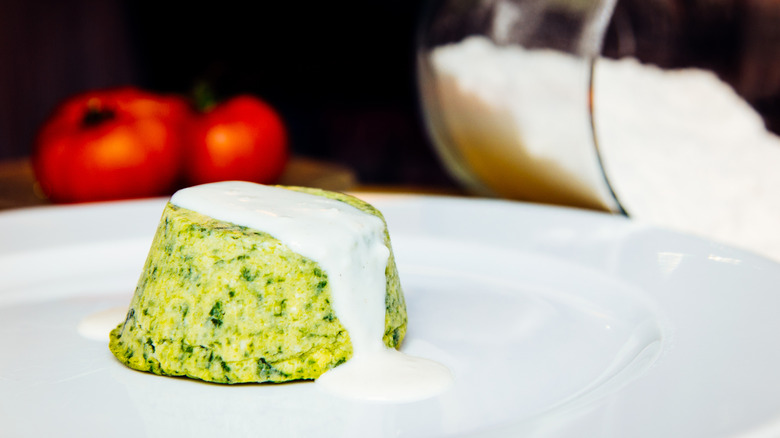
Soufflés might allow more wiggle room (pun intended) than many gourmands expect. When the dish was still ensconced in its U.S. heyday, a recipe for Spinach Soufflé (Soufflé aux Épinards) appeared in Julia Child's seminal "Mastering the Art of French Cooking, Vol. I" (1961). She recommends pro tips like generously buttering the ramekin for unfettered rising, and baking the ramekin on the middle oven rack at 400 degrees Fahrenheit, then quickly lowering the temperature to 375 degrees Fahrenheit. The French Chef herself added sauteed shallots and Swiss cheese to her spinach soufflé, and her cookbook includes a variation in which minced boiled ham and mushrooms are also added. In short, making a soufflé may be impressive, but it doesn't have to be a big, finicky deal. To help home cooks along the road to puffy perfection, we've rounded up 15 common soufflé mistakes and how to avoid them, shared by professional pastry chefs.
To complete the meal, pair spinach soufflé alongside complementary dishes like a fresh green salad (this French-inspired arugula and chèvre salad would perform beautifully), roasted Yukon gold potatoes, crusty bread, and a glass of bright white grenache blanc, or a semisweet rosé. If you prefer red wine, which can pair fabulously if your spinach soufflé is performing as a side dish to pot roast or short rib, opt for a medium-bodied, darkly herbal, vibrantly acidic Montepulciano.