

The Major Downside Of Using A Stainless Steel Cutting Board
We may receive a commission on purchases made from links.
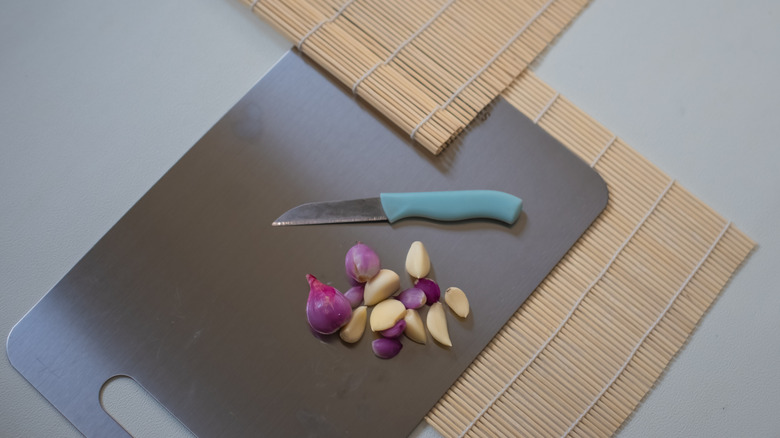
Don't get us wrong, stainless steel cutting boards have their merits. On a maintenance note, they're easy to keep clean, and don't hold onto stains as fiercely as plastic boards. They also don't require regular seasoning, which is a major convenience factor over wooden boards. For aesthetically-minded home cooks, they perpetuate a sleek, contemporary vibe sitting on the countertop. These boards are made from food-grade stainless steel, often 304 steel, the material used in professional restaurants and hospitals. They're the real deal — which is a good thing, considering Michelin-starred chef David Chang of the Momofuku empire will judge you by what cutting boards you own. But, alas, that low-maintenance makeup comes with a fatal hamartia: Stainless steel cutting boards wreak havoc on your knives.
As your sharpened, prized knife blades slice into ingredients, chop after chop, that direct contact with the stainless steel gradually (or, rather quickly) wears down the blades with repeated metal-on-metal friction. Hope you like dull blades, or sharpening your knives after every single use – or, in the immediacy, hearing the decidedly unpleasant, grating clang of metal against metal (ouch). Cooking at home is so...relaxing? Pleasurable?
Skip the steel for everyday home cooking. If you've followed the late great Anthony Bourdain's advice to invest in one good chef's knife for your kitchen arsenal, rather than stashing a drawer filled with half-decent knives ready to replace fallen soldiers in sempiternal succession, then a stainless steel cutting board is not your friend.
Say so long to sharp knife blades
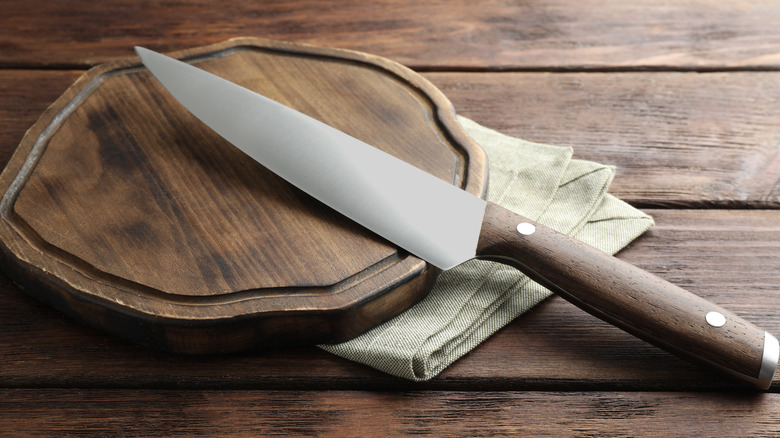
Ultimately, every material comes with unique benefits and drawbacks. Stainless steel cutting boards are durable, naturally antibacterial, and hygienic. No germ or odor absorption here. They also resist damage and other surface abrasions better than softer materials like plastic or wood. Notably, they can be lighter weight than some dense, heavy wooden boards, making them easy and safe to lift over a hot oiled pan or boiling pot (which can be especially beneficial to home cooks with neuropathy or carpal tunnel). Still, while stainless steel boards boast unmatched longevity and pretty much never need replacing, the same unfortunately cannot be said of your precious, battered knife blades.
By contrast, wooden cutting boards are gentle on knives, while plastic cutting boards dull knives more quickly and are easier to scratch or dent (which can create crannies for harmful bacteria to hide over time). Some high-quality wooden cutting boards are totally worth investing in, like the internet-favorite John Boos Block (currently $48.95 on Amazon). However, plastic boards boast easier cleanup than wood, which can be especially important if you're slicing raw meat and veggies (and back to raw meat again) at fairly regular intervals. These more pliable materials make a good fit for everyday use — and, if it's in the budget, opt for one of each: Steel, plastic, and wood.
Own multiple cutting boards? They can be neatly stored with one quick, affordable spice rack hack (you can thank us later).