

16 Japanese 7-Eleven Snacks We Wish Were Available In The US

Japan's 7-Elevens are well-known for having all sorts of delicious and unique snacks that you just can't find in the United States. While the convenience store chain got its start in the U.S., it first opened locations in Tokyo in 1974. As of 2025, there were over 22,000 locations across Japan, which vastly outnumber the approximately 12,300 in the U.S. With people on social media fawning over their 7-Eleven finds in Japan, it makes us a little jealous that the locations in the U.S. tend to stock such ordinary snacks. We'd absolutely love for some of the treats available in Japanese locations to make their way to North America. While we wish, we'd largely prefer imports to attempts to recreate the same products with U.S. ingredients. It's never quite the same otherwise.
Our list is heavy on dessert pastries and frozen treats, but it also includes chocolate, savory snacks, sandwiches, and soups. Many inspire repeat purchases among tourists visiting Japan, and others are viral sensations. Whether you're planning a trip to Japan or just like to live vicariously through the enjoyment of others, here are the 16 Japanese 7-Eleven snacks we most wish would show up on shelves in the U.S.
Pancakes with maple syrup and margarine
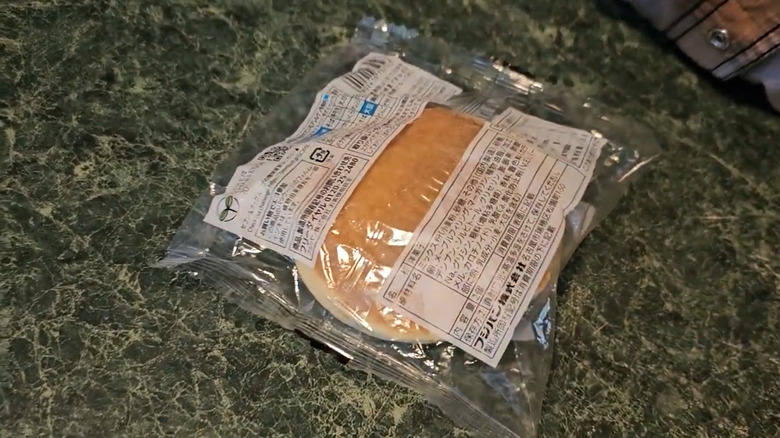
Pancakes with maple syrup and margarine are one of the 7-Eleven snacks you never knew you needed until you've tried it. If you watch videos or read discussion threads on social media with people talking about their favorite treats at Japan's 7-Eleven, this one comes up quite often.
With rice, soup, fish, and other less-familiar breakfast items featured prominently in Japanese breakfasts, these pancakes are likely to be tried more often in the morning because they're more familiar to Westerners. Every part of this snack is delightful, with balanced flavors throughout. It's one of those items people love enough to eat daily and wish they could have shipped from Japan after they leave.
You can also sometimes find sweet potato, red bean, and whipped cream versions. We've also heard of people hitting up both the 7-Eleven and Lawson's convenience stores to create a breakfast sandwich with 7-Eleven's pancakes and Lawson's Famichiki chicken.
Black Thunder
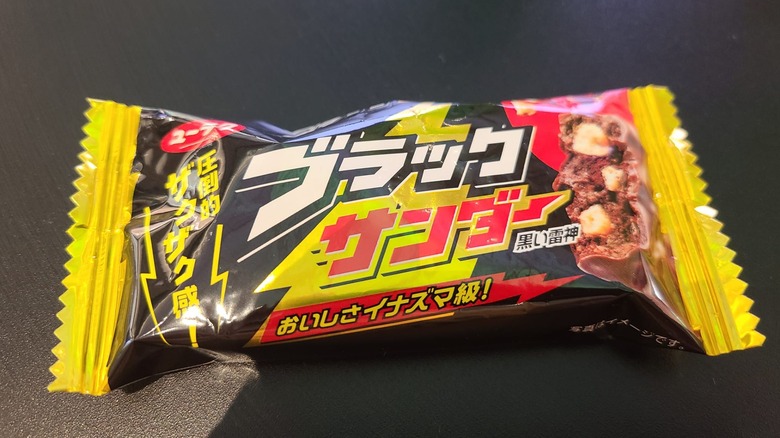
Black Thunder is a cookie candy bar with rice puffs and other fillings, coated in chocolate or other flavors that we wish we could get in the U.S. What makes them interesting is that they come in several unconventional flavors you don't often (or ever) see in U.S. candy bars. The base chocolate flavors include milk and dark chocolate.
Among the wide variety of Black Thunder flavors, there's one with granola, raisins, and pumpkin seeds, an almond and hazelnut, a soft butter that includes vanilla flavors, and custard apple pie. If you're not in a chocolate mood, you might consider alternatives such as roasted soybean flour, strawberry, banana, or matcha. At one point, you could find some chocolate ones at Costco in the U.S., but they disappeared. Additionally, we're more interested in the more distinctive flavors to break up the monotony of the candy bar selection currently available.
Milk bread sandwiches
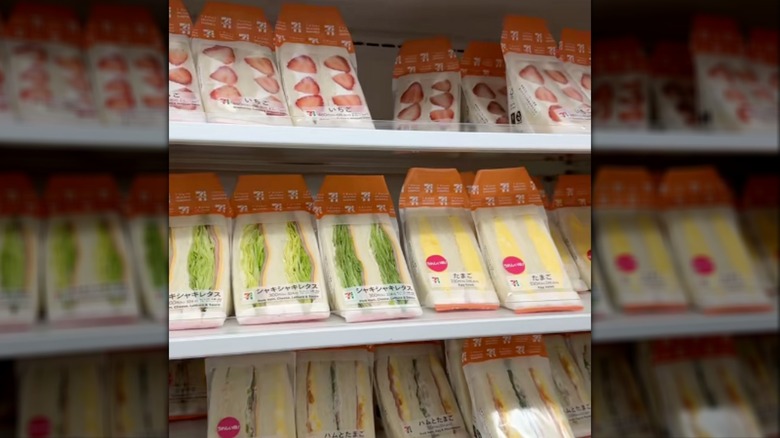
While you may have already heard of the wonders of the version of the Japanese egg salad sandwich now available at U.S. 7-Elevens, you'll find a whole section of the refrigerated department in Japan's stores dedicated to a variety of milk bread "sandos."
Japanese milk bread is softer and more pillowy than typical white bread, with a buttery, slightly sweet flavor profile. It's ideal for both sweet and savory sandwiches. Some interesting items you might find at 7-Eleven include fruit sandwiches with fresh fruit like strawberries or Mandarin oranges and whipped cream. There's also a lettuce sandwich, which is heavy on the lettuce but also contains ham, cheese, and sauce. You can also get a mixed sandwich, which provides three sandwiches in one: tuna salad, ham and lettuce, and egg and sauce.
Unfortunately, the U.S. version of the famous 7-Eleven egg salad sandwich hasn't lived up to the Japanese version, with both the egg salad and the bread falling short. If some of the other milk bread sandwiches migrated to the U.S., we'd hope they wouldn't suffer in quality.
A variety of Japanese ramens, including fresh ones
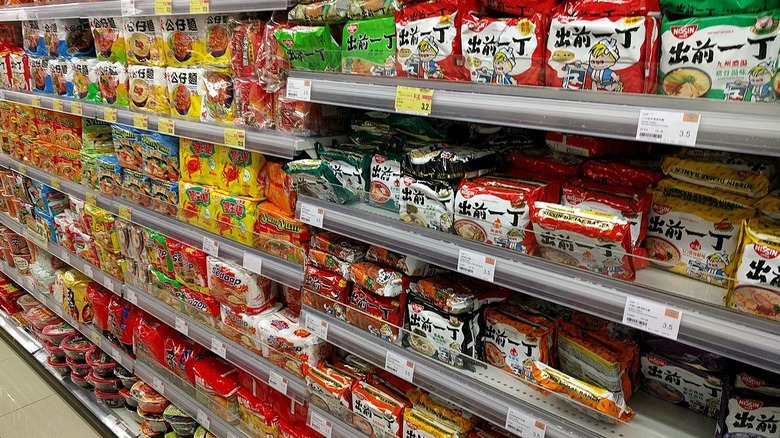
Ramen originated in Japan, and there are several types, which is why you'll find such a big and sometimes exotic selection of ramen at Japanese 7-Eleven. They're popular enough that you can find hot water dispensers on-site, so you can make them right in the store rather than having to take them home. While you can order some of the packaged ones online, they're extremely pricey, coming in at around $10 or more each, plus international shipping costs.
Japan's 7-Eleven carries ramen varieties you've probably never encountered before, like chili tomato, pork-bone broth, tempura soba, kitsune udon, and cheesy chicken ramen. However, we especially want to try the one with the reputation for being the most popular: spicy miso Mongolian tanmen.
Not only are there dried ramen like you're most used to seeing in stores, but you'll also find versions in Japan's 7-Eleven that have fresh ingredients. The fresh ones are packaged much like a salad and include ingredients such as fresh meat, vegetables, and eggs, but they still require you to add water and heat them. One of the best fresh options we'd like to try is meaty Kitakata ramen, which replicates a style from Kitakata City.
Teriyaki Pringles
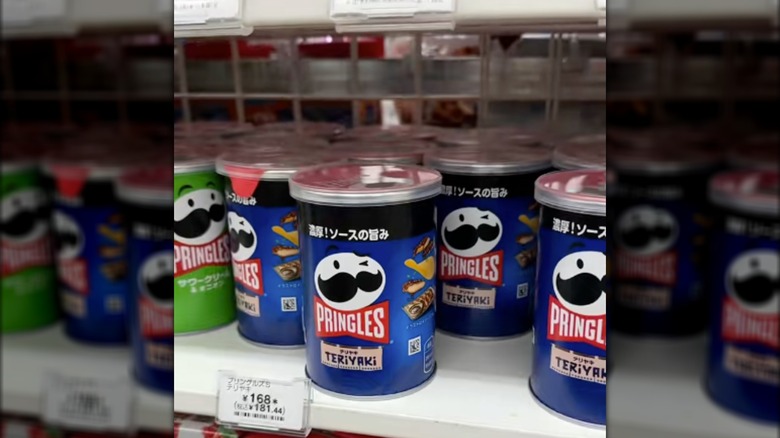
While you can get Pringles in the U.S., you can't get the Teriyaki ones you can find in a Japanese 7-Eleven yet. We'll have to wait and see whether their popularity in Japan might bring them to the U.S. eventually. After all, Pringles has tried all sorts of flavors in the U.S. over the years. If Top Ramen Pringles could work for the U.S. market, teriyaki certainly could.
People on social media who've tried them are extremely impressed, and they've become quite a sensation. They have an intense, rich umami flavor that makes them great for people who already like teriyaki or those who crave other strong Pringle flavors like sour cream and onion. We'd like to think these would receive a high Pringles ranking if they were available to try in the U.S. You can find other unusual Pringles flavors in Japan, such as consomme and Hi! Cheese!, but those don't have quite the same draw for us as the teriyaki ones do.
Ohayo Brulee
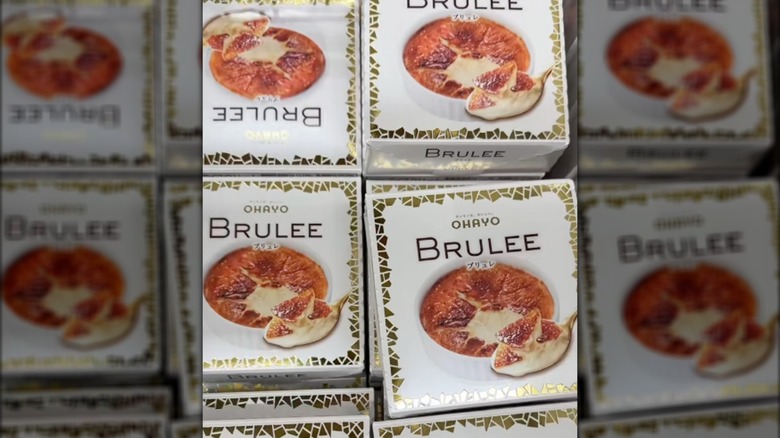
Ohayo brulee is often mentioned when people on social media discuss their favorite 7-Eleven frozen treats. This is one of those desserts people crave when returning to the U.S. from Japan. What makes these so good is that they turn crème brûlée into a dessert you can enjoy straight out of the freezer without the work of making one at home.
While the picture on the outside of the package looks like an ordinary creme brûlée, the Ohayo version is made with brûlée-flavored pudding-like ice cream rather than the custard you'd normally expect. However, you still get the same hard caramel layer on top of the dessert that makes regular creme brûlées so easy to love. It's so good that some people on social media who discovered them in Japan ended up eating them multiple times a day. While we've heard that you can find them in Australia and Singapore, they don't seem to have made it to the U.S. yet.
Smoothies from the smoothie machine
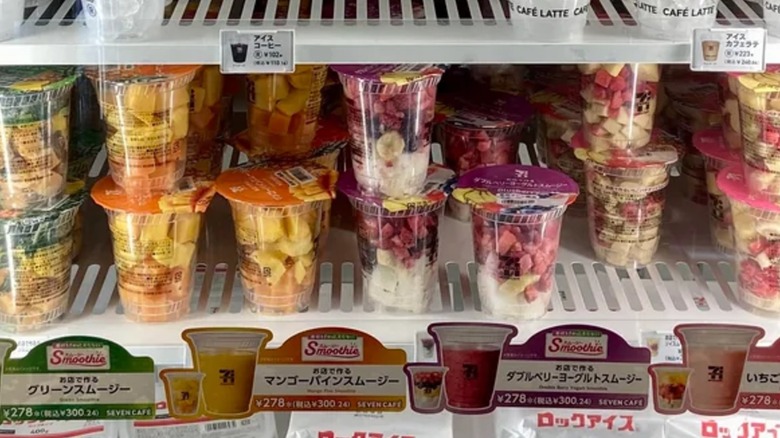
One thing we'd love to come to U.S. 7-Elevens is the delicious smoothies. You can find the unmade smoothies in the frozen section of the store and then take them to the smoothie machine to blend them fresh.
There are all kinds of flavors available. These include both fruit smoothies, such as açaí, mango, and berry, as well as veggie smoothies, such as those featuring greens and sweet potato flavorings. One that seems universally loved by social media reviewers is the banana smoothie. You might also encounter some with yogurt or even coffee as ingredients.
Smoothies were slow to roll out at 7-Eleven in Japan, but they proved popular and are now available in some other countries, like Australia and Vietnam. So, we'll cross our fingers that they'll eventually come to the U.S. and be as good as they are in Japan. While the ones in Vietnam seem to be all fruit and/or veggies, we've seen complaints on social media from Australia that the ones they have include additives.
Onigiri
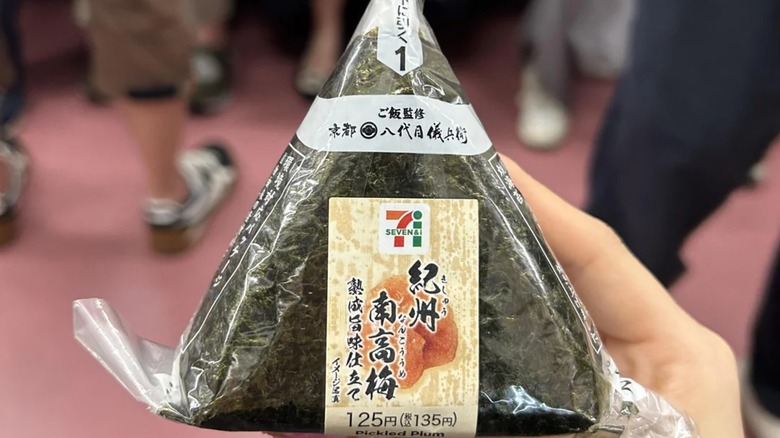
Another Japanese 7-Eleven item we'd be very excited to see in the U.S. is onigiri. Onigiri are rice balls that contain flavorful fillings. So, they would make an especially nice option for those looking for gluten-free meal options that aren't salads. The ones in Japan's 7-Eleven stores are wrapped in seaweed.
It seems that the onigiri available is seasonal. Many are seafood-centric, like salmon roe in soy sauce, tuna with mayo, shrimp with mayo, and walleye pollack roe with mustard. Other meat options include ones like pork with green mustard, barbecue beef, or fried chicken. However, you might also find some vegetarian options, such as Kishu plum, turnip wasabi, and konbu seaweed. Like with convenience-store and grocery-store sushi, we'd expect to see onigiri Americanized a bit if it showed up in the U.S., with fillings like barbecue beef, fried chicken, or California-roll-inspired options, probably working well.
Melon bread
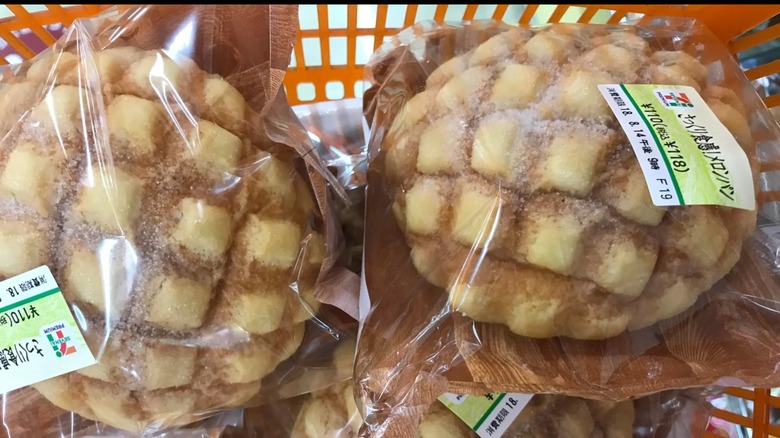
There's a whole bakery section in Japanese 7-Elevens to entice customers, featuring several packaged baked goods we'd love to see show up a little closer to home. Our vote for the first one to jump the ocean is the melon bread (also known as melon pan).
Japanese melon bread is characterized by having a soft, fluffy interior and a cross-hatched, crispy exterior that is reminiscent of a cookie. The one available from 7-Eleven has a lot of crunchy browned sugar crystals on the exterior and hiding out in the dessert's grooves. To set the record straight, it doesn't taste like melon (although some bakers do add melon flavor). Instead, it likely got its name from the metal meron-gata mold used to make it (Japanese speakers tend to pronounce "l" and "r" similarly). Some people are convinced that it looks a little like the patterns on a melon, too.
Probably the closest thing you'll find to melon bread in most places in the U.S. is concha from a Mexican bakery, which has some textural and visual similarities. However, they're definitely their own thing, making them a desirable pastry to be able to find in a U.S. 7-Eleven.
Custard cream puffs
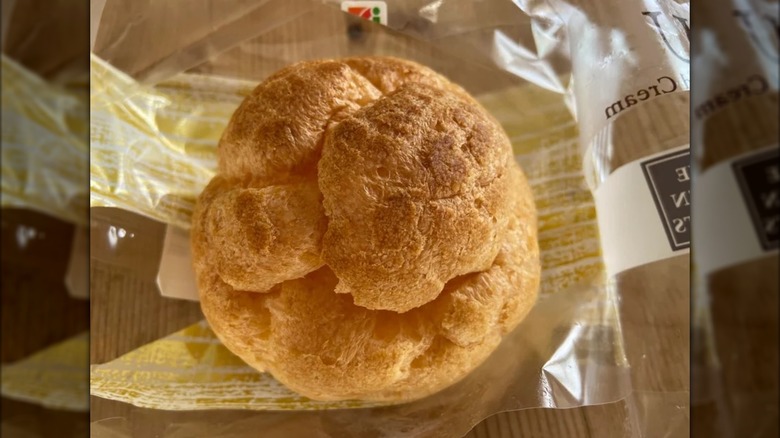
Pastries are nice, but they're even better with filling inside, which is why we'd love to see the type of custard cream puffs you can get at Japanese 7-Elevens come to the U.S. as an option beyond donuts, muffins, apple fritters, and brownies. The convenience store's custard cream puffs are a bakery item that often inspires multiple purchases from those visiting Japan. Once people on social media try them, they seem to keep going back for more.
The custard cream puffs are fairly large, with a pastry shell that's fluffy and light. Inside, you'll find a filling made with a mixture of custard and whipped cream. It's so full of filling that you have to be a little careful taking each bite lest it spurt out everywhere. Since you can see the vanilla beans in the custard, you can imagine that the vanilla flavor is very pronounced. Like many Japanese desserts, it's not overly sweet, which makes a nice contrast with the very sweet offerings you tend to see in convenience store bakeries.
Sugar butter sand tree
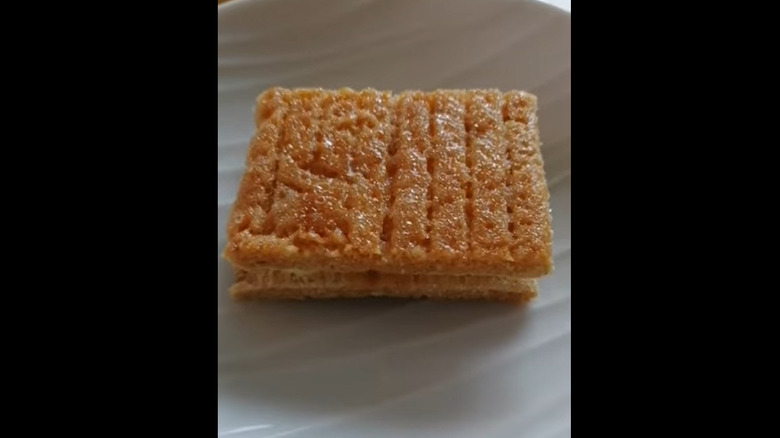
Another 7-Eleven pastry we often see people talking about enjoying is the mysteriously-named sugar butter sand tree (also known as a sugar butter tree sandwich). It's a sandwich cookie that's especially tasty and has a hefty amount of filling.
The buttery, crispy sugar cookie portion is made from a yeasty mixture of wheat, oat, and rye flour, along with corn grits and bread crumbs. The outside is coated with butter and granulated sugar, which adds to its unique texture and flavor. The closest thing we have to sugar butter sand trees in the U.S. is graham crackers, but it's still very different. Meanwhile, the filling is usually made from white chocolate, though we've also heard rumors of a maple-flavored filling. They're well-loved enough that people have tried to create copycat recipes, which, unfortunately, is the only way to get something similar in the U.S. currently.
Matcha donuts
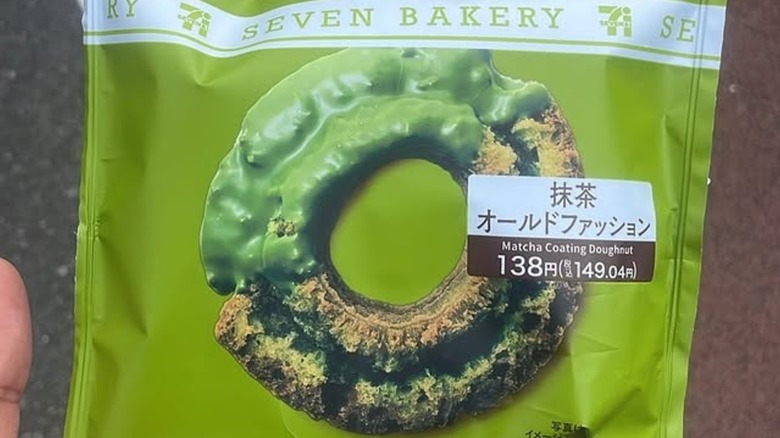
A specialty bakery item that we'd love to get a chance to try in the U.S. is matcha donuts. In Japan, they seem to be a seasonal item that often shows up during the summer, along with other matcha-flavored items. We'd love for U.S. 7-Elevens to have a matcha season.
One limited-time-only iteration that appeared in 2022 came through a collaboration with a green tea shop in Kyoto called Itohkyuemon. These were prepackaged in two varieties featuring Uji matcha. One was matcha and sugar coating, a chewy variety with matcha in both the dough and the sugar glaze. The other was simply called a matcha donut, and it was an old-fashioned matcha-infused donut with a dark chocolate coating on one half. Another version in 2024 was an old-fashioned donut with a green matcha coating on half of the donut.
Custard filled waffles
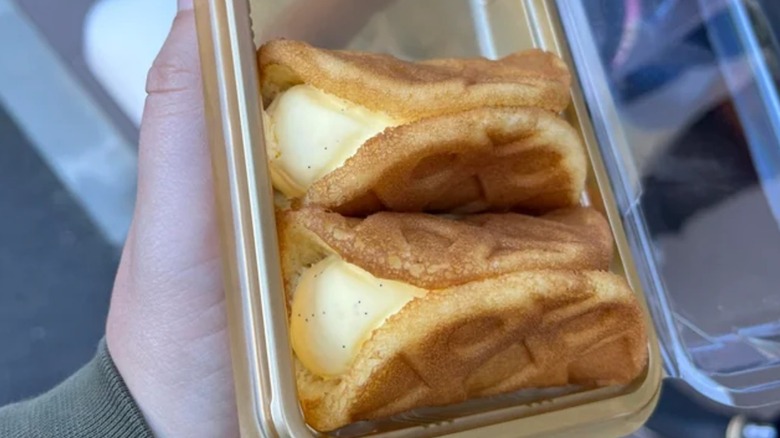
Custard-filled waffles are another really fun Japanese 7-Eleven bakery item. These mini waffles are folded into a taco shape and filled with custard. They come on a covered tray of four, and you eat them like dessert tacos. They've been available only since 2023 but have already become favorites.
The waffle part is soft rather than crisp, and the filling is a soft and creamy custard. They're lightly sweet, and some people have called them Japan's version of Twinkies or cannoli, but the experience is definitely different. They're melt-in-your-mouth soft, making them a little closer to pancakes than waffles, although they have the external markings of a waffle. Social media images also show specks of vanilla bean throughout the filling, indicating a delightful vanilla flavor. Many people on social media report making repeat purchases when they can find them, but they apparently sell out quickly due to their popularity. We're betting they'd be an instant hit if they showed up in U.S. 7-Elevens.
Glico grape ice balls
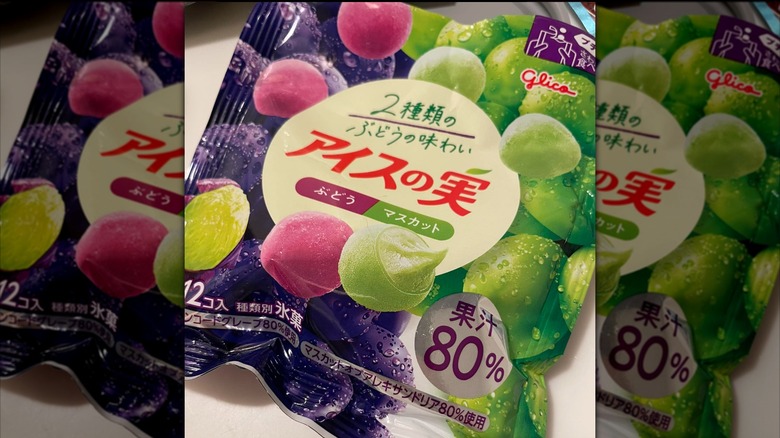
Glico grape ice balls have garnered praise online as one of the most refreshing snacks available at Japanese 7-Elevens. While they have the shape of frozen grapes, they don't actually contain a real grape inside. Instead, it's more like a frozen sour grape-flavored sorbet ball. The packages include green and purple varieties with distinct flavors. These are especially great to enjoy on hot days, and they work well if you want something that's fruity, cool, and sour all at once.
Many on social media who have sought out these unusual snacks have raved over them, rating them highly fro their unusual approach to a refreshing snack, saying they'd stay in Japan just for these, and even calling them life-changing. They're reportedly super addictive. While there are some frozen sour grape treats in the U.S., like Fruit Riot!, they're not quite the same as Glico grape ice balls.
Matcha burritos
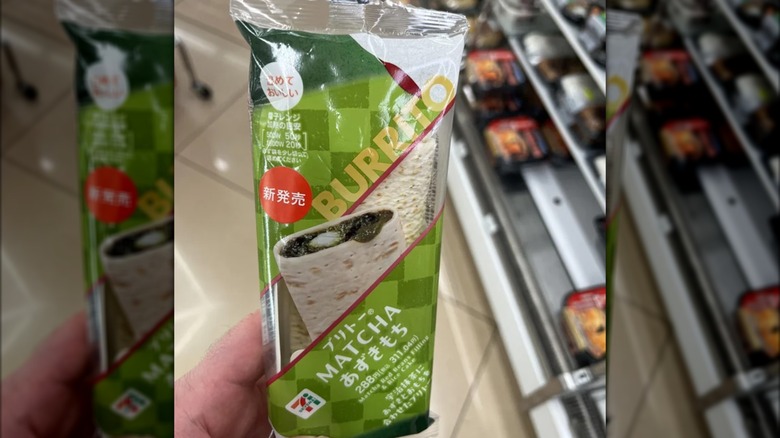
A Japanese 7-Eleven matcha offering that's on the odder side is matcha burritos. We're very curious about Japan's take on burritos and would love to have them come to the U.S., even if only for a limited time, so that we can try them. They were completely new in December of 2025, but social media users who tried them have loved them, even if they didn't expect to like them when they bought them.
This Mexican Japanese fusion item is truly inventive. The filling includes azuki red beans, which are more prevalent in Japan than the black beans and pinto beans you'd normally find in a traditional burrito. Along with the red beans, you get a mochi and Uji matcha filling inside the tortilla. Plus, there's cheese in the mix. So, you end up with an unexpected flavor combo that's a little sweet from the red beans but also salty and savory from the cheese. It's the burrito we never knew we needed, but now that we know, we simply must petition for it to come to the United States.
Mango ice cream
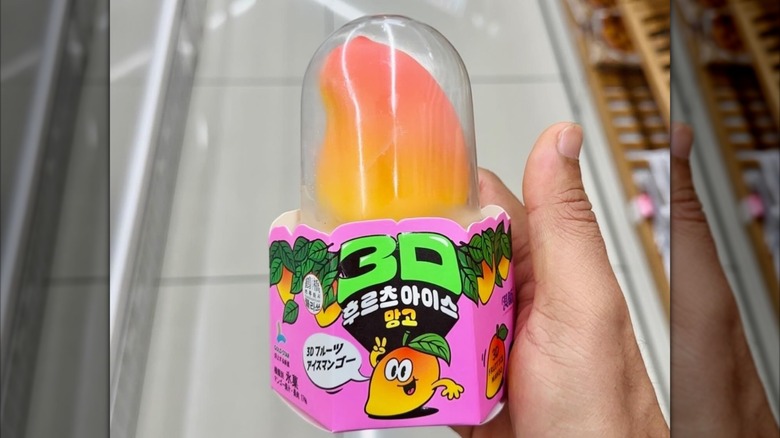
Another viral frozen treat we'd love to teleport from Japan's 7-Eleven stores to the United States is 3D ice cream. These are popsicles shaped to look like real 3D mangos, peaches, and grape bunches. They come in individually wrapped, plastic-domed pedestals, like gumball machine capsules, to keep the popsicle upright. These treats have a hard shell on the outside, while the inside is soft and smooth.
These first became popular in China and other areas of Southeast Asia before finding their way to Japan. Like many Japanese products, you might be able to find them at a few Asian markets in the U.S., but we'd love to see them become a regular fixture at 7-Eleven to make them easier to acquire and not so much of a hard-to-find novelty. Plus, we'd prefer one that's lightly sweet, like the ones in Japan, rather than one that's a complete sugar bomb.