

7 Vintage Kitchen Design Trends Boomers Remember Fondly
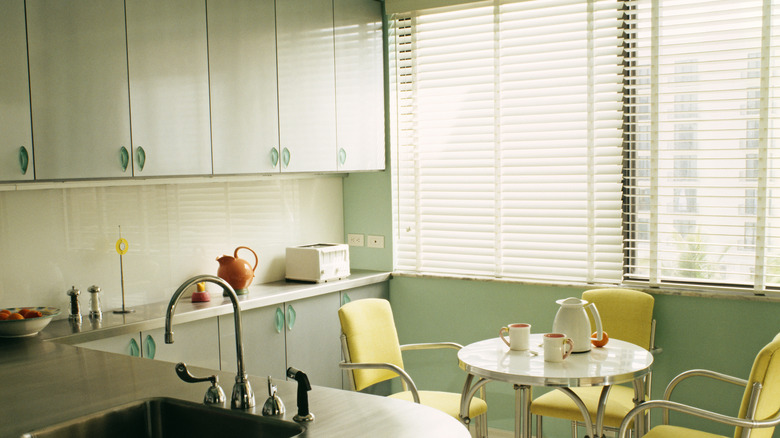
Interior design trends tend to vary on a regular basis, rotating over the decades as they go in and out of style. While slapping on a coat of paint or picking up a new piece of furniture for your living room are pretty easy switches to make, kitchens are often a bigger renovation job. Defining styles show up year after year, transitioning between colors, materials, and layouts. You might remember more recent kitchen design trends, like the all-white aesthetic, but what about looking further back?
For the boomer generation, born between the 1950s and 1970s, kitchen styles have changed a great deal since the mid-century. Those decades were a time of home development, with many women stepping into the workforce following World War II. This meant less time to perform household duties, leading to a surge in functional and practical designs.
While some trends are best left in the past (we're looking at you, kitchen shag carpets), others continue to be remembered fondly. Some are bolder and others are subtler, and chances are they've popped up in modern design trends in novel ways. We looked at some of the more influential kitchen design trends of the '50s, '60s, and '70s and compiled the list of those that boomers probably still think wistfully about.
Vibrant colors
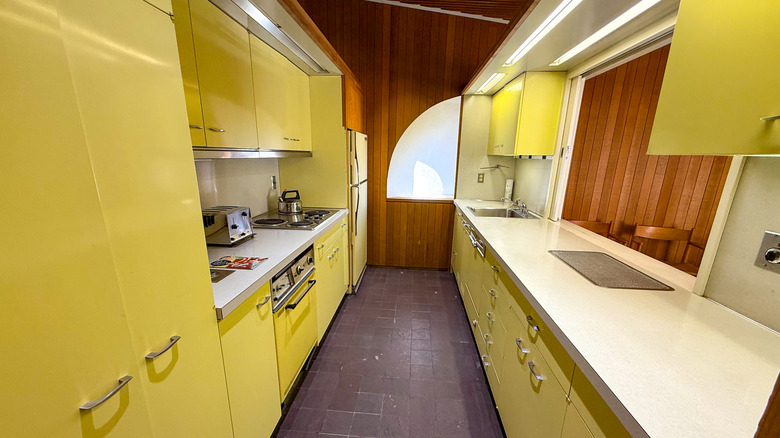
Color trends influence design aesthetics a great deal, which is immediately evident when you start to look at pictures of vintage kitchens. Though colors have become more in vogue in recent years, it's nothing like the degree that was omnipresent in the mid-century. While some past decades saw color incorporated to add a pop of brightness amidst brown wood tones, others were more in-your-face about it. Vibrant yellow, orange, turquoise, avocado green, gold, pink, and blue hues added an energetic dimension to the kitchen, taking it from utilitarian to statement-making.
Painted walls and cabinets were common, and precursors to modern color-drenching trends were the norm, with colorful cabinets and floors to match the rest. The trend also included two-toned kitchens, striking a dynamic contrast between opposing colors, for a dramatic visual effect. While colorful cabinets and a movement away from all-white or completely neutral kitchens are starting to make waves, the vibrant kitchens of the 1950s to 1970s were on a whole other level.
Patterned linoleum floors
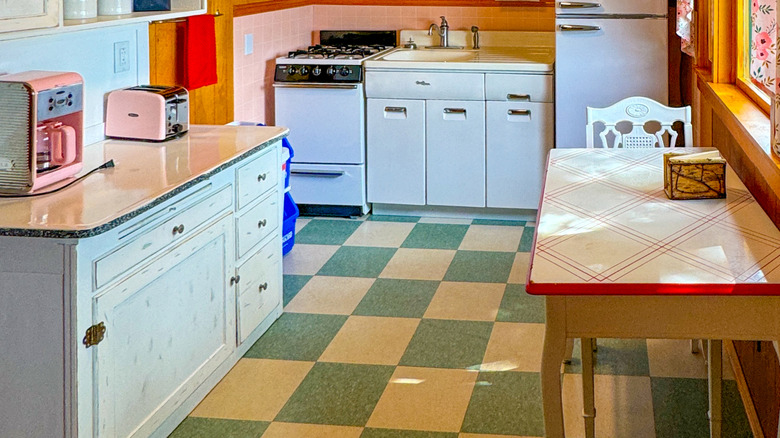
Linoleum often gets a bad rap, but there's something decidedly fun about patterned linoleum floors. They were big in the '50s and continued to be used in many kitchen decors (even as shag rugs and wall-to-wall carpeting started to gain traction). A basic black and white checkered pattern was a popular favorite for a while. It was reminiscent of diner floors, and it brought a seemingly modern look to kitchens. Nowadays, the design choice remains popular in some houses, though you'll usually find checkered tiles rather than linoleum or vinyl.
Aside from black and white checkered motifs, linoleum floors took on a life of their own, complete with a multitude of colors and patterns. Faux tiles, faux brick, faux stone, faux wood, and funky patterns were abundant, splashed out in any color you could think of, gracing kitchen floors across the country. Aside from the ultimate flexibility in pattern choice, linoleum was a durable material that was easy to clean and resistant to the wear and tear of a kitchen, adding to its popularity.
Wood paneling
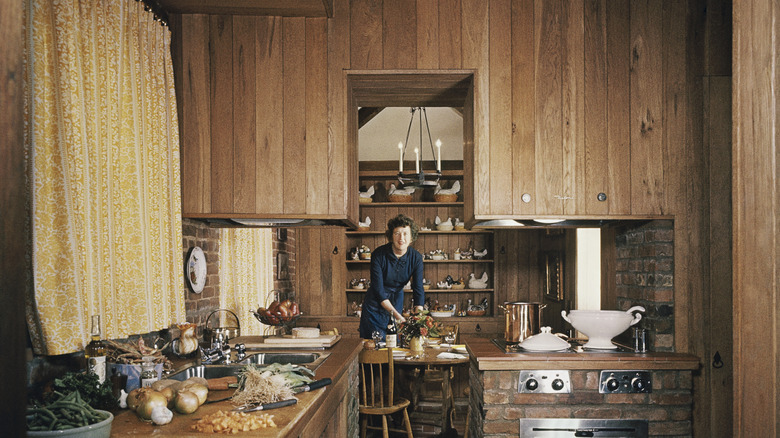
Amidst the colorful bold hues present in kitchens in the '50s and '60s, wood paneling became popular as well. Sold as planks in a range of colors and styles, the panels were considered an easy and affordable option for homeowners to install themselves. Whereas other alternatives required a bit more planning or hiring someone to drywall the space, adding wood paneling was a quick fix to cover up old, outdated walls. The convenience was part of the appeal, making it easy to renovate a kitchen with basic skills.
Solid brown was the tone of choice. For most people, it added a certain warmth and coziness to the kitchen area. Highlighting wood in kitchens with unpainted cabinets or wood paneling is becoming popular once again, taking boomers on a trip down memory lane, but this time with a slightly more sophisticated twist. Modern versions offer more options for customization and sleeker designs, and they're often used as an accent rather than taking over the entire space.
Formica countertops
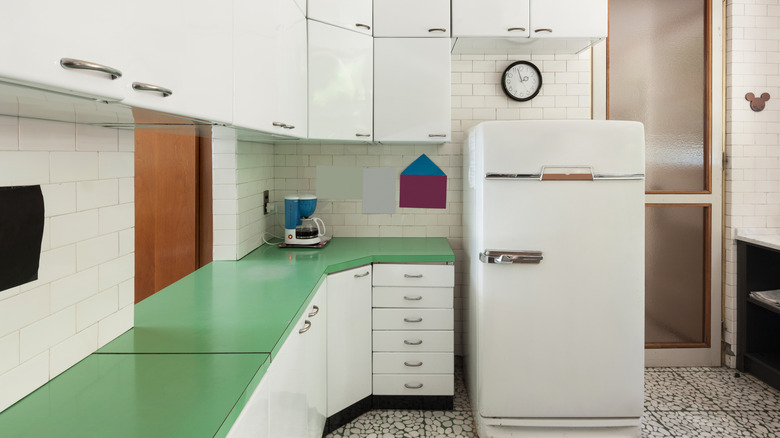
Formica is a brand name for laminate that was introduced as a material in kitchens in the 1920s, and by the 1950s, it had really taken off. It was durable, heat-resistant (up to 356 degrees Fahrenheit), affordable, and easy to clean, making it an excellent component of boomer kitchens, where functionality was prized. Even better, it could be made in a wide range of colors and patterns, offering endless options to satisfy homeowners. There were patterns that looked like mosaics, stones, and even wood, as well as solid colors if you wanted to make a statement.
Formica was typically used as a countertop material, but tables and other furniture made with it also rose in popularity. Considering the loud nature of many Formica designs, they started to become less common as trends shifted to more muted and natural looks. Naturally, as with all things interior design, the versatile material is starting to become trendy once again with younger generations, especially as technological improvements mean certain patterns can be hard to distinguish from natural materials.
Metal cabinets
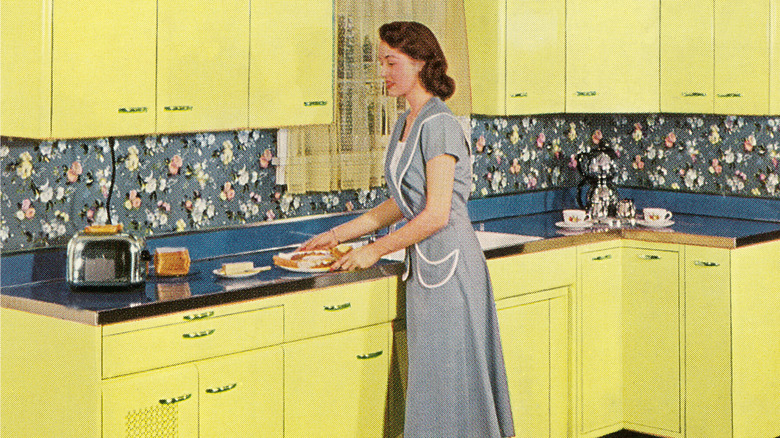
Nowadays, typical options for cabinet materials include solid wood, plywood, or MDF, but by the 1950s, metal cabinets were a common choice. Prized for their durability and heavy-duty nature, they were seen as modern and futuristic during a decade where innovation was constant. Thanks to their extreme resistance, they required minimal effort to upkeep and could easily endure daily wear and tear. They also didn't suffer from issues related to heat and moisture exposure. Metal didn't require particular care when cleaning, making it an all-around convenient choice.
Aside from the practicalities, metal could also be powder-coated in a wide array of colors to suit the vibrant aesthetic of the times. This made it easy to fit into a retro kitchen decor. Steel was typically the metal of choice, popularized after World War II, when steel factories that were producing weapons sought out new products to make. Metal cabinets are slowly making a comeback, but they might not be as colorful as they were in decades past.
Colorful appliances
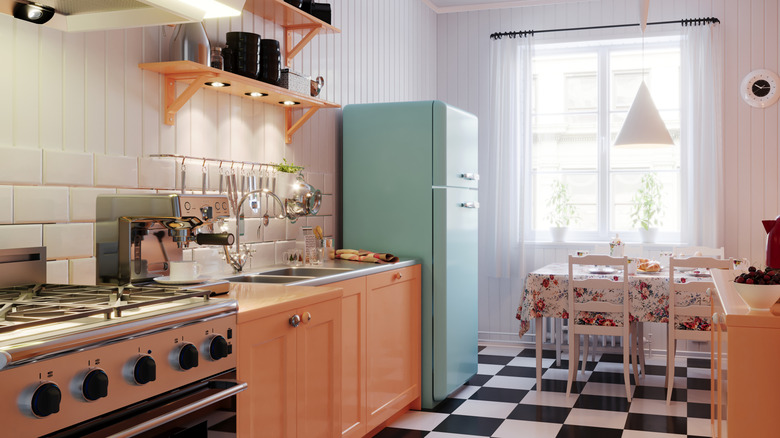
To hammer it in, colorful designs were all the rage in boomer kitchens, but this didn't stop at the walls, cabinets, and counters. Appliances were also privy to a wide range of colors, making them far more interesting than the monochrome options of today. Colorful appliances started to become more common in the 1950s, initially only in a few shades of pastel hues that matched the rest of the decor. Pink, pale yellow, and turquoise were commonly highlighted in kitchens, bringing a joyful touch without being over the top.
In the next decade, the colors got more vibrant and saturated, with bold reds, lime green, and orange in the rotation. By the '70s, the colors became tamer and earthier, matching the wood paneling that had by now taken over. Still, refrigerators and stoves were seen as another element of decor, rather than solely as appliances as they are today. Retro-style colorful appliances are popular in certain current kitchen designs, but they aren't as ubiquitous as they once were.
Decorative wallpaper
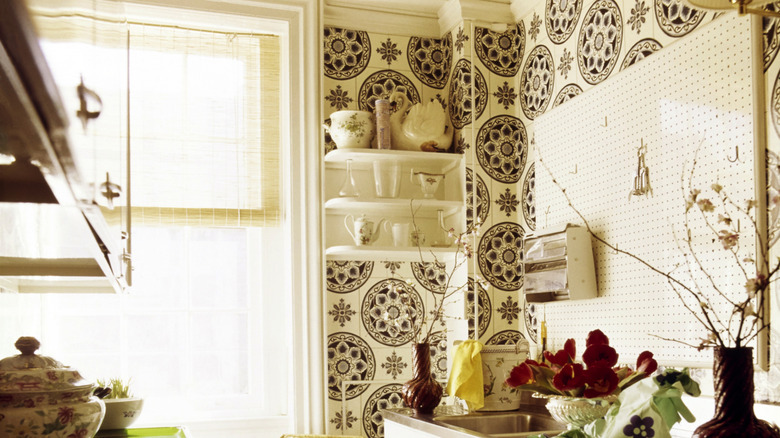
With all other kitchen design trends rampant in boomer kitchens, it should come as no surprise that patterned wallpaper graced many retro interiors. Using eclectic wallpaper became popular in the 1960s and continued into the following decade, fittingly in a time when colors were bold and loud.
Some patterns leaned heavily on geometric shapes, splashed out in vibrant colors that really stood out. Others incorporated bold floral designs or images of abstract nature, adding to the futuristic appeal. In case homeowners needed to be reminded of the room in which they were, some patterns featured food or kitchenware.
Patterned wallpaper often matched the overall color scheme of the kitchen, though usually in more of a brash, rather than subdued manner. Nowadays, some interior designers are starting to opt for similar design choices by incorporating wallpaper, though bright colors are usually replaced with earthier tones to fit the current trends.