

Red Flags At Breweries That Should Send You Running
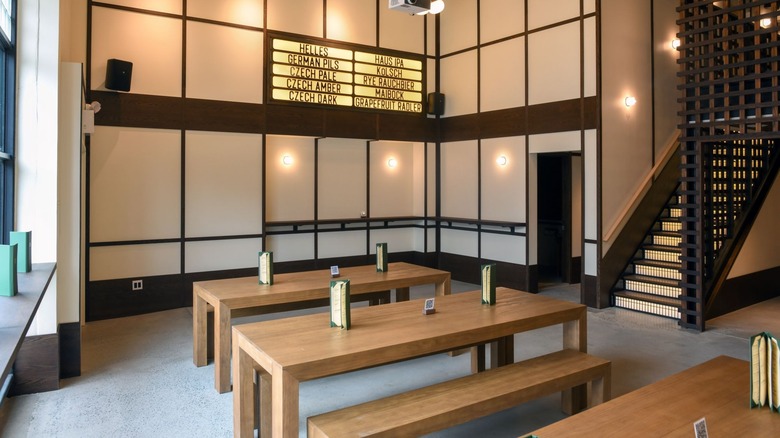
A few hours at a brewery with a group of friends and family is a great way to spend an afternoon. Have a few craft beers, some tasty beer-friendly snacks, perhaps a board game or a card game or two, and you've got yourself a nice little daytime activity. But just like any establishment where you'll be eating or drinking, it's never a bad idea to be observant. To keep your eyes peeled for those oh-so-important red flags — things that, if you see them, or smell them, should have you sprinting out that door as quickly as possible. To get some perspective on what to look out for the next time you visit a brewery, we chatted with Nick Meyer, founder of Eckhart Beer Co., a taproom and brewery in Brooklyn, New York.
As a brewery owner, Meyer does his best to make sure that his establishment is running as swimmingly as possible, so he knows if a brewery is run well and if a brewery isn't doing its best in serving its clientele. But just as importantly, he knows all the positive parts of the brewery experience, too, so don't think of this as a brewery-bashing session. Rather, think of this as a guide to keep in your back pocket when you visit such places, doing your best to notice these red flags but also appreciating when you don't see a single warning sign, and simply enjoy what the brewery is doing well. You may not be a beer expert (yet), but you're about to be an absolute brewery buff.
If the staff isn't attentive and educated ...

When you go out, regardless of whether it's a restaurant, bar, or pub, you want the staff to know their stuff. If you ask a question, it's assumed that the person you're asking will know the answer to some degree, and even if they don't know the exact answer, they're willing to do their best to figure it out and do it with a smile. This is especially true at a brewery, where there can be questions about where the beer is from, what it's made with, tasting notes, levels of hoppiness, and the like. Having an educated, attentive staff is crucial. So if the staff at the brewery you're at isn't showing any kind of interest in customer service, that's a red flag.
"If you have staff that look happy to be there, engaged, knowledgeable about their work and products, that's a really good sign," said Meyer.
Let's start with the knowledge aspect of the job. Brewery staff don't need to be beer encyclopedias necessarily, but they need to be able to talk about the beer they're serving. With the quirkiness of the craft beer industry, notes Meyer, there are a lot of questions that need answering, and even if a staff member doesn't drink, they need to be able to answer those questions regardless. Then there's the question of attentiveness. For Meyer, having a "no phones in front of customers" policy ensures that the staff is paying attention to the work instead of scrolling through Instagram.
If the space is disorganized and messy ...
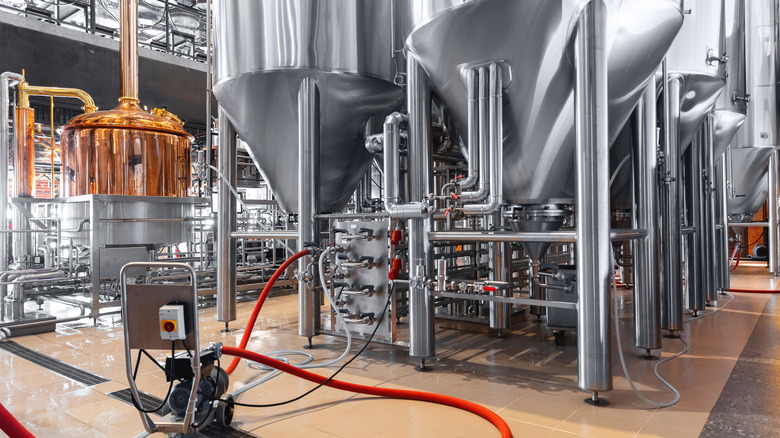
Coming from a fine dining background, Meyer has a thing about organization. And it's for good reason — if you walk into a brewery and see dirty tables, a messy bar setup, a disorganized production area, that's a whole lot of red flags that can be mashed into one big one.
"There's this classic cooking cliche that however your station looks like, your head looks like," said Meyer. "If your station is disorganized and messy, your head is the same. I think a lot of breweries, you can look in the back and production area, and it's a good indication of how seriously they take the work."
When you go into a brewery, it isn't automatically your job to become the mess police, but it is something to look out for when you're walking through to find a table or ordering at the bar. That organization, or lack thereof, as the case may be, can also be a sign of a lazy staff that isn't doing their jobs, or a manager that isn't paying attention to the space as a whole. Either way, if the brewery you're in looks like it needs a cleaning crew to come through, that may be a sign that you should go somewhere else.
If there are too many tap lines ...
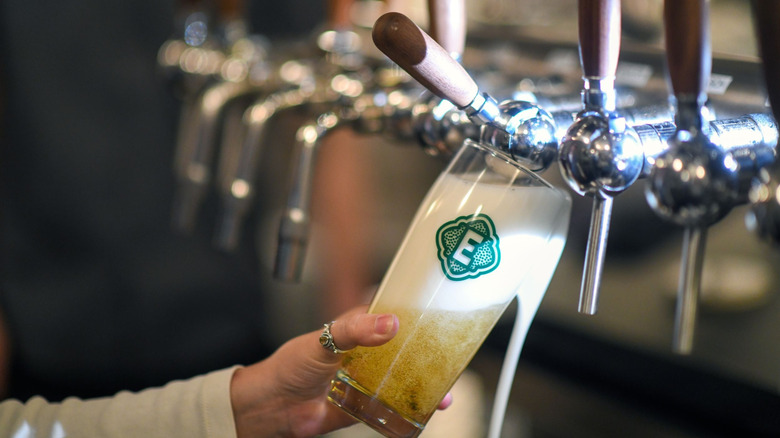
When it comes to craft beer, what used to be a fledgling, underground industry has grown into something truly large and impressive. With that said, you could argue that there's almost too much variety, too many choices, and with that, the possibility that not all of those tap lines are being properly tended to.
For Meyer, if a brewery is offering an almost crazed amount of beers on tap, that can and should be seen as a red flag. At Eckhart, Meyer and his team went back and forth about the number of beers to offer, deciding that 10 would be their sweet spot, offering just enough to cover all the bases. Is there an exact number of tap lines a brewery should have? In short, no. However, having an excess of beer options, to the point where some of them may go unordered for days or weeks, is absolutely an issue to consider.
"It was my personal belief that the craft brewery scene has gotten out of control with how many beers they offer. My belief is guests think they want that, but then it's overwhelming, and then they choose the same two things," noted Meyer. "If I go to a place with 25 beers, I wonder how old the oldest beer on that list is. It could have been sitting around for a long time."
If there are no food offerings, and no option to bring your own ...
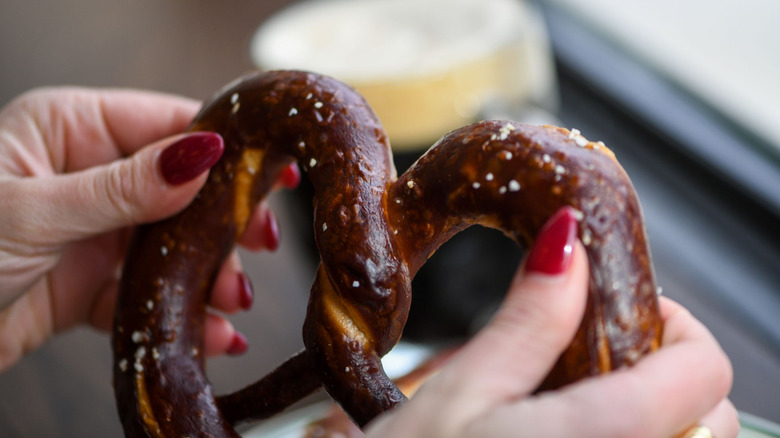
Going to a brewery can easily turn into a multi-hour activity, and if you plan on spending that much time drinking beer, having some snack options is more than crucial. Brewery food options can go one of two ways: either they offer food on site, or they give customers the option to bring in their own food. Not having a food menu? Not a red flag on its own as far as Meyer is concerned. However, not having a food menu or some kind of vendor or food truck on the premises, and not allowing customers to bring in snacks of their own? That brewery may as well hoist a red flag on every table.
"We choose to serve food because it's a smart idea and people want it, it keeps people in their spot longer," noted Meyer. "I've never been to a brewery that didn't have food options, like a food truck or an outside vendor, or allowing people to bring stuff. I would say, if a brewery did that, I would be critical of that." Ultimately, for Meyer, giving customers some food options, whether they're provided by the brewery or from the customers themselves, keeps people from getting too drunk, which is never a bad idea.
If your beer can is gushing ...
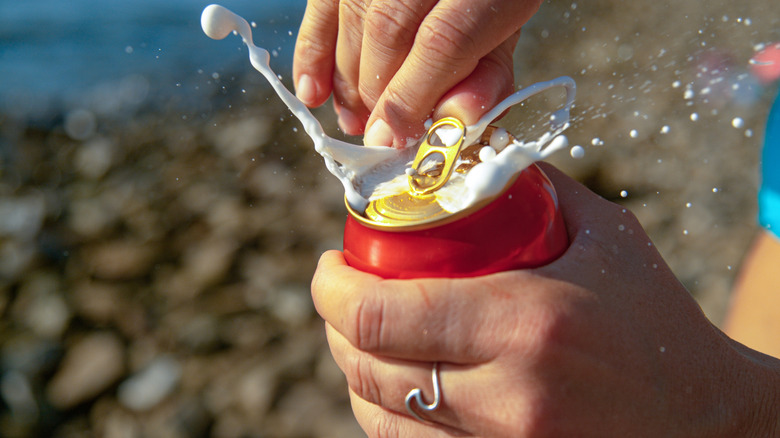
The process for brewing beer isn't an overly complicated one, but it does have a few steps worth knowing about if you aren't already a beer expert. Grains, like barley, are crushed, soaked in hot water, and then the solids are removed from the liquid, which is now called the wort. The wort has hops added to it while boiling, and then yeast is added to the mixture; this marks the beginning of the fermentation process. Now, here is where you'll want to pay extra attention: Once the beer is ready to be bottled or canned, the fermentation should be done. If it continues to ferment in the can or bottle, that may be a sign of bacterial contamination, which can lead to gushing. And if the beer you order at your local brewery is gushing, that's a major red flag.
"If you open the can and the beer comes fountaining out of it, that's an indication that some kind of fermentation has been happening after it went into the can, and another indication is if the can is really firm," Meyer explained. "You should be able to squeeze it, and it should give. If it feels like it's about to burst, that's a bad sign." Just like with eating, drinking beer is a sensory experience, meaning before you take that first sip, observe what's in the can (or the cup) to make sure it's looking good and smelling good.
If the bar glasses aren't clean ...
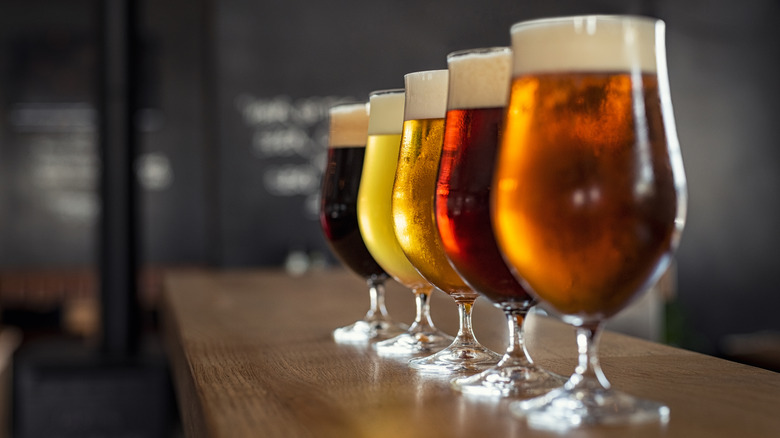
"The big thing is cleanliness," said Meyer, and to be honest, we couldn't agree more. The brewery space itself should absolutely look well-kept, but if the beer glassware you're drinking out of — you know, the things you're putting your mouth on over and over while enjoying that beer — is dirty, that may be one of the biggest brewery red flags imaginable. Fingerprints or smudges aren't the only telltale signs of glass cleanliness. According to Meyer, foam that disappears quickly or a lot of bubbles sticking to the side of the glass are both signs of a dirty glass.
"A really clean glass [means] you'll have bubbles coming up from the bottom of the glass, rising through the center of the beer. Any bubbles sticking to the glass, that's a sign that it's not clean."
If you're at a brewery that's serving beer in a plastic cup — hopefully it's good-quality, solid plastic and not a solo cup — that isn't a bad thing. But for Meyer, the hard work that goes into making the beer is better appreciated (and better tasting) in a glass instead of a plastic cup. If that's the case at the brewery you're at, that glass better be spotless. Otherwise, it's a sign you should turn around and walk right out of there.
If the beer names are offensive ...
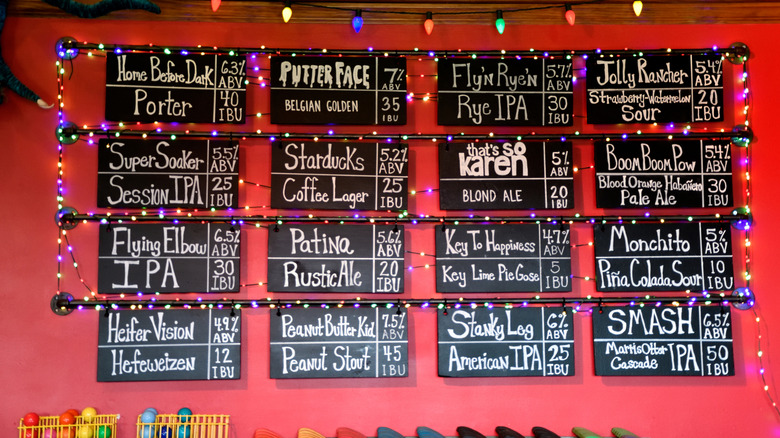
Craft beer names aren't all that different from craft cocktail names. They can get pretty inventive and creative, and when they're fun or silly, they can add something special to the drinking experience. Hoppy Ending Pale Ale (Palo Alto Brewing Company), Brew Free! or Die IPA (21st Amendment Brewery), and Duck Duck Gooze (The Lost Abbey) — how could you not want to try these? However, when a brewery goes a little too overboard with the naming of its beers to the point where it's just gross, that's when Meyer sees a big red flag.
According to Meyer, "off-color" beer names were more acceptable when the craft beer industry had just started. But the industry has changed since then, and there should also be more respect for the liquid being produced and the people who enjoy it. If the beer is actually worth drinking, it shouldn't need an off-putting name.
"I think everyone should know better now than to have offensive or off-color names for their beer," said Meyer. "It's not appetizing. This is something I'm going to consume, and if you make me feel disgusted with the name, I'm going to have disgust for the beer."