

The 10 Best Things To Infuse In Olive Oil For Maximum Flavor
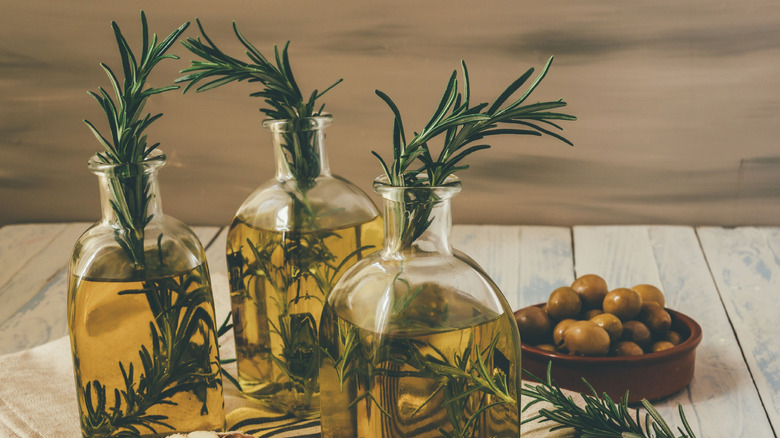
There's nothing like a swirl of high-quality extra virgin olive oil to finish a bowl of homemade pasta or a freshly blended bisque. That rich, fatty mouthfeel, paired with fruity and grassy undertones, can do wonders for dishes both sweet and savory. Although olive oils vary in flavor, as do fine wines and chocolates, you can count on a slight botanical and floral undertone, along with a slightly bitter and peppery aftertaste. The intensity and supporting notes vary depending on the variety of olives used, the climate and region where the olives are grown, the harvest timing, and even the soil conditions. However, there is a way to add external flavors to olive oils through infusions.
Those seeking a bold and intense flavor from their olive oil may consider infusing it with these 10 ingredients for maximum flavor. Always use a high-quality extra virgin olive oil for the best results, and be sure to consider the undertones of flavor in your unique bottle when pairing it with an outside ingredient. If you're new to the world of infusions, consider your strategy, choose between a cold or hot infusion, and select your ingredients carefully. As a recipe designer and chef, I prioritize safety over flavor, so do your research, follow safety precautions, and never store your infused olive oil in the pantry to prevent botulism caused by bacteria. And while a high-quality EVOO infused with expensive truffle or aromatic harissa might be decadent, you can also work with what you have, even if that's kitchen scraps, for your first oil infusion.
Lemon
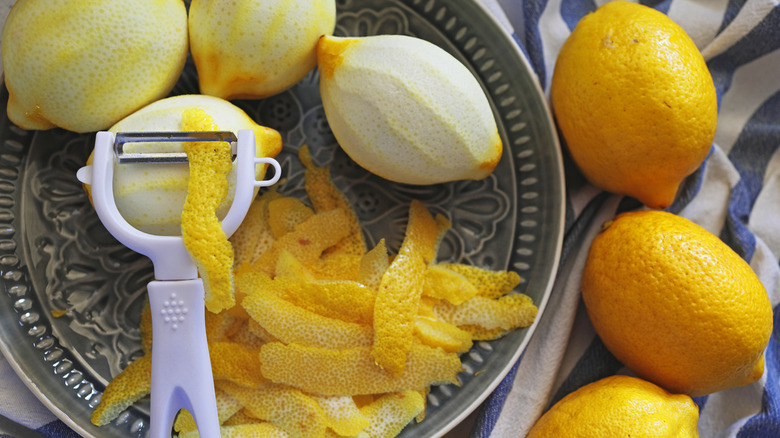
While you might assume that an infusion is simply the fusing of two ingredients, there's actually a little more that goes into it. For example, to make lemon-infused olive oil, you can't just combine lemon juice with olive oil and call it a day. You'll want to use lemon peels that have been cleaned and the pith removed. These peels contain lemon oil, which holds quite a bit of concentrated flavor. For a hot infusion, heat the olive oil on a low setting, along with the peels. Do this for about 10 minutes, but you can extend the process to intensify the infusion. Strain the olive oil, separating the peel, and store it in a sterilized jar in your refrigerator.
A cold infusion takes longer, typically a few days if not more, and doesn't involve heat. Instead, the oil can infuse gradually in the refrigerator. Lemon-infused olive oils can be used in just about any dish that you might squeeze lemon juice into, sweet or savory. Use it in fish or poultry marinades, dressings for salads, quinoa bowls, or fruit salads. Garnish your sorbet with a small drizzle or swirl it into your lemon olive oil cookie batter. Infusing olive oil with lemon is a great way to use leftover lemon peels, and it can be used in so many capacities.
Rosemary

Herbs are famous for finding their way into olive oil infusions. Herbs can be subtle or powerful, and on the powerful end of the spectrum lives rosemary. It's piney, minty, citrusy, peppery, but mostly, it's intense. If you're looking to infuse your olive oil with maximum flavor, look no further than rosemary. For the safest method, use dried rosemary to prevent the growth of bacteria. As always, you can decide between a hot or cold infusion, but take the necessary precaution of storing it in your refrigerator.
Rosemary-infused olive oil can have myriad uses. Rosemary can be used to enhance both red and white meats, so be sure to include it in your marinade or sauce. It can also be included in salad dressings, over roasted vegetables, or used as a garnish, drizzled on pasta. It makes for a wonderful bread-dipping sauce topped with a little flaky sea salt or Parmesan cheese. If you're a charcuterie fan, consider drizzling soft cheeses with rosemary-infused EVOO to enhance the fatty mouthfeel and add a pop of unique flavor. Garnish dips, ice cream, or even baked goods with a hint of rosemary and a whole lot of richness. Grow and dry your own rosemary at home, even in the winter, so you can experiment with infusions all year round.
Truffle
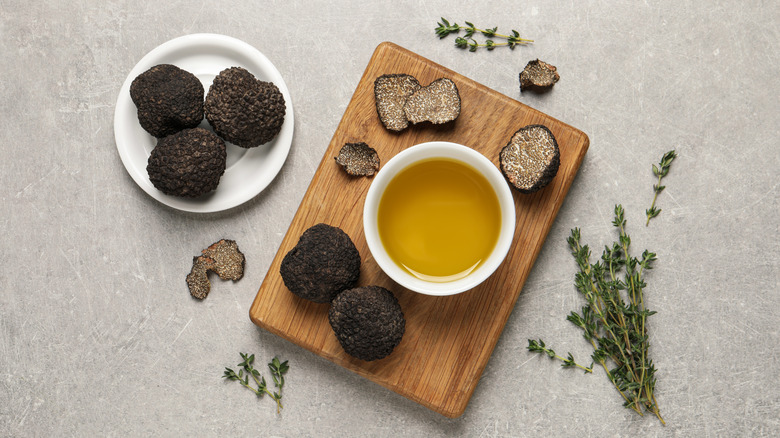
Truffle oil is expensive. But did you know that much of the time, when you buy truffle oil, you're not actually getting real truffle-infused oil? That's right, it's probably synthetically flavored, so it's time you took matters into your own hands and infused your own at home. Although I would usually recommend using dried items for an infusion, the flavor is much more powerful if you use fresh truffles. Slice the truffles into thin slices to create more surface area and get the most out of those expensive little 'shrooms. Do a cold infusion or a low-heat hot infusion to preserve the truffle flavor best, and store the flavored oil in the refrigerator. Unlike dry infusions, there is a greater risk for bacterial growth. Luckily, truffle oil is so incredible that you'll have no problem using it up before it spoils.
Truffles have an intensely umami flavor, are slightly woody, and very potent. Classically, truffle oil is used in cream and mushroom-based recipes, particularly pasta and risotto dishes. You can also use truffle oil tossed with French fries or in other potato dishes. Typically, you want to avoid using truffles in intensely flavored dishes, as they tend to compete heavily; rather, they do wonders when elevating boring recipes. Truffles are expensive, so surround them with quality ingredients to get the most out of your purchase.
Basil
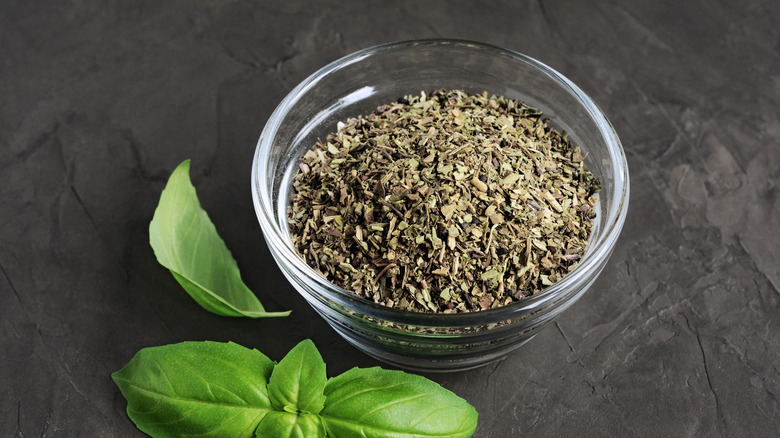
Although not the boldest of herbs, basil still has quite a punch of distinct flavor. Basil and olive oil are a classic mix, as both are heavily used ingredients in Mediterranean cuisine. So, why not skip a step and infuse your olive oil with basil beforehand? I recommend using a dry infusion to prevent bacterial growth. If you can use whole dried basil leaves, the straining process might be easier. However, as long as you have a fine sifter, those tiny flakes you get on the spice shelf should do just fine.
Basil-infused olive oil has both sweet and savory notes. It's mildly minty, a tad peppery, with an almost citrus-like zest. Although famous mostly for pasta recipes, basil has endless applications, from adorning fruit to being coupled with ice cream. Try drizzling your basil-infused olive oil over strawberries, or use it in a savory capacity in your summer salad, roasted vegetables, or grain bowls. I like to use a basil infusion in lighter dishes, particularly with spring and summer vegetables. Grow your own basil indoors all year round, and dry leaves before they yellow for your olive oil infusions. Both olive oil and basil have peppery, sweet, and savory notes, so it's no wonder the two go so beautifully together.
Blood orange
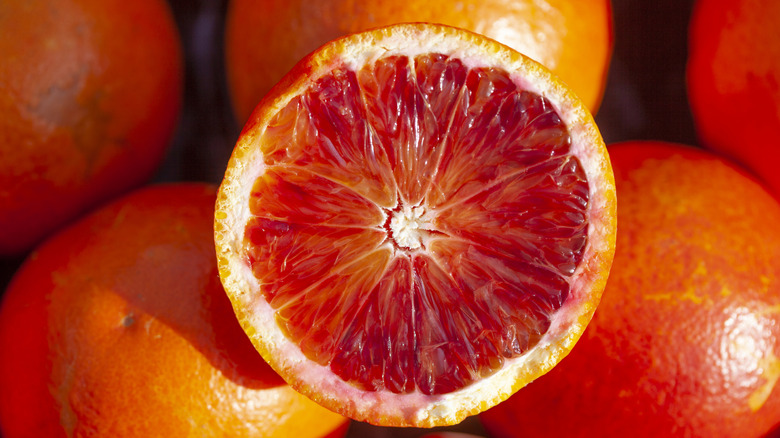
You can certainly infuse olive oil with orange peel, making it bold, sweet, bright, and tangy. But if you're looking for a more complex, berry-like, or even floral tartness in your infusion, turn to blood oranges. Yes, they sound a little scary, especially because they get their name from the color of their flesh. Blood oranges are sometimes more difficult to come by, depending on your region, but have an elevated, more complex profile that does wonders for an olive oil infusion.
Much like you would do with a lemon infusion, clean, dry, and remove the pith from the blood orange peel before starting your hot or cold infusion. You can also use dried peel for a safer method, removing almost all chance of botulism via bacteria in water. However, it's still important to take precautions and store your infusion in the refrigerator, as well as mark it with an expiration date. Fresh ingredients may expire in just a few weeks or even days, while dried ingredients can last over a month in some cases.
A blood orange infusion, like most citrus infusions, can be used in salad dressing, over fruit or desserts, and even in poultry or fish marinades. If you plan to drizzle it over vegetables, consider root vegetables and dark leafy greens.
Chipotle
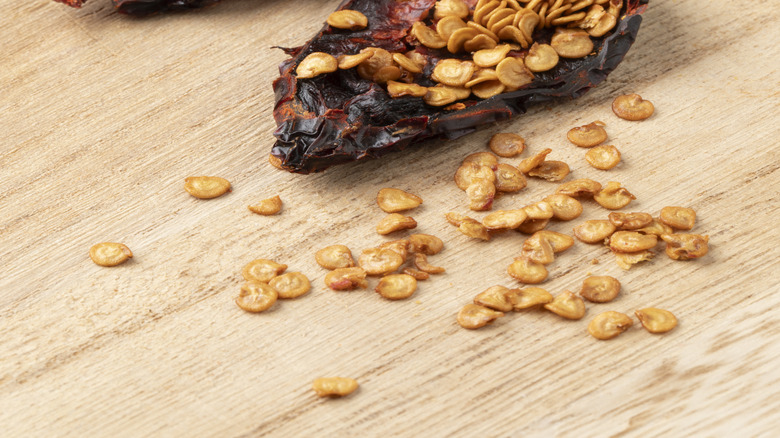
When discussing bold flavors, it's impossible to ignore hot peppers. Chipotle peppers have a distinct smoky flavor, along with sweet undertones. Instead of the fresh or grassy flavor of a serrano or jalapeno, chipotle peppers are a bit more earthy and heavy. Dried peppers can be used for an infusion in olive oil, and the combination of smooth, rich, smoky, and spicy flavors can make for the ultimate ingredient.
Use chipotle-infused olive oil for meat rubs, especially during grill season. Add a hot kick to your roasted or grilled veggies, spice up your salad dressings, or drizzle it right onto your tacos or burrito bowls for the ultimate pop of flavor. A little goes a long way with hot peppers. When cooking with chipotles, be sure to start with less than you think you might need, and note that the heat blossoms over time. I like to pair my Chipotle-infused olive oil with fresh herbs and tart dairy products to create contrast.
Harissa
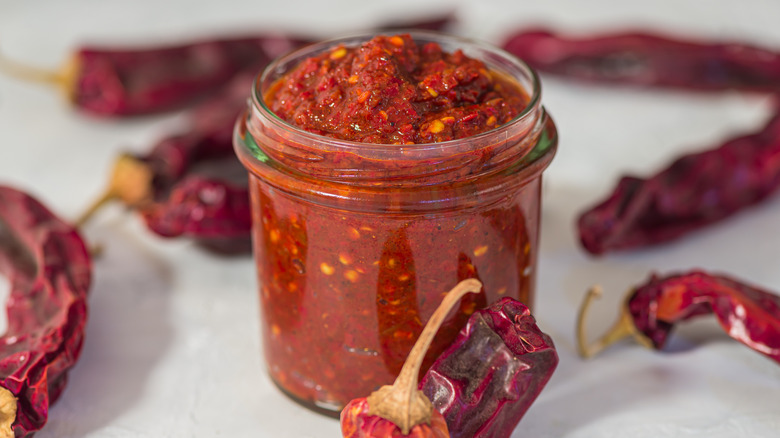
Although we know harissa as an aromatic, intensely flavored paste, you'll want to find harissa powder to use for your olive oil infusion instead. This North African combination of spices will leave your taste buds tantalized. With heat from the chili, along with cumin, coriander, garlic, and caraway, you'll quickly understand why this is one of my favorite olive oil infusions. You can order, shop for, or make your own harissa spice mix. The important part is knowing just how much to add to your olive oil. Use a hot or cold infusion, and instead of a strainer, use cheesecloth to catch some of the spices. However, you may notice it will still color your olive oil and leave some debris.
Harissa olive oil can be used to garnish hummus and other dips, along with meats, vegetables, and bean dishes. Its African heritage doesn't mean that it's limited to that particular cuisine, and it tastes delicious over Mediterranean and South American cuisine as well. Stick to savory foods and sweet vegetables, as garlic doesn't play nicely with most fruits and desserts. With just enough heat to make a statement, harissa-infused olive oil helps make bland meals pop and to elevate already flavorful recipes without stealing the show.
Jalapeno

There are many reasons jalapenos are so popular, but I think it has something to do with the sweet undertone, mild heat, and fresh grassy flavor. It holds the status of a hot pepper without the smoke or tears. This is why jalapenos make such a wonderful olive oil infusion: They won't overpower the olive oil with heat, but instead bring mostly flavor. Dried jalapenos are the way to go, and because of their low heat profile, you can use more than you might with a blistering hot pepper.
Jalapenos can be paired with both sweet and savory foods, but I like to limit their range in the sweet foods department. However, you can use them alongside some fruits, especially mango, strawberries, and pineapple. In fact, use a little jalapeno-infused olive oil when grilling pineapple for an unexpected pop of heat and added flavor. Consider using a mild jalapeno olive oil with seafood and poultry, and be sure to purposefully pair it with herbs and spices. Use honey to balance the heat in a marinade, and don't forget about minced cilantro and lime juice as supporting actors in your recipes. If you're cooking with jalapenos or other hot peppers, be sure to wash your hands thoroughly before touching your face to prevent burning.
Cilantro
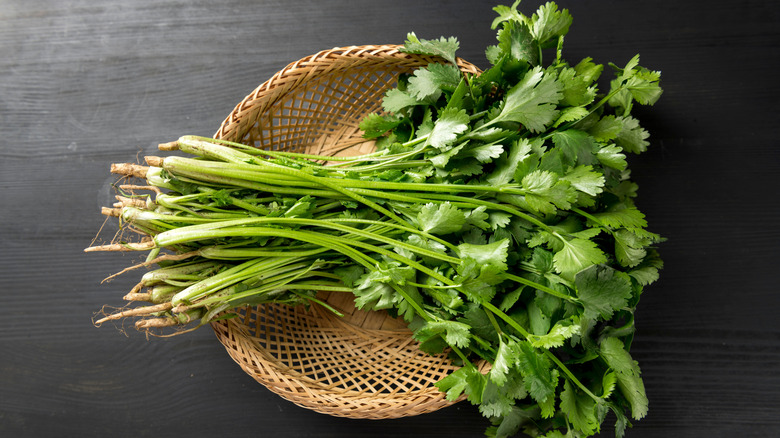
One of the more refreshing, citrusy, and vibrant herbs out there, cilantro also takes the cake for most controversial. How can an herb be controversial, you might ask? Well, did you know that some people think cilantro tastes like soap? It's actually a genetic predisposition, so if your face twists at the thought of cilantro, this infusion is not for you. For the rest of us, consider a dried cilantro infusion for your tacos, seafood, grilling marinades, vegetables, salads, rice seasoning ... the list is endless. Consider using it in place of butter for corn on the cob, or even finishing your dips and sauces with a drizzle.
Cilantro and olive oil make a natural pairing, so having a bottle on hand might be worth your while. For Mediterranean and South American cuisine, cilantro-infused extra virgin olive oil is a must. Infuse cilantro into a lighter olive oil and use it to pan-fry your soft taco shells to give them a burst of flavor. If you're a fan of using fresh herbs in your salads, do so in combination with an herby olive oil-based salad dressing. The fresh zesty lightness of the cilantro works wonders, coupled with the buttery, peppery, fruity flavors of a high-quality olive oil.
Oregano
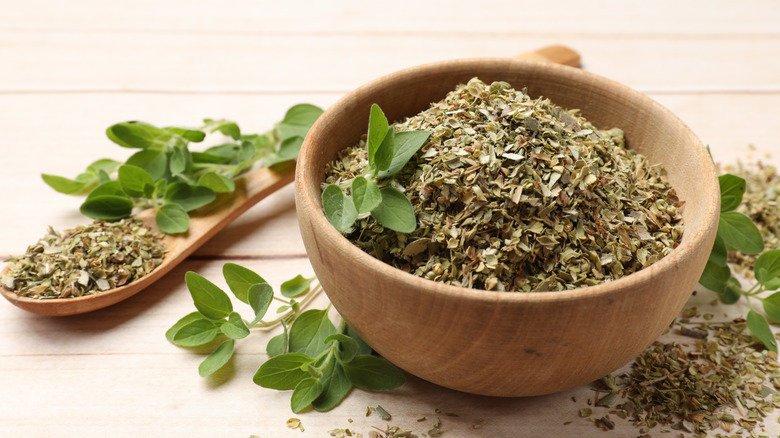
If you're looking for maximum flavor, then look no further than oregano. This herb is intensely flavorful but very complex. It combines notes of lemon and mint, with earthy and rustic flavors. It's even a bit peppery and warm, and also savory. Different varieties produce slightly different notes, but your typical Mediterranean oregano makes for a fabulous olive oil infusion.
Because this herb is intense, it may shine through a bit brighter and dominate the subtle notes of the olive oil. You can also add less or shorten your infusion for just a whisper of oregano flavor instead of a flood. Oregano is known for making flavor pop, which is why you can use it as a substitute for salt in some of your recipes. This is why it makes the perfect candidate for a maximum flavor infusion, and can be used to make just about any savory recipe sing. Consider it over pizza, on pasta, in salad dressings, or over vegetables. Any recipe that calls for oregano is sure to be elevated by an oregano-infused olive oil.