

16 Vintage No-Bake Desserts That Are As Delicious As They Are Easy To Make
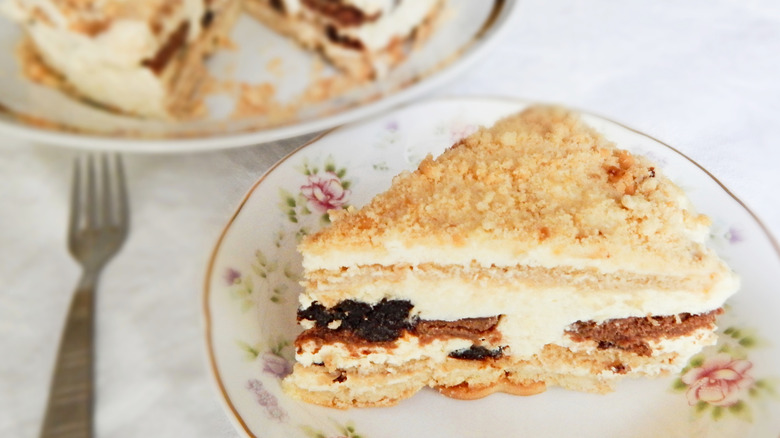
We may receive a commission on purchases made from links.
From the mid- to late 20th century, American cuisine was defined by convenience. Make-ahead, no-bake recipes dominated party spreads, giving us wild concoctions to look back on, like the infamous Jell-O salad, tuna and Jell-O pie, and tomato-flavored Jell-O (we're sensing a pattern here). Making entire meals with packaged ingredients that only take a few minutes to whip up was seen less as a shortcut and more as modern ingenuity. While some of the — let's just say — stranger recipes haven't stood the test of time, some of those on-the-fly desserts of yesteryear still deserve a spot in the party spread.
In this list, we'll make a case for some vintage dessert recipes that will have your guests thinking you spent hours toiling away in the kitchen. In reality, most of these mid-to-late-century recipes are easy to whip up on the spot with some basic ingredients you might have tucked away in the pantry. They may not scream modernity — and yes, there's Jell-O in some of them (but no mayonnaise, we promise) — their old-school, nostalgic charm is what makes them so interesting, delicious, and most importantly, easy to prepare.
Buckeyes
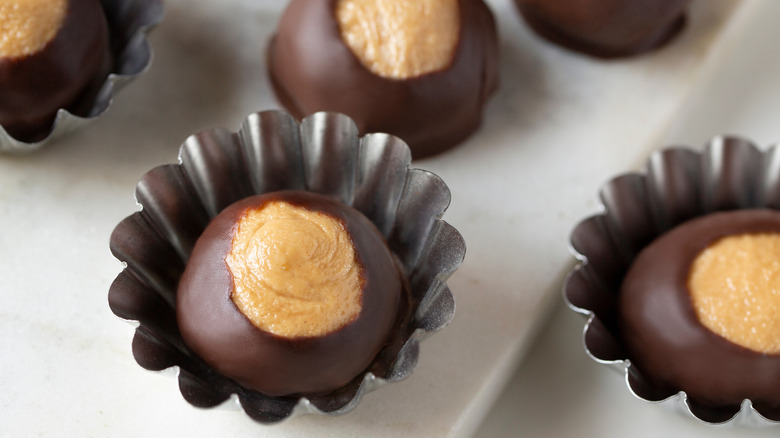
Buckeyes are a simple treat that makes a huge impact at a party. These tiny, poppable delights are loaded with peanut butter and chocolate flavor, kind of like a homemade Reese's cup. The humble buckeye is simply a ball of sugary peanut butter rolled in melted chocolate, then left to harden. If you're interested in bringing a homemade treat to your next get-together, following a buckeye recipe is nearly as simple as buying candy at the store and telling everyone you made it yourself — and it won't give you bad candy karma.
Buckeyes became a staple dessert for Ohio natives starting in 1919, when the Buckeye Candy Company opened in Brooklyn, Ohio. The treats are named for the nut of the state's native buckeye tree, a dark brown spherical nut with a round, light-brown eye. The buckeye candies get the iconic look of their eponymous tree nut when some of the chocolate is left off at the top of the candy, exposing the creamy, light-brown peanut butter center.
Grasshopper pie
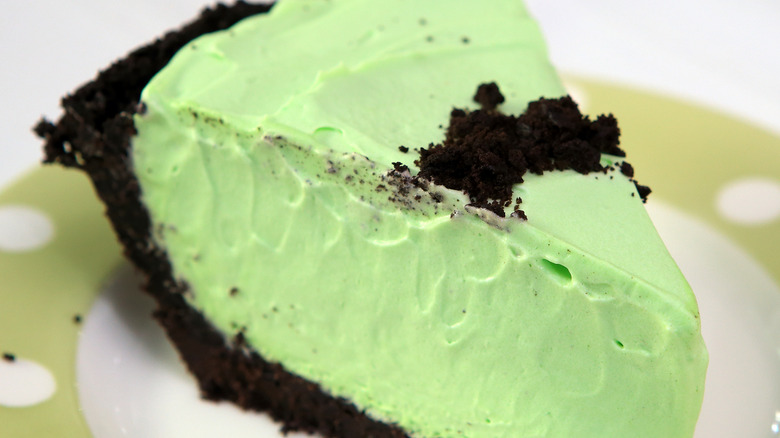
What's more appealing than a dessert that can lift your spirits (pun intended)? Grasshopper pie is a boozy, retro dessert that's as flashy as it is tasty. It's modeled after the grasshopper cocktail, a popular digestif or dessert drink from the mid-century that's since faded into obscurity. Legend has it that the grasshopper pie was first created by the cocktail inventor's wife. She was looking for an opportunity to turn the drink made with white crème de cacao and crème de menthe into a chocolatey, minty dessert sensation.
The original recipe for the grasshopper pie involves a crust made of crushed chocolate crackers (think old-fashioned Oreos) and a bouncy filling made of melted marshmallow, plus the two liqueurs that make a grasshopper cocktail. The pie is frozen and topped with whipped cream and shaved chocolate for a prettier presentation that's perfect for a holiday party — just be sure to keep the kids away.
Eclair cake
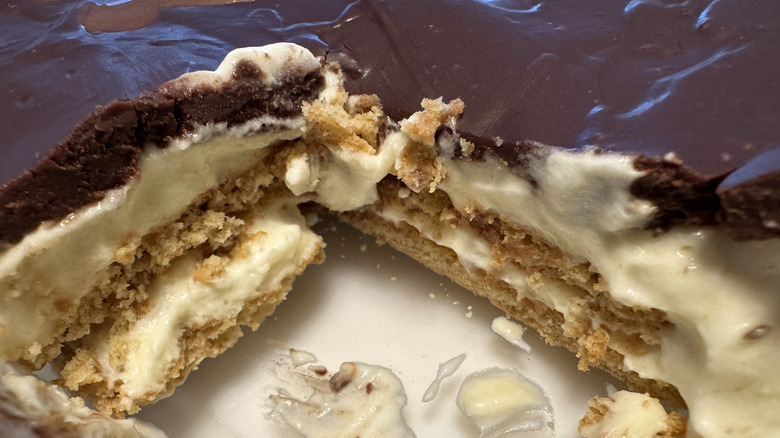
It may look and sound bougie, but the chocolate eclair cake of 1980s potluck fame is deceptively easy to make, even when time is of the essence. An eclair cake recipe requires just vanilla pudding (made from a boxed mix, of course), Cool Whip, graham crackers, and a tub of chocolate icing. The ingredients are layered together so that the cake looks just like a giant pastry.
There isn't anything about this cake that makes it a true eclair; the name mostly comes from its eclair-like presentation. However, the fluffy vanilla pudding mixed with Cool Whip, graham crackers, and rich chocolate icing gives it a similar flavor profile to the real deal, but with its own unique, crunchy twist that never fails to be a huge hit at parties. Just be careful cutting and plating this creation — it tends to get a little sloppy.
Ice cream snowballs
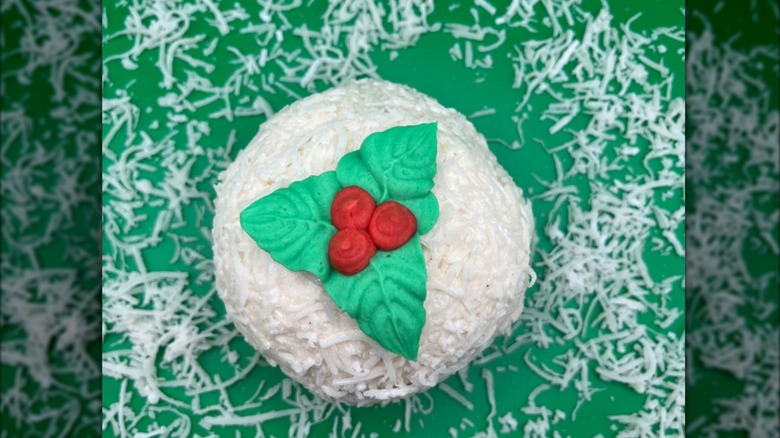
Unless it's for pies à la mode, you don't often see ice cream treats as part of a party or potluck spread, which makes sense. It's hard to keep ice cream intact, especially at outdoor gatherings — but you might not have to worry about that with these snowballs, because they'll be scarfed down before they have a chance to even think about melting.
Ice cream snowballs are made by rolling round scoops of frozen ice cream in shredded coconut and then topped with, well, whatever you want. The treat was popular in the 1950s and 60s, when Foremost Dairy created them for the holiday season. The company's version featured an icing holly sprig and a candle stuck in the top, with an old ad referring to them as "flaming ice cream snowballs."
A quintessential snowball has coconut and a hot fudge drizzle, but a s'mores version with mini marshmallows and crushed graham crackers will be the talk of the party. Or, try your hand at Rocky Road snowballs with marshmallow, chocolate chips, and crushed walnuts.
Watergate salad
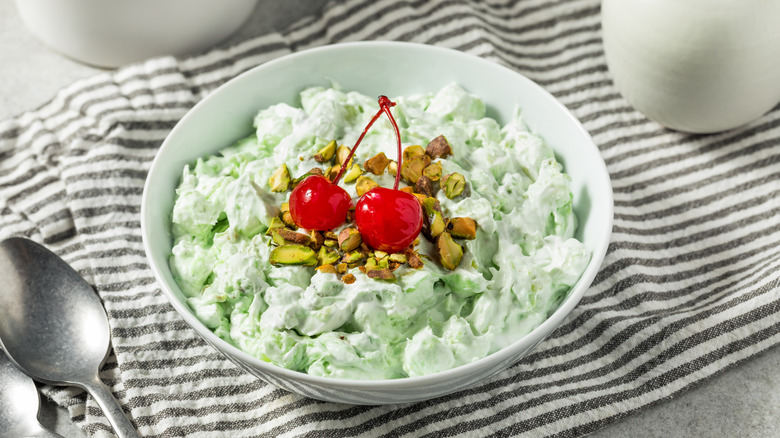
On the surface, Watergate salad looks like one of the famously egregious Frankenfoods of the mid-century, but it's actually a lot more delicious than its odd ingredients and funky color let on. The salad's (and that term is used very, very loosely) origins date back to around 1976, only a couple of years after President Richard Nixon resigned as a result of the infamous scandal that shares its name with this recipe. Around this time, Jell-O unveiled a pistachio-flavored pudding mix that was an instant hit in American kitchens. The recipe got its name when a rumor spread that it was invented in the famous hotel, although the Watergate staff denies this. Still, the name and association stuck, making this dish a historical staple.
In classic 1970s American culinary fashion, the pistachio pudding mix was combined with canned fruit and Cool Whip to give birth to the mint-green goop known as Watergate salad. A typical Watergate salad recipe includes crushed pineapple and chopped pecans for some textural contrast, and despite its appearance and negative historical connection, you'd be surprised how quickly this dish can disappear at a potluck.
Crown jewel cake
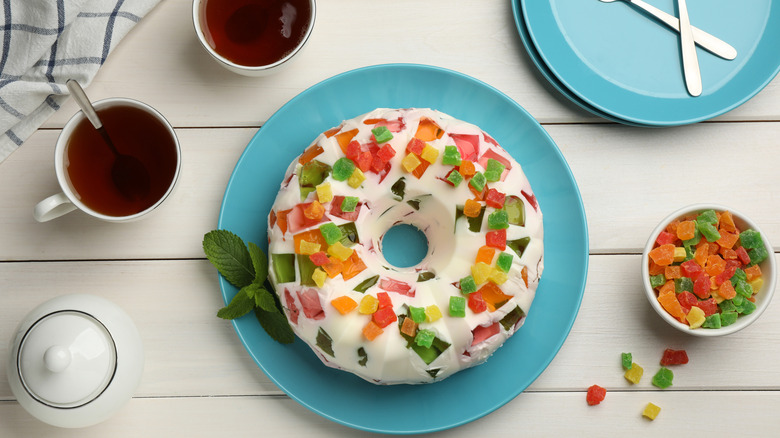
If you like to be the center of attention at every party — or, in this case, make the dish that steals the thunder from everything else in the spread — you have to try your hand at a crown jewel cake. First unleashed upon the world in the 1962 edition of the "Joys of Jell-O Cookbook" from General Mills, the crown jewel cake is easily one of the most colorful, quirky desserts of the mid-century. It may not be as simple to make as most of the dishes on this list, but it's a no-bake recipe that's worth the effort (and the subsequent colorful Jell-O powder dust all over your kitchen).
The cake (if you can really call it that) is made with cherry, lime, and orange Jell-O chunks mixed with whipped cream that's been fortified with lemon-flavored Jell-O. The mixture is poured into a graham cracker crust and topped with more whipped cream until it looks like something out of a child's sugary, rainbow fantasy. There are a lot of fruity gelatin flavors going on in this treat, but the decadent whipped cream lets them all meld together nicely.
Puppy chow
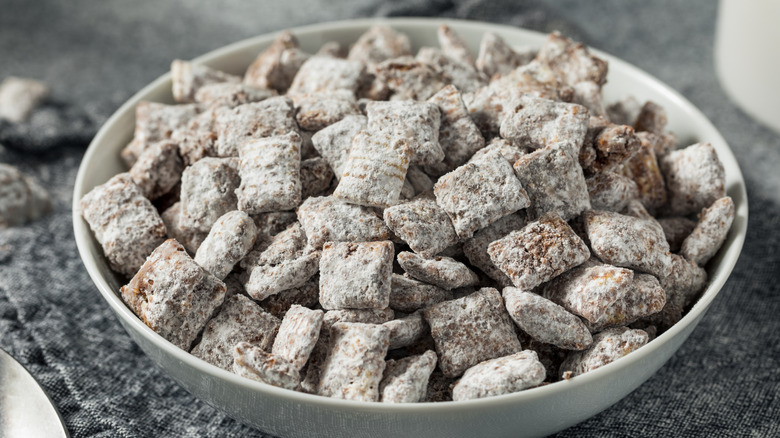
Starting in the 1960s, puppy chow became the quintessential finger food of kids' parties and Christmas get-togethers in the Midwestern United States. You can think of it as Chex Mix's sweet, candy cousin. It's made with Chex cereal covered in melted chocolate, peanut butter, and plenty of powdered sugar. Its pet food association may come from its appearance, but it's also likely linked to Ralston Purina, the nation's most well-known pet food brand. The company also produced Chex cereal when it first hit store shelves back in 1937.
Puppy chow is still alive and well today, but not as the homemade creation that '60s and '70s kids grew up with (unless you step into an old-school Midwestern kitchen, that is). It goes by the name Muddy Buddies these days, and while the corporate version isn't an exact replica of the homemade sleepover staple, it still scratches the nostalgia itch for Gen-Xers.
Tang pie
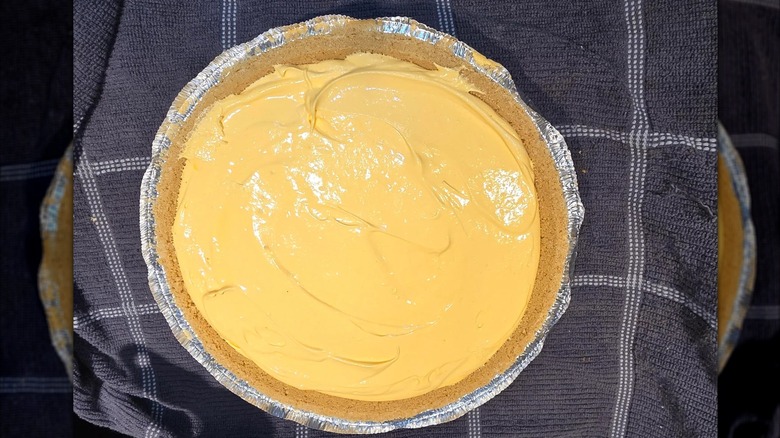
In the middle of the century, the sweet, orange drink mix known as Tang skyrocketed in popularity at the same time as America's fascination with space travel. Astronauts touted the drink mix as a great way to make the nasty drinking water on board rockets more palatable. In order to boost Tang's popularity even further, General Mills incorporated it into a no-bake pie recipe, leading to one of our history's most infamous dessert creations.
The original recipe for Tang pie involves combining the drink mix with Cool Whip, sour cream, and condensed milk and pouring the mixture into a graham cracker pie crust. Tang pie sounds unpleasant on the surface, but it tends to receive generally positive reviews, with folks likening it to orange salt water taffy and Creamsicles. Since it's so easy to make, it's worth taking a crack at it even if it winds up being a flop for your taste buds — at least you'll get to say you experienced one of the '60s' most dastardly desserts.
Haystacks
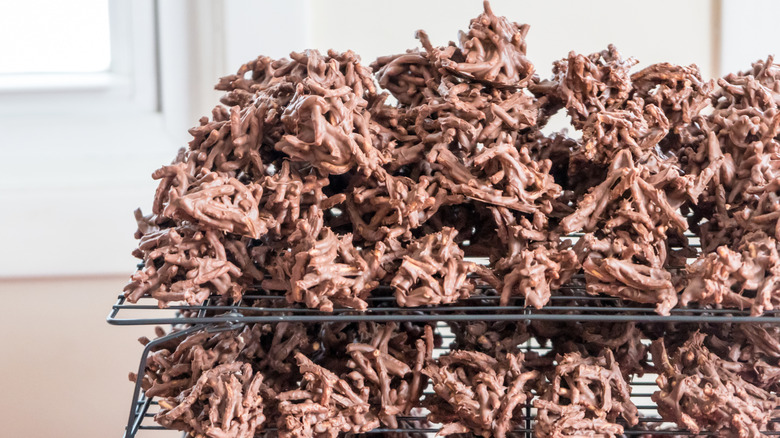
Let's say you forgot about that work potluck — and wouldn't you know it? It's tonight. It's moments like these that you'll be glad you had a recipe for haystacks stashed away in an old recipe book somewhere. These cookies require just three or four ingredients, depending on what flavor you're going for (or what you happen to have in the pantry). They're a favorite of both kids and adults, and they're sure to bring back a wave of happy memories for most of the older party guests.
To make haystacks, you'll need chow mein noodles (the kind sold as a salad topping, like these noodles from La Choy) and peanut butter. The rest is up to you. Melt the peanut butter with chocolate chips for classic chocolate peanut butter haystacks, or mix in butterscotch chips for a warm, toasty version. You can even add some festive sprinkles or crushed candy canes for a holiday-themed treat. Just stir the noodles with your melted ingredients, scoop them into cookie shapes, and let them harden in the fridge on parchment paper.
Lush
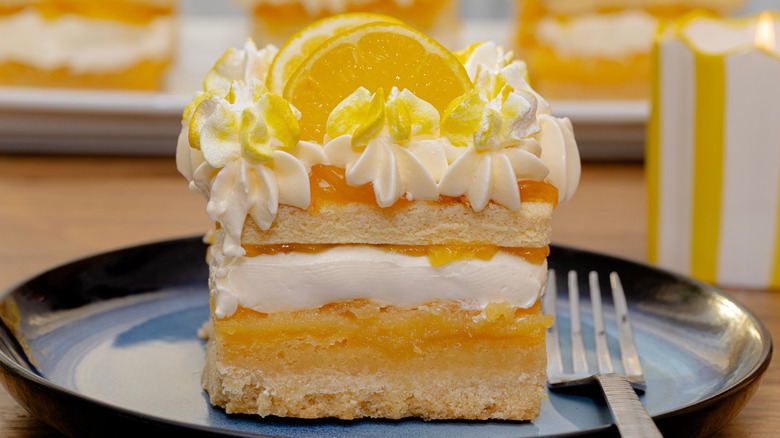
A lush dessert is one of those rare homemade sweets that has it all: Its presentation is beautiful enough for an elegant party, its flavor is adored by everyone, and it's easy enough for a novice cook to nail the recipe on the first try. You can think of this sweet treat kind of like a dessert lasagna. It's all about layering — a popular dessert technique of the 1960s and 70s.
Lush is typically made with Cool Whip, pudding, some kind of no-bake crust, and usually some sort of jam-like filling, like compote or fruit curd. No matter your taste, you'll find a recipe that's right up your alley. Lemon lush with lemon curd or lemon-flavored pudding and crushed vanilla wafers is a fan favorite. An elevated coconut cream lush is the perfect after-dinner treat to hand out at a luncheon or dinner party, and it's so easy to make ahead of time and have them waiting patiently in the fridge. If you want to guarantee it'll be a success at the party, opt for a simple chocolate lush — who can resist whipped cream, chocolate pudding, and crushed Oreo?
Trifle
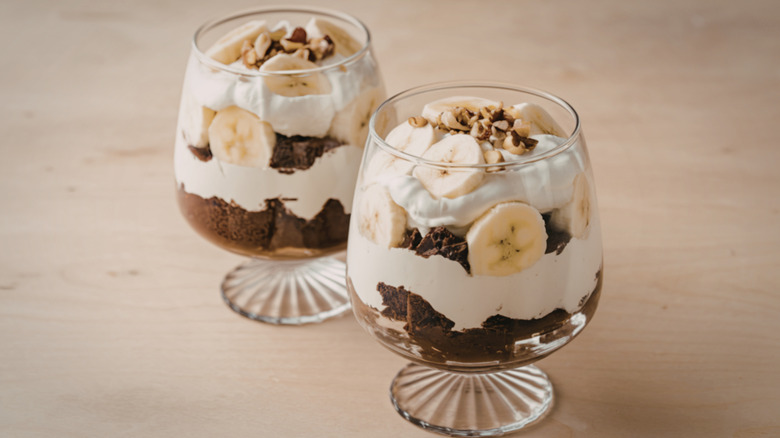
If you're not from England, there's a good chance you're not familiar with trifle. But don't worry — we're here to spread the joys of the humble trifle far outside Albion's shores. Trifle came about in the 18th century as a method for using up leftover cake, back when food waste was a cardinal sin. A traditional British trifle recipe involves crumbled cake bits soaked in alcohol and layered with custard and fruit, similar to the way that lush is constructed. The alcohol preserved the leftovers, and the layers of custard and fruit paired nicely with the texture of booze-soaked cake.
A traditional trifle is delicious in its own right, but don't be afraid to get creative with this recipe — it's all about using up leftovers, after all. After the holidays are over, use excess gingerbread cake for a trifle with warming spiced flavors, caramel sauce, and decadent vanilla pudding. Or, swap the vanilla pudding for pumpkin and cream cheese filling to make an autumnal dessert. You're not limited to just leftover cake in trifle, either. Try it with brownies, cookies, or whatever baked dessert remnants are filling up your fridge.
Church window cookies
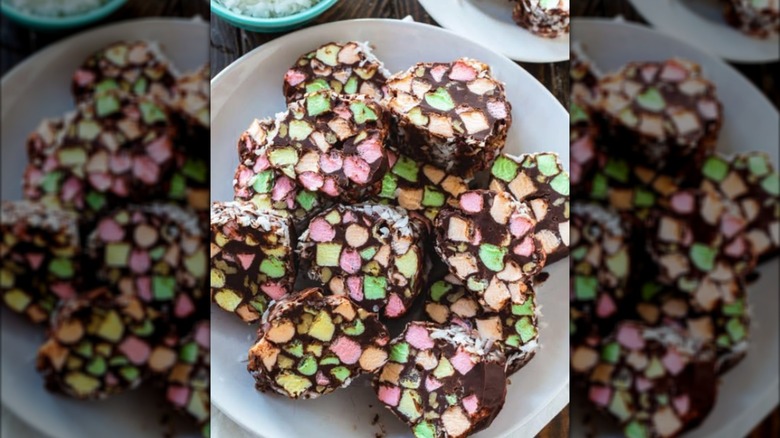
Church window cookies, also known as cathedral cookies and stained glass cookies, are a real blast from the no-bake past. They were once a staple in recipe books of the '60s and '70s but have since disappeared into the ether. Even though they're old-school, they're sure to impress at any food-focused function thanks to their fun, colorful presentation and unique texture.
Church window cookies require mini marshmallows (the colorful, fruit-flavored kind, like these from Great Value), chocolate chips, butter, shredded coconut, and optional crushed walnuts. The marshmallows, butter, nuts, and melted chocolate are mixed together and formed into a log, then the log is rolled through a layer of shredded coconut before being chilled and sliced. This is a great recipe to get the kids interested in experimenting in the kitchen; the festive colors and flavors are appealing to picky palates, and the preparation is easy enough for even the most inexperienced cook.
Icebox cake
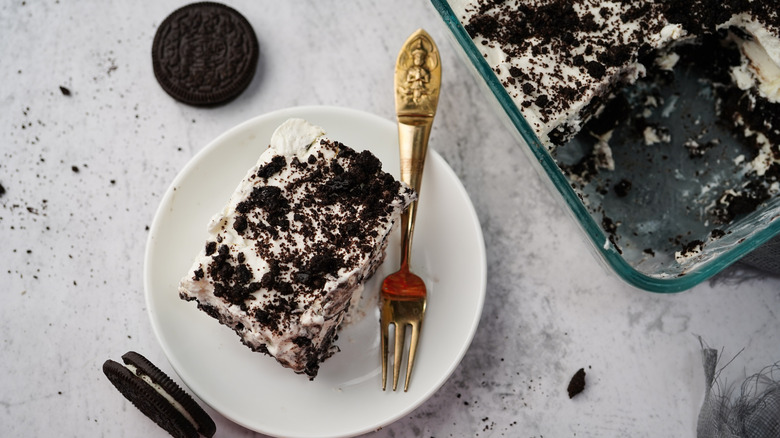
The icebox cake is one of the most iconic no-bake dessert recipes of all time, and it's one of those rare vintage dishes that never really faded from the mainstream. It's flashy enough to act as a celebratory treat, customizable enough to become anyone's favorite dessert, and most versions are a breeze to create from scratch.
The original icebox cake recipe was printed on packages of Nabisco's famous chocolate wafers in the 1920s. Little did the company know that, unlike most of those recipes printed on food packages, this one was going to start a movement. The cake's name comes from the old-fashioned name for the refrigerator, which is a necessary component in the cake's preparation. The original recipe, the one that's been hanging around dessert tables for decades, called for chocolate wafers layered with whipped cream — and that's about it. The addition of cookie crumbles or shaved chocolate on top gave it a pretty presentation, but that was up to the cook. Nowadays, there are all sorts of bougie icebox cake recipes floating around, but the simplicity of the original means it will always stand the test of time.
Chocolate tiffin
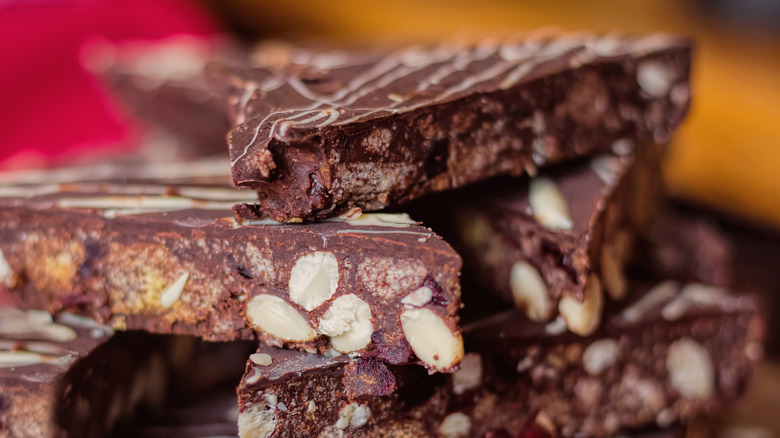
It looks very much like a traditional chocolate cake, but its secret is that it never saw the inside of an oven. The chocolate tiffin was invented by the Cadbury Chocolate Company back in the early 1900s. During this time, easy-to-make recipes were gaining popularity, so tiffins were becoming common substitutes for traditional cakes. The name comes from the English word meaning "to take tea" or "to take a light meal in the afternoon."
A typical chocolate tiffin recipe requires cookies — either common low-sugar cookies in the U.K. known as digestive biscuits or graham crackers — chocolate chips, butter, nuts, cocoa powder, dried fruit like raisins and cherries, and golden syrup from the U.K. (honey or maple syrup are good substitutes for the latter). The cookies are crushed, and the ingredients are mixed together and chilled overnight in the fridge. The result is a dense, fudge-like cake that's excellent as part of a holiday spread, a birthday treat (who's to say you can't stick candles in a chocolate tiffin?), or even a calorie-dense hiking or camping snack (just don't let it melt).
Bourbon balls
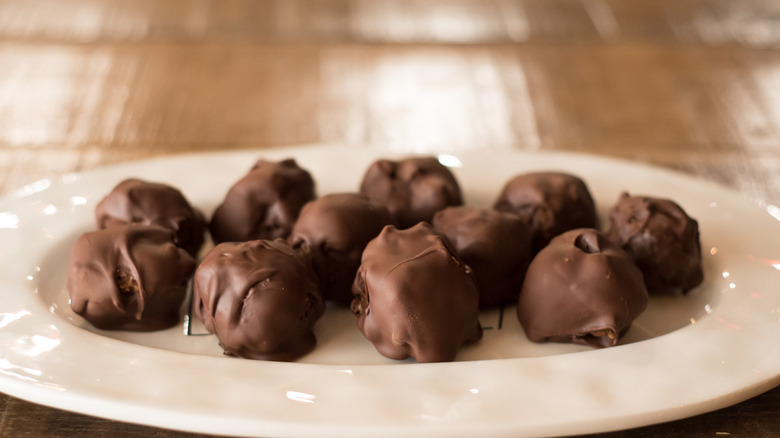
When everyone expects the same old pies and cookies that have graced the dessert table year after year, be the hero who brings the homemade bourbon balls. The origin story of bourbon balls stretches back to the 1930s, with the Rebecca Ruth Candy company, now a household name in Southern sweets. The company invented the candies — which started off as regular, boring old chocolate confections — by adding a splash of the state's famous liquor to the recipe, creating an instant local classic. Rebecca Ruth Candy still makes its signature boozy treats to this day, where they're considered a Kentucky delicacy.
To make your own bourbon balls, soak some nuts (pecans are the traditional favorite) in bourbon overnight. Then cream butter and sugar with the chopped nuts and some more good — but not too good — bourbon. Roll the balls of creamy, buttery, boozy sugar and nuts in melted chocolate, let them chill and harden in the refrigerator overnight, and either gift them in a decorative box or eat them all in one sitting — the choice is yours.
Banoffee pie
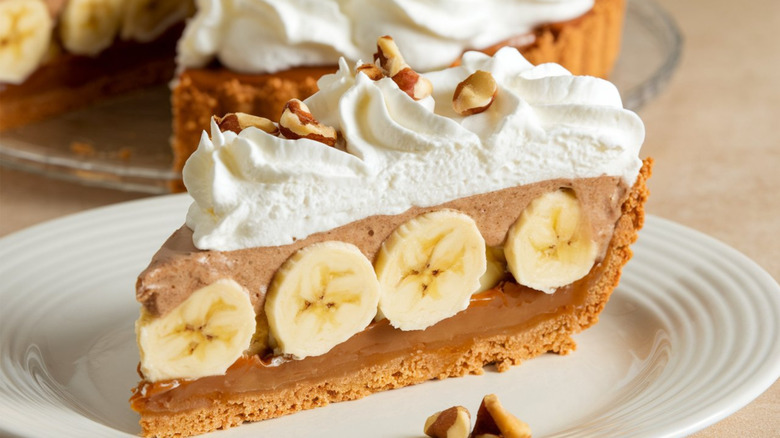
Banoffee pie is yet another British creation, and I'm sure you can guess the two ingredients that make up the bulk of the recipe. The pie is made mostly of banana and toffee, with a no-bake cookie crust, and plenty of whipped cream. The pie was invented in 1971 at The Hungry Monk restaurant in Jevington, East Sussex, by owner Nigel Mackenzie and chef Ian Dowding. They were attempting to recreate a recipe for Blum's Coffee-Toffee pie, but decided on a tropical fruit spin to give it their personal touch. The recipe was wildly successful around the U.K., to the extent that the Oxford English Dictionary eventually included the word "banoffi."
If you want to make your own banoffee pie, start with a crust of crushed graham crackers or digestive biscuits. Then make your own toffee with sugar, butter, and condensed milk — or melt down a store-bought version like this one from The Hampton Popcorn and Candy Company — and layer it into the crust with sliced bananas. Top the pie with decorative whipped cream swirls and some shaved chocolate to maximize its aesthetic appeal.