

The 7 Most Iconic Fast-Food Feuds — And The Real Beef Behind Them
If there's one thing Americans love, it's fast food. The quick-paced service, affordable pricing, and convenience have made fast-food chains thrive nationwide. The top 10 most valuable quick-service restaurants all originated in the United States. Whether it be Starbucks, McDonald's, or Subway, these franchises can be found dotted across the country, and they are all competing against one another for your business.
The quick-service restaurant industry is incredibly lucrative, with sales reaching $509 billion in 2024. The competition is fierce, with companies navigating shifting consumer trends to stay on top. Rival chains are constantly vying for market dominance, utilizing unique marketing strategies to make an impression. Sometimes, a chain will roll out new products to pull consumers from its opponent. Other times, they'll throw subtle or not-so-subtle digs into their advertisements and posts.
When done right, a public feud can be a powerful marketing strategy, increasing social engagement and bolstering sales. However, it is always a risky move, and the results can also be devastating. Over the years, fast-food favorites have duked it out, ending in lawsuits, bankruptcy, and ruined reputations. Some rivalries became so popular that the media dubbed the feuds with their own names. Whether it be the burger wars, coffee wars, or breakfast wars, these iconic rivalries have cemented themselves into American cultural history.
McDonald's vs. Burger King
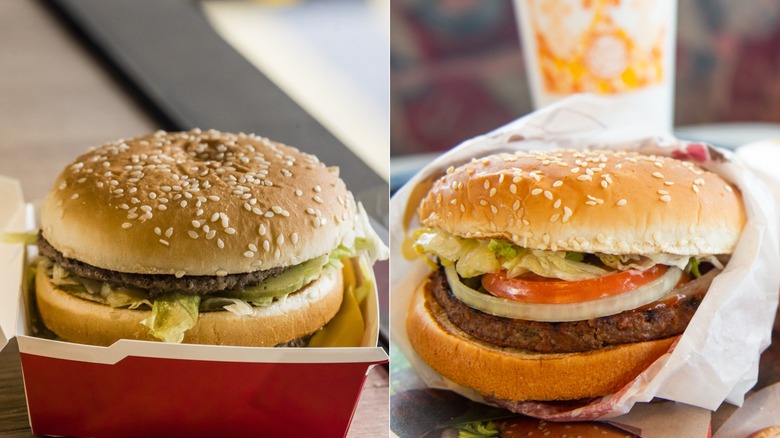
The rivalry between McDonald's and Burger King is one of the most iconic in fast-food history. While there's no denying McDonald's as the No. 1 fast-food chain in the U.S. in terms of sales, Burger King has put up quite a fight over the years. Originating in the 1940s, McDonald's popularized the fast-food model, launched the mascot Ronald McDonald, aired commercials during Super Bowls, and even created jingles for menu items like the Big Mac. This marketing strategy pushed competitors like Burger King to develop their brand identities. Burger King came up with its own mascot, the Burger King, and a jingle for its signature burger, the Whopper.
In the early 1980s, Burger King launched a series of advertisements that initiated what is deemed the "burger wars." In nationally aired commercials, the chain took direct shots at McDonald's, comparing each restaurant's burgers. The advertisements made a series of claims against the chain, with one stating that McDonald's used 20% less meat in its regular burger than Burger King. Others emphasized that consumers preferred Burger King's flame-broiled burgers over McDonald's fried burgers, and that the Whopper beat out the Big Mac and Wendy's Single in taste tests.
A series of lawsuits ensued, from both McDonald's and Wendy's. Burger King eventually agreed to discontinue the ads, but it didn't fully concede. The chain shifted to newspapers, running a series of print advertisements with one stating in bold letters, "GUESS WHO WON...". By the mid-'80s, the burger wars cost chains a total of $318 million in TV advertising alone. This burger battle shaped the way brands compete, introducing direct advertising attacks, which brands still engage in today.
Popeyes vs. Chick-fil-A
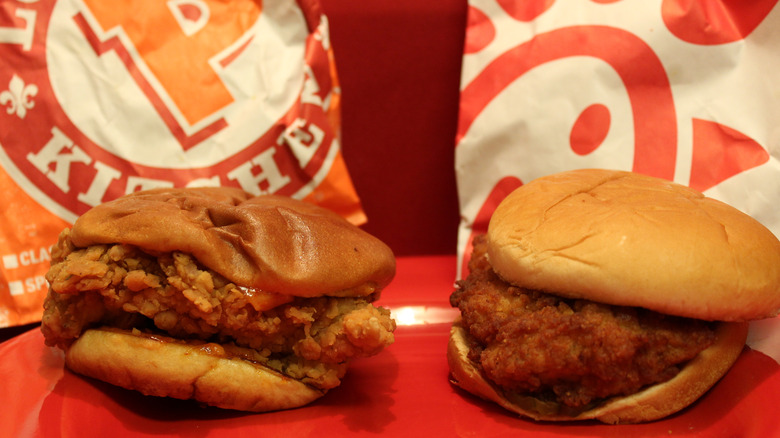
On August 12, 2019, Popeyes Louisiana Kitchen debuted a new chicken sandwich on its menu. The sandwich, a buttermilk-coated and breaded chicken breast with pickles and mayonnaise on a buttered brioche bun, had similarities to Chick-fil-A's Original Chicken Sandwich. For years, Chick-fil-A had a solid hold on the chicken sandwich industry. Meanwhile, Popeyes was better known for its bone-in fried chicken.
A quick social media interaction set the stage for a chicken sandwich showdown. When Popeyes' new menu item debuted, Chick-fil-A made a post on Twitter (later X) praising its own sandwich as the original. Popeyes replied to the post, simply asking, "...y'all good?" That simple exchange set off what would become the chicken sandwich wars. From August 17 to September 1, over 16 posts a minute about the sandwich were shared on X. Long lines began to form at Popeyes to the point its restaurants would experience chicken shortages, and the internet was flooded by chicken sandwich-themed memes. Other restaurant chains wanted a piece of the action, with dozens of them releasing a chicken sandwich or revamping their recipe following the Popeyes sandwich launch. From 2019 to 2024, fried-chicken sandwich consumption increased 19% at U.S. restaurants, and thousands of new chicken chain locations popped up across the country.
A year into the chicken craze, Popeyes sold 203 million chicken sandwiches. Aside from its virality, the chicken sandwich is considered one of the best chicken items on Popeyes' menu, with a recipe that took nearly three years to perfect. Although Popeyes saw a temporary boost in sales, Chick-fil-A's simplified menu and emphasis on customer service allowed the restaurant to maintain its spot as the top chicken fast-food chain.
Domino's vs. Pizza Hut
The rivalry between Domino's and Pizza Hut, two popular pizza restaurant chains, has been ongoing for decades, and consumer needs have shifted in the process. Pizza Hut first opened in 1958, and Domino's in 1960, at a time when pizza restaurants were uncommon outside of the East Coast. Pizza Hut had opened almost 2,000 locations by 1973, taking the lead over Domino's, which only had 200 locations in 1978.
When Domino's started growing along with Little Caesars, the head of marketing at Pizza Hut strategized on how to block that growth, resulting in an era of innovative new menu items. Items like the Pan Pizza, Stuffed Crust Pizza, and the Dippin' Strips Pizza allowed Pizza Hut to stand out amongst competitors. During the Great Recession, consumers shifted toward buying more affordable and convenient options. Rather than experimental new items, consumers looked for good pricing and reliability.
That's when Domino's stepped in, creeping up on Pizza Hut's top spot in the 2010s. Domino's focused on technology; with an already efficient online ordering site, the chain introduced additional ordering methods via social media apps like Twitter and Facebook Messenger. Domino's also introduced specialized, custom-built delivery cars, fitted with warming ovens and storage areas for the pizza. Pizza Hut attempted to shift gears, releasing new specialty flavors and bringing back its classic logo, but it wasn't enough. By 2018, Domino's had surpassed Pizza Hut as the largest pizza company in the world based on global retail sales.
Wendy's vs. everyone else
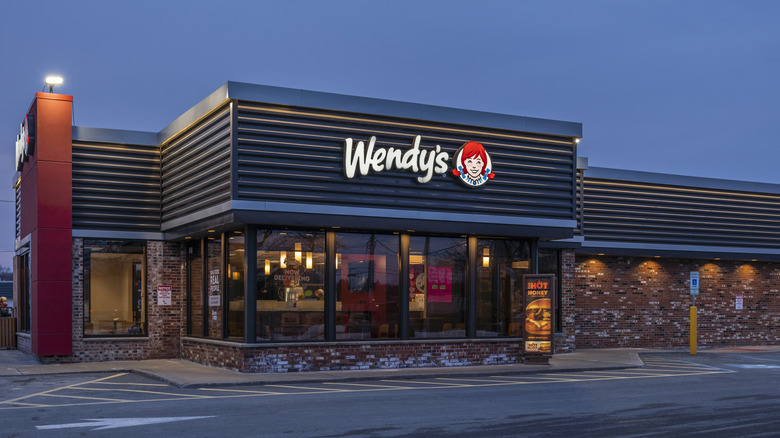
From flashy Super Bowl commercials to limited-edition menu items to catchy slogans, fast-food chains have consistently utilized unique marketing strategies to build their brands and garner a leg up in a competitive market. Occasionally, chains will include jabs here and there to undermine their opponents. When it comes to sassy quips and quick digs, Wendy's is an expert.
The chain consistently produces social-first content, emphasizing its social media presence and keeping up with media trends. Wendy's is especially active on X, where it has gotten into quite a few tiffs with fast-food chain competitors. McDonald's has fallen victim to Wendy's roasts a few times over the years, with many posts taking digs at McDonald's frozen patties. In one tweet, McDonald's shared that it will use fresh beef at many locations for its Quarter Pounders. Wendy's was quick to reply, stating, "So you'll still use frozen beef in MOST of your burgers in ALL of your restaurants? Asking for a friend." The post got well over 100,000 likes.
McDonald's hasn't been the only target on Wendy's list. Burger King also received flak for having frozen patties, with Wendy's posting, "Not interested in the frozen beef kingdom." Although throwing digs can be a risk, Wendy's witty use of social media was well-received. The chain gained millions of followers across platforms, saw an increase in stock prices, and experienced same-store growth.
Subway vs. Quiznos
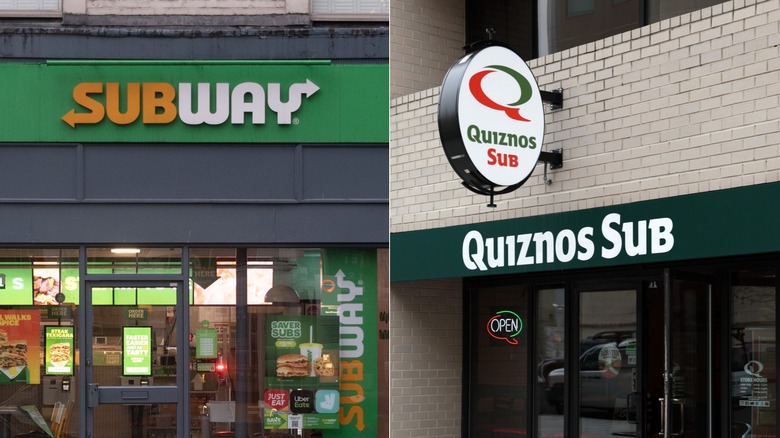
When it comes to made-to-order sandwiches, Subway and Quiznos have dominated the industry for years. Both chains had thousands of stores across the U.S. by 2007. Quiznos is known for its toasty, gourmet-style subs with melted cheese, while Subway offers customizable, made-to-order subs with a variety of fresh veggie options.
The two sub-chains were inevitable rivals, and that feud became all the more evident in 2006, when Quiznos asked the public to submit homemade commercials specifically targeting Subway. One of the rules of this contest was that the submitted videos should show that the Quiznos sandwiches were "superior" to Subway's sandwiches. Subway didn't take well to this and subsequently filed a lawsuit against Quiznos and the site that ran the contest. Subway claimed that many of the submitted videos depicted the restaurant in an unsavory light. The suit also targeted Quiznos advertisements outside of the contest, which implied that Subway's sandwiches weren't as meaty as the sandwiches at Quiznos.
The two chains reached a settlement, but Quiznos was still in hot water. The chain was struggling to make money and eventually filed for bankruptcy in 2014. Meanwhile, Subway had introduced the Five Dollar Footlong and healthier alternatives for a more health-conscious consumer base. By 2024, Quiznos went from thousands of U.S. locations in the mid-2000s down to only 148. Subway, however, has solidified its spot as the top sandwich chain in the U.S., with over 20,000 locations as of 2025.
Starbucks vs. Dunkin' vs. McDonald's
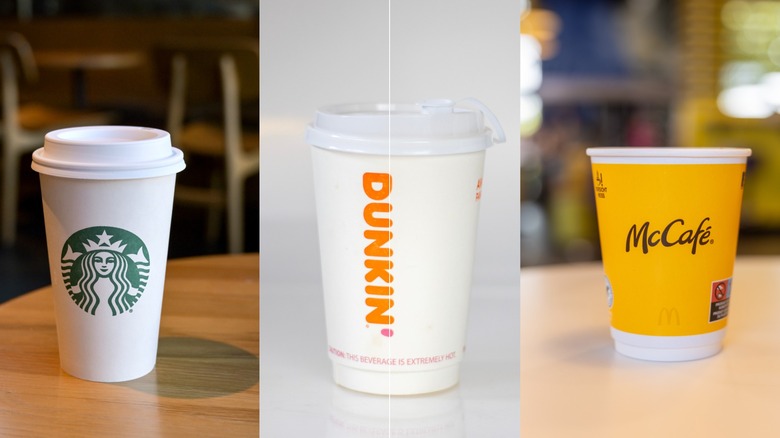
With premium customizable coffee drinks, a loyal consumer base, and a comfortable atmosphere, it's no surprise that Starbucks has dominated the coffee industry as the world's largest coffeehouse. The premium coffee industry is a multi-billion-dollar market, and with the success of Starbucks, other chains wanted in. The first to bite was Dunkin', initiating a competition deemed the "coffee wars."
In 2003, Dunkin' added freshly-brewed espresso, lattes, and cappuccinos to its menu. McDonald's started selling premium roast coffee in 2006, and shortly after, began offering lattes, cappuccinos, mochas, and espressos. Each chain offered a different experience for consumers. For McDonald's, the fast-food breakfast market was a stronghold. For Dunkin', the chain offered a consistent coffee-to-go experience. For Starbucks, drinks were the highlight, and the atmosphere was curated for consumers to spend more time in stores. McDonald's angle in the coffee wars was its low prices.
However, the brand image of Starbucks was a large pull for consumers. Rather than branding itself as a caffeine fix for the working class, like Dunkin' or McDonald's, Starbucks emphasized a European coffee-house culture, creating an upper-middle-class aesthetic. Inevitably, the chain that didn't engage in the battle remained on top. In 2024, Starbucks set the record for being the world's largest coffeehouse chain. Although Starbucks won the coffee wars in the U.S., there are still global rivals, with China's largest coffee chain, Luckin Coffee, adding new fuel to the war.
Taco Bell vs. McDonald's
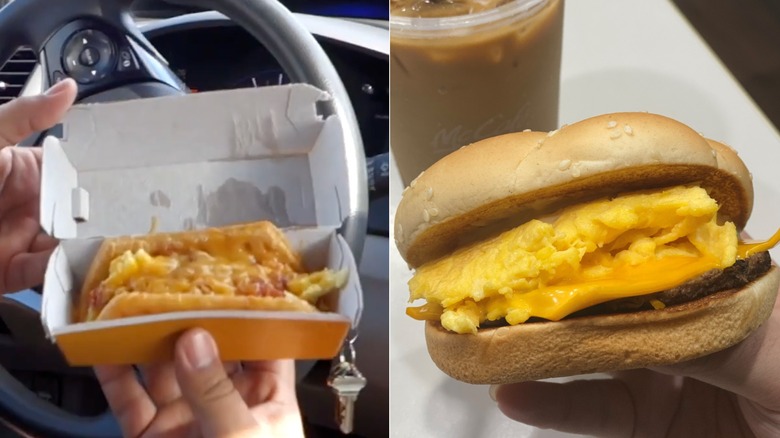
Breakfast is one of the most profitable sectors of the fast-food industry and accounts for 12.5% of total foodservice sales in the U.S. McDonald's first introduced breakfast with the Egg McMuffin in the late '70s, and subsequently created a full breakfast menu by 1977. What was once a small addition to the McDonald's menu, only served on mornings, has become a major aspect of the business. Breakfast sales account for around 25% of McDonald's domestic revenue.
Whenever a fast-food chain finds success, competitors are more than ready to snap back with their alternatives, and in this case, breakfast menus became the target. In 2014, Taco Bell developed a breakfast menu and set its sights on McDonald's in the process. When Taco Bell released its Waffle Taco, which consisted of a sausage (or ham), egg, and cheese in a waffle shaped like a taco shell, its advertising made some blatant digs at its competitor chain.
This sparked the 2014 breakfast wars. In one advertisement, a mulleted man explains, to the tune of "Old MacDonald Had a Farm," that he'd been eating McDonald's breakfast since the '80s and needed to get with the times. He ultimately swaps it out for a Waffle Taco and eschews his once-dated look. Taco Bell wasn't just one-and-done. The company released another ad, featuring multiple men named Ronald McDonald. At the end of the commercial, one of the Ronalds holds up a Waffle Taco and states that he loves Taco Bell's new breakfast. After the ads went viral, McDonald's and Taco Bell threw a few jabs back and forth on Twitter. The tit-for-tat ended up benefiting both chains, increasing media engagement and growing breakfast consumption in the fast-food industry.