

6 Ways To Combine Coffee And Tea That Aren't Just Dirty Chais

Whether you're enjoying breakfast or an afternoon pick-me-up, choosing between a soothing cup of tea or a strong mug of coffee can be a serious dilemma. You could try mixing the two, but they'd probably clash with each other ... right? On the contrary, cultures around the globe have enjoyed delectable coffee-tea hybrid drinks for decades, and trendy new spins on the concept could make you fall in love at first sip.
Coffee mixed with tea is a delicious and unexpected drink combination that can bring out the best qualities of both beverages. Smooth and aromatic coffee can mellow the bitter tannins found in many teas, while the complex notes of your favorite black, white, or green tea will enrich and lift up the java's taste. Perhaps the most widely known example today is the dirty chai latte, made of chai spiced black tea mixed with milk and a shot of espresso. While this drink is certainly delicious, there are tons of lesser-known beverages in this category that may better suit your tastes.
If you prefer your drinks intense rather than milky and mild, an Ethiopian spreeze delivers on concentrated flavor. Worried about caffeine overload? Try pairing coffee with herbal teas or tisanes. And that's just scratching the surface — we've found six coffee-tea concoctions that prove the brilliance of this pairing.
Yuenyeung is Hong Kong's favorite coffee-tea hybrid
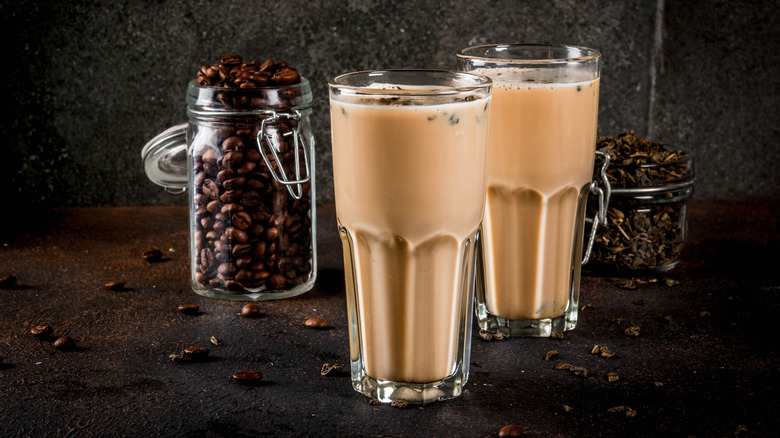
In Hong Kong, coffee and tea come together in one delectable drink: yuenyeung, which can also be transliterated as yuanyang, yinyeung, or yinyong. Fans of this drink have pointed out that the name sounds like "yin-yang," which fits the combo of strong milk tea and coffee. The lighter, sweeter tea harmonizes with the dark and brooding java, creating a sweet, creamy beverage balanced with a complex bitterness and bracing hit of caffeine.
The exact origins of yuenyeung are unclear, but most sources claim the drink arose from Hong Kong's famous cha chaan tengs — café- and diner-like eateries that started springing up in the 1950s. These beloved spots serve Western-influenced food and drink, including wildly popular Hong Kong-style milk tea, made of extra-strong black tea mixed with evaporated and/or sweetened condensed milk. Some sources note that this highly caffeinated tea was particularly popular with blue-collar laborers, so pouring in coffee was a natural move to add even more fuel to each glass.
Today, most cha chaan tengs, street vendors, and DIY recipes combine 3 parts coffee with 7 parts milk tea to make yuenyeung. While you could use any black tea, Ceylon (or orange pekoe) is the ingredient that characterizes Hong Kong-style milk tea. Regular drip coffee is the usual choice for yuenyeung, but it should be brewed to extra strength. Mix the tea with the evaporated or condensed milk, pour in the coffee, and serve hot or over ice.
A dirty matcha is like a dirty chai for green tea fans
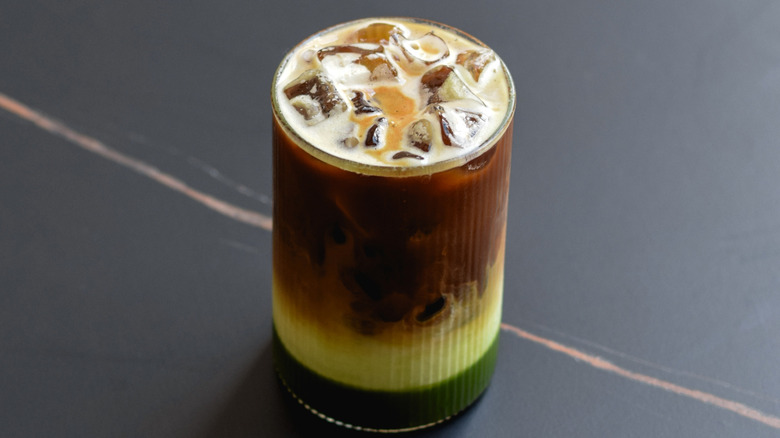
Dirty chais may be Starbucks-famous, but a matcha-based variation is rapidly growing in popularity. A dirty matcha combines coffee and matcha into one creative concoction, and it's most commonly served in iced latte form. The coffee adds complexity to the matcha and deepens the bright, grassy taste, while the tea complements the java with extra fragrance and earthiness. Milk rounds the beverage out by smoothing over the bitter notes.
Most iced dirty matcha recipes layer the matcha at the bottom, then pour in the milk followed by one or two shots of espresso, creating a lovely layered effect. To ensure the drink tastes as good as it looks, choose your ingredients wisely. A strong, very bitter espresso will clash with the matcha, so reach for a lighter coffee with fruity, floral, or earthy notes. Also, don't go overboard with the matcha — most recipes use just 1 teaspoon. Avoiding matcha latte mistakes, like using water that's too hot, will also prevent an overly bitter beverage.
Once you've figured out your ideal ratio of milk, matcha, and coffee, have fun tweaking your dirty matcha. Many baristas add plain or vanilla simple syrup, though flavors like caramel, hazelnut, or even brown sugar would also be mighty tasty. If you prefer hot drinks, try combining freshly brewed espresso and matcha with steamed milk, then top with a swirl of whipped cream or dash of cocoa powder.
Ethiopian spreeze delivers espresso and tea in their purest forms

For those who shun complicated lattes loaded with milk and sweetener, the Ethiopian spreeze delivers a coffee-tea combo without a smidgen of dairy. The bold drink combines potent Ethiopian coffee with strong-brewed black tea, often in a one-to-one ratio. Some drinkers sweeten their spreeze with sugar, but this is by no means a requirement. This beverage is commonly served in a small glass befitting its intense nature, and some vendors pull the espresso shot directly into the cup of brewed tea to create beautiful layers of black and reddish-amber.
Ethiopia is renowned as one of the best coffee bean-growing countries in the world, which is no surprise, considering it's the original home of the coffee bean. Many Ethiopian coffee varieties are characterized by a bright acidity with berry and citrus notes, which is why they pair so well with floral, fruity, slightly tart black tea. The combination may be too sour for some drinkers, but lovers of intense, high-quality tea and coffee will delight in this unique sipper.
A spreeze is also called a spritz or spris, which can be confusing, since the latter two terms also refer to layered fruit juices or smoothies popular at Ethiopian juice shops. This is because these drinks and their many names derive from the Amharic word "spriss," meaning "mix." The concept of spriss can be seen in various aspects of Ethiopian cuisine, including everyday meals where various dishes are piled onto injera flatbread and all eaten together.
Kopi cham combines a special coffee with tea and canned milk
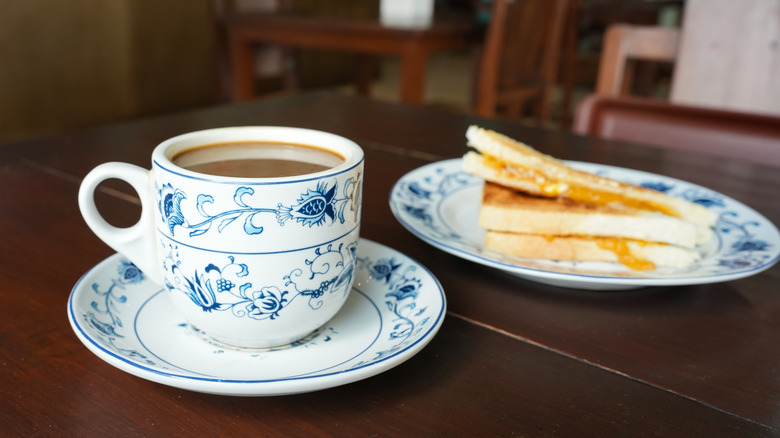
On summer days in Malaysia and Singapore, heading to a kopitiam (or coffee shop) for ais kopi cham is a surefire way to cool down and beat fatigue. With a name roughly meaning "iced mixed coffee" in Hokkien, this Malaysian iced drink combines coffee and tea in a manner very similar to Hong Kong's yuenyeung, with a few differences.
Both yuenyeung and kopi cham (also called just "cham") combine strong black tea and coffee with condensed or evaporated milk, and can be served hot or iced. However, kopi cham typically adds extra sugar to the tea. And while yuenyeung is made by preparing milk tea first, then adding coffee, kopi cham has a less specific assembly process. Most recipes simply mix all the ingredients together in a mug or a glass with ice. Most importantly, while yuenyeung is based on Hong Kong milk tea, kopi cham is traditionally made with kopi, a special style of coffee found in both Singapore and Malaysia.
Kopi is the most popular type of coffee in both of these countries, made with robusta or liberica beans that have been roasted with sugar and butter or margarine. The grounds are placed inside a cloth "sock" for brewing, which concentrates the kopi, resulting in a deep, dark brew with a uniquely rich, caramelized aroma. This foundation is what really sets kopi cham apart. During breakfast at kopitiams, boiled eggs and toast with kaya jam are served alongside cham and other kopi drinks.
A dirty London Fog is a must-try for Earl Grey tea lovers

Yet another beverage similar to the dirty chai, a dirty London Fog takes the classic formula for the tea latte — Earl Grey tea, milk, and vanilla extract or syrup — and adds a shot of espresso. Also cutely called a "London Smog" due to its darker color, this elegant drink is full of the refreshing bergamot flavor of Earl Grey, adding brightness and complexity to the coffee. With rich vanilla, the resulting latte is fragrant and creamy, with a touch of tannins.
To make one dirty London Fog, most recipes use 1 Earl Grey tea bag or 2 tablespoons of tea leaves steeped in 1 cup of water. Since it's going to be paired with espresso, overly bitter tea is a huge no-no. To brew it properly, heat the water just until it starts to boil before pouring it over the tea. Even more importantly, don't oversteep — three to five minutes is plenty of time.
From there, mix all the ingredients with ice in a glass or in a warmed mug, and you have a simple yet comforting drink. To get more creative, it's quite popular to add lavender syrup to dirty London Fogs for a gorgeous floral aroma. Earl Grey is also a perfect infusion for honey, and a generous spoonful in your drink would be pure magic. For an iced London Smog, the best addition may be a topping of sweet and creamy vanilla cold foam.
Coffee plus herbal tea provides great flavor without too much caffeine

As delicious as most coffee-tea hybrids are, the double whammy of caffeine can be way too much for some drinkers. To avoid jittering all day and night, use various types of herbal tea instead. Despite their names, teas like mint, ginger, and jasmine do not contain tea leaves, making them caffeine-free. While not "true" teas, they still come in a huge range of unique flavors to complement any type of coffee.
To infuse hot coffee with herbal tea, you can mix loose tea with the coffee grounds and then brew, or steep a teabag in the hot coffee after brewing it. If you love cold brew coffee, simply mix the tea with the java grounds, then proceed with the cold steeping process. The amount of tea depends on how strong you want the taste to be, though delicate types like chamomile may need a heavier hand to be noticeable.
Flower-based teas add a beautiful fragrance that perfectly enhances light and medium-roast coffees. Chamomile's mild and soothing sweetness is lovely in iced drinks, while elegant rose, herbaceous lavender, and aromatic jasmine can come through in hot coffees. Ginger and peppermint teas are perfect for fall and wintertime lattes. Rooibos tea, with its uniquely spicy, woodsy, and honeyed notes with a touch of tannins, is the best choice for those who like their java extra robust and flavorful. All of these options and more can add much-needed interest and complexity to a cheap, basic cup of joe.