

A Salty, Smoky Fish Was Once A Breakfast Classic — And It's Making A Quiet Comeback
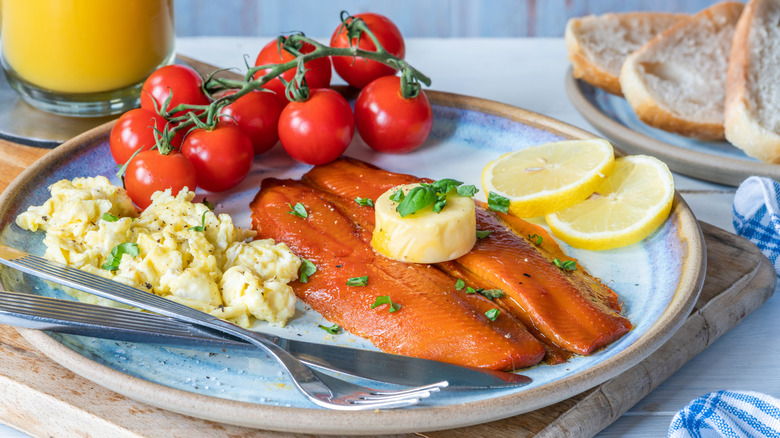
Imagine you're in Dickensian London in the mid-19th century and you've ambled into a local pub for a full English breakfast. It's very likely that you would order kippers rather than — or perhaps along with — a rasher of bacon or bangers and mash. Kippers were one of the most popular breakfast foods in Britain for over a century, and it's said that Queen Elizabeth II enjoyed them at her royal breakfast table. But in the 1970s, kippers virtually vanished from local eateries as a result of overfishing and changing tastes. In recent years, however, with the rise in popularity of smoked and cured fish from around the world, kippers are making a comeback in the United Kingdom.
Kippers are salted and cold-smoked herring that date back to 1843, when the kippering process allowed the fish to be transported without spoiling via England's railway system. The best kippers are fatty and oily, not too dissimilar from mackerel, with a salty-smoky and quite "fishy" taste that pairs well with eggs or potatoes. When briefly cooked, they do tend to be a bit smelly, but for some people, that's part of their appeal, as it is with especially pungent "stinky" cheese.
At one time, England's waters swarmed with herring, but as Britons' appetites for kippers swelled, herring began to be wiped out. In 1977, the British government took the extraordinary step of ceasing all herring-fishing operations. Fisheries shut down, and at the same time, the younger generation wanted more modern and easier-to-prepare food.
Canned herring is healthy and versatile
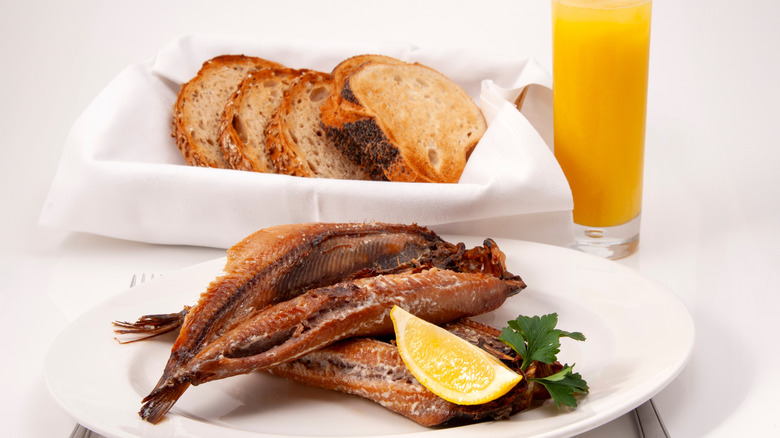
By 1983, the herring population had rebounded, but interest in kippers had waned, and despite the abundance of herring, nobody was eating them anymore. Rather, mackerel — another sustainable fish — had eclipsed kippers in popularity as a healthy fish that's rich with Omega 3. Kippers may have had a whiff of the stuffy Victorian era, but high-end restaurant chefs began putting them on their menus again. Supermarkets also began stocking canned kippers, and sales in the past few years have continued to increase at a fast pace. And there's little wonder why: Smoked herring is versatile and can be cooked in a number of ways, such as baked, fried, or simmered, and incorporated into a number of umami-packed dishes, like flavorful fish tacos.
When shopping for canned herring, there are some common mistakes you should avoid making. For example, don't confuse it with pickled herring, which has a much different consistency and flavor, and is not generally used in hot meals, as explained by a Michelin-awarded chef. These days, the majority of kippers come from the Isle of Man, located between England and Northern Ireland, by families who have been producing canned herring for generations. If you're a fan of Aldi's Aisle of Shame, kippers or smoked herring have been occasionally available, and you may be able to catch a tin or two when they're in season. If you're so lucky, perhaps after one taste, you might become a kippers super-fan, like George Orwell and Sir Laurence Olivier.