

14 Foods With Just As Much Healthy Fat As An Avocado (If Not More)
While there was a time when any kind of fat was considered a detriment to your health, nutritionists now advise that healthy fats are not only acceptable, but an essential part of a balanced diet.
What we call healthy fats are monounsaturated fats and polyunsaturated fats, which have been shown to reduce levels of bad cholesterol and contribute to cell health. Saturated fats and trans fats are the ones that we need to limit, as they can raise cholesterol and have been linked to increased inflammation.
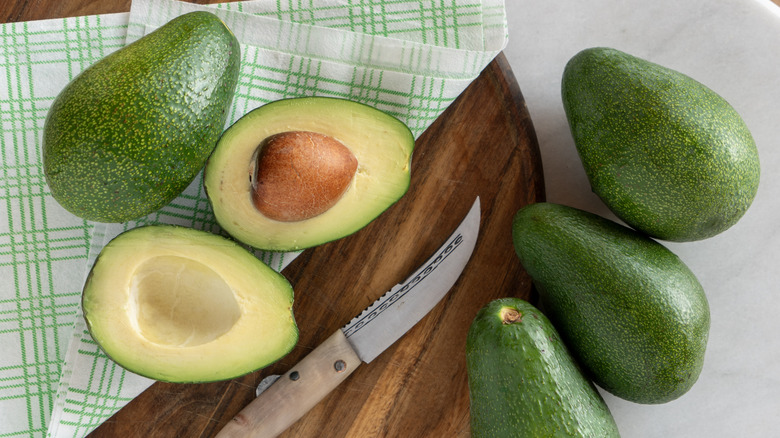
Avocados are a great source of healthy fats, with 9.5 grams in half an avocado along with fiber and antioxidants. However, it's advised that you don't get all your healthy fat intake from avocado alone. The fat in avocado is mostly monounsaturated, but the body also benefits from polyunsaturated fats, particularly for heart health. And unlike monounsaturated fats, polyunsaturated fat can't be made by the body and needs to be obtained from food.
It's important to remember that while healthy fats can have a whole range of health benefits, any type of fat is calorie dense. Instead of simply adding healthy fats to your diet, it's recommended you use them where possible as a substitute for less healthy fats. For someone eating about 2000 calories a day, the suggestion is for between 45-80 grams of fat a day, with only 22 grams of that consisting of saturated fat.
Pecans
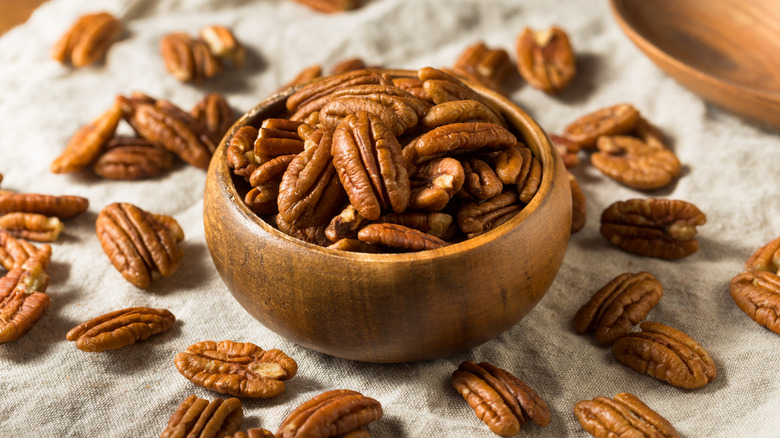
Just an ounce of pecans (around a quarter of a cup) contains 17.7 grams of healthy fats. Compared to other nuts, they are a good source of vitamin A, vitamin E, and the antioxidants known as flavonoids, which have been shown to protect heart health. While you could see this as an excuse to eat more pecan pie, instead try adding pecans to coleslaw for extra crunch and protein.
Macadamia nuts

Originating from Australia (not Hawaii as you might think, which is just a big producer), macadamias are prized for their slightly sweet, buttery flavor. The secret to this is the high levels of healthy fats, with 17.1 grams per ounce – primarily monounsaturated. Although they are one of the more expensive nuts, the creamy taste is worth it, whether you eat them as a snack or in this coconut macadamia French toast recipe.
Walnuts
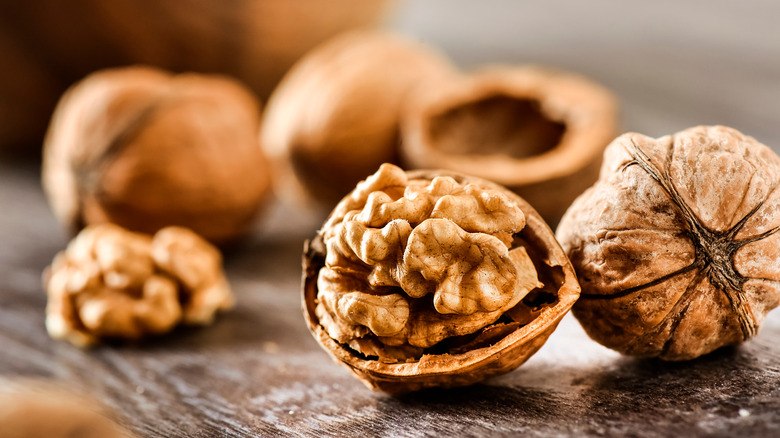
Walnuts are unique in that most of their healthy fat content (15.9 grams of fats per ounce) is polyunsaturated. They are the only nut source with a significant amount of the ALA omega-3 fatty acid, which has been shown to reduce the risk of cardiovascular disease. Walnuts are also high in the amino acid tryptophan, which helps sleep regulation. So while they're delicious on oatmeal or breakfast yogurt, it's best to eat walnuts before bed.
Brazil nuts
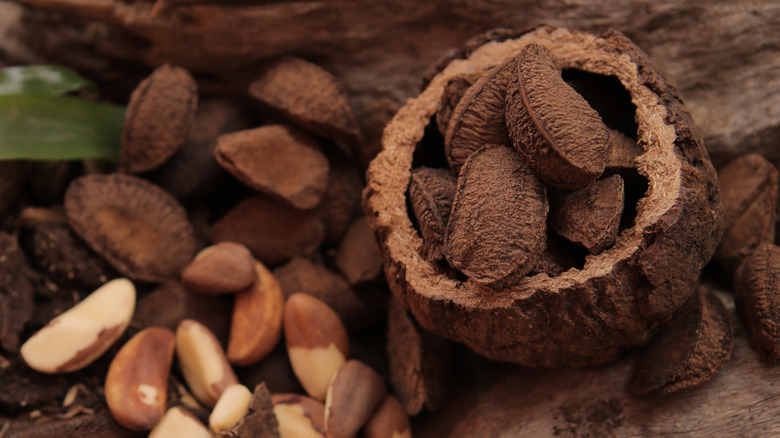
Nutritionists generally recommend eating nuts in moderation due to the calories, but with Brazil nuts there's even more reason for portion control. While they are a good source of healthy fats, with 13.9 grams per ounce (around 6 kernels), they also contain high levels of selenium – so much that some doctors recommend a maximum of two Brazil nuts per day. So rather than snacking from the bag, try them in mixed nut selections instead.
Sunflower seeds
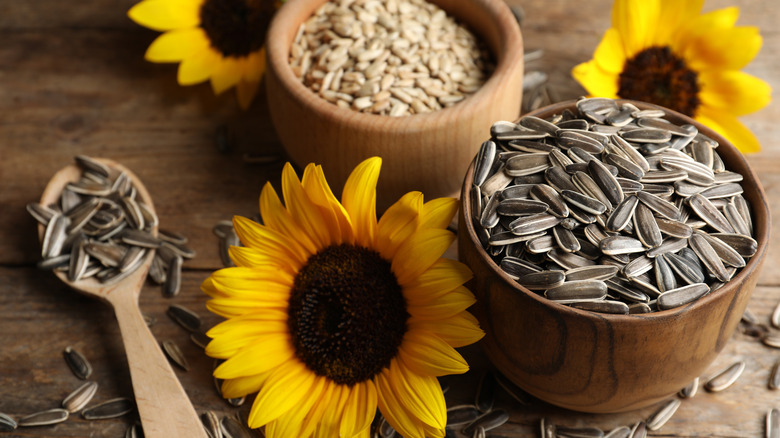
There's a lot to love about small but mighty sunflower seeds. As well as being high in healthy fats (13.7 grams per ounce), they're rich in fiber, protein and vitamin E. They are also incredibly versatile, adding bulk to granola, crunch to salads, turned into nut-free butter, or simply eaten as a snack. However, our favorite use for sunflower seeds is to swap them for pine nuts in pesto.
Almonds
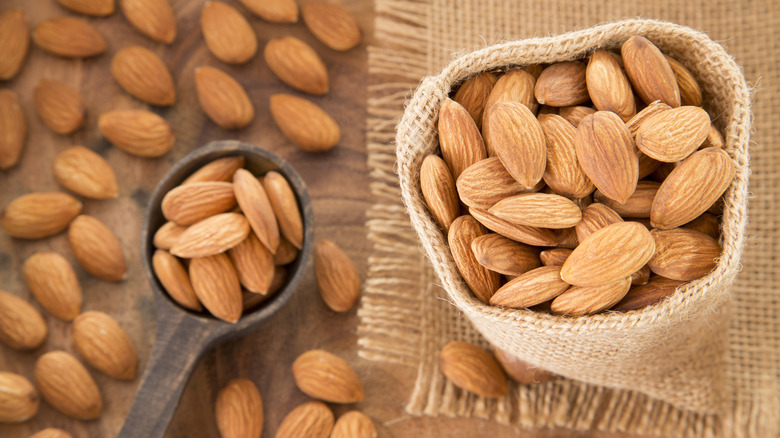
As the most consumed tree nut in the U.S., almonds wouldn't seem to need much more promotion. But whether you're enjoying them in savory dishes or in a decadent almond dessert, you'll be pleased to know that you'll be getting 12.5 grams of healthy fats per ounce. It's good news for gluten-free baking too, with around 46 grams of unsaturated fats in every cup of almond flour.
Pumpkin seeds
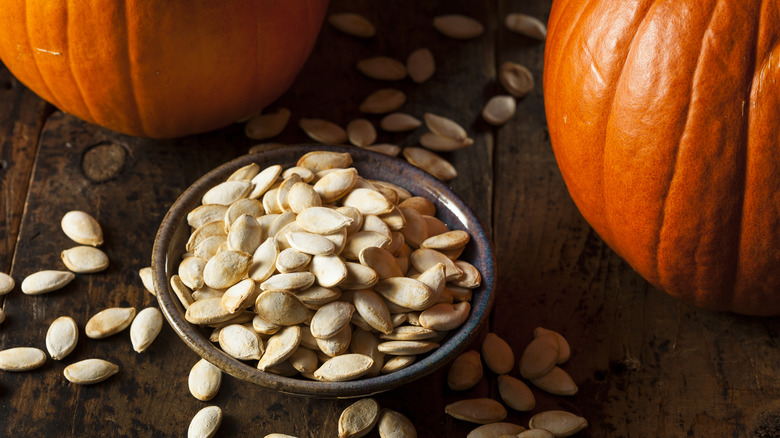
When you're scooping out a Jack-o'-lantern, your mind isn't necessarily considering healthy fats, but this bounty shouldn't go to waste. An ounce of pumpkin seeds (around a quarter cup) contains 10.9 grams of healthy fats, with a good balance of monounsaturated and polyunsaturated varieties. While shell-off pumpkin seeds are more versatile for adding to recipes, snacking on pumpkin seeds with the shell will give you a big fiber boost, with 5.2 grams per serving.
Almond butter
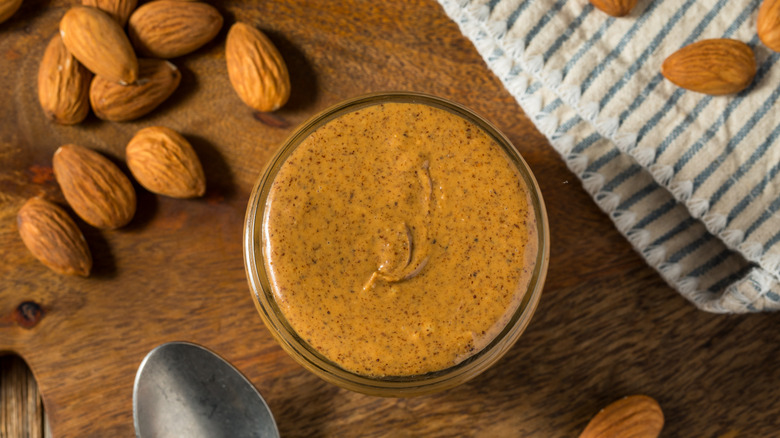
Whether you enjoy almond butter as an allergen-free alternative to peanut butter, or just like the mild and creamy taste, it has a lot to offer in terms of nutritional value, with good levels of calcium, fiber, and 14.7 grams of healthy fats in every 2-tablespoon serving. When looking for the best brand of almond butter, read the label carefully, as many store-bought varieties include sugar, salt, or palm oil in the mix.
Peanut butter
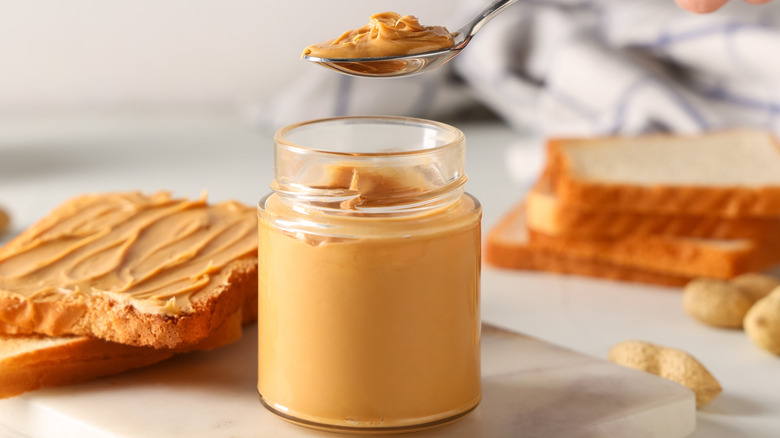
If you're looking for ways to incorporate healthy fats into your diet, it's good to know that you don't have to give up on the classics. The 2 tablespoons of peanut butter used on a PB&J contain a substantial 12.3 grams of unsaturated fats. A study from the University of Michigan even found that while foods like hot dogs can reduce your lifespan, a peanut butter and jelly sandwich can add up to 33 minutes to your life.
Canola oil
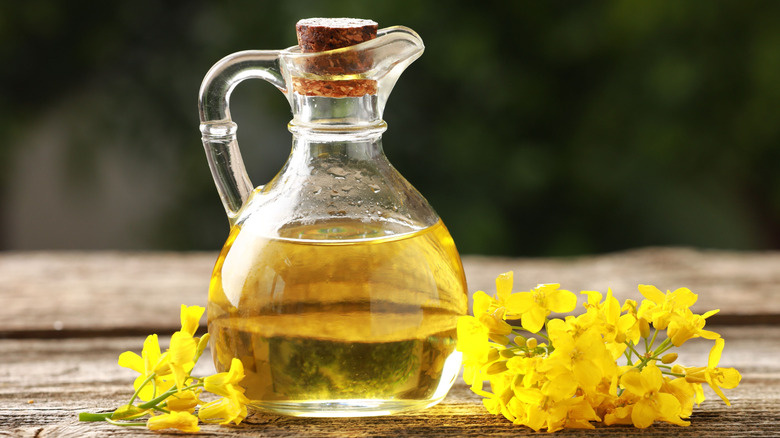
Reducing saturated fats and upping your healthy fat intake could be as simple as replacing butter with oil in cookies, muffins or brownies. Canola oil has a neutral taste and tenderizing effect on baked goods, and will keep them soft when refrigerated. Every tablespoon contains 12.8 grams of healthy fats, but less than a gram of saturated fat, compared with the 7.2 grams of saturated fat in a tablespoon of butter.
Olive oil
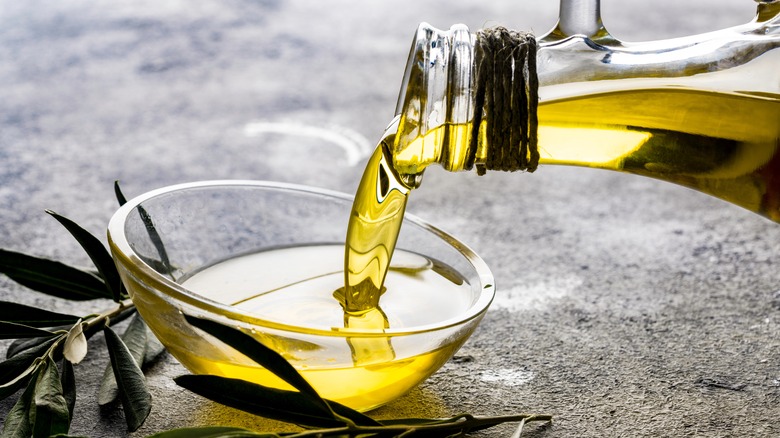
Just by making a simple salad, you can get a good dose of healthy fats. Every tablespoon of olive oil you add to a dressing or drizzle over your vegetables will deliver 11.3 grams of mainly monounsaturated fat. Olive oil is a key ingredient in the Mediterranean diet, considered to be one of the best diets, and is a favorite of residents of Blue Zones, areas associated with the longest lifespans.
Sunflower oil
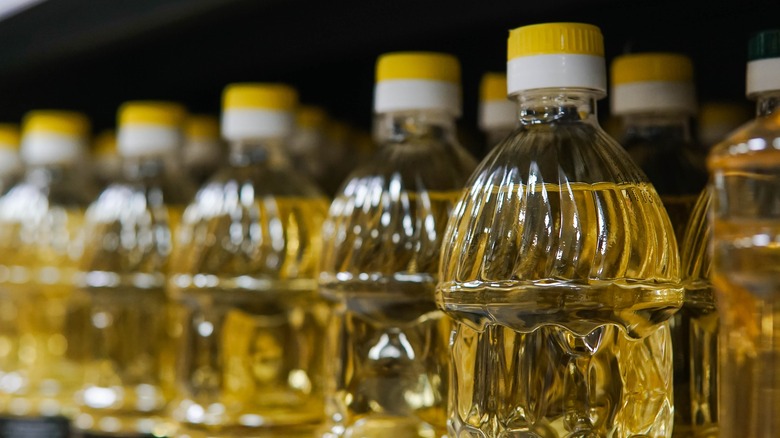
Just like the seeds that it's made from, sunflower oil is a rich source of healthy fats — particularly monounsaturated fats. A tablespoon contains 12.3 grams of healthy fats, from a total fat content of 14 grams. With a high smoke point and fairly neutral taste, sunflower oil is a natural choice for home frying, and the secret to extra crispy roast potatoes.
Tahini
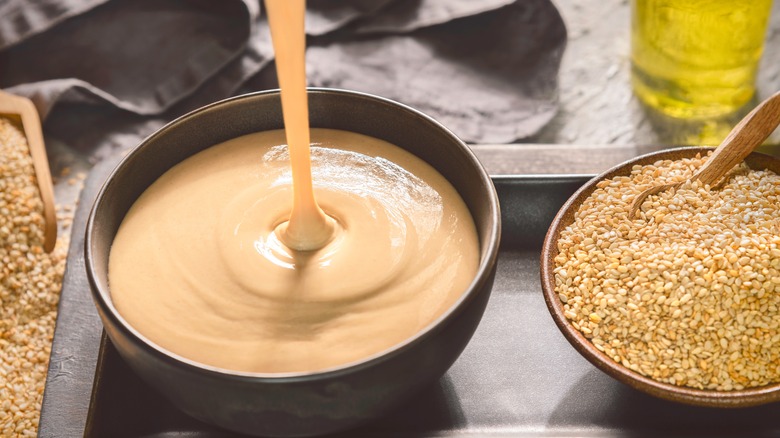
You might be most familiar with tahini for giving hummus its signature taste, but it's a surprisingly versatile ingredient that can be used in a whole host of savory and sweet dishes. Get creative with tahini in recipes like date smoothies, pumpkin soups, or energy balls. As well as giving your dishes a creamy texture and flavor, it has the benefit of 12.9 grams of healthy fat for every two tablespoons you use.
Mackerel
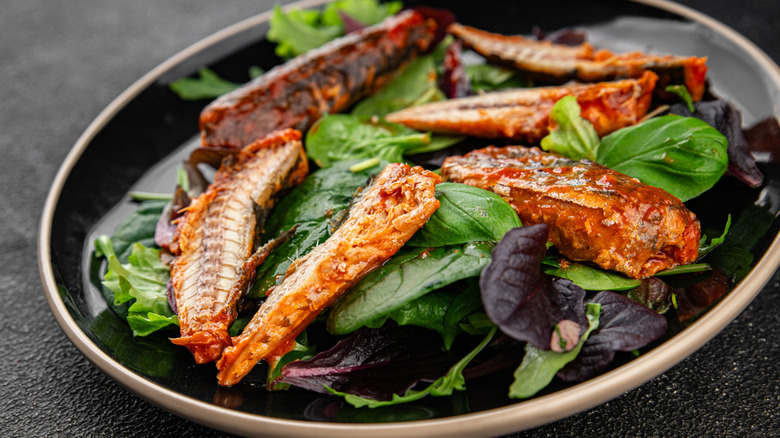
You've probably heard that you should be eating fatty fish twice a week for heart health, but which fish is best? Fatty or oily fish include salmon, sardines, and herring, but it's mackerel that gets top marks for healthy fat content. Fresh mackerel is excellent when grilled, but it's easy and affordable to incorporate tinned mackerel into your menu, particularly as a swap for tinned tuna. A drained 4-ounce can delivers around 9-14 grams of healthy fats.