

15 Vintage Christmas Dishes That Deserve A Spot In Your Holiday Spread
We may receive a commission on purchases made from links.
No matter how old you are, you probably have distinct memories of eating certain foods that only make an appearance during the season of giving. Nowadays, store-bought pies and charcuterie boards dominate holiday spreads — and there's nothing wrong with a little convenience and a grazing board for easy snacking. But pulling out all the stops to feature old-fashioned American favorites on Christmas is the perfect way to turn the warm, holiday nostalgia up to the max.
Whether you want to recreate decades-old memories of cooking and baking with family, or you want to test your skills with a quintessential vintage Christmas spread like something from a Hallmark movie, we've got you covered. In this list, we've highlighted some standout favorite dishes from the holiday traditions of decades past that have all but disappeared, from sweet snacks to memorable dinners. These foods were Christmas mainstays in the mid-to-late century, and we're here to defend their honor and save them a spot in the smorgasbord. So when you're getting ready to plan your festive menu, consider skipping the funky new-age recipes and instead, pull a few classics from this list to warp your guests back to a cozy Christmas memory.
1. Fruitcake
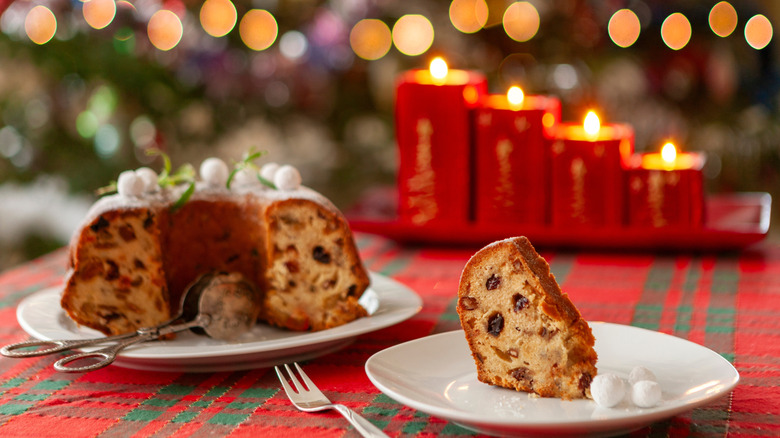
A traditional fruitcake is easily the most quintessential — and most polarizing — treat at the Christmas table. People love to hate on the dense holiday cake so much that receiving a fruitcake for Christmas has become a cliché, the equivalent to getting a stocking full of coal from Mr. Claus himself. But the misunderstood fruitcake is so much more than just a dessert we love to hate.
The history of fruitcake stretches all the way back to ancient Mesopotamia. The Sumerians are thought to have created the first fruitcake, not as the perfect gift for annoying in-laws, but as an offering to the gods. There's evidence of cakes made with ingredients like spices, dried fruit, nuts, wine, and honey in ancient civilizations all over the world, from Greece to China to Western Europe. The cake was a symbol of longevity in some ancient cultures, a religious symbol in others, and a delicacy throughout most of the ancient world.
A typical recipe for an old-fashioned fruitcake stays true to the millennia-old tradition with dried and candied fruits like cherries, apricots, and currants along with brandy, treacle, and classic holiday baking spices. It's incredibly dense and rich — the antithesis of most modern cakes. If you plan to try your hand at this Christmas staple, don't wait until last minute; fruitcakes need to be aged for months before they're ready, but the wait is worth it to indulge in such an iconic, time-honored tradition that's literally fit for the gods.
2. Grape jelly meatballs
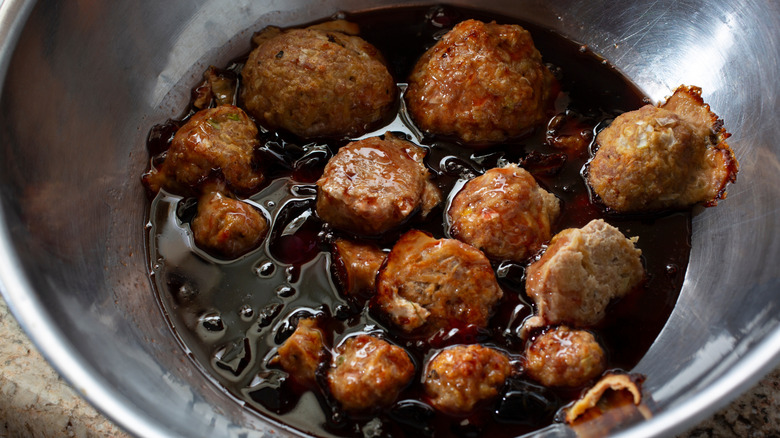
If you thought grape jelly and meatballs sounds like something right out of the weird-mid-century-foods playbook, well, you'd be right. Grape jelly meatballs — also called cocktail meatballs — were one of the most popular hors d'oeuvres of the '60s and '70s. If you celebrate Christmas in the U.S., you probably have childhood memories of trying these sweet little morsels and being disturbed (but intrigued) when you found out they were made with something you usually only associate with peanut butter and toast.
These old-school meatballs are made with just three ingredients: meatballs, grape jelly, and either barbecue sauce, ketchup, or sweet chili sauce. Like many recipes at the time, they rely on pre-made ingredients, so they're easy to whip up at the last minute. Tossing everything in a slow cooker makes the recipe even easier than it already is, and the meatballs stay warm while the party rolls on. Opt for barbecue sauce if you want an extra-sweet and smoky flavor, ketchup for a mild, tangy taste, and sweet chili sauce for some sweet heat in your appetizer.
3. Mince pie
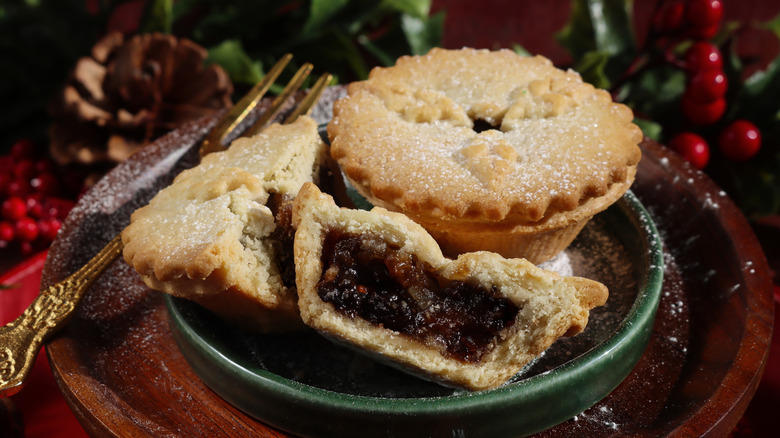
Like fruitcakes, mince pies take vintage to a whole new level. Some versions of meat pies existed in ancient cultures across the globe, and original mince pies are thought to have got their start in the Middle East during the 12th century. Fast forward a few centuries, and they're a popular staple in 18th-century American cuisine and, later, a Christmas staple in Europe. They weren't specifically a Christmas tradition in the past like they are today, although they were a popular food come wintertime. The alcohol in the filling kept the pies fresh for a while, so the folks of the pre-refrigerator-era could enjoy hearty, portable meals of sweet fruits and meat throughout the entire winter season.
Old-fashioned mince pies were made with suet, spices, candied fruit, sugar, and meats like sheep's tongue. Today, modern mince pies eschew the tongue to lean more fruit-based, although they're still often made with beef suet. High-quality mincemeat — the filling in mince pies — can be purchased by the jar (often found through British food retailers) to make your old-fashioned Christmas meal easy, but still traditional.
4. Church window cookies
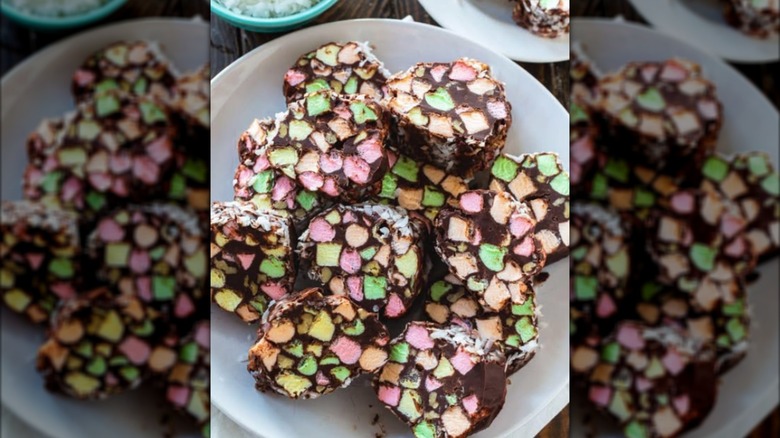
No-bake cookies and cakes define the dessert trends of the mid-century. They're easy to whip up on the fly for drop-in houseguests (also a thing of the past) and they usually look the part of an intricate dessert that had you toiling away for hours in the kitchen. Church window cookies — also called stained glass cookies — are a classic no-bake Christmas treat that never fails to impress guests with a stunning aesthetic and equally impressive flavor.
A traditional church window cookie recipe involves just four ingredients: chocolate chips, sweetened flake coconut, butter, and colorful mini marshmallows. The marshmallows, melted chocolate chips, and butter are mixed together, formed into a log, and coated in flakes of coconut. After the log is sufficiently chilled, the cookies are sliced to reveal a colorful, stained glass-like pattern within. You can even make these cookies sans coconut to appeal to a wider range of tastes — they still retain all their festive, colorful charm.
5. Potatoes au gratin
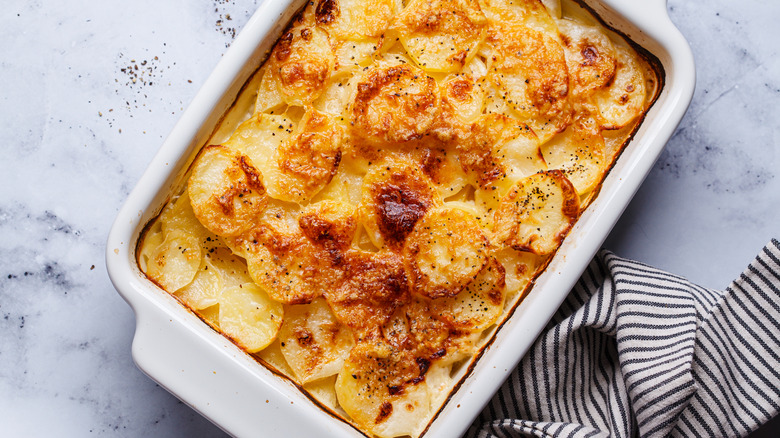
Many people confuse scalloped potatoes with potatoes au gratin, or they think they're the same recipes with different names depending on the cultural context. While they're similar, one is — we'll just say it — better. Potatoes au gratin feature cheese, usually gruyère, and plenty of cream. Meanwhile, scalloped potatoes are made with a milky roux for their creamy texture. Both are excellent side dishes for a Christmas dinner spread, but the gooey, cheesy flavor and texture of potatoes au gratin is a better complement to the rich, salty meats typically served during the holidays.
To prepare potatoes au gratin, the potatoes have to be sliced thin so they cook evenly. This also gives the dish its signature melt-in-your-mouth texture, achieved by layering the cream and cheese with the potatoes — it's basically a rustic French casserole. Serve it with some fresh herbs on top (thyme or rosemary are both excellent options) for a fresh taste and a prettier presentation.
6. Spoon bread
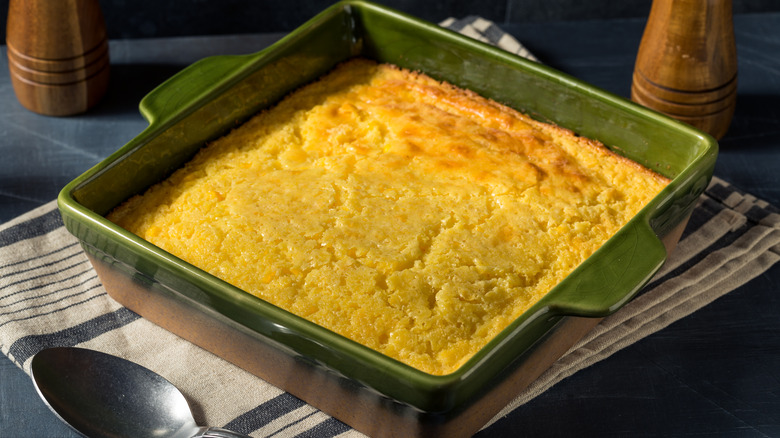
If you're not from the South, you've probably never tried spoon bread, which is a crying shame. Spoon bread never really made its way out of Black American kitchens down South. It's thought that the original recipe has ties to James Hemings, Thomas Jefferson's enslaved personal chef. Jefferson brought Hemings to France, where he learned techniques that he would later teach to other enslaved chefs. Spoon bread was created by mixing these French techniques with Native American and Black American techniques and ingredients. With its amalgamated history, it's a great choice for a hearty dish as part of an iconic American Christmas feast.
You can think of spoon bread kind of like a hybrid between an extra-moist, classic Southern cornbread and a soufflé. The batter is prepared with cornmeal, milk, and eggs — just like a typical cornbread. But extra liquid is added to make the batter thin and the final product moist and slightly gooey. It's baked in a casserole dish and served hot with — you guessed it — a spoon. It's great as a savory-sweet side alongside Christmas ham, or it can be made into a sweet dessert with added chocolate, fruits, or candy.
7. Plum pudding
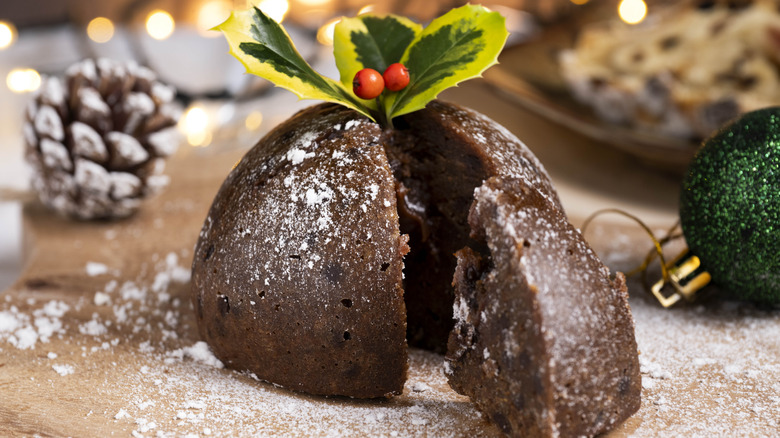
It sounds like something fictional, reserved for Christmas songs and Dickens' classic holiday novel, but plum pudding is very real and very delicious, even though it rarely shows its face on the Christmas dessert table these days. The old-timey dessert also goes by the names figgy pudding and, more commonly, Christmas pudding.
Plum pudding exists in the same vintage-Christmas universe as mince pies and fruitcake; it's been around since the 15th century, when winter meals were often made of easy-to-preserve animal fat, spices, and dried fruits. Plum pudding's earliest versions were much more savory than the Victorian era-version of the dish, which, by then, had become a holiday staple. Cooks would combine the pudding's ingredients — suet, brown sugar, raisins, currents, candied orange peel, eggs, breadcrumbs, spices, and alcohol — and boil them, then wrap them and let them mature in time for Christmas, much like a fruitcake.
Today, the plum pudding is heavily associated with British cuisine, where it's still a Christmas mainstay in some more old-fashioned family traditions. A classic version of the dish is still made very similarly to the Victorian-era version, with the aforementioned ingredients fitted into a pudding basin — like the Muldale Ceramic 1 Liter Pudding Basin — and then steamed for hours. When it's served, the pudding is doused in booze (usually brandy) and then flambéed.
8. Pineapple baked ham
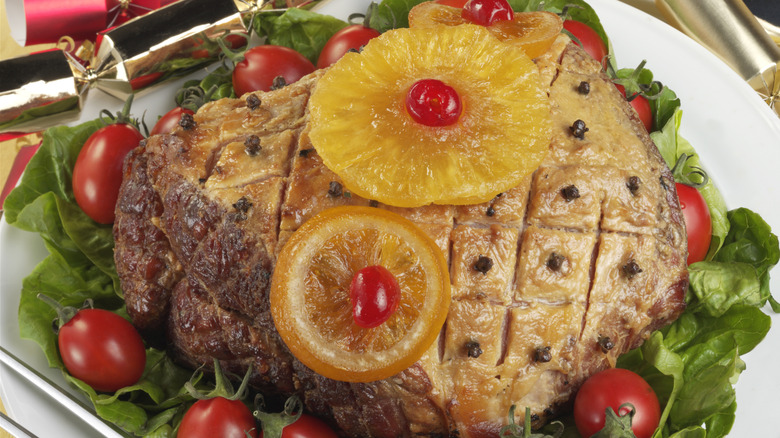
It's an unspoken rule of American culinary law that turkey is for Thanksgiving and ham is for Christmas — without these meats to claim their rightful place in the center of the table, a holiday feast is just a regular old party spread. There's nothing wrong with a plain baked ham with a mild, generic glaze, letting the side dishes do most of the flavor heavy lifting come dinnertime. But if you want to go the extra mile, an old-fashioned pineapple ham takes the flavor up a notch, and it makes the dinner spread look much more festive and fun.
Pineapple and ham go together like Christmas and snow, and making an old-fashioned pineapple baked ham requires only a little bit more effort than making a plain glazed ham. Simply stick canned pineapple rings all around the ham with toothpicks, press a few cloves into the meat, and then douse it with pineapple juice from the can and with some beer. Once it's done, remove the cloves (but leave the pineapple) and cover the ham in a mustard-brown sugar glaze.
9. Oyster stuffing
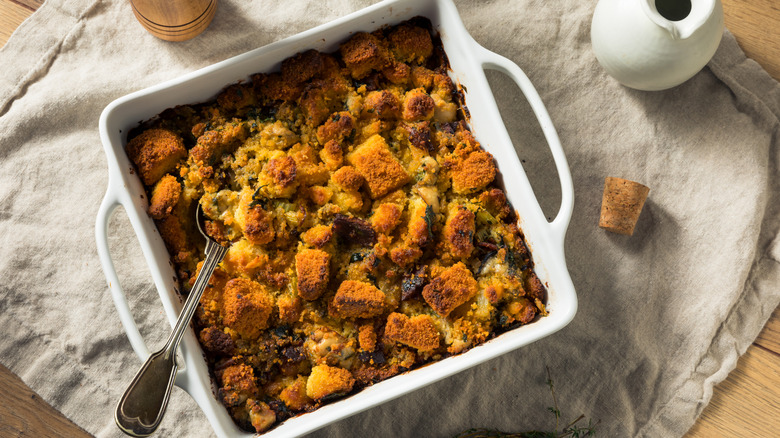
Oyster stuffing — also known as oyster dressing — is similar to the classic stuffing we serve alongside meat during the holidays, but with a seafood twist. It's a popular holiday dish in coastal regions of the U.S., since fresh (as opposed to canned) oysters make this side dish main-course worthy.
The base of the dish consists of cubed bread with or without bread crumbs, sautéed onions and celery, butter or oil, eggs, fresh herbs like parsley and thyme, and fresh shucked oysters. All the ingredients are baked in a casserole dish — including the reserved liquid from the oysters — resulting in a comforting side that's simultaneously rustic and classy. The briny flavor from oysters and their soft, chewy texture give a normally flat-tasting recipe some nuance in flavor and more complexity. Try making the oyster swap for your next holiday stuffing recipe, and you probably won't ever want to go back to boring, basic, bread-only stuffing.
10. Spritz cookies
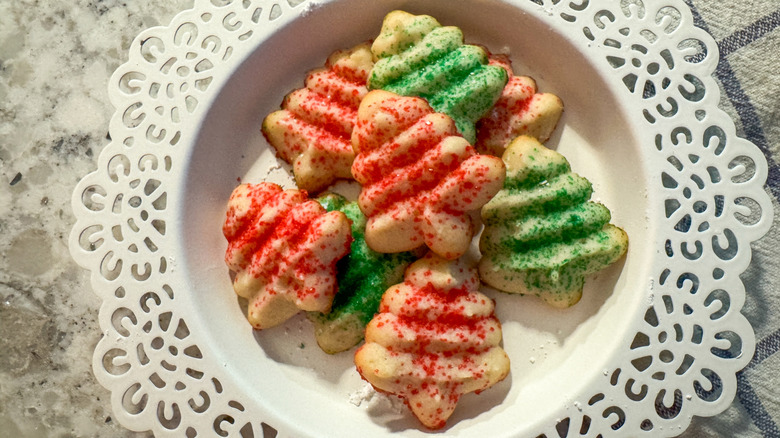
Chances are you've had spritz cookies at least a few times during the holidays, but you might have confused them with sugar cookies. They aren't nearly as common at the Christmas dessert table as they once were, but they're still known to make an appearance from time to time. You'll find some recipes for classic spritz cookies in vintage cookbooks from beloved brands, like Pillsbury's Best Butter Cookie Cookbook, which features a spritz recipe developed by Ann Pillsbury herself.
Spritz cookies are easy to recognize because they're almost always shaped like Christmas trees, wreaths, and ornaments come Christmastime. They're made by pressing cookie dough with a cookie press, like OXO Good Grips 14-Piece Cookie Press Set. The result is a more detailed, textured shape than what's achievable with a cookie cutter, which gives spritz cookies their signature thick consistency. The dough is made with plenty of butter, making the cookies extra soft with a rich, melt-in-your-mouth taste that's similar to that of sugar cookies, but much creamier. The cookies are typically topped with round red and green sprinkles to add a pleasant crunch to their soft bite, or a drizzle of chocolate for a more luxurious flavor.
11. Sweet potato casserole
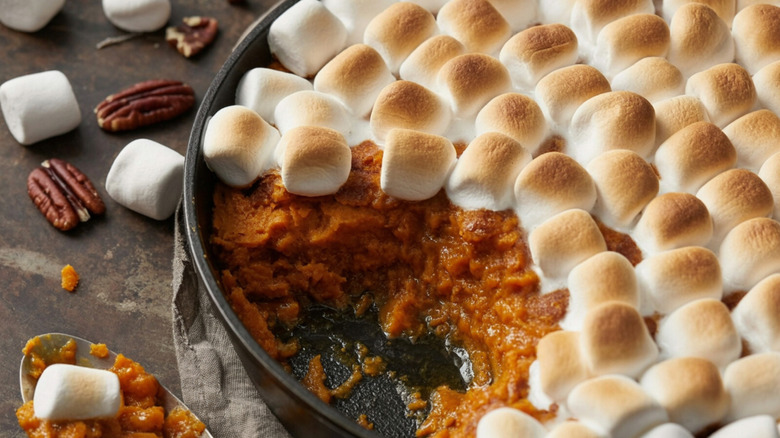
For some families, a classic sweet potato casserole is one of the most anxiously anticipated sides during the holidays. But the old-fashioned dish is sometimes cast aside for modern sweet potato concoctions, or even just plain old mashed sweet potatoes. But we're here to make the case for this sugary, cinnamon-y side dish that has "mid-century" written all over it.
Sweet potato casserole is made up of mashed sweet potatoes mixed with brown sugar, butter, and spices and topped with marshmallows in a casserole dish. After it's baked, the marshmallows turn golden-brown and slightly crispy, giving the dish its trademark texture.
Every family has their own unique way of upgrading sweet potato casserole, but the marshmallows are non-negotiable. Some top the mixture with pecans and crumb topping for a little crunch, while others infuse the potatoes with an earthy flavor via maple syrup and unsweetened cocoa powder. Although this dish leans sweet, it's still commonly served with the dinner offerings as part of a holiday spread, acting as a sugary reprieve from all the rich, salty foods.
12. Roasted duck
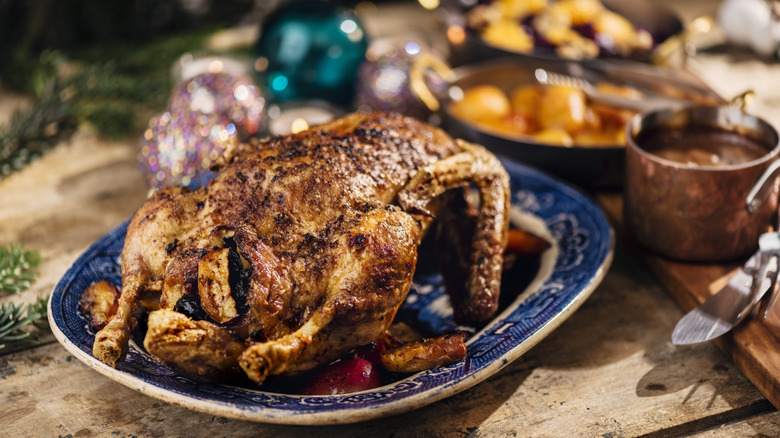
If you're planning on going big with an elegant holiday spread, roasted duck should be at the center of the table. It's more complicated to cook than chicken, beef, or ham, but it's an excellent option if your Christmas gathering is small and an entire ham would be overkill. It's richer and more luxurious than chicken, and it's easy to customize with holiday-themed flavors without losing its natural, robust taste.
To Christmas-ify your roasted duck, try a cranberry-orange glaze. Duck is extremely rich and savory, so the bright flavors of fruit play well against the contrasting taste of the meat while evoking the Christmas spirit. Plus, the stickiness of the sweet glaze is delicious against duck's trademark crispy skin. Add fresh herbs, like rosemary, to make the roast's flavor even more complex, and a little cayenne or paprika for some sweet heat. Pair the roast duck with light sides, like roasted Brussels sprouts, carrots, and parsnips, and tack on a side of cranberry-orange relish to up the fruit factor.
13. Struffoli
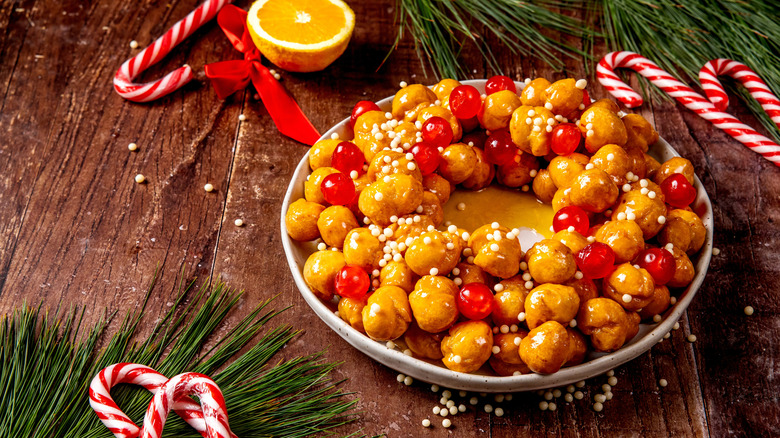
It doesn't look the part when it's decked out with festive sprinkles and topped with colorful candy, but struffoli is actually a dish that predates even mince pies and fruitcake. Its exact origins are uncertain, but it's believed to have roots in ancient Greek culinary traditions, which paved the way for much of the modern Italian fare that we know today. Struffoli is most commonly associated with Naples, where it's enjoyed during the holidays, but it made its way to the U.S. to become an American tradition, like so many other Italian dishes.
So, what exactly is struffoli? The dish consists of tiny, round dough balls — not much bigger than marbles — covered in honey and then decorated, usually with nonpareils, like Supernatural Rainbow Nonpareils. However, they can be topped with candy pieces, sprinkles, whipped cream, and even maraschino cherries. The outside of the dough retains its crispiness, even with the heavy toppings, while the inside is extremely soft and tender with a mildly sweet taste. They're intended to be spread out on a serving tray and shared family-style, so they're a great dessert if you're trying to embody the Christmas spirit with food.
14. Pineapple fluff
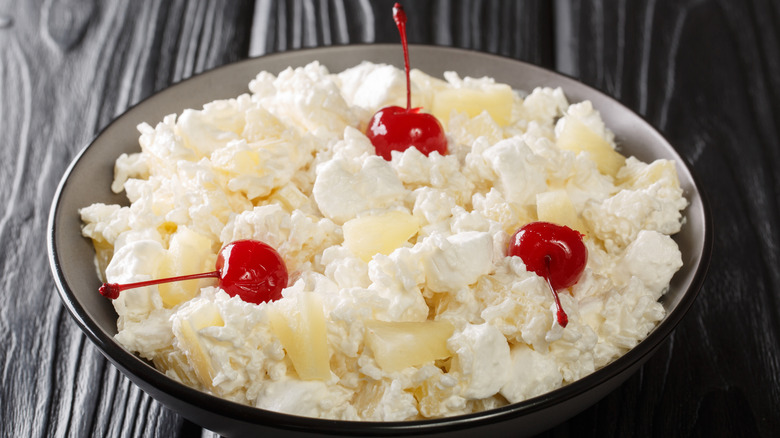
Pineapple fluff has everything you'd ever want in a classic vintage American dessert: canned fruit, Cool Whip, Jell-O pudding mix, and a presentation that screams "1970s." You can think of pineapple fluff like a more tropical version of ambrosia salad, and like ambrosia salad, it's almost entirely a thing of the past. Typically, it consists of canned crushed pineapple mixed with Cool Whip, vanilla pudding mix, and mini marshmallows. Like so many dishes from the middle of the century, this was a quick dessert made by mixing ready-to-eat ingredients and just-add-water mixes — no culinary skill required.
Usually, pineapple fluff consists of a bit more than just fruit, Cool Whip, and pudding. Every family did their Christmas fluff a little differently back in the day; maybe they added crushed pecans and maraschino cherries, or shredded coconut for a little extra tropical flavor. To make it taste a little bougie, they may have tossed in some macadamia nuts. We'll let you decide if this funky mid-century dessert is worth resurrecting this Christmas, or if it's better left to go the way of ambrosia salad and celery-flavored Jell-O.
15. Rum balls
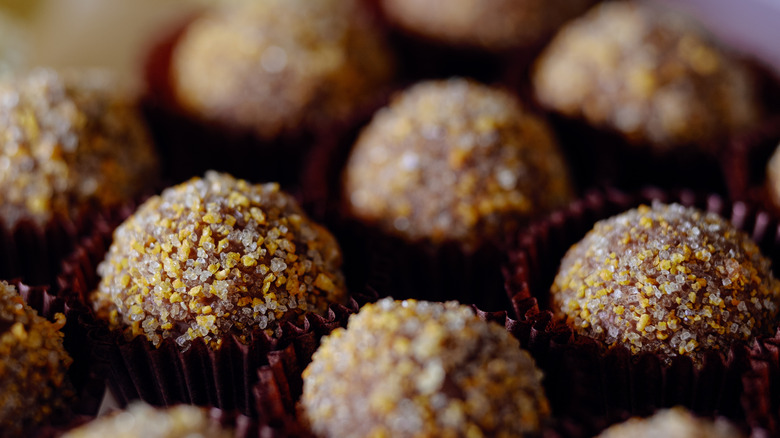
Nothing says "it's time to party" like a cookie loaded with booze. Rum balls — or "romkugler," as they're known in Denmark, where the recipe originated — are a little bit like modern cake pops, but for adults only. The Danish make their rum balls with leftover cake, chocolate, jam, and rum formed into little poppable balls rolled in coconut flakes.
It should come as no surprise that Danish rum balls took off in mid-century America. These no-bake treats are easy to put together in minutes and they're easy to customize with unique flavors, like smoked orange rum balls for Christmas. In the U.S., rum balls are made a bit differently than in Denmark; instead of cake, American rum balls are often made with leftover cookies. Vanilla wafers offer the most neutral, customizable flavor profile, but most store-bought cookies work in this recipe. The cookies are crushed in a food processor, mixed with corn syrup, cocoa, and plenty of rum, then rolled in powdered sugar.