

10 Foods With More Vitamin D Than Eggs
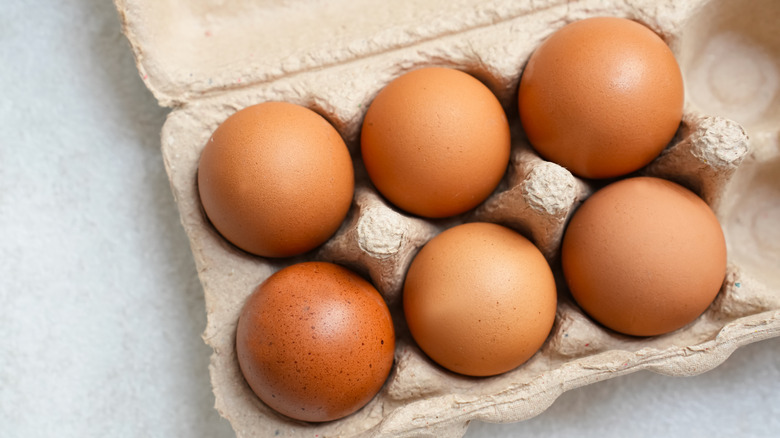
Eggs contain a plethora of health benefits, and are filled with protein, good fats, B vitamins, and choline, which is great for brain health, but they aren't actually the best food source of vitamin D. Vitamin D aids in the absorption of calcium in our bodies, which is essential for healthy bones, and helps to reduce inflammation in the body, along with aiding in the metabolism of glucose and helps to support our immune system. The vitamin is measured in International Units, known as IU, and a single serving of one egg yolk has 41 IU of vitamin D. Even if you have a three-egg omelet for breakfast, that's only about 20% of the recommended daily vitamin D intake.
The National Institute of Health recommends that those between 1 – 70 years old consume 600 IU of vitamin D per day, including those pregnant and lactating, and adults over 70 should increase their vitamin D consumption to 800 IU daily. Along with vitamins A, E, and K, vitamin D is a fat-soluble vitamin, meaning that they need fat accompanying them to be absorbed into the body. Humans can get vitamin D from exposure to the sun, but foods are also a great source for the vitamin without the risks from excess UV exposure. Given that almost two-thirds of Americans are vitamin D deficient, it's imperative that we get more in our daily diets. We've rounded up the foods with the most vitamin D per serving.
Swordfish
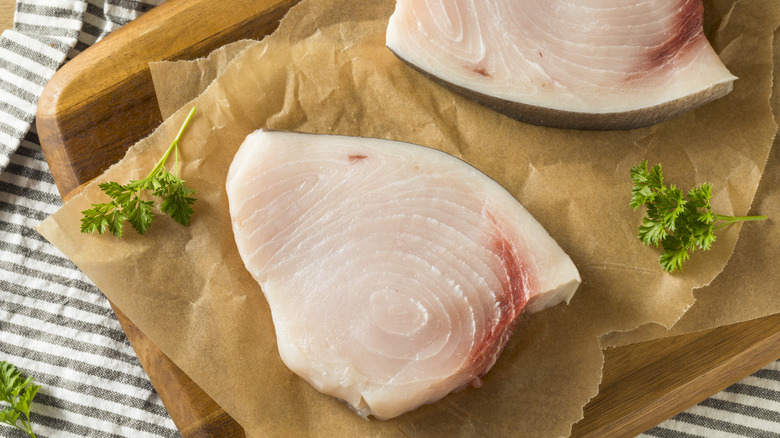
Boasting a whopping 566 IU of vitamin D per 3 ounces, swordfish has a more firm, meat-like texture than most other fish. A slightly larger portion of swordfish will fulfill your daily requirement of vitamin D intake in just one meal. If you've never cooked swordfish before, start with simple recipe like our pan-seared swordfish with lemon butter sauce.
Rainbow trout
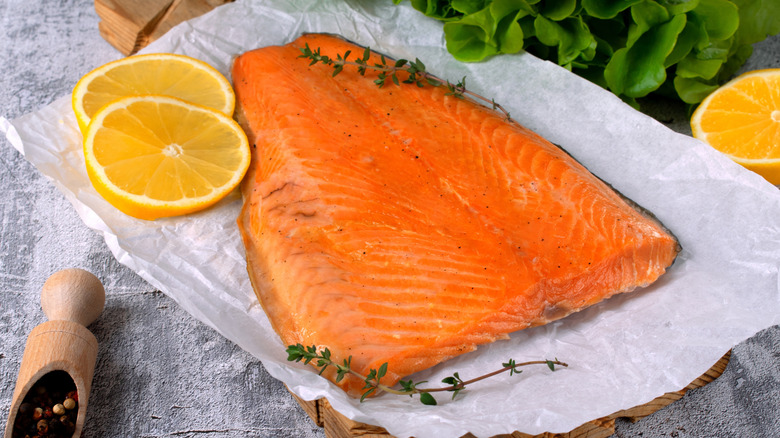
A thin yet fatty fish with a much different texture and flavor than swordfish, rainbow trout has 359 IU per 3-ounce serving. Mild, tender rainbow trout is a great fish to add into your dinner rotation as it cooks quickly and is a versatile fish flavor-wise. Rainbow trout is excellent pan-seared, but it also makes a great smoked fish.
Salmon
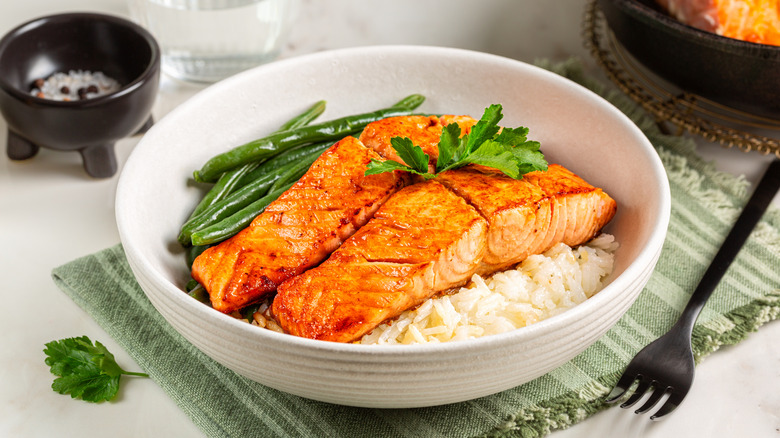
Depending on the type of salmon, the pinkish-orange fish has between 383-570 IU per 3-ounce serving. Not only high in vitamin D, salmon contains high levels of protein as well as vitamins B12 and B6, in addition to being a great source of omega-3 fatty acids. One of the most popular fish available that's buttery and easy to cook, salmon can be found in most restaurants or grocery stores. When looking for salmon at the store, opt for wild-caught over farm-raised.
Canned tuna
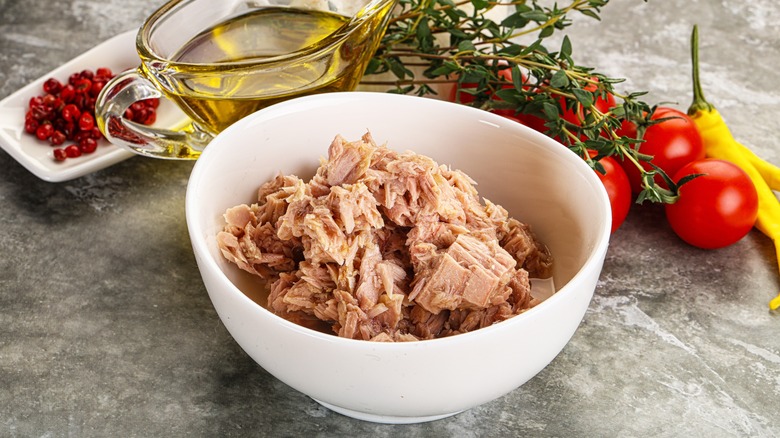
A star of the easiest work-from-home lunches around, canned tuna has 231 IU per 3 ounces. A standard can of tuna is usually 5 ounces, so if you eat the whole can, whether it's oil-packed or water-packed, you're consuming about 385 IU of vitamin D, which is more than half of the recommended daily intake of vitamin D.
Sardines
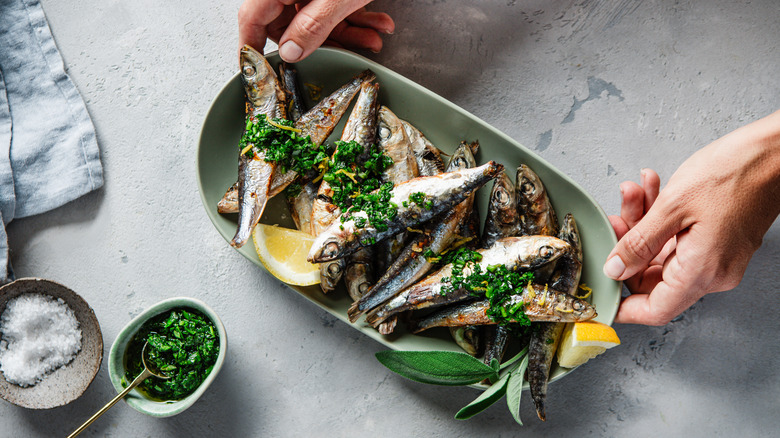
While they might not be the first thing that comes to mind when you think of eating fish, the small sardines pack a punch of vitamin D for their petite size at 177 IU per 3-ounce serving. Sardines are one of the most nutrient-packed foods you can buy, and that includes plenty of vitamin D.
Whole, fortified chocolate milk
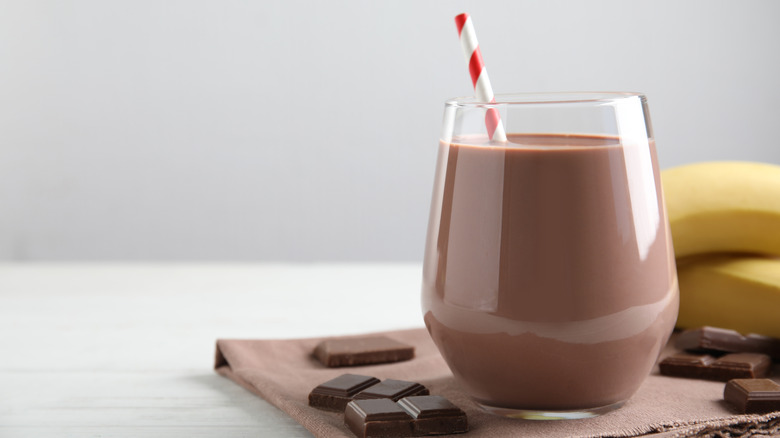
Great news for both kids and those young a heart, whole, fortified chocolate milk is an unexpectedly great source of vitamin D. Knowing that the majority of Americans are vitamin D deficient, should you buy milk fortified with vitamin D, and fortified chocolate milk has 122 IU per cup. You can choose store-bought or make your own at home, just be sure to use whole, fortified milk as whole milk has the necessary fat to transport the vitamin.
Eggnog

It might surprise you to see eggnog on this list, but if eggs and fortified dairy are good sources of vitamin D, then it only makes sense that the holiday beverage combining both sources would be high in vitamin D. An 8-ounce serving has 124 IU of vitamin D. You can easily make it on your own, but be sure to avoid the common mistakes everyone makes with homemade eggnog.
Fortified soy milk (unsweetened)
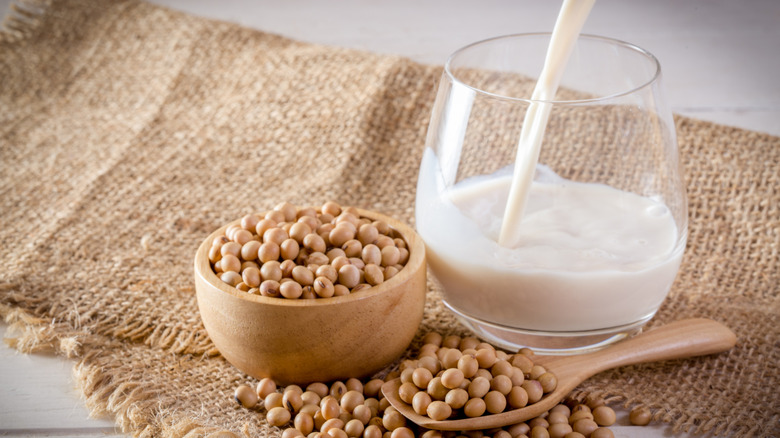
Similar to fortified whole milk, fortified soy milk is also a great source of vitamin with 100 IU per 8-ounce serving, and it's a perfect option for those who don't consume dairy. Not only great in coffee or cereal, but soy milk is also a great non-dairy alternative for baking and desserts, and tends to have a comparable texture to traditional dairy milks.
Yogurt
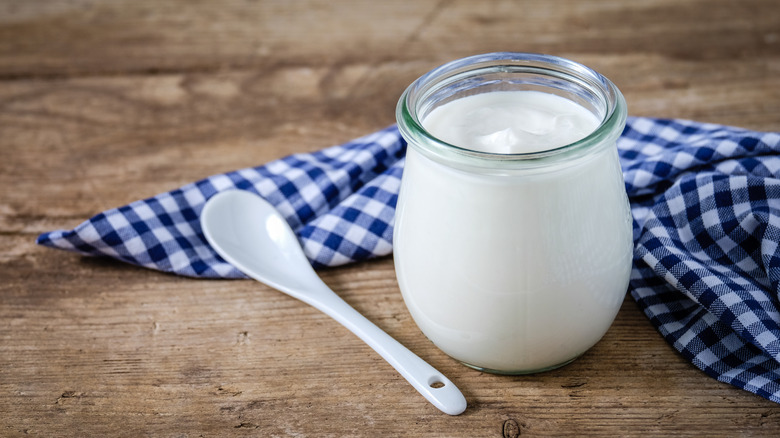
There are a wide range of types of yogurt out there, but plain and nonfat yogurts contain anywhere from 80 to 200 IU of vitamin D per single cup serving. Yogurt is great on its own or topped with fresh fruit and granola, but you can also incorporate it into meals other than breakfast by adding it to smoothies, marinating meat in it, or easily turn in into a sauce like a classic tzatziki sauce.
Chanterelle mushrooms
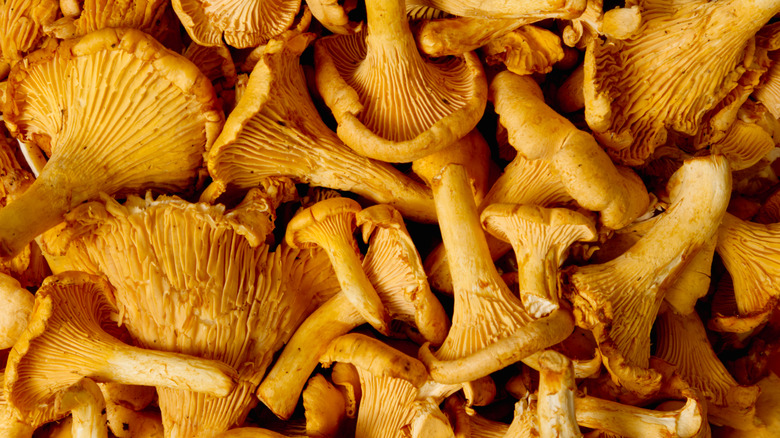
The gorgeous, yellow-hued mushrooms contain 114 IU per cup when raw, although they do lose about 15% of the amount of vitamin D after cooking. While it may sound like the equivalent of charging your crystals in the full moonlight, you should let your mushrooms sit in the sun before cooking them, as it can boost the vitamin D levels in any type of mushroom.