

9 Non-Alcoholic Sparkling Wines, Ranked
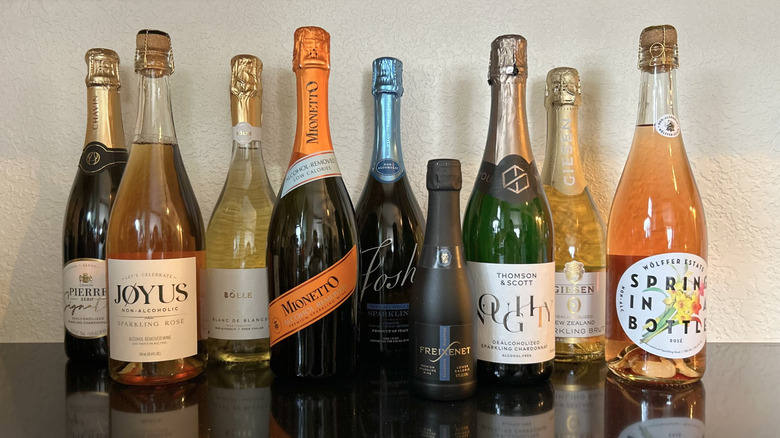
It used to be trendy for restaurants and bars to embrace booze-free offerings during Dry January. With a rising wave of sober-curious consumers, however, these items have found a permanent place on menus everywhere. Retailers, too, have shifted their selection, making room for one of my personal favorite non-alcoholic alternatives: sparking wine.
Two months ago, I decided to (temporarily) embrace a sober lifestyle. Much of my inspiration came from Hilary Sheinbaum, author of "The Dry Challenge and Going Dry: A Workbook." Beyond asking the important introspective questions, her tips range from replacing spirits in non-alcoholic cocktails to curating sober celebrations.
To make my experiment successful, I knew my bar cart needed some updates. Whether you hope to cut back or quit alcohol cold turkey, it's important to have a game plan. How will you ring in the new year, honor milestones, or join in raising a glass? I had those same questions, and sure, there are dozens of zero-proof options on the market.
Let's be honest, though: you're going to be disappointed and more inclined to cut your challenge short if your swap is fizzy grape juice. While some alternatives are, unfortunately, more similar to Welch's than wine, others impress even expert sommeliers. Based on hours of research and personal taste testing, this guide will help you decide which non-alcoholic sparkling wines are truly toast-worthy.
Josh Cellars Non-Alcoholic Sparkling
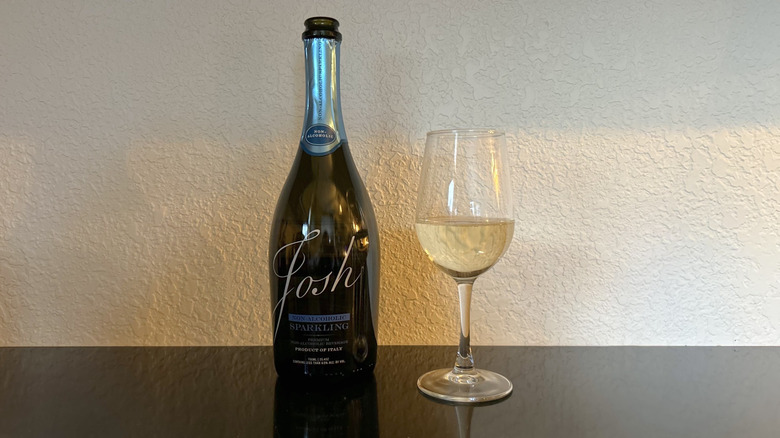
Josh Prosecco ranks highly among cheap "champagnes" with alcohol, but unfortunately, its zero-proof alternative leaves a lot to be desired. In my opinion, the nose is a smack of sugar akin to marmalade and cotton candy grapes — far from the brand's compelling descriptor of pear, citrus, and green apple.
While the wine's scent isn't entirely off-putting, I found the flavor to be quite unpleasant. Any nuance is masked with a cloying artificial sweetness that borders medicinal. These qualities are a hint to the wine's 10.6 grams of added sugar, which is more than double that of almost all other products reviewed. Comparatively, Josh Cellars Non-Alcoholic Sparkling is also the most indulgent, with 44 calories per 5-ounce glass.
However, this household name doesn't aim to be refined. Rather, it's affordable and accessible. Along with offering nationwide shipping, the brand has partnered with mega retailers like Target and Total Wine & More, signaling the ever-growing demand for booze-free alternatives.
Josh Cellars Non-Alcoholic Sparkling debuted this past June from a group of Italian winemakers. This team has had a dependable process for five generations and granted, adapting isn't always easy. Despite the harsh criticism, I appreciate the effort and attention towards consumers' shifting taste. Should future iterations reel back on the sugar, I'd be interested in giving this product a second chance.
Pierre Zéro Signature Sparkling Chardonnay
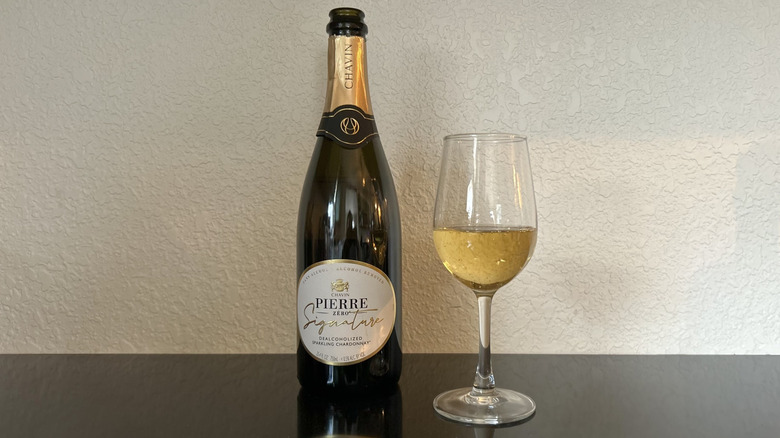
Set in southern France, Pierre Zéro has access to some of the world's most prized wine-growing regions. The company's founder, Mathilde Boulachin, was fittingly raised in Champagne and is an admirable pioneer of non-alcoholic wine. Far fewer alternatives were available when the brand was established in 2010. But in the years since, I'm not sure that it's kept up with the rigorous competition.
In fairness, given its worldwide cultivation, chardonnay offers a wide range of characteristics. However, I have yet to come across a variety as saccharine as the Signature Sparkling Chardonnay from Pierre Zéro. To me, the aroma of this golden wine is heavily honey-like and quite comparable to mead. The sugary scent carries through to the flavor, which is very similar to sparkling white grape juice and not quite the sophisticated sip I was hoping for.
Looking at the label, this makes sense as the bottle contains 9% concentrated grape juice. Sadly, this one-note flavor overpowers the more complex tones of the dealcoholized chardonnay. But those with a sweet tooth may find this to be an absolute winner — especially given that it contains only 3 grams of natural sugar and 16 calories per 5-ounce glass.
Compared to other non-alcoholic wine brands, Pierre Zéro is moderately priced and available in dozens of countries, including the United States. However, nationwide distribution is limited. You're unlikely to find this Signature Sparkling Chardonnay at major retail chains.
Wölffer Estates Spring in a Bottle Rosé
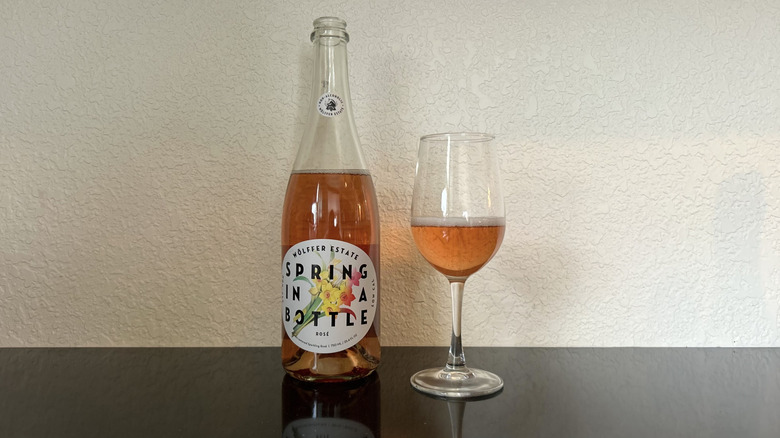
Wölffer Estates is a highlight of the Hamptons and among the best wineries in the country. It's a chic place to sip cool, crisp rosé in the warm afternoon sun. Spring in a Bottle captures that sensation, allowing it to be enjoyed anytime, anywhere.
In my opinion, there's truly something transportive about this product, with its vibrant floral label and mini bottles that are, in themselves, an excuse to plan a picnic. When filling your basket, consider fresh salads, spicy Asian flavors, and other recommended pairings from the brand.
I could see those suggestions working well with this coral-colored wine, as it very much reminded me of kombucha. It offers a subtle fermented sourness and a touch of citrusy sweetness, plus a noteworthy minerality — which, in my opinion, lingers a bit too long and tastes quite tinny.
Though Wölffer Estates does not disclose this information, I wonder if its process involves the use of Brettanomyces. This wild yeast can not only cause a metallic finish, but a hay-like aroma (something that is listed in the brand's description of Spring in a Bottle Rosé). Nevertheless, I imagine this could be somewhat polarizing.
Fortunately, the product is moderately priced and easy to come by, should you be interested in sampling it for yourself. Online orders placed via Wölffer Estates' website can be shipped to 42 states. Many nationwide retailers also have this wine in stock.
Jøyus Non-Alcoholic Sparkling Rosé
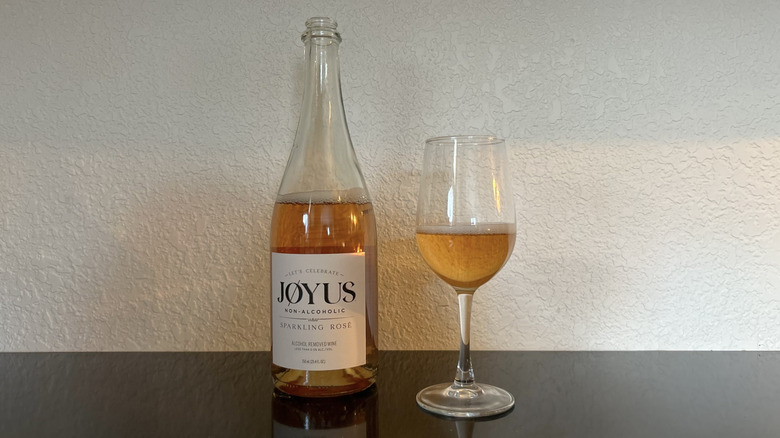
The year Jøyus debuted, its Non-Alcoholic Sparkling Rosé won gold in the esteemed San Francisco International Wine Competition. What makes the award-winner especially impressive is that it was developed by someone who's sober. Founder Jessica Selander hasn't had a sip of traditional wine for nearly two decades, though she must have a stellar memory for flavor.
This Non-Alcoholic Sparkling Rosé is well balanced with a lovely fermented sourness that delivers red fruit flavors akin to cranberries and tart strawberries. Its bright acidity does, indeed, compare to a true rosé — albeit, one on the sweet side of the spectrum.
From a dry tempranillo to a candy-like pink moscato, there are many different types of rosé on the market. These are labeled as such when alcohol is involved. Like many booze-free alternatives, Jøyus does not specify its product to be a particular variety.
If you prefer a more crisp bottle, consider this tip when buying non-alcoholic wines: Look closely at the label. Similar to the Pierre Zéro chardonnay, Jøyus Non-Alcoholic Sparkling Rosé contains white grape juice concentrate which, in my opinion, dims its delicious depth. That being said, sommeliers and industry professionals gave it a gold medal.
You can be the judge by purchasing a bottle directly from the brand's website or via Amazon. It falls on the pricier side compared to others on this list, but Jøyus just launched mini 187-milliliter bottles that are perfect for a taste test.
Freixenet Alcohol-Removed Sparkling White Wine
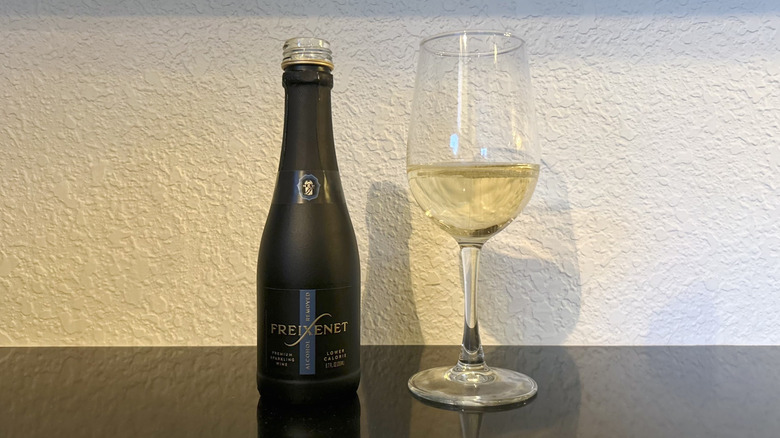
Like Mionetto, its sister company, Freixenet crafts both traditional and dealcoholized wines. For this review, I sampled its Sparkling White Wine and loved its level of sweetness, which is tapered by a significant amount of minerality.
Interestingly, I also found it to have a mild salinity, which is often associated with vineyards in coastal areas. As it turns out, this wine is made from airén grapes grown in the Penedès region of Spain, which is set along the Mediterranean Sea. In my opinion, to taste its salt-kissed breeze is a sort of magic.
However, similar to the metallic flavor of Wölffer Estates' sparkling rosé, some may find this more savory finish to be too prominent or lingering. For that reason, along with tough-to-beat competition, I ranked this non-alcoholic alternative right in the middle. Personally, I found it quite appealing and more comparable to traditional wine than others previously mentioned.
Even better, it's the most affordable option on this list. Full and miniature bottles of Freixenet Alcohol-Removed Sparkling White Wine can be purchased on its website, as well as major retailers like Total Wine & More.
Giesen Sparkling Brut
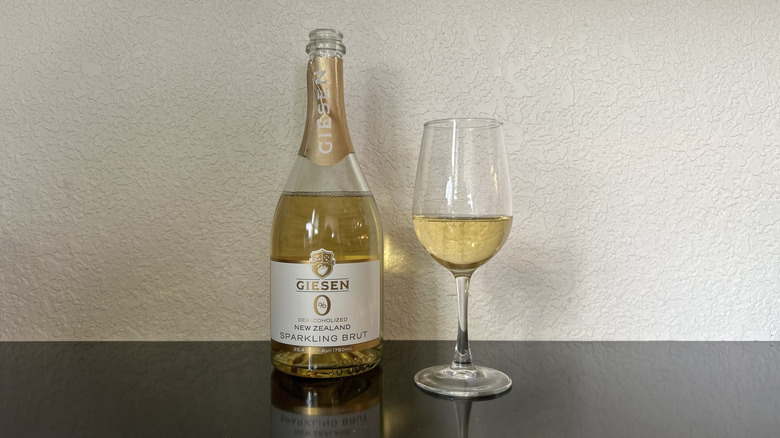
Break out your champagne flutes! While perhaps less "everyday" than some competitors, no wine on this list is more ideal for a celebratory toast than Giesen Sparkling Brut. Expect a dance of bubbles and a perfect balance between dry and sweet. It offers a rounded, full flavor with floral nuances and a zing of tart citrus. While the brand also describes its brut as having a hint of pear, I found this quality to be more aromatic and akin to lychee.
Regardless, given that Giesen holds the non-alcoholic category's second-largest market share, many agree that this is wine absolutely delightful — and surprisingly, not at all too sweet, despite it containing 2% grape juice. This small splash still allows the more complex wine flavors to shine.
Giesen Sparkling Brut features grapes from the Waipara region of New Zealand's south island, a cool climate where low-sugar varieties thrive. Fittingly, it contains the least amount of sugar among all others reviewed, with just 2.9 grams per 5-ounce glass.
Stores including Total Wine & More offer this product at a moderate price point. It's also available from online retailers like Amazon and The Zero Proof.
Noughty Non-Alcoholic Sparkling Chardonnay
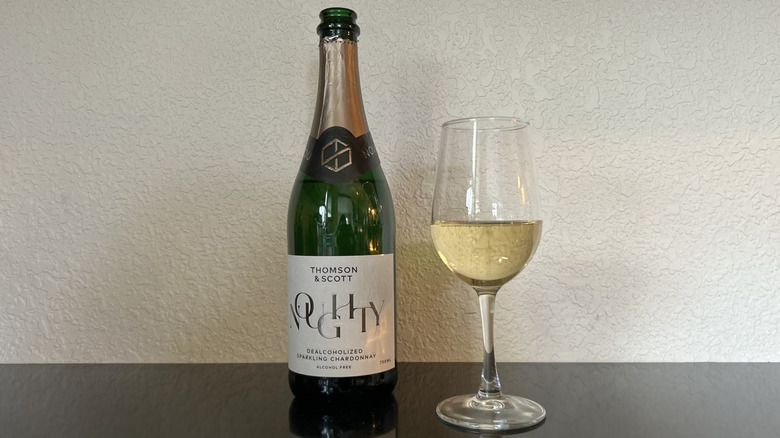
Noughty produces some of the most premium alcohol alternatives on the market, and its Sparkling Chardonnay is no expectation. Rather than oak barrels, this dealcoholized wine is first produced in stainless steel tanks, which creates a crisp and fruit-forward character.
To me, pear and tart green apple were obvious on the nose and carried through to the flavor. This touch of acidity beautifully complements the mild sweetness which, similar to the Pierre Zéro chardonnay, is reminiscent of honey.
Additionally, like the bottle from Freixenet, I noted a subtle hint of salt when tasting this wine — without previously knowing that its grapes, too, are sourced from southern Spain. This slight minerality adds even greater depth, making Noughty Non-Alcoholic Sparkling Chardonnay stand out from competitors.
Hospitality professionals have taken note, with glasses of this brand poured at the likes of Raffles, The Ritz-Carlton, and trendy restaurants. Add a bottle to your home bar cart or secure a pack of minis for your next soirée. Noughty is priced just above the average competitor, but in my opinion, its wines are well worth the cost. Along with direct purchase via its website, this product is available from online and in-store retailers.
Oh, and I almost forgot to mention: Noughty is a woman and minority-owned business, and its parent company, Thomson & Scott, is a certified B Corp. What's not to love? It was tough to make a final call, but this contender definitely places in the top three.
Mionetto Alcohol-Removed Sparkling Wine
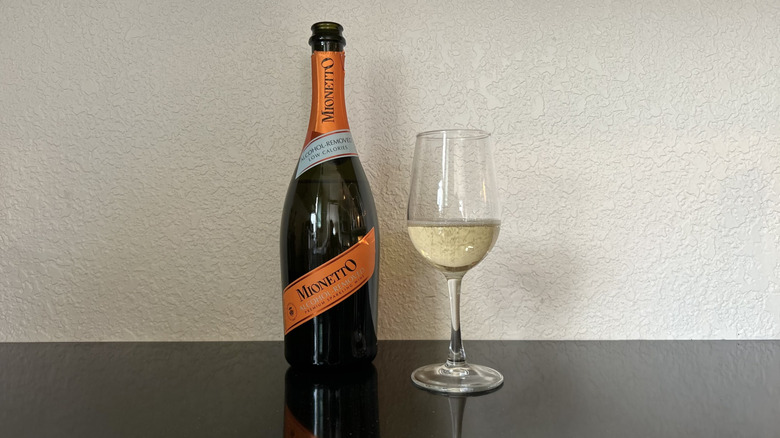
In addition to having a bright and balanced flavor, Mionetto Alcohol-Removed Sparkling Wine is an exceptional value. Among others sampled for this review, its affordability is second only to Freixenet, its sister company.
This compelling price point not only makes it an everyday luxury, but a versatile option that you don't have to be too precious with. Use it to easily replace alcohol in cocktails, like a mimosa or an Italian spritz (note that the brand offers one of the best zero-proof aperitivos). This wine also inspires a toast to any and every small victory — even on a weeknight, as it comes with no consequence of a hangover.
Overall, Mionetto Alcohol-Removed Sparkling Wine is a guaranteed crowd-pleaser that's approachable, yet memorable. It dances on the floral, citrus, and tree fruit side of the flavor wheel, with prominent notes of apple and ripe peach. Bonus points were awarded for its lively, long-lasting bubbles. This is a signature feature of the brand, which primarily has vineyards in the Prosecco region of Italy.
Exchange a "salute" when clinking your wine glasses or a charming set of mini bottles from Mionetto. Both can be purchased from its website, as well as major liquor retailers, grocery chains, and big box stores.
Bolle Blanc De Blancs

Now, the moment you've been waiting for (or perhaps quickly scrolled to out of eager curiosity): Bolle Blanc De Blancs is my top pick for non-alcoholic sparkling wines. You don't have to just take my word for it. Wine Enthusiast has honored it with 91 points, while other industry professionals in various competitions have provided even higher scores. Despite its lack of alcohol, this bottle has earned its place at the tables of many Michelin-awarded eateries and acclaimed hotels.
So what's its secret? For one, the brand partners with vineyards in La Mancha, Spain, the world's most storied wine-growing region. Blanc De Blancs features a blend of 75% chardonnay and 25% silvaner grapes from this iconic denomination of origin.
More importantly, Bolle is the only company to re-ferment after dealcoholization. This process rebuilds the aroma, flavor, and structure of traditional wine in an unparalleled way. Blanc De Blancs opens with a citrus-forward profile that develops into minerality, earthiness, and a faint tropical finish. It's an intriguing combination reminiscent of lemon pepper and pineapple that's deeply layered and beautifully dry.
While some cheap bottles of wine taste expensive, others know their worth and such is the case with Bolle. This product is about double the cost of its average competitor. For a special occasion, though, it's deserving of the splurge — and sure to win over any non-alcoholic wine skeptic. Purchase is available through its website and other online retailers, including Amazon and The Zero Proof.
Methodology

When writing this review, I started where most inquiries do: Google. I read several existing articles and blogs about the best non-alcoholic wines on the market, taking note of which products were often top recommended. This analysis informed my shopping list, though several brands were generous in offering complimentary samples.
Once I had collected all nine contenders, I taste tested them one after another in a single afternoon (alongside a small group of girlfriends — they say to never drink alone!). Together, we took note of the color, nose, and palate of each wine, referring to a tasting wheel to help decipher nuances.
This little sober soirée was helpful in determining the flavor quality of each wine, but other qualifiers went into this ranking, too. I considered the cost, sugar content, and calories of these products, and created spreadsheets that ordered them consecutively. This review also evaluated awards, variation in bottle sizes, value, and accessibility.
With all of these attributes accounted for, I ranked the wines accordingly. Of course, flavor is the most important factor for many, though it's also the most subjective. Perhaps your taste buds prefer sweet more than dry, or rosé over white. Regardless, I hope this guide has helped you determine a good place to start. Cheers!