

10 Most Influential Restaurant Chains Of All Time
Imagine living in a time when drive-thrus, fast-casual salad spots, and app-delivering didn't exist; it seems surreal, doesn't it? Well, if you've ever utilized even one of these innovations, you've experienced a fast food revolution brought in by what are now industry giants. But here's the thing: every single convenience that seems like a norm in modern dining was once a radical experiment that someone had to pioneer first. Someone had to prove Americans would line up for five-cent hamburgers in identical white buildings, that franchising could create coast-to-coast consistency, that a coffee shop could become your "third place" between home and work.
We're not here to rank the biggest and most profitable restaurant chains in American history, but rather to recognize the true pioneers – the ten chains that invented entirely new categories, revolutionized business models, and fundamentally took us decades ahead of our time in shaping our expectations from fast food. They didn't just build successful empires; they created blueprints that hundreds of fellow businesses, even competitors, would follow. They took risks when the masses doubted them, solved problems the industry didn't know it had, and in doing so, rewrote the history of American dining culture. There's a reason why some of these remain powerhouses today. So, here are ten restaurant chains that left permanent marks on how, where, and what we eat, from eating a fried chicken sandwich in an outlet mall to digital-first restaurants that redefine the very nature of ordering food.
White Castle
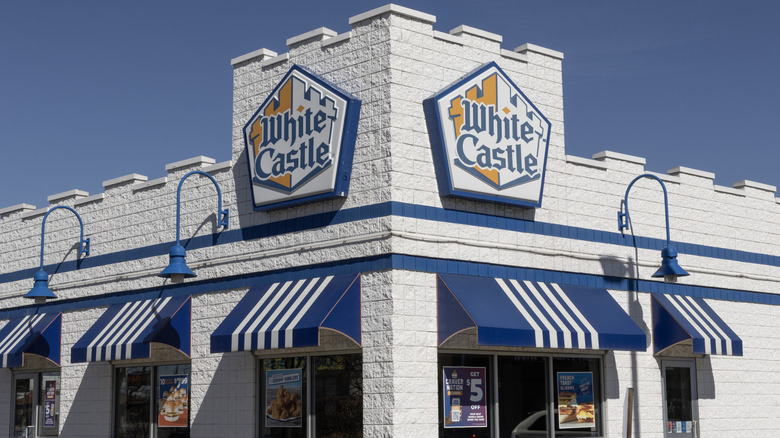
Before White Castle, hamburgers had a reputation problem. Thanks to the negative publicity from books like "The Jungle" by Upton Sinclair, which described unsanitary meat-packing practices, hamburgers were considered sketchy fare sold by street vendors of dubious hygiene. But Walter Anderson and Billy Ingram wanted to paint a different picture: turning the hamburger into the main character.
Opening in Wichita, Kansas, in 1921, White Castle not only changed the masses' perception of hamburgers but also everything about how restaurants should — and would — operate. White Castle was built small, gleaming buildings, blue banners, and stainless steel and porcelain interiors that were the epitome of cleanliness. Every burger was made the same way, every single time. The price, five cents, remained stable for a notable period of time. White Castle wrote the rulebook of restaurant standardization before McDonald's made it famous, and one that every fast food chain followed.
White Castle is truly a case study of how you can mass-produce food without sacrificing quality or consistency. The restaurant's kitchens had their own meat grinders, buns were baked in house, too. Each aspect of production was controlled, and eventually, America was introduced to the idea of takeaways. White Castle became famous for selling 'em by the sack, as it is called. The chain proved to America that fast food could be clean, reliable, and affordable. White Castle is important because it paved the way for fast food burgers, deriving intangible influence from innovating the 1920s, and eventually the entire fast food industry that we know today.
Howard Johnson's
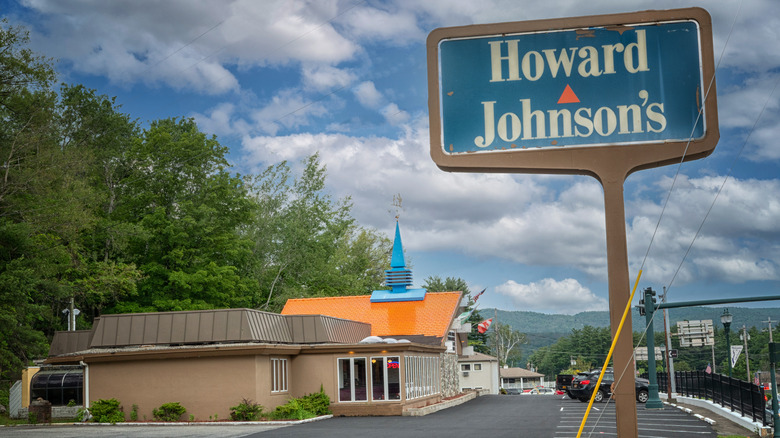
Howard Deering Johnson didn't invent the concept of a restaurant, but he invented something far more salient: the franchise system that would define America's dining industry for centuries to come.
Starting as a small combination drugstore, newsstand with a soda fountain in Quincy, Massachusetts, Johnson built his empire on one principal insight: Americans want consistency. When you saw the orange roof with the turquoise cupola, you knew exactly what to expect: the same 28 ice cream flavors, the same fried clams, the same reassuring predictability, whether you were dining in Massachusetts or across the coast.
In 1935, Johnson struck gold with his real genius: franchising. He joined hands with businessman Reginald Sprague and opened his first franchise, building a model where independent operators could run restaurants under the Howard Johnson brand and standards. By the late '70s, the brand had transformed into one of the largest restaurant chains in America, with over 1,000 locations and about 500 motor lodges.
More importantly, HoJo's pioneered roadside dining, understanding before anyone else that America's new highway system would make for a captive audience of eager-to-explore travelers. Chain locations were smartly placed restaurants at busy highway exits and rest stops, completely radicalizing where and how Americans ate while traveling cross-country. While modern fast food contributed to the downfall of Howard Johnson's, every chain restaurant you see clustered around highway exits today owes its success to the chain's legendary vision.
McDonald's
The McDonald brothers, Richard and Maurice, didn't always set out to conquer the fast food world. They simply wanted their hamburgers to reach customers faster. So, in 1948, they redesigned their San Bernardino drive-in restaurant around a revolutionary concept: the Speedee Service System. Instead of carhops and a massive menu, the brothers built an assembly line where each worker had a specific task to perform. Burgers were assembled identically. Fries were cooked in batches. The menu was cut down to nine essential items. The result? Customers got their food in record time.
Then Ray Kroc entered the picture. A milkshake machine salesman turned franchise operator turned empire builder, Kroc saw the big picture when the brothers couldn't: This system could conquer the fast food world. He bought the brothers out in 1961 for $2.7 million and went on to build the most successful fast food chain known to humankind.
McDonald's didn't just perfect fast food; it exported the essence of Americana to the entire world. Those golden arches became a beacon of recognition globally; a kid in Canada knew it just as well as an adult in Mexico. Riding on the success, McDonald's went ahead and standardized every single thing. Call it the "McDonaldization," as termed by sociologist George Ritzer. From portion sizes and cooking times to employee training and building design, everything was built for efficiency and predictability. Every fast food chain since has followed McDonald's playbook. The franchise model, the limited menu, including an iconic sandwich we forgot about, the assembly-line kitchen, the real estate strategy, the marketing to children, McDonald's wrote the modern fast food bible.
KFC
Harland Sanders was 62 years old when he first franchised his Kentucky Fried Chicken restaurant. The American businessman and honorary "Colonel" spent decades running a service station and restaurant in Corbin, Kentucky, perfecting his pressure-cooked chicken recipe with the legendary 11 herbs and spices. When the new interstate highway bypassed his restaurant in 1952, Sanders could have shut shop. Instead, he loaded up his car and started driving.
The Colonel became fast food's first traveling salesman, going door-to-door to restaurants and cooking his chicken for skeptical business owners. If they liked it, he'd sign them up for four cents per chicken sold. In 1964, Sanders sold the company for $2 million with over 600 franchised locations.
But that wasn't the end of the line. KFC's biggest innovation materialized because of international expansion. In 1987, KFC became the first Western restaurant to set up shop in China. Today, China is KFC's largest market with over 12,000 locations, more than what it has in the United States. The innovation lay in recognizing that American fast food can be adapted for foreign markets, paving the path for McDonald's, Pizza Hut, and all the other chains that you see around globally.
KFC also revolutionized how fried chicken, along with the beloved side dish of potato wedges, can be made in volume. Sanders' pressure fryer cooked chicken in eight minutes instead of 30, defining fried chicken as real "fast" food. Before KFC, fried chicken was Sunday dinner. After KFC, fried chicken became fast food available any day of the week.
Domino's
Tom and James Monaghan bought a struggling pizza shop called DomiNick's in Ypsilanti, Michigan, for $500 in 1960. Eight years later, Tom renamed it Domino's. His obsession wasn't just good pizza; it was great delivery.
Domino's made a promise that would define the brand and take the industry by storm: 30 minutes or it's free. That guarantee, launched in 1973, forced the company to pivot its entire delivery logistics and how. It designed custom pizza boxes that kept pies hot and intact. It built heat-preserving bags. It mapped delivery routes with military-level detailing and used the most unique vehicles to deliver pizza. And, it created commissaries to ensure consistent dough quality. Every operational decision was made through the lens of speed.
But Domino's real genius came decades later, when it found a loophole in the delivery system. In 2007, online ordering began. In 2008, Domino's introduced the pizza tracker, where you could see your order move from prep to order to delivery in real-time. Eventually the pizza tracker built ordering into TVs, social media, and even created a pizza emoji ordering system. By 2018, Domino's was raking in 65% of its sales through digital channels alone.
Domino's became a testament of how low-margin, traditional businesses can be transformed through the use of smart technology. It's plays proved that logistics and user experience matter as much as the product itself. Today, every restaurant chain focusing on its app, its delivery, and order tracking is following Domino's playbook.
Starbucks
When Starbucks opened in Seattle's Pike Place Market in 1971, America's caffeine fuel was watered-down diner coffee or instant coffee, a utility for the sake of it, not for the experience of drinking a beverage.
Howard Schultz, then a director of marketing, completely transformed that ideology. After visiting Italian espresso bars in 1983, Schultz became a man on a mission, to make coffee shops gathering places, community hubs, a "third place" that wasn't home or work. He bought Starbucks in 1987 and began an expansion that would define America's coffee culture, even today.
Starbucks introduced Westerners to Italian-grade drinks and whole bean coffees, taught a generation to order in sizes like "grande" and "venti," and made $5 coffee equivalent to a gourmet beverage. The brand built a template for the modern "cafe," with free Wi-Fi, comfortable chairs, outlets for laptops, and a welcoming atmosphere that made you want to stay for longer. The barista became a coffee connoisseur. Coffee, itself, became a craft.
But what Starbucks truly did was make the everyday coffee run feel premium. With multiple customization options, loyalty programs, and mobile ordering, it turned an everyday commodity into a luxury experience enjoyed by the masses. As of late 2024, there are over 40,000 stores across 88 countries.
Subway
A 17-year-old Fred DeLuca didn't know the empire he'd create when he opened Pete's Super Submarines in Bridgeport, Connecticut, in 1965, with a $1000 loan from friend Peter Buck. He had a simple idea: made-to-order submarine sandwiches, fresh ingredients, and a healthier alternative to traditional burgers.
While the sandwiches were immensely delicious and unimaginably popular, Subway's (renamed in 1968) real transformative innovation was accessible franchising. While McDonald's required hundreds of thousands of dollars in startup capital, Subway presented a simplified, cheaper model. The shops were smaller, equipment was minimal, and real estate requirements were adaptable. With modest capital and ambition, anyone could own a Subway franchise.
And this model paid off big-time. By 2011, Subway had more locations worldwide than McDonald's, becoming the largest restaurant chain worldwide. Subways were practically everywhere: gas stations, Walmart stores, hospitals, college campuses. The ubiquity became the brand.
Subway also made fast food look healthy. Its initial concept was always to provide a healthier alternative, so it made complete sense when it promoted Jared Fogle, the spokesman who claimed to lose 245 pounds eating Subway sandwiches. Fogle marketed seven subs with 6 grams of fat or less, turning Subway into a healthy choice when cooking at home wasn't feasible. (Today's fresh fit sandwiches could use some more 'wow' factor.)
Sweetgreen
When three Georgetown students opened Sweetgreen in 2007, the farm-to-table movement was just starting to see the light of day, but it was still largely confined to posh restaurants. Sweetgreen decided to turn that experience for the masses, focusing on local, seasonal, sustainable ingredients available at fast food speeds and fast casual rates. Even Martha Stewart prefers this fast food chain over others.
Once the path was paved for that, the focus shifted to envisioning the restaurant as a technology company. From the beginning, Sweetgreen had complete faith in its app and digital infrastructure. By 2015, 25% of orders came directly through the app, growing to a staggering 68% by 2021. Customers have the option of saving favorite orders, skipping a queue, and earning points. The app saves dietary preferences and makes ordering feel personalized.
Sweetgreen took its tech even more seriously by taking it up a notch. It eliminated the traditional POS system in some locations and went cashless, getting orders through mobile apps or kiosks. Further partnerships with delivery platforms were rolled out, but Sweetgreen has also pushed the needle with its own delivery system, testing anonymous delivery robots and ghost kitchens. The company went public in 2021 at a $3 billion valuation, not because it had the most locations worldwide, but because it was one of the first to build on an entirely digital foundation.
Chick-fil-A
S. Truett Cathy opened the first Chick-fil-A in Atlanta's Greenbriar Mall in 1967, and ended up pioneering the mall food court concept that has defined American suburban dining ever since. While others saw malls as places to shop, Cathay envisioned an audience famished after their shopping trip.
But Chick-fil-A didn't stop there. Its most notable innovations include proving that fast food didn't have to mean mediocre service. Employees would bring the food to your table, say "my pleasure" instead of "you're welcome," and even remember the names of the regulars. Fine dining hospitality cues were adapted for fast food, quick-service environment, setting a new standard that competitors lined up to match.
And the proof is in the pudding. Chick-fil-A has the highest average sales per restaurant of any fast food chain in America, an average $7.5 million annually. Imagine hitting this mark while staying closed on Sundays. And of course, how can we not mention the chicken sandwich itself? Cathy created the sandwich by placing a boneless breast filet on a buttered bun with two pickles. And Chick-fil-A absolute best sauce is a classic for a reason. Before Chick-fil-A, a chicken sandwich wasn't ever seen as a fast food item. Now, they're ubiquitous.
Panera Bread
When Ron Shaich merged Cookie Jar with the first Au Bon Pain in Boston in 1981, which later got renamed as Panera Bread, he gambled on something unthinkable: that Americans would pay more for bread that was healthier, fresher, and more craft-focused.
Turns out, the gamble paid off because Panera ended up creating a whole new space for itself; not quite fast food, not quite casual dining, somewhere in between. The chain soon became a fast-casual bakery-cafe model that meant fresh-baked bread as the mainstay, soups and salads that felt like a wholesome hug, and an atmosphere that welcomed people to stay for longer.
Beyond this, Panera's true influence came in the form of menu transparency. In 2010, it became the first national chain to post calorie counts right up on the menu, two years before the law demanded it. In 2014, Panera removed all artificial additives, publishing a "No No List" of ingredients that were withdrawn. By disclosing what was put into the sandwiches and publishing an ingredients list online — in an age where competitors hid it like a top secret — Panera created transparency that still echoes through the industry. Suddenly, all major chains had to answer for what's in the food. Panera made "clean eating" a thing when the industry wasn't even focused on it, but it triggered the entire industry to level up its standards.