

An Underrated Herb That Happily Grows Alongside Lavender Indoors
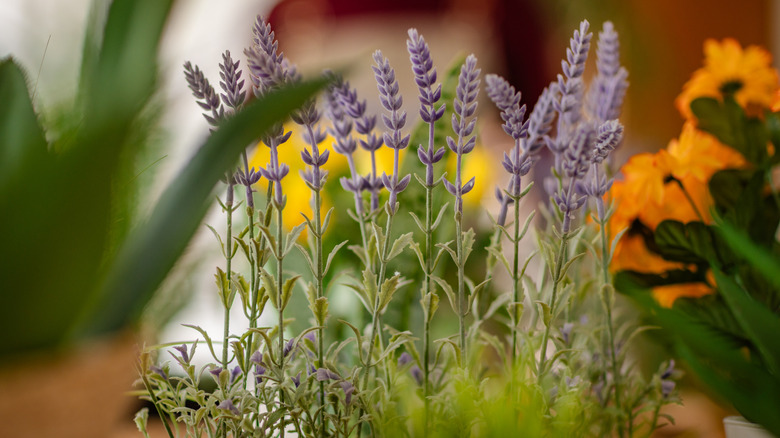
Fragrant, useful, and eye-catching, nothing impresses like an indoor herb garden. Thinking about adding lavender to the planter? There's no better neighbor for it than marjoram. Companion plants — like rosemary and thyme, or tomatoes and marigolds – are plants that thrive under the same growing conditions. They like the same type of soil, amount of sunlight, and general temperature. Marjoram and lavender make terrific companion plants, stimulating each other's growth and improving their flavors as their shared soil is symbiotically enriched. Aesthetically, marjoram grows in a bushy shrub-like shape with densely-gathered leaves, creating a visually-stunning display in a pot with lavender. Low-growing marjoram fills the open space below those taller lavender stalks for a lush, layered look.
Marjoram is admittedly not as commonplace of a kitchen herb as parsley, but it's one of the best staple herbs to have in your kitchen arsenal. For the uninitiated, marjoram is an intensely aromatic herb (about 2% essential oil) native to the Mediterranean, and subsequently, it's commonly used sauces, soups, stews, and vegetable dishes. On the palate, marjoram arrives warm, slightly spicy, a tad sharp, and not unpleasantly bitter. It's especially popular in savory applications like meat dishes, namely sausages, lamb, chicken, and turkey. This transformative herb can also be used to elevate stuffing, eggs, squash, pasta dishes, potatoes, beans, mushrooms, and more.
Marjoram and lavender are the chummiest neighbors in the herb garden
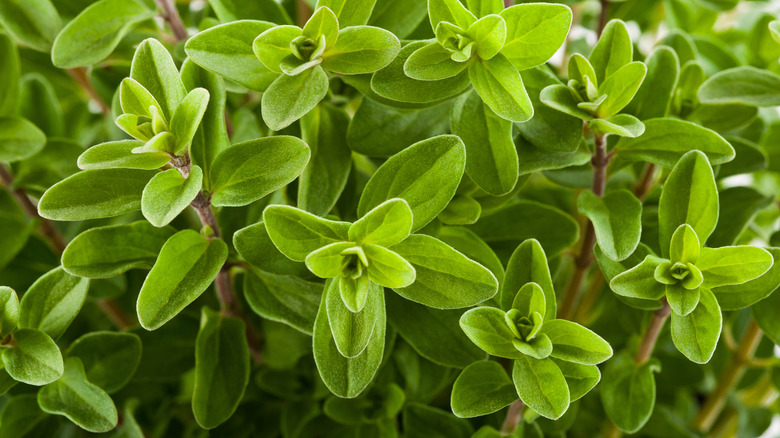
From a culinary perspective, planting marjoram beside lavender can prove particularly advantageous considering that marjoram is typically used in savory recipes while lavender is most commonly used for sweet applications, such as our lemon lavender cake or this plum-lavender pie. By stocking both in your home herb garden, a wide range of flavor needs is covered. For the tastiest results, we recommend planting English lavender varieties.
Marjoram thrives indoors (65 to 70 degrees Fahrenheit) and performs well in container gardening. It needs rich soil with a neutral pH (about 6.9) and good drainage. The herb also likes a lot of sun and has a low tolerance for overwatering. Lavender similarly requires a lot of sunlight (at least four hours of direct sun every day) and temperatures of 50 to 70 degrees Fahrenheit. It thrives when watered once every 10 to 14 days in well-draining soil, syncing up with marjoram's growing needs. For optimal growth, rotate your lavender-and-marjoram pot once a week (ensuring even sunlight exposure) and use a terracotta pot; the porous material helps absorb excess water.
If you're planning out a larger indoor herb garden, marjoram and lavender also plant well alongside chives, sage, and oregano. Working with less space? You can even grow indoor herb plants in an old coffee mug on the windowsill.