

10 Mistakes To Avoid When Making Matcha Lattes
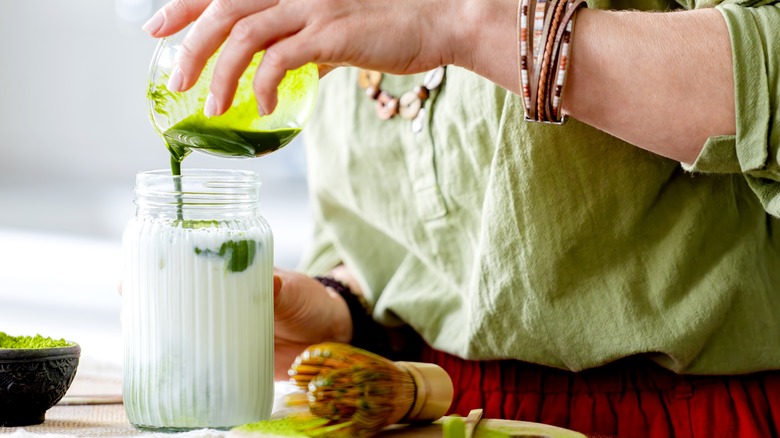
You may have been enjoying matcha for years, or perhaps just learnt about it, but either way, this drink is taking the world by storm at the moment. This potent drink has a deep-rooted Japanese tradition and is centuries old, but nowadays, you cannot go into a coffee shop without seeing its green hue all around you. From simple matcha to matcha lattes, matcha bubble tea, dirty matchas, and matcha cookies and cakes, it's in every corner. Though a somewhat polarizing flavor, those of us who love it are pleased whenever we spot it on the menu. It gives you a little energy boost without making you feel wired the way coffee does, and it contains beneficial antioxidants, too. Plus, its smoky tea flavor is a delight (to those who get it!).
During my time as a barista, I worked extensively with matcha and attended several specialized workshops on the subject. I can attest to the fact that there are many pitfalls to avoid when making the drink. Although it's not an overly complicated ingredient to work with, there are some key steps you need to follow. However, you don't need to feel intimidated to make it for yourself at home. Once you understand how matcha works and where you could go wrong, you'll be making matcha lattes to your heart's delight. Here are some mistakes to avoid when making matcha lattes.
Burning the matcha without knowing (water is too hot)
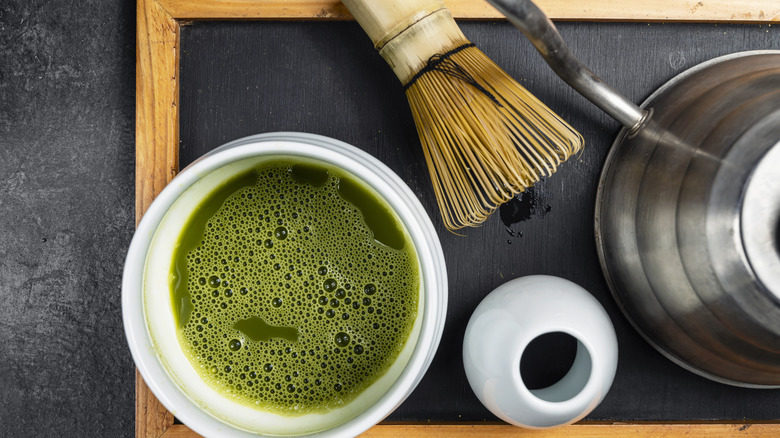
One of the most common ways that people go wrong when making matcha lattes is using freshly boiled water. We've all been there. We turn on the kettle, and as soon as it's finished boiling, we pour some into our matcha powder. Then, we wonder why we don't like the taste of matcha. This is because matcha requires a certain temperature of water to be at its best, and boiling water can scorch it, affecting its taste, color, and nutritional value. You'll be able to tell because it will taste more bitter, and the color will be less vibrant green and more yellowish and brown.
The exact water temperature you want can depend on the type of drink you're making, and some other factors. To keep it uncomplicated, your water temperature, generally speaking, should be between 140 and 170 degrees Fahrenheit. Don't worry, you don't need to get out a thermometer every time you make a matcha. What I, and many baristas, do is pour the freshly boiled water into another cup and let it sit for a couple of minutes first, before pouring it into the matcha, and that always does the trick. On the other hand, you shouldn't be using cold water to make your matcha, either. It will make it more difficult to dissolve and won't taste as flavorful. So, even if you're making an iced matcha, it's best to mix it with hot water first before pouring it over ice.
Using the wrong type of matcha
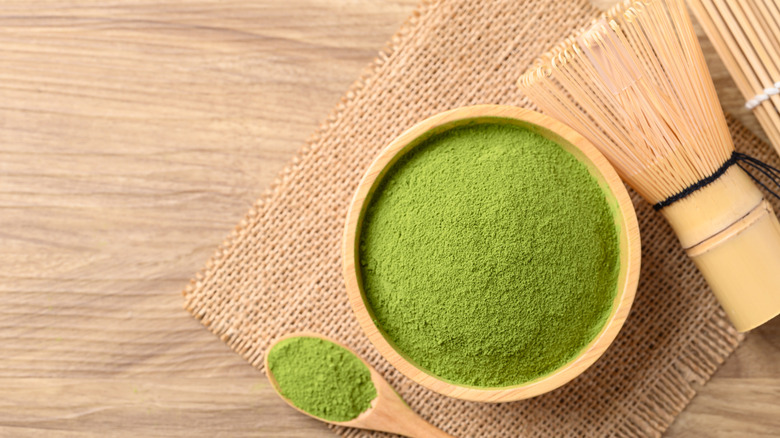
The type of matcha you use can also affect the taste and quality of your matcha latte, as not all matcha powders are made equal. The primary differentiator you'll find outside of Japan is the distinction between ceremonial-grade and culinary-grade matcha. Culinary-grade matcha is likely to have a more pungent or bitter taste because it's meant to be used in baked goods and other applications outside of drinking a cup of matcha. This means you want the taste to shine through a bit more sharply. On the other hand, ceremonial-grade matcha is intended for drinking, and it's meant to have a more delicate taste and aroma.
In truth, what constitutes the two types of grading is quite unregulated and can be relatively subjective; plus, in Japan, matcha is not distinguished in the same way. If you're new to matcha, you can stick to this as the general rule, but try out samples whenever possible until you find the type of taste you like in your cup. Either way, there are some easy red flags to look out for, like if the matcha is significantly cheaper than the rest, or if it is not made in Japan.
Foregoing the sifting step
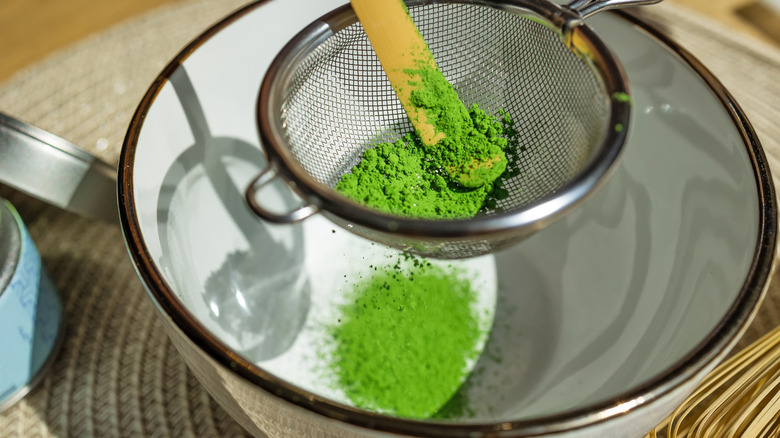
Some people might think this step is redundant because you're going to whisk the matcha anyway. However, sifting your matcha is a pretty important step if you want the smoothest and tastiest cup possible. Because your matcha is a powder, it's probably going to have some clumps in it, like most powders do. While you may be able to get some of these clumps out while whisking, it's unlikely you'll get them all. The result will be an uneven finish and potential clumps of matcha powder as you drink, which isn't the most appetizing experience.
The other benefit of sifting it is that it will leave you with the finest particles of matcha in your cup, and that will "dissolve" (matcha doesn't technically dissolve, but suspends in water) into the water much more easily to create that uniform paste or liquid. Use a small, fine-mesh sieve and place your matcha powder inside. Then, give it a couple of little shakes until the fine powder has passed through. You may be left with a few tiny clumps, which you can break up with a spoon to pass through the sieve.
Using too much or too little matcha
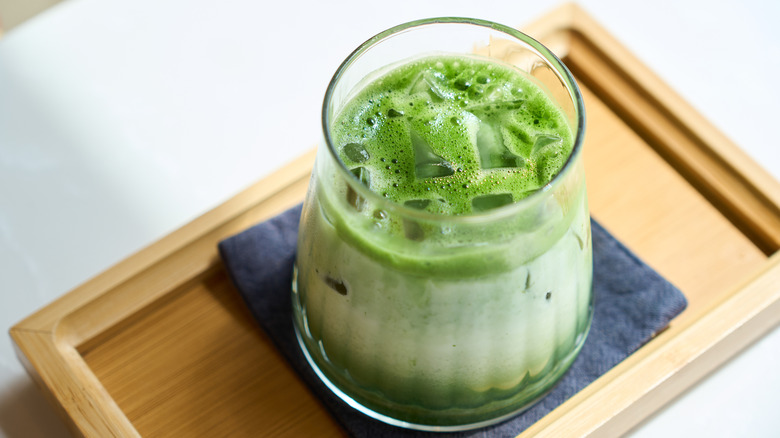
Determining how much matcha to add to your cup can often be a source of confusion. If you have no idea at all, you might use 1-2 teaspoons, which is actually way too much. A little goes a long way with matcha, especially if you're new to the taste. You should start with only a little and build your way up over time. It's also going to differ whether you're having straight matcha in hot water, as it's drunk traditionally, or a large milky latte, which will need a bit more to achieve enough flavor.
Now, what is the perfect amount? While it's always going to depend on how strong you like it, a good rule of thumb to get you started is about ½ teaspoon of matcha powder for an 8 to 12-ounce drink. You can always adjust and add more or less of it going forward, but that will give you a pretty balanced matcha-to-liquid ratio.
Choosing an electric whisk instead of a bamboo chasen
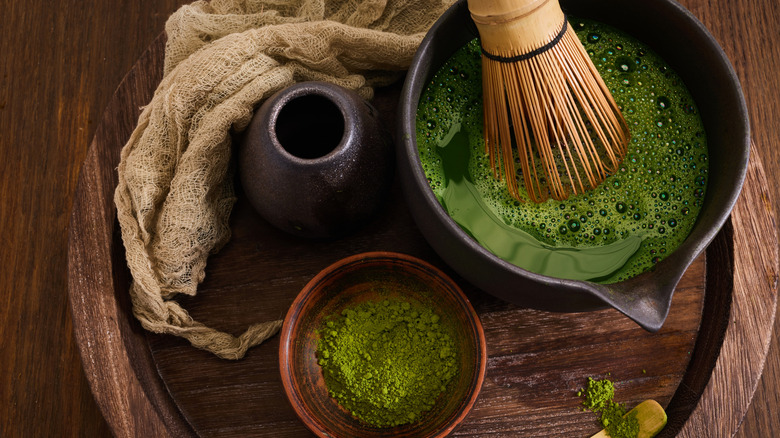
In today's age, most of us look for speed and convenience in our kitchen appliances. That's why many turn to using an electric whisk or frother for making matcha, rather than using the traditional bamboo matcha whisk, called a chasen. It gives you a consistent result every time, it's quick and easy to use, and all you need to do is turn it on. In reality, though, it's not the best cup of matcha you could be making. While an electric frother will do the job, it creates larger and more uneven bubbles, giving you froth, but not necessarily smoothness. A bamboo chasen, on the other hand, gives you full control over the level of thickness you want, and creates a light and airy froth that yields the smoothest mouthfeel.
While the difference may be slight, you will notice it once you start using a chasen. This is the tool that was invented specifically to whisk matcha, so not only will it give you the best result, but you're also honoring tradition while using it. It takes a little bit of time and practice to figure out the best technique for yourself, but that's all part of the matcha-making experience. Trust me, you'll grow to love the ritual, and it will be worth it when you're whisking up velvety cups of matcha like a pro.
Stirring the matcha in circles
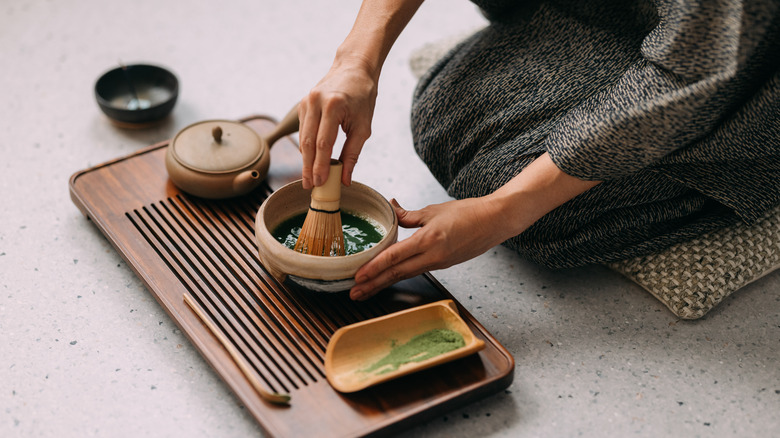
If you've ever tried to make a cup of matcha using only a teaspoon, you'll have noticed that it doesn't dissolve in the same way as sugar or instant coffee. Stirring a teaspoon doesn't really work to break up the clumps and, as we've covered, using a bamboo chasen or whisk is best. That's the first step. Then, you've got to learn how to whisk. Many beginners start by mistakenly only moving their whisk in a circular direction. While this is a good first step to ensure all the powder has been wet, you need to whisk it in a zig-zag motion to get it to suspend evenly in the water.
In my experience, whisking in an "M" shape is the best motion to master. The other main thing I was taught is that you need to work quickly, but not violently. You want to have a steady, easy flow to mix your matcha and create that delicate froth. It can feel a bit clunky in your first couple of tries, but it will become easier and more natural the more you do it.
Using a cup or bowl that's too small for adequate whisking
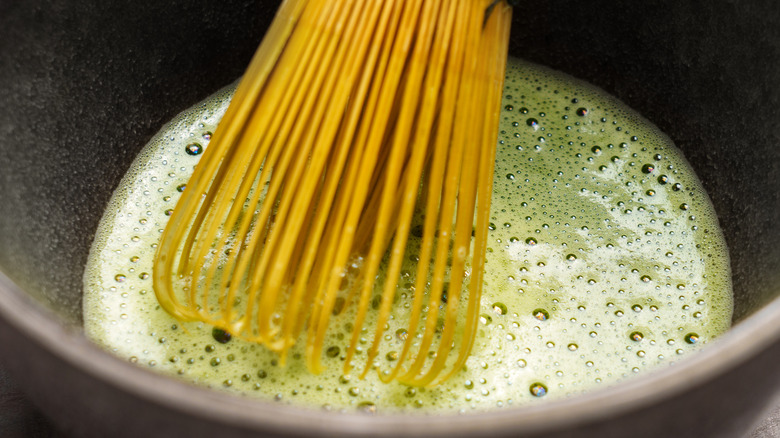
This may sound pretty obvious, but it's actually a really common mistake people make. Instead of using a wider bowl or cup, we think we can whisk up our matcha in any old mug, or our regular coffee cup. If your cup is too small, you won't have enough space to work on your whisking. As you whisk, you are also incorporating tiny air bubbles into the drink, which is what creates the foam. So if you don't have the space to move, you're not going to get enough air bubbles in.
Set yourself up for success with a wide base cup, mug, or bowl. There are often traditional matcha bowls you can get in a Japanese specialty goods store if you want to get the proper vessel. But you can just as well use whatever you already have at home. If you're unsure what size to use, practice whisking with your chasen in an empty cup. If your hand feels comfortable during the motion, then the size should be good.
Frothing your milk and matcha together
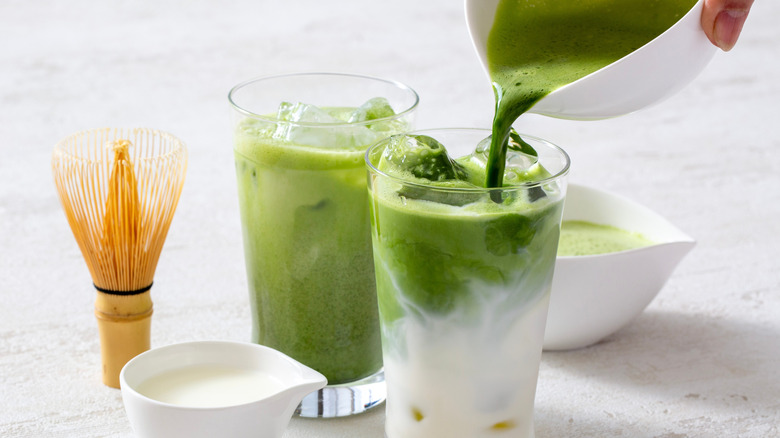
You may think that since you're making a matcha latte, you could cut out one of the steps and froth your milk and matcha in one go. The usual practice is to whisk a shot of matcha using only matcha powder and water, and froth your milk separately. Then you pour your whisked matcha into the frothed milk or the other way around; however, you never froth them together. This is because milk and water have different characteristics and froth differently. Additionally, the primary step is to create a quick suspension of the matcha powder in water, which will then enable it to mix easily into your milk. It won't "dissolve" as well in the milk, and you'll likely find matcha clumps at the bottom of your glass.
You'll also have less control over your frothing because you'll be frothing your matcha in a larger amount of liquid. So, no matter what, always froth or whisk your matcha in water first. Your drink will be much better, and you'll waste less matcha as you won't risk it ending up in clumps at the bottom of your drink.
Steaming your milk too hot
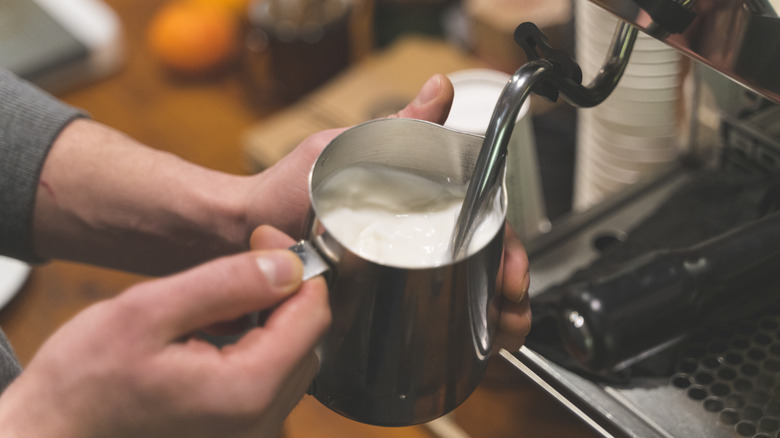
So you've waited until your boiled water has cooled down a little before adding it to your matcha, but that's not the only component where you need to worry about temperature. Another easy way to mess up your matcha latte is by steaming your milk too hot. If you add super-hot milk into your matcha "shot," then you risk scorching the matcha with the milk.
You want to make sure you're not boiling your milk; you want to heat it until it reaches between 140 and 150 degrees Fahrenheit. If you don't want to use a thermometer, just give it a second to cool down slightly after steaming it, the way you would with your matcha. Then pour it over your matcha and enjoy.
Getting your milk-to-water ratio wrong
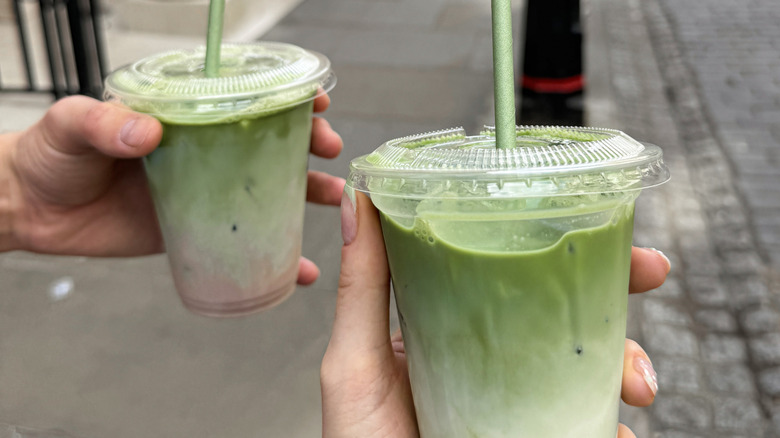
Another factor that affects the taste of your matcha latte is getting your milk-to-water ratio wrong. Too much milk, and your matcha will be pretty bland. On the other hand, if you're using too much water, then your latte won't be creamy enough. This ratio can be pretty subjective, and you'll find that every cafe uses a different ratio. During my training, we tried a couple of different measurements and ultimately settled on a ratio of 1 ounce of water to 6 ounces of milk. This gave us the right level of matcha strength and creaminess.
I like my lattes to be pretty strong, and don't prefer to drink huge milky drinks, but this is going to be different for everyone. I find the 1:6 ratio to be quite easy to follow, but it ultimately comes down to your personal preference. Plus, there are sweeteners, toppings, and other additions that people mix in that will influence the ratio. Use this as a good starting point from which to tweak it to your taste. There are also plenty of matcha latte recipes online that you can try out to find your perfect ratio.