

14 Foods Named After Places That They Didn't Originate From
The DNA of certain foods reveals a lot about where they originate. Some dishes have clear identities, like pasta and tacos, both of which contain ingredients commonly found in their respective cuisines. Others, like the iconic Italian beef sandwich and French toast, were born in places that you'd never expect. There are several reasons for this food-nomenon. Immigration is a big one, as people are forced to juggle tradition with adapting to new environments with different tastes. Marketing is another, because who doesn't want to stand out from their competitors? And sometimes, like in the case of baked Alaska, names are correlated to how the dish looks.
Some of your favorite foods likely fall under this category. What's most interesting, however, are the stories behind how they came to be, which paints a picture of how culture has spread throughout the world. Here are some foods named after places that they didn't originate from.
French dip sandwich (Los Angeles)
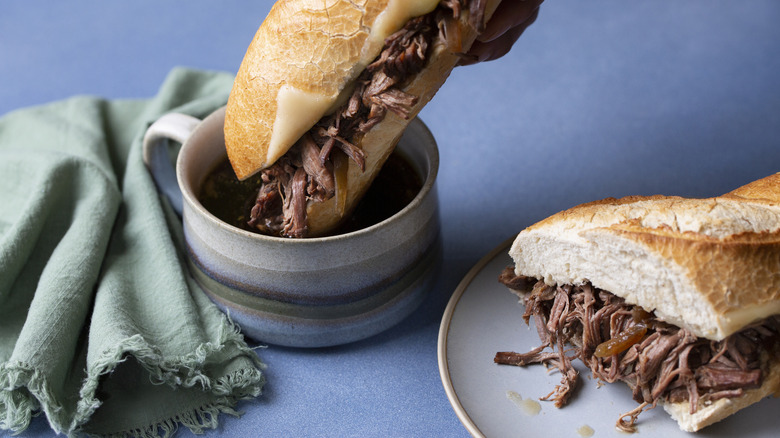
Two Los Angeles landmarks, Philippe The Original and Cole's Pacific Electric Buffet, claim to have invented the famed French dip sandwich, the former in 1918 and the latter in 1908. It traditionally features sliced roast beef on French bread with a side of savory meat juice for dipping. Referred to as "au jus," meaning "with juice," the dip comes from roast beef drippings, blended with butter, red wine, Worcestershire sauce, salt, and pepper. Popular toppings include cheese, hot peppers, and spicy mustard. Pork, ham, turkey, and lamb variations have spawned over the years, too.
Despite the name, there is nothing French about this sandwich besides the bread and restaurant owner, Philippe Mathieu. As Mathieu tells it, he stumbled upon the idea after accidentally dropping a French roll into a roasting pan filled with meat juice. To his surprise, the customer wound up enjoying it and returned the following day with friends to request it again.
Cole's claims that sore gums inspired the creation of the French dip sandwich. Apparently, a customer experiencing gum pain requested softer bread and suggested dipping it in meat juice. We'll let you decide which story seems most plausible. Whether it was created as a result of coincidence or resourcefulness, the French dip sandwich is iconic.
French fries (Belgium)
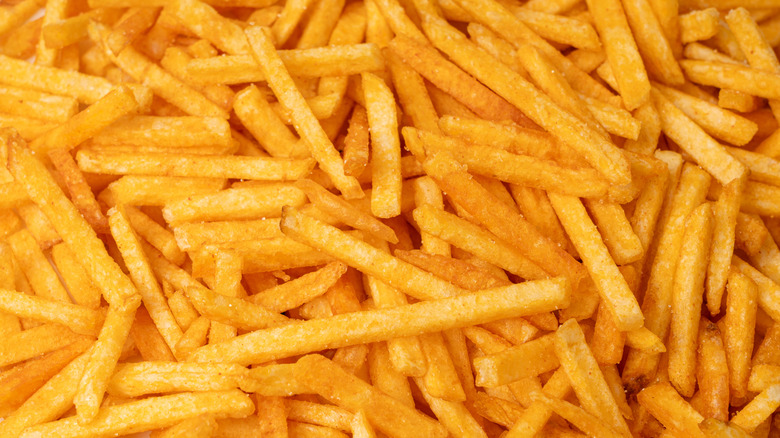
The world's most popular "french" food is not even from France, according to historians, who say that french fries were created in Belgium. Most believe that they were invented by fishermen in Namur, Belgium, in 1680 during winter as a fried fish substitute. When the nearby river froze over, preventing them from fishing, they decided to slice potatoes into thin sticks and fry them instead, unknowingly creating the holy grail of side dishes.
The name apparently came to the U.S. by way of soldiers who sampled the southern Belgian treat during World War I. They called them french fries instead of Belgian fries because French was the dominant language in that part of the country. That said, the debate surrounding the true origin of french fries continues. In a 2019 interview with French magazine Le Figaro, the gastronomy historian Pierre Leclercq pushed back against the popular narrative, claiming that modern-day fries emerged on the streets of Paris in the late 19th century, particularly around the districts of Pont-Neuf and the Boulevard du Temple.
He posits that historians conflate traditional Belgian-fried potatoes, slices prepared with little oil, with modern-style fries, which are stick-shaped and fried in fat. He cited famous Parisians of the time and their mention of the food and says the Belgian origin story is a misappropriation that started with a 1985 newspaper article. Despite Leclercq's impressive sleuthing, Belgium is still considered by most to be the inventor of french fries.
Hamburger (America)
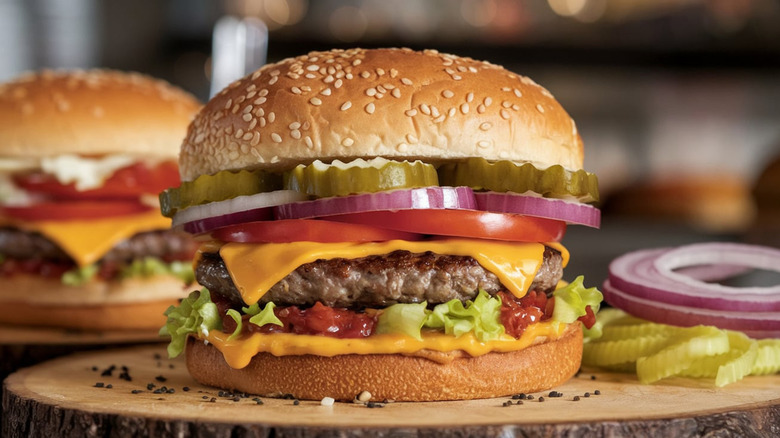
Hamburgers are interesting because the burger patty itself was, in fact, popularized in Hamburg, Germany. The origins of the modern hamburger sandwich, however, are still debated to this day. Historians point to the late 1840s, a period when a large number of Germans immigrated to the U.S. to escape political upheaval, bringing with them their traditional meat preparations, one being "Hamburg-style" chopped steak. Hamburg was known for its high-quality beef, and around the time it started taking off in America, doctors began prescribing ground meat for tummy aches. This perfect savory storm would set the stage for the hamburger's introduction.
The true origin gets murky from here, as several people claim to be the inventor — and each one makes a pretty good case. A guy named Charlie Nagreen, aka "Hamburger Charlie," from Wisconsin, is one claimant. Uncle Fletcher Davis, a cafe owner from Texas, is another, along with people in Connecticut, Ohio, and New York. To establish a timeline, most food historians believe that the modern hamburger wasn't created until the patty was placed on buns. As far as when that exactly was, and who deserves credit, is anyone's guess.
Baked Alaska (New York)
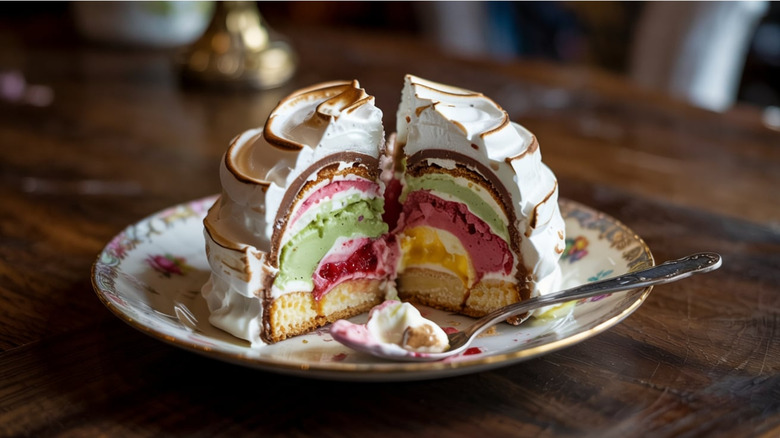
Baked Alaska is one of the hardest desserts to make for several reasons, one being that it requires you to light chilled meringue aflame before consuming it. Modeled after the shape of an igloo, it features cloud-like toasted meringue atop cake and ice cream. Despite the obvious inspiration, baked Alaska did not originate in America's northernmost state, but in New York. It was an indirect result of an 18th-century invention by an American scientist named Sir Benjamin Thompson.
Thompson discovered that whipped egg whites contain air bubbles, which helps insulate the cake and ice cream from burning. His discovery made its way to France, where it inspired the creation of "omelette norvégienne" (Norwegian omelette), a dessert featuring cake and ice cream covered with meringue and broiled. Sounds familiar? It's allegedly a precursor to baked Alaska, although today, both names are used interchangeably.
In 1867, a French pastry chef named Charles Ranhofer, who worked at New York's famed Delmonico's, created another dessert almost identical to an omelette norvégienne. The only difference is that he specifically used banana ice cream and walnut spice cake. He named it "Alaska, Florida" as a play on the hot and cold contrast of ice cream and toasted meringue. The reason we call it Baked Alaska today is a historic deal made in 1867 between the U.S. and Russia over the land that would later become Alaska and America's 49th state.
Hawaiian pizza (Canada)
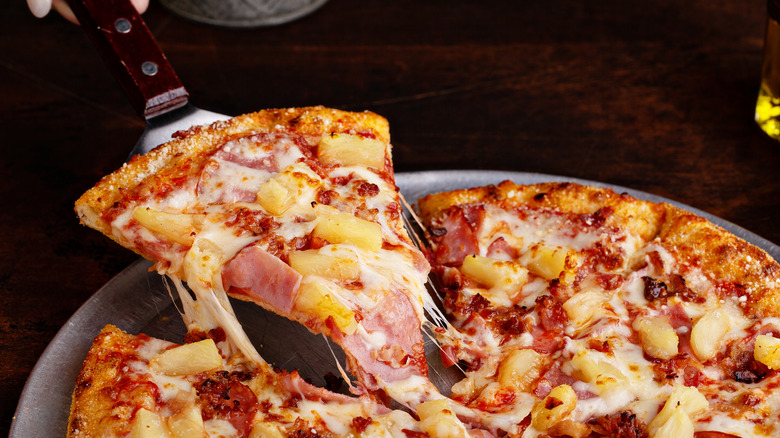
The subject of ire for pizza-loving purists, Hawaiian pizza is one of those food creations that people either love or hate. What's interesting is that maple trees are more common than palm trees where it originated — in Ontario, Canada, not sunny Hawaii. Satellite Family Restaurant is the birthplace of this iconic dish, where a Greek immigrant named Sam Panopoulos created it in 1962, though pineapple as a pizza topping had been a thing as early as the mid-1950s. Panopoulos was inspired by a trip to Naples, Italy, and the concept of Americanized versions of traditional foods.
Like many inventions, Hawaiian pizza was a happy accident. Panopoulos was simply experimenting with adding pineapple to ham pizza, and, after discovering that he enjoyed it, decided to give it a test run. The customer response was so positive that he made it a permanent menu item. Whether you love it or hate it, Hawaiian pizza is a staple at pizzerias nationwide today.
Hollandaise sauce (France)
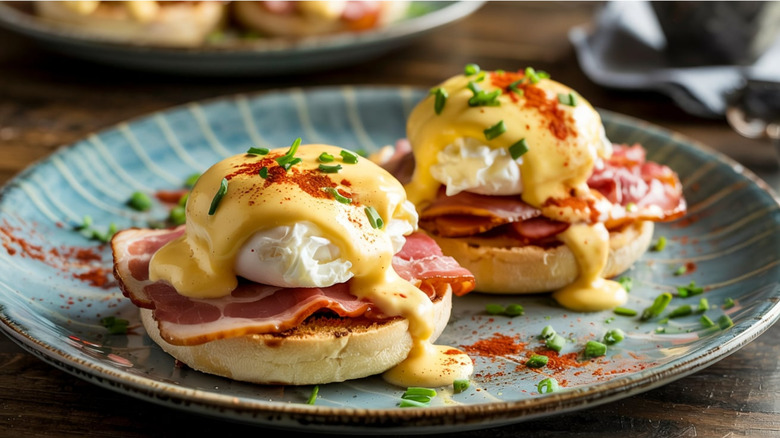
Hollandaise sauce, the yellow creamy topping for eggs Benedict, made of butter, egg yolks, lemon juice, and pepper, was actually created in France. There's nothing Dutch about this classic sauce, other than the name, which means "from Holland" in French. The first published recipe appeared in 1758 and included bouillon and flour in place of eggs. However, there is evidence to suggest that a prior recipe featured vinegar, presumably in place of lemon juice.
Before it was named hollandaise, it was called Isigny, after the town Isigny-sur-Mer. Hollandaise was likely coined by French Protestant Huguenots, who fled to Holland to escape the Catholic majority, where the name may have changed before being reintroduced to France. By the early 19th century, hollandaise sauce was fairly common throughout France, and over time, people presumably began associating it with Holland due to the name.
German chocolate cake (Texas)
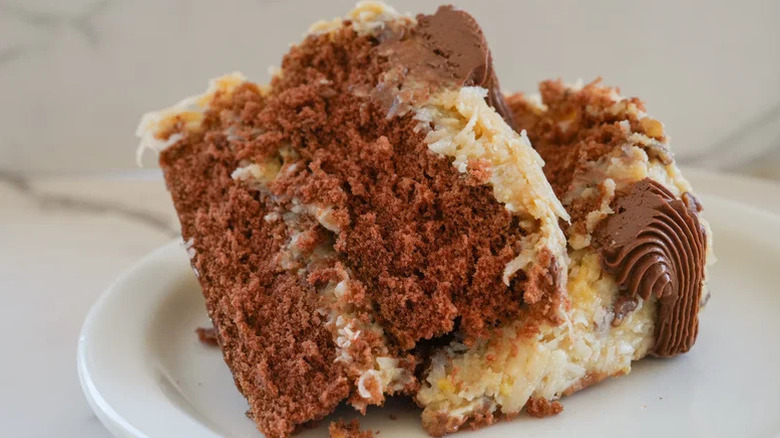
Germany is well-known for its high-quality chocolate, but the American dessert, German chocolate cake, does not actually contain any. The Dallas Morning News spotlighted a German sweet chocolate cake recipe as its "Recipe of the Day" in June 1957, which was submitted by Mrs. George Calay of southeast Dallas. Yes, German chocolate cake is from Texas. In the cake, she used Baker's German's Sweet Chocolate, which isn't German at all, but is named after its creator, Samuel German, who invented it in 1852. Kraft now owns the brand, which still exists today.
German chocolate cake typically has three layers of chocolate cake made with sweetened chocolate and buttermilk, and each layer is iced with custard frosting blended with coconut and pecans. Following the recipe's rapid success, newspapers nationwide began sharing it. Eventually, the possessive "'s" was removed from the name, leaving just "German chocolate cake" and leading to the widespread confusion over its true origin that still exists today. President Lyndon B. Johnson even served it to the German Chancellor Ludwig Erhard at a luncheon once.
French toast (Rome)
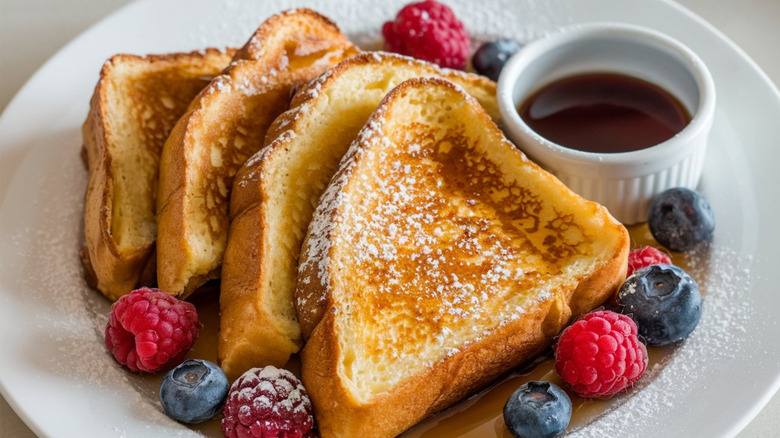
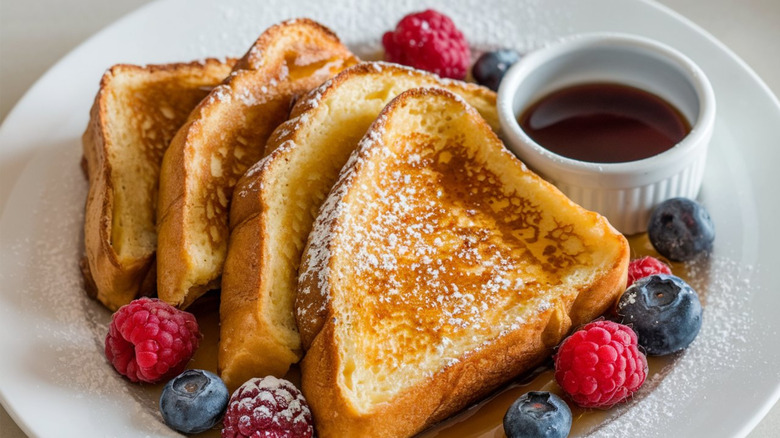
For one reason or another, people get a kick out of naming their food creations after France. French toast is another example. It's a dish that many believe is inspired by pain perdu, which is seemingly identical, but only on the surface. There are, in fact, subtle differences. Pain perdu, meaning "lost bread," is traditionally made with stale French brioche or a baguette, whereas French toast technically doesn't require a designated bread type, so long as it's sliced. Also, cream is added to the custard that the bread is soaked in, giving pain perdu an extra-decadent flavor boost.
Nuances aside, most people consider them the same dish, which is fine — except that it reinforces the false belief that French toast originated in France. The classic breakfast food actually dates back to ancient Rome. It first appeared in a 4th-century cookbook called "Apicius de re Coquinaria," or in English, "Cookery and Dining in Imperial Rome," by Marcus Gavius Apicius. French toast evolved from there, with variations curiously appearing in English cookbooks.
Rome ruled over both England and parts of France at one point, so we can assume that's how the recipe spread. Apparently, the French referred to it as "Roman bread" for centuries. The name "French toast" was supposedly a spelling accident made by a New Yorker named Joseph French, who intended to call it "French's toast" when he introduced it to America in 1724.
Cacahuate Japonés (Mexico)
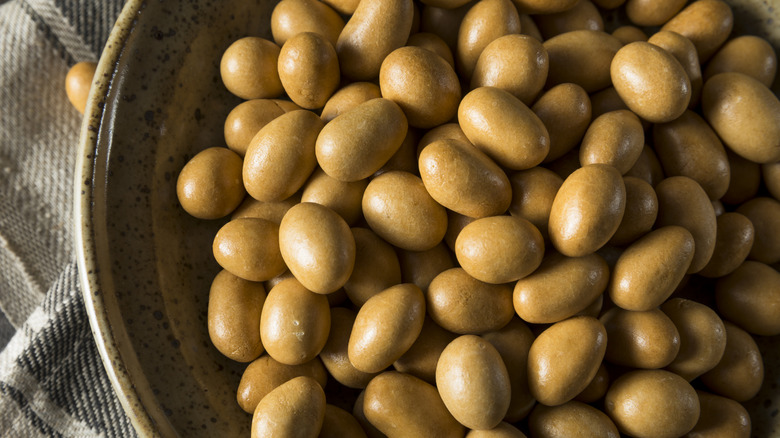
Japanese peanuts, known as cacahuate Japonés, are one of Mexico's most popular snacks. However, these crunchy peanuts, coated with toasted wheat flour and soy sauce, neither originated in Japan nor are they popular there. They were invented by a Japanese man named Yoshigei Nakatani, who immigrated to Mexico in 1932. Nakatani spent his first ten years integrating into Mexico's society, even marrying a Mexican woman. Despite his initial goal of becoming successful, he struggled to find steady pay and with the prejudice against Japanese immigrants.
In 1943, when he was unemployed with a wife and children to care for, Nakatani decided to make traditional Mexican candies (called muégano) and sell them to neighbors — a skill set he picked up as an apprentice at a candy shop in his hometown of Sumuto. The move proved successful and inspired him to make oranda, a salty fried wheat candy from Korea. A growing customer base set the stage for Nakatani to invent cacahuate Japonés in 1945. He initially attempted to make a similar snack from his childhood featuring peanuts, rice flour, and soy sauce, but was unable to find rice flour, so he decided to use wheat flour instead. Cacahuate Japonés saw quick success as well and are enjoyed worldwide today.
Italian beef sandwich (Chicago)
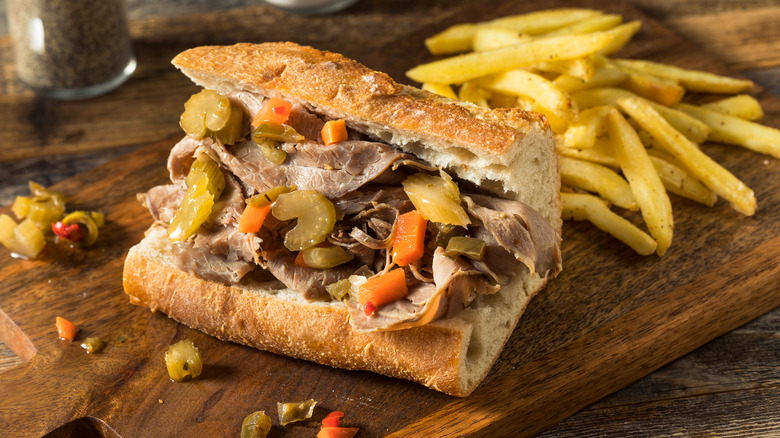
The Italian beef sandwich has gotten a lot of attention lately due to the hit Chicago-based television show, "The Bear," in which it plays a major part. It was invented in Chicago during the 1930s, when the city was rapidly becoming one of America's biggest hubs for Italian immigrants. There was a thing called "peanut weddings" at the time, named after the only food people could afford to serve due to money being scarce. Sometimes at these weddings, everyone would chip in to buy beef, which they sliced and served in a bun brushed with beef broth.
As far as who invented the sandwich, most people credit Pasquale Scala, who operated a catering service that delivered beef, and possibly even served Italian beef sandwiches at peanut weddings. His company "Scala" would become the top Italian beef supplier in the city.
The first restaurant to serve them, however, was Al's #1 Italian Beef, then called Al's Bar B-Q. The restaurant was believed to be a front for a bookie place. Pacelli and his wife were instrumental in transitioning Al's into a legal restaurant, and in 1980, was named the maker of the city's No. 1 sandwich by Chicago Magazine. While Pasquale Scala is the true originator, Al's success has somewhat overshadowed his contribution to the point that people still credit the restaurant as the originator.
Chicken Kiev (France)
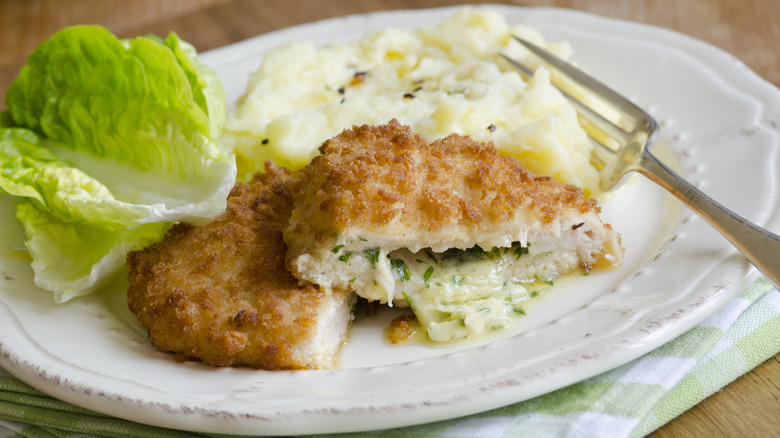
France is the birthplace of many dishes, including the delicious fried classic, chicken Kiev, named after the capital of Ukraine. It features chicken flattened and rolled with cold butter and herbs, then breaded and fried. The herb-infused butter oozes out when the chicken is cut and can be used as a sauce. Allegedly, the Russians sent some of their chefs to train in France in the 1840s, where they learned a fried veal dish called the Mikhailovska cutlet. After returning to Russia, it was made with chicken — which was a pricier delicacy, fit for royalty.
It remained a luxury option until after World War II, when Russians who immigrated to America and opened restaurants renamed it "chicken Kiev," hoping it would attract Russian and Ukrainian immigrants. The dish didn't make it to Ukraine until the 1960s, but only because tourists began requesting it.
Singapore noodles (Hong Kong)
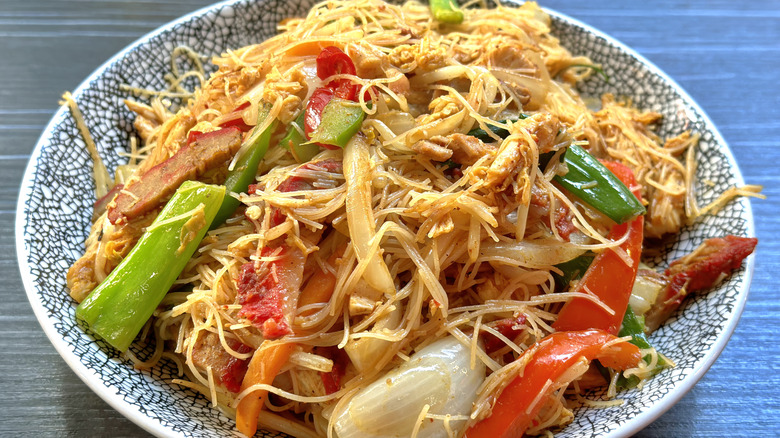
Singapore noodles, a dish often associated with the Southeast Asian city, is actually from Hong Kong. In fact, requesting it in Singapore is likely to confuse the average local, as restaurants there typically don't serve the dish. Aside from Hong Kong, Singapore noodles are actually more common in countries outside of Asia, like the United Kingdom and Australia. While there are countless varieties of this stir-fry dish, it traditionally features vermicelli noodles, curry powder, meat (pork, chicken, or prawns), eggs, and vegetables. Depending on where you are, other popular ingredients can include bell peppers, lime, peanuts, char siu, and roasted British chicken.
Singapore noodles were invented in Hong Kong during the '50s or '60s. It was allegedly created to offer something foreign, so the chefs chose to name it "Singapore" because it wasn't a place many knew about at the time. From there, Hong Kong chefs took the dish to Europe, where it continued to spread around the world.
Mongolian barbecue (Taiwan)
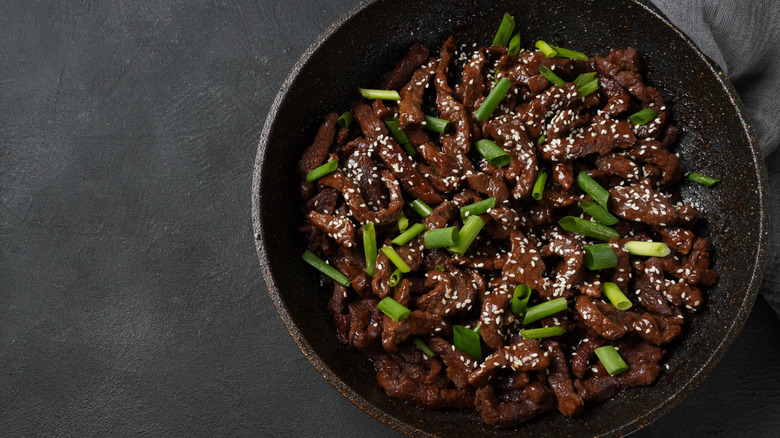
A Taiwanese comedian named Wu Zhaonan invented Mongolian barbecue in the 1950s. During that period, around 1.2 million Chinese began immigrating to Taiwan to escape the civil war back home, bringing their culinary traditions with them. Zhaonan, who graduated from China University in Beijing, had returned to Taipei to earn a living and opened a food stall called Kao Rou Xiang (or "fragrance of grilled meats"). He specialized in traditional Beijing barbecue, but due to ongoing political strife between the two Chinese political parties, he chose to call it Mongolian barbecue to avoid criticism.
Also known as "mong gu kao rou," Mongolian barbecue consists of stir-fried slices of beef, flavored with soy sauce and green onions. Zhaonan clearly had a keen marketing sense. He even came up with the all-you-can-eat model of service typically associated with Mongolian beef restaurants. Following some success, Zhaonan's food stall was unceremoniously destroyed by a typhoon, so he decided to return to his successful comedy career.
Russian dressing (New Hampshire)
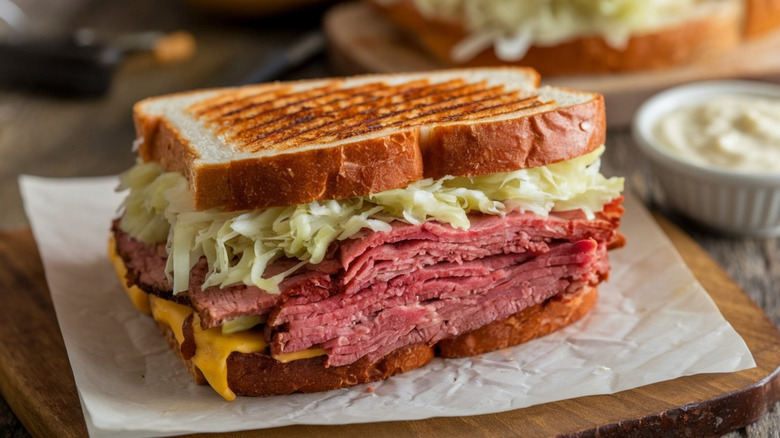
Fans of the classic Reuben sandwich know all about its go-to condiment, Russian dressing; however, some may not be aware of its American origins. It was born in Nashua, New Hampshire, a place that isn't known for its Russian population. So how did this creamy flavor-giver come about? A grocery store owner named James E. Colburn invented it in the early 1900s, initially calling it Russian salad dressing. Colburn's new condiment was an instant success, and soon after, his operation expanded beyond Nashua to retailers and hotels. Thanks to the success of Russian salad dressing, Colburn was able to retire in 1924.
The condiment is made with onion, mayonnaise, ketchup, horseradish, Worcestershire sauce, paprika, and salt. Aside from Reubens, Russian dressing pairs nicely with most savory sandwiches, tacos, hot dogs, and more. As for why Colburn chose to name it Russian, no one really knows.