

Don't Skip These Dirty Kitchen Countertop Items Next Time You Clean
We may receive a commission on purchases made from links.
There are a lot of places you might not think to clean in your kitchen. While most people tackle countertop grime, sinks and faucets, stovetops, and backsplashes, some areas are consistently overlooked — those include your kitchen utensil holder and knife block.
You should be cleaning your knife block every four to six weeks. To do so, remove all of the knives from the slots and then wipe the block with a clean cloth or sponge to remove loose debris. Dip a bottle brush, straw brush, or pipe cleaner in a bowl of warm water and mild dish soap and insert the brush into each slot of the knife holder. Move it around to remove gunk and debris, then wipe the exterior of the knife block with soapy water and rinse it with a slightly damp sponge. Dry it completely with a clean towel or cloth and place the knife block upside down on the dish rack or drying rack to let the slots drain and dry. When it is completely dry, you can replace the knives in their slots.
Another item that is often ignored is the cooking utensil organizer. While the utensils are cleaned regularly, the holder itself could be harboring grime, debris, and germs. You should be cleaning it every month. If it is dishwasher safe, just remove the utensils and pop it in the dishwasher. If not, wash it by hand using dish soap. Make sure it is completely dry before returning the utensils.
Other tips for keeping kitchen countertops clean
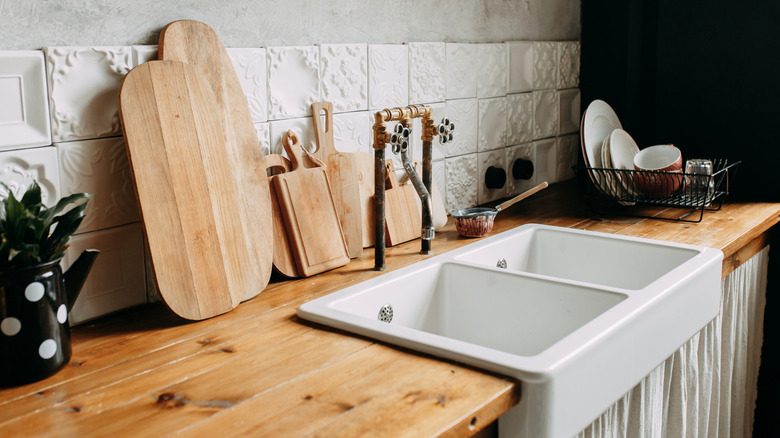
While your kitchen countertops are a great place to store appliances, knives, and utensils, but they can quickly get crowded. If you want to free up kitchen countertop space so that you have more room for food prep, you might want to rethink storing food canisters on your kitchen counter. Like your utensil holder, your canisters will get covered in cooking oils, grease, and dust and develop a grimy layer. If you're not cleaning them regularly, they can become the perfect breeding ground for germs and bacteria.
Other items you should stop leaving on your kitchen counters are small appliances that are rarely used. Store them in cupboards or your pantry. This will keep them protected from grease and grime and will also keep your counters free and clear. For the items you absolutely have to keep on your counter, consider using kitchen tool organizers. Just remember to clean the organizers regularly as well as the items they are storing.
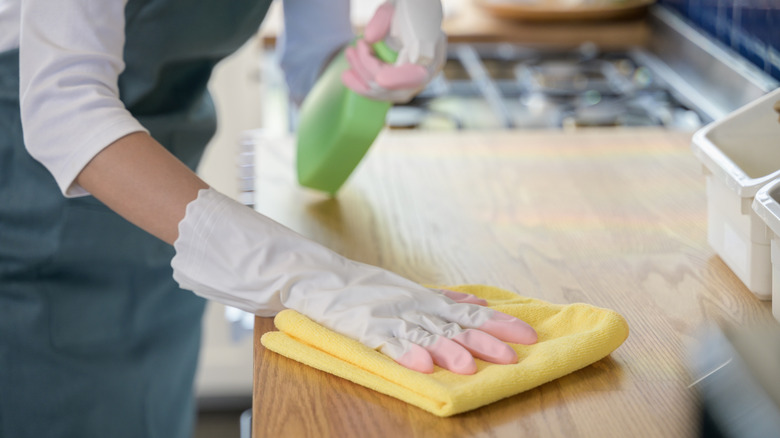
When cleaning your counter, remove everything from it before you begin. Then use a clean cloth or sponge to wipe away dust and loose debris. Use a countertop cleaner that is designed for the specific material of your countertops, such as a stainless steel, marble, or granite countertop cleaner. When you're done cleaning the countertop, dry it with a clean cloth and then clean the canisters and other items before putting them back in place.