

9 Mistakes To Avoid When Eating At A Greek Restaurant
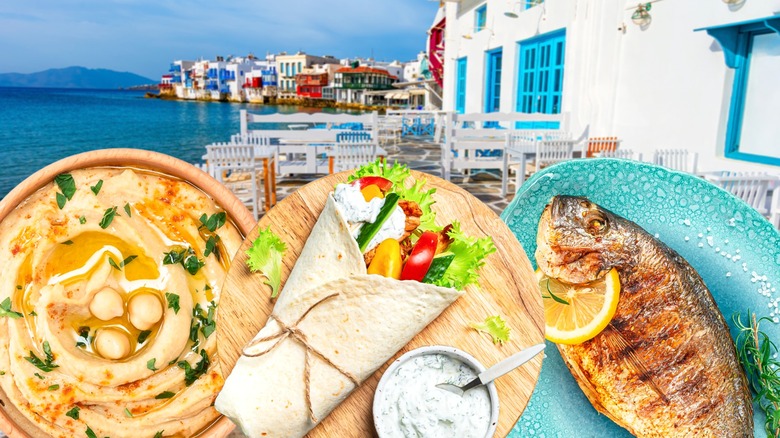
Greek cuisine is incredibly popular all over the world, and it's easy to see why. The Mediterranean country's food is famously healthy and chock full of downright addicting recipes, especially for anyone who's always seeking out a lemony sauce for their herb-heavy seafood dish. If you're looking for a type of cuisine for catering at your next big event, or you're searching for the perfect spot to take a large group out for a memorable dinner, you can never go wrong with Greek food. There's something to please everyone here, from hearty, meat-heavy meals to light and fresh vegetarian dishes.
In my years as a server and manager of a Greek eatery in the U.S., I can tell you that most of my customers weren't taking full advantage of the cuisine's bright, eclectic flavors and distinct recipes. But it wasn't their fault — it's so easy to get caught up in what's familiar that we end up sacrificing a deliciously-new experience in favor of what's recognizable and comfortable. So, I'll help you step outside your comfort zone by putting my years of Greek restaurant experience to use. In this list, I've outlined some of the most common mistakes made when ordering at a Greek restaurant. These blunders are easy to make, but once you're able to identify them, you'll know what to avoid doing (and what to strive for) so you can embrace the citrusy, herbaceous, charcoal-grilled flavors of Greek dishes to the fullest.
Not asking about the specials first

At some restaurants, like diners, specials are better off avoided, but at a Greek restaurant, you'll find the freshest, most unique dishes gracing the specials board.
Like other Mediterranean cuisines, seasonality is particularly integral to Greek food, so you'll often find that the specials list is full of dishes with local, seasonal ingredients or recipes tied to ephemeral traditions.
In the spring, it's not uncommon to see Easter (a particularly significant, food-focused holiday in the Greek Orthodox tradition) dishes on a Greek restaurant special's board. Lamb dishes, like magiritsa — a stew similar to avgolemeno, but with lamb offal — with a side of tsoureki (sweet Easter bread) is a quintessential Greek Easter meal you might find as a restaurant special.
In the summer, you'll likely spot a fresh seafood dish or crisp salad on your neighborhood Greek spot's specials list. Nothing says summer quite like a tomato-heavy horiatiki salad, especially when tomatoes are in season and extra red and juicy. Come winter, a world of cozy soups and stews made with braised meats and nuts opens up, many of which you might not find on the restaurant's regular menu, so be sure to ask your server what the special of the day is.
Ordering only gyros or souvlaki
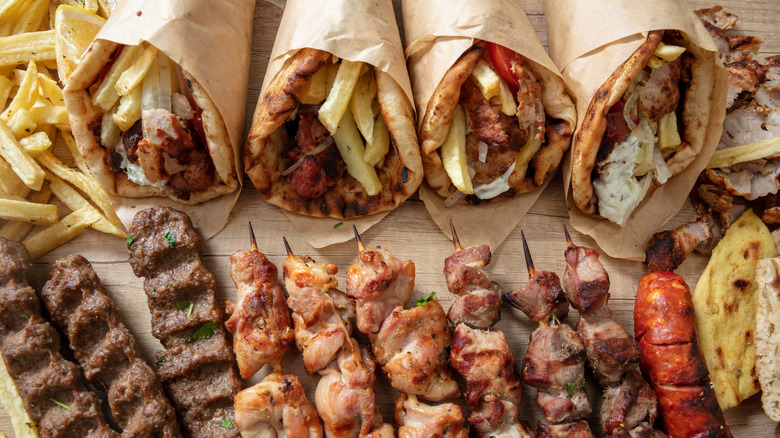
In the U.S., and other parts of the world where Greek cuisine is popular, gyros and souvlaki are easily the most sought-after Greek dishes. These are the foods that you'll see folks lining up for at Astoria food trucks or street carts, and even ordering at posh Greek eateries.
Gyros and souvlaki are both meat-based dishes, but they're quite different from one another. Souvlaki consists of chunks of grilled meat — usually lamb, pork, chicken, or beef — on a skewer or stuffed into a sandwich. Meanwhile, gyro is thin-sliced meat — usually pork and lamb, or, more common in the U.S., beef and lamb — inside a warm pita with veggies and sauce.
Both of these dishes are extremely famous Greek street foods for good reason, but when eating at a Greek restaurant, you're better off skipping the sandwich or meat skewers in favor of something that's a little more unique and representative of Greek cuisine as a whole. Cuisines all over the world typically offer some form of grilled meat on a skewer or in a sandwich, and while Greek souvlaki and gyro is unique in its own right, there are much more distinct recipes to choose from; meals that you won't find outside a Greek restaurant.
Sticking with water only

If you're the type to order just water at a restaurant in order to focus your attention on the food (don't worry, I'm right there with you), I implore you to cast this quirk aside when dining at a Greek restaurant. Greek drinks make a name for themselves on the world beverage stage thanks to the country's distinct environment and penchant for fresh flavors. They're an absolute must-try, whether you're a coffee, wine, or sugary drink enthusiast.
Most casual Greek eateries in the U.S. offer drip coffee, but if you're fiending for a jolt of caffeine, opt for Greek coffee instead, which is anything but a regular cup of joe. Greek coffee is similar to Turkish coffee in that it's brewed by boiling ultra-fine grounds with spices and served in a small cup. Sugar is optional, but milk is a no-go with this brew. Or, if it's a hot day, choose a foamy Greek frappe, made of frothed instant coffee, sugar, ice, and milk.
For those looking to imbibe, Greek wines are a world-famous option that shouldn't be passed up. Greek wines are much higher quality than other wine origins thanks to the country's distinct native grape varieties, perfect for wine production. If you're looking for something a little stronger and more unique, ouzo — a spicy, anise-flavored spirit that's exceptionally popular in Greece — might be right up your alley. If booze is off the table, inquire about visinada, a tart and sweet cherry drink made with fresh fruit that's delicious alongside an herbaceous summer salad.
Not familiarizing yourself with the menu ahead of time

Personally, I like to go in blind when I'm trying out a new restaurant. Opening up an unfamiliar menu at a restaurant that I'm excited to try is like Christmas morning. However, when I'm getting ready to experience a cuisine I'm unfamiliar with, I prefer to learn some of the dishes ahead of time so that I have at least a general understanding of what each dish is and how to pronounce it correctly.
Even if you're a seasoned polyglot, the transliterated Greek language is famously difficult for native English speakers to read. Words are extra-long and there's lots of double letters, so pronouncing one correctly on your first attempt is a rare feat. That's why it's best practice for Greek dining to learn some of the pronunciations ahead of time to avoid accidentally ordering the wrong dish, and to save some time — your server will undoubtedly appreciate it, especially on a busy weekend night.
Beyond just pronunciation, having a little context about the dishes themselves can make the experience much more enjoyable. Greek cuisine is full of regional specialties, seasonal offerings, and holiday traditions that might not be obvious from the menu alone. Knowing the difference between koulourakia (Easter cookies) and kleftiko (a dish of slow-roasted lamb) or moussaka (a lasagna-like dish with eggplant, meat, and bechamel) and moustokouloura (cookies made with grape must) could be the difference between a delicious, memorable meal and a disappointing disaster.
Covering dishes in extra sauce
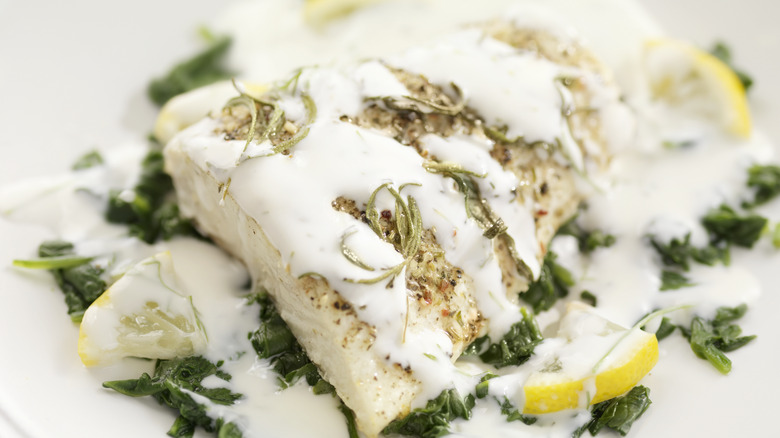
In America, we have a tendency to go a bit buck-wild with condiments. However, in Greek cuisine, sauces and condiments are few and far between. Sure, there's tahini and tzatziki, but don't make the mistake of drowning every dish in one of these sauces. One of the most common Greek food faux pas that I would catch my customers doing time and time again was ordering extra sauces, including sauces that didn't come with their meal (usually tzatziki), and then covering everything on their plate until their meal was unrecognizable.
I've seen customers cover moussakka, pastichio (Greek lasagna), and fish dishes in tzatziki more often than you'd think. And hey, no judgments — you like what you like. But ultimately, I suspect most of these customers were covering their dish in sauce not because they thought it tasted better, but because that's just what they were used to doing. So instead of getting loose with the sauces, try to appreciate the delicate, balanced flavors that come with each dish.
Try not avoid ordering sauces that don't typically come with your meal of choice — a dish with bechamel, like pastichio, paired with tzatziki isn't a great combo. Greek cuisine is all about light, zesty flavors highlighted by herbs, so when you cover your dish in a dairy-based sauce, all the chef's efforts are null and void.
Ordering just a main dish instead of meze
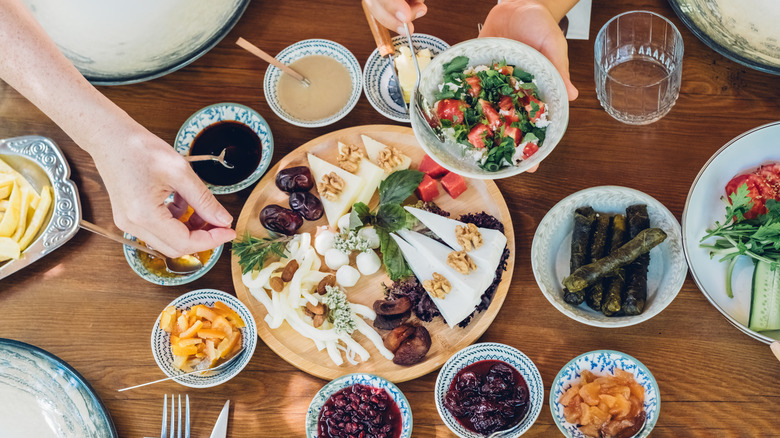
Restaurant culture in the U.S. typically involves each individual at the table ordering their own separate meal of their choice — just one dish per person. It's a simple, straight-forward method of dining, but it lacks the warmth and spirit of a cozy, no-rush family meal. In many parts of the world, including Greece, meals are enjoyed communally as a variety of multiple, small appetizer-like dishes known as meze (also spelled mezze).
Mezze-style dining makes a night out more about sharing and togetherness, where everyone at the table can enjoy and discuss the same dishes. It's an especially good choice if you're at a restaurant that's new to you and want to sample a range of its most popular dishes.
Meze is as integral to Greek cuisine as dipping sauces are to American dining. Most Greek restaurants offer a variety of classics, with some even devoting an entire section of the menu to meze. My personal favorites are keftedes — Greek-style meatballs — and dolmades, which is the Greek word for Middle Eastern dolmas, otherwise known as stuffed grape leaves. Melintzanosalata — a roasted eggplant dip known as baba ganoush in the Middle East — is another staple on Greek meze tables, along with sagankai (fried cheese), tyropita (cheese pie made with phyllo), and taramasalata (a dip made from fish roe).
Fearing the whole, grilled fish
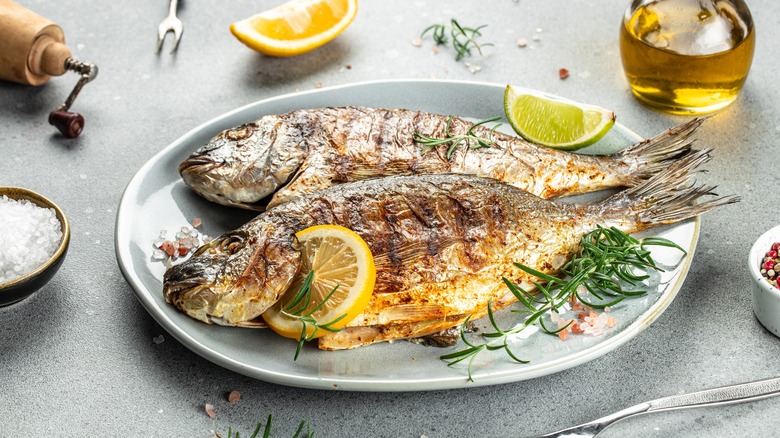
The sight of an entire fish on your dinner plate — bones, eyes, and all — is enough to make anyone who isn't used to this type of dining wince. No one would blame you for being a bit taken aback, considering a whole grilled fish for dinner isn't a custom in every country. But in Greece, a whole fish is like an American's steak and potatoes: it's a custom that's as commonplace as the country's picture-perfect beaches and colorful architecture.
A whole grilled fish in Greek cuisine is often prepared simply, with just herbs, olive oil, and lemon to show off the natural flavor of the fish. If you're at a restaurant that offers a whole fish, you'll likely find it as a fish of the day or a daily special, since the whole fish is usually a fresh, local catch, or at least something that pairs with the season.
You might be wondering why anyone would bother digging into a fish while having to pick away at non-edible parts, but the answer is a simple one: It tastes better. When a fish is grilled whole, it preserves moisture and, therefore, the fish's natural flavors. A good grilled fish is extra-flakey, melt-in-your-mouth meat that's incredibly flavorful — no sauces or extra salt required. Before having your next Greek meal, learn how to eat a whole grilled fish if you're feeling a bit intimidated; I promise that it'll be well worth the effort.
Expecting hummus
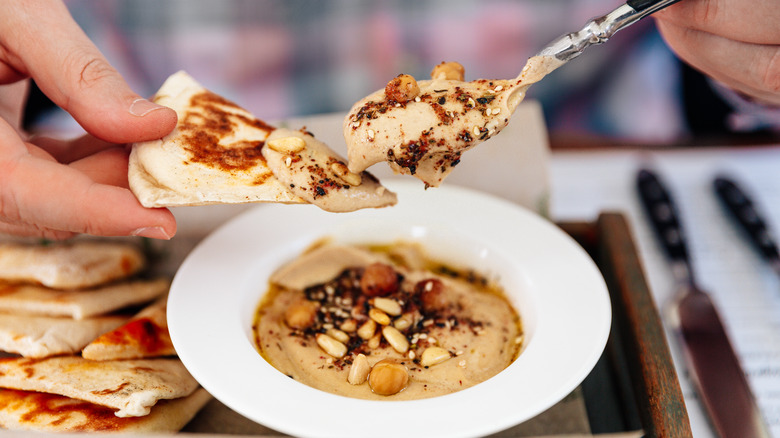
Ahh, hummus — it's no longer just for vegetarians. Hummus has become a staple around the globe in recent decades, thanks to its simplicity, versatility, and the fact that it's downright delicious. This humble chickpea-tahini-lemon juice combo is offered at restaurants and cafes all over the world, but folks in the U.S. often expect to find it at Greek eateries. However, despite popular belief, hummus is not of Greek origins, although it's easy to see why this common myth persists.
Hummus is actually of Middle Eastern origins, most likely Syrian, specifically (although there's plenty of debate over which nation is the true birthplace of the world's favorite dip). But considering the two parts of the world share an ocean, Greece and the Middle East share a lot of similarities in their cuisines. Although hummus isn't of Greek origins, you're guaranteed to find similar dips on the average Greek restaurant menu.
Look for melintzanosalata (eggplant dip), taramasalata (fish roe dip), or fava (split pea dip) if you're craving something hearty to dunk pita in. But it's increasingly more likely that you'll find traditional hummus on a Greek restaurant menu, since the dish is so popular — just don't be taken aback if this non-Greek dish isn't offered at your neighborhood Greek spot.
Not saving room for dessert
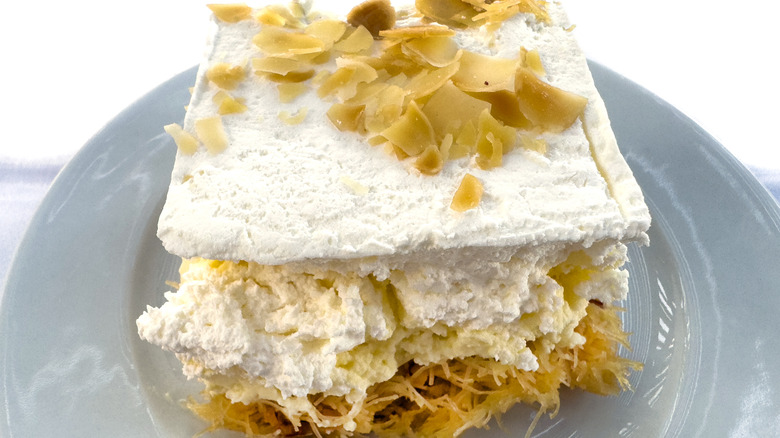
Besides getting to try new things and share with the people at your table, another major upside to making a light meal of a few small plates is that you're more likely to save room for a dessert. Normally, I don't mind passing up on dessert in favor of having more of a restaurant's savory options, but at a Greek restaurant, dessert is a must.
Greek desserts are incredibly unique in the world of sweets; they're about as different from American desserts as you can get. Levels of sweetness vary, and many of the desserts you'll find at a Greek restaurant incorporate delicate, flakey phyllo dough — one of the most famous ingredients in the country's cuisine.
You've likely tried baklava at one point or another, so I urge you to step away from everyone's favorite nutty treat and look deeper into the world of Greek siropiasta (syrup-soaked desserts). Galaktoboureko is like baklava, but instead of honey and nuts, this dessert consists of semolina custard stuffed inside flakey phyllo and covered in syrup. Although originally of Turkish origins, a Greek take on ekmek kataifi that you might find at Greek restaurants in the U.S. is made up of custard, homemade whipped cream, and shredded phyllo dough soaked in a sweet syrup. Loukoumades — honey-drenched Greek donuts — are a major crowd pleaser at Greek eateries, along with melopita, and cheesecake-like dessert made with no crust and plenty of honey.