

10 Vintage Candies No One Seems To Eat Anymore
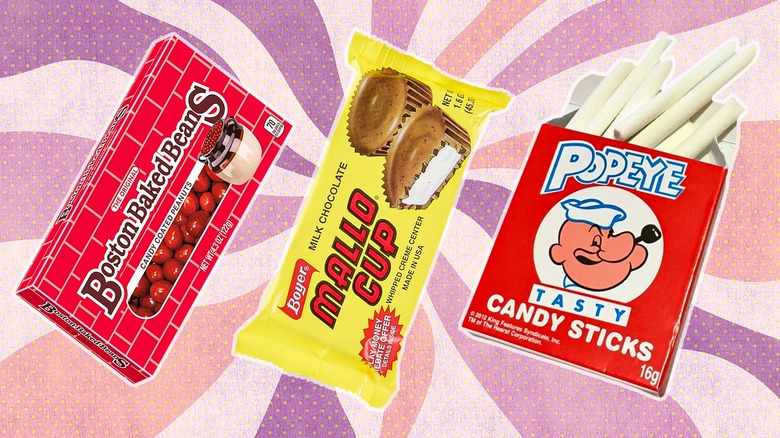
Over the years, as you pass by grocery store check-out aisles and food-stacked shelves, the bright colors of flashy logos and trendy snacks tend to shift. The new exciting candy bar from a decade ago may be located at the bottom of the shelf instead of front and center. The go-to treat you had as a kid may be discontinued now. There are numerous old-school vintage candies that were once best-sellers but have been forgotten over time, replaced by the ever-changing "next best thing."
Although some have been discontinued, remembered only in chat forums and nostalgic social media posts, others remain, waiting to be remembered and reintroduced to the mainstream. Whether you are deep in nostalgia and craving that candy you once had in elementary school, or you're curious to try something new, here are some vintage candies that no one seems to eat anymore, but are still available, waiting to be enjoyed once more.
Abba-Zaba
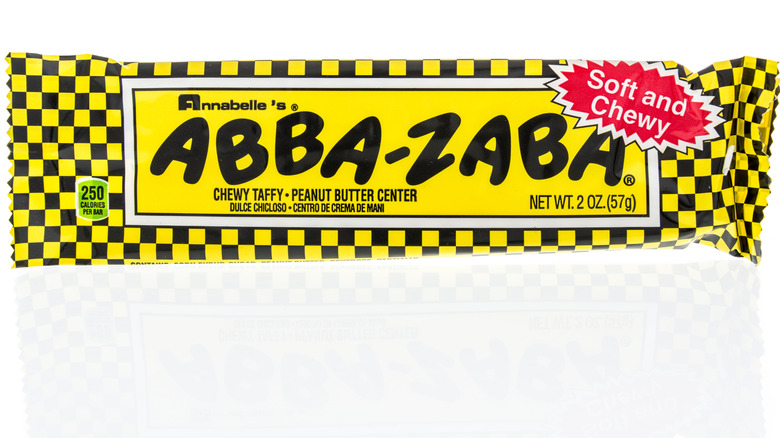
When it comes to the candy aisle, it can be hard to stand out. Each candy is wrapped up in vibrant packaging, fighting for the attention of passing customers. Abba-Zaba pulls its weight, wrapped in a bold yellow, with a black and yellow checkerboard pattern that feels reminiscent of old-school taxis. Once a favorite of the Hollywood actor, John Wayne, Abba-Zaba is a vintage candy that has been enjoyed in the U.S. for over a century.
First created in 1922, the candy bar was acquired by what is now the Annabelle Candy Company, based in the San Francisco Bay Area. This vintage bar quickly garnered popularity in the Western U.S. The classic Abba-Zaba bar is a kosher candy bar with chewy white taffy wrapped around a creamy peanut butter filling. The taffy has a sweet, vanilla flavor profile that complements the soft, salty peanut butter interior. When you bite into an Abba-Zaba, expect a long taffy pull and some candy stuck to your teeth.
If you're not a fan of chewy, pliable taffy, stick the Abba-Zaba bar into the freezer for a few hours. Once solid, give the bar a bang or two against a hard surface, and you'll end up with crunchy, melt-in-your-mouth frozen taffy bites. Although the ownership of Abba-Zaba has changed over the years, the original flavor remains consistent. However, if you are looking for a twist on the classic, the bar now comes with variations like apple-flavored taffy or chocolate filling. Nowadays, it can be hard to find Abba-Zaba on typical candy shelves, especially in the Eastern U.S. Luckily, specialty candy stores and online retailers like Amazon still stock the classic taffy bar.
Popeye Candy Sticks
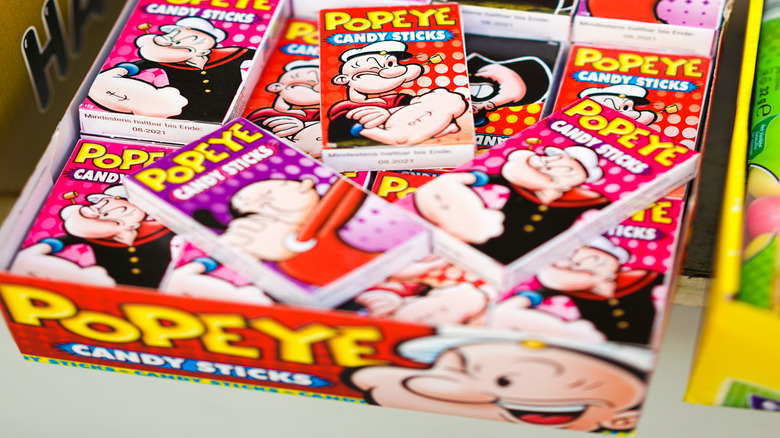
One of the most recognizable symbols associated with Popeye is his corncob pipe, so it comes as no surprise that the Popeye branding would adorn candy sticks. Nostalgic for some and despised by others, Popeye candy sticks have been riddled with controversy over the years. They were originally called candy cigarettes and joined a long line of candy cigarette products.
Candy cigarettes first popped up in the 1880s, when Hershey's released chocolate in cigarette shapes. Things ramped up in the 1920s when the chocolate candies were replaced by a chalky white candy product that emitted little puffs of candy powder. Eventually, actual cigarette companies got in on the trend, teaming up with candy producers to make candy cigarettes as visually similar to the real deal as possible. Popeye candy cigarettes even had a red tip to emulate burning embers.
Things started to shift after the public became privy to the health risks associated with cigarettes. By the 1990s, studies found that children who enjoyed candy cigarettes were more likely to switch to the real thing. Rebranding occurred, and many candy cigarette products shifted their label to candy sticks. Even still, candy sticks had a following due to their mild, sweet taste and unique chalky consistency.
Nowadays, many countries ban the candy cigarettes completely. However, the U.S. still sells them. Whether you are nostalgic for a childhood treat or intrigued by the dark history that it holds, Popeye candy sticks can still be found on online retail sites and specialty stores.
Mallo Cup
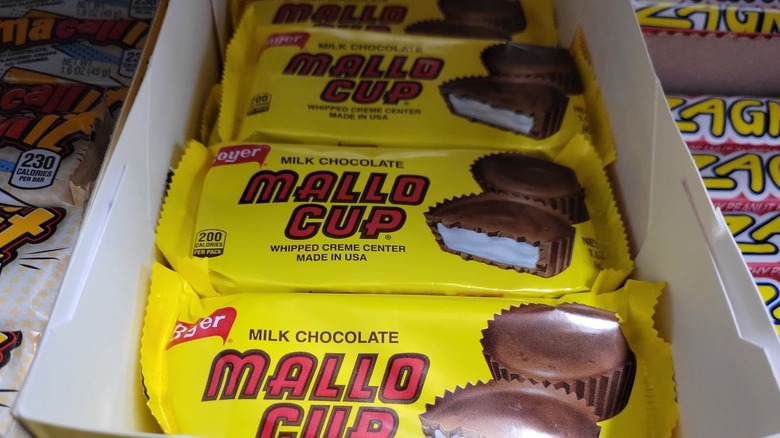
A Pennsylvania delicacy, Mallo Cup candy is more than just a tasty dessert; it's a symbol of perseverance and survival. During the Great Depression, two brothers, the Boyers, needed to make money for their family. The duo went door to door selling homemade candies and developing original recipes. The brothers decided to make chocolate-covered marshmallows, and with the help of their mother, who suggested making them using cupcake paper for stability, the Mallo Cup was born.
A Mallo Cup consists of a milk chocolate casing filled with soft, gooey whipped marshmallow creme. There are bits of coconut flakes in the chocolate, which add a welcome crunch and enhance the warm, toasty flavor profile of the candy. To amplify that toasty, nutty quality, try using the Pennsylvania candy in s'mores. The Boyer Candy Company had success with this tasty treat and made a unique marketing move for Mallo Cups by including cardboard "Play Money" in each candy package. The cardboard money came in the form of points, which could be saved and exchanged for candy. Nowadays, the program still stands, and points can be redeemed for prizes like T-shirts and mugs. Over the years, the Boyer Candy Company expanded, making a variety of cup candies. Although there have been changes in ownership over time, the Boyer Candy Company still runs out of Pennsylvania and sells the classic Mallo Cups.
Chick-O-Stick
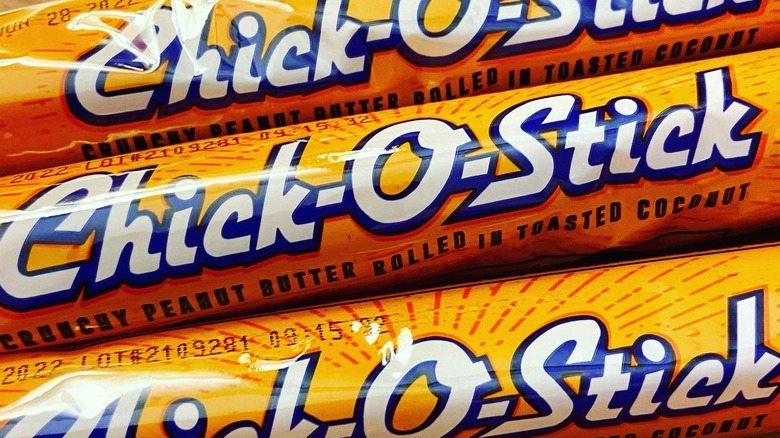
Don't be deceived by the name. There's no chicken in this candy stick, although it was colloquially referred to as "chicken bones" in the South. A Chick-O-Stick is an eight-inch-long rod of sweet sugary goodness. The stick is made out of a mixture of peanut paste, pure cane sugar, toasted coconut, and vanilla flavoring. The flavor is similar to a Butterfinger, excluding the chocolate. However, Chick-O-Stick differs from Butterfinger in that they are vegan-friendly. So, for any recent vegan who craves that Butterfinger flavor, Chick-O-Sticks are a great vegan-friendly alternative.
Chick-O-Stick is somewhat of a Southern cult classic for those who are in the know. Originating in East Texas during the early 1950s, it became a popular treat, in part because it didn't melt in the Southern summer heat like other chocolate-based candies. Chick-O-Sticks are dry with a crispy honeycomb texture, but once left out, they can absorb moisture from the air and become soft and chewy.
Chick-O-Stick has been around for decades with the same owners, Atkinson Candy Company. In 2019, the company changed the recipe for Chick-O-Sticks in an attempt to be more health-conscious. The original Chick-O-Stick was developed in a home kitchen with simple ingredients. The new recipe reverts to those roots, opting not to use artificial flavors or colors. The candy's distinct orange hue now comes from turmeric. If you are looking to try a tried-and-true Southern classic, or if you are feeling nostalgic, you can find Chick-O-Stick on the Atkinson Candy Company website or at online retailers like Walmart.
Astro Pops
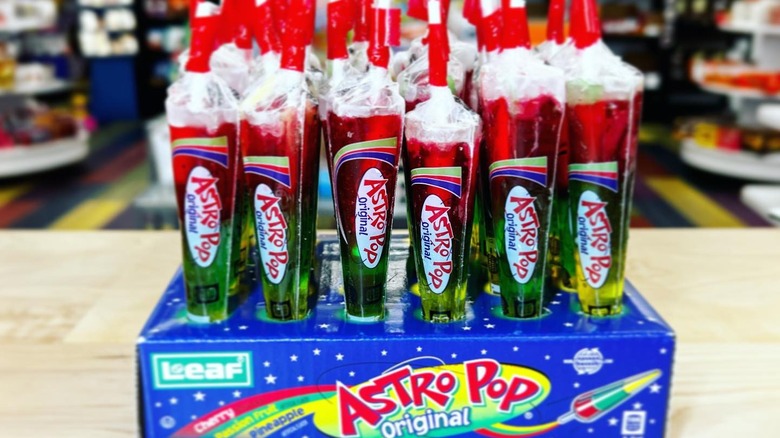
If you've ever wanted to try a candy created by two actual rocket scientists, look no further than Astro Pop. Astro Pop, a multi-colored cone-shaped lollipop, was once extremely popular, with millions sold in the U.S. It was created during the "Space Race" between the U.S. and the Soviet Union. In the early 1960s, two scientists left their jobs in the space program and decided to make a rocket-themed lollipop. The pair developed custom machines to create a candy inspired by a three-stage rocket. The lollipop, deemed Astro Pop, had three flavor tiers and was known to be long-lasting. The original included pineapple, passionfruit, and cherry flavoring. The candy proved popular, as anything associated with space was in vogue.
Branded as "the longest-lasting lollipop on Earth," the candy had stable success over the years. However, after a lawsuit in the early 2000s due to the pointy shape of the pop, Astro Pops had to change shape and lost favor quickly. They were discontinued and off the shelves for years. Luckily, a company called Leaf Brands acquired the rights to Astro Pop in 2010 and now sells the pop in its original shape. If you are looking to try one, keep an eye out on the Leaf Brand website, because they sell out quickly.
Zotz
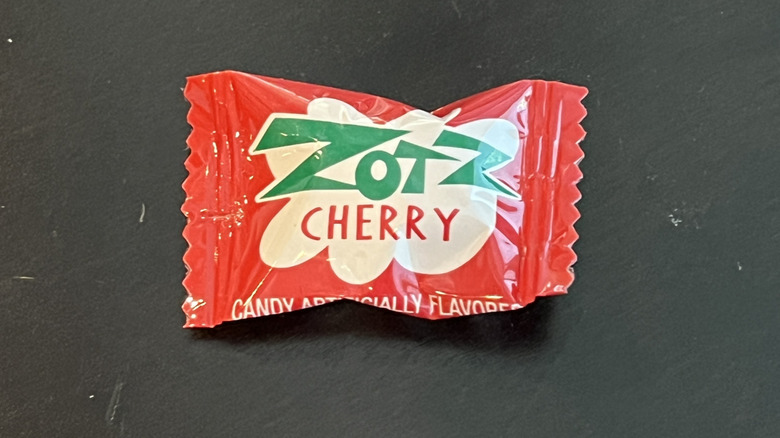
Popular in the U.S. in the 1970s, these small, fizzy hard candies have origins in Italy. Zotz candy is both fruity and fizzy. They come in a variety of flavors, which include grape, cherry, watermelon, orange, raspberry, apple, and strawberry. These are the same flavors that Zotz has always carried, so if you are looking for a specific nostalgic flavor, Zotz still has it. Similar in ways to Pop Rocks Candy, one of the biggest appeals for Zotz is the fizzy reaction that occurs when eaten. The candy has bicarbonate of soda in its center, which, when combined with saliva, causes a fizzy, sour flavor blast.
Andre Prost Inc., an importer and distributor of confectionery goods to the U.S. and Canada, started selling Italian fizzy candies under the name Zotz, after the CEO's kids took a liking to them. Those kids were on to something, because nearly fifty years later, Zotz is still sold in the U.S., and is still made at the same original factory in Italy. For those looking to try these fizzy candies, they are sold at specialty candy shops across the country, as well as large retailers like Five Below or Amazon. If you like fizzy, sweet flavors but not hard candy, Zotz soda, a soda inspired by the candy, may be up your alley. They have flavors like Zotz grape soda, cherry soda, and watermelon soda.
Wax Lips
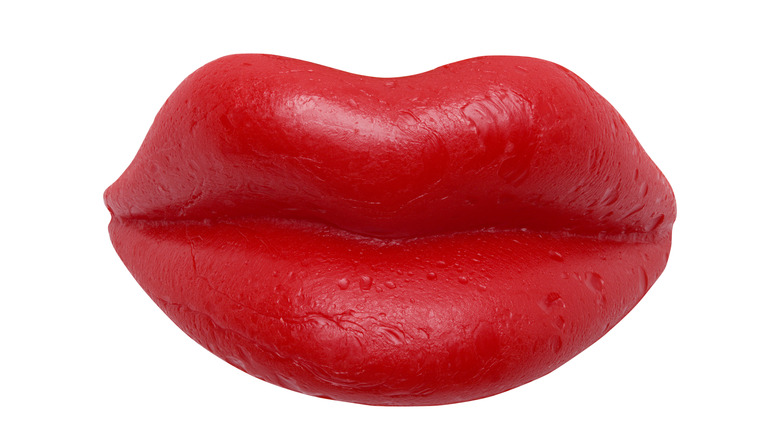
It's not often that a food product can also act as a costume, prop, or butt of the joke, but when it comes to wax lips, playing with your food is expected. Wax lips are a novelty candy made from colored and flavored paraffin wax. Don't worry, the wax in these candies is safe and food-grade. Wax lips come in a variety of flavors and colors, with flavors like cherry, orange, lemon, and grape. The lips have a wax bite plate in the back, so you can bite onto them and cover your own lips with the oversized lip candy for extra fun. Although you shouldn't swallow the wax, you can chew it like gum.
Wax candy itself came into the picture due to a surplus of paraffin, a byproduct of kerosene distillation that the U.S. had plenty of after the birth of the oil industry in the mid-1800s. Wax candies gained popularity, and later evolved into candies like Wack-O-Wax's Wax Lips. At the height of sales, around 30 million wax candies were being sold each year. However, the 1982 oil shortage led to major struggles and multiple ownership changes over the years. Luckily, Wax Lips has survived through the chaos and remains a nostalgic, laugh-inducing candy for each new generation. Whether it's for a quick Halloween accessory or you crave that chewy, sweet flavor, you can find Wax Lips at stores like Michaels or Amazon.
Boston Baked Beans
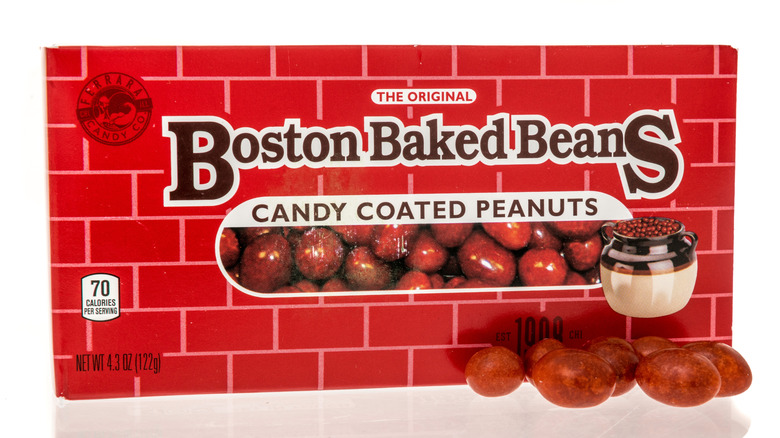
Not to be confused with the savory Boston baked beans dish, these sweet candy-coated peanuts have been around for decades. Although the origins are a bit muddy, the Ferrara Candy Company claims to be the creator of this nutty candy. They state on their website that Salvatore Ferrera developed the treat in Chicago in 1924. It seems plausible, since Ferrera was an Italian Immigrant who often made and sold candy-coated almonds at his candy shop.
Boston Baked Beans, which were peanuts covered in a red-dyed candy shell to emulate cooked beans, were popular in the 1920s and 1930s, and are made by a variety of candy producers. However, the main producer, the Ferrara Candy Company, still makes the treat in Chicago. The candy can often be found boxed or bagged with a brownish-red brick design. Boston Baked Beans are crunchy from the candy shell and peanut, and have a salty and sweet addictive quality that will make you go from having a few to a handful without even noticing. Although not as popular as they once were, you can still find Boston Baked Beans at some theaters and in major retailers.
Claeys Candy
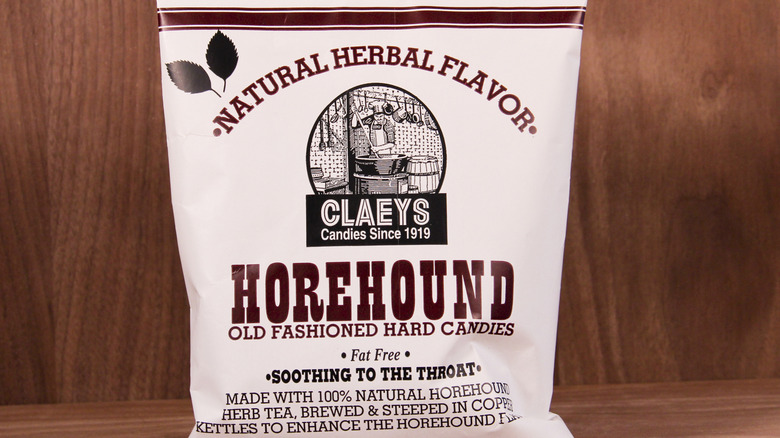
Founded in 1919 in a South Bend, Indiana garage, Claeys Candy is known for its classic flavor and old-fashioned feel. If you've ever found yourself in an Ace Hardware or a country store somewhere, you've possibly encountered Claeys candies. Although the company began with a caramel nut bar, its hard candies are what solidified them in the candy industry. The company makes a variety of hard candies, with popular flavors like wild cherry, root beer, and watermelon. They also have a variety of more nostalgic flavors like sassafras, clove, ginger, and a special horehound flavor.
All of Claeys' hard candies are made with natural ingredients and dusted with a sugar coating for an extra pop of texture and sweetness. Even though kids these days may not be begging for Claey's Candy at the grocery line check out, these hard candies are still incredibly delicious and can satisfy any sweet tooth, from candy enthusiasts to picky eaters and everyone in between. You can find these hard candies at online retailers, in general stores, or even hardware stores.
Bit-O-Honey
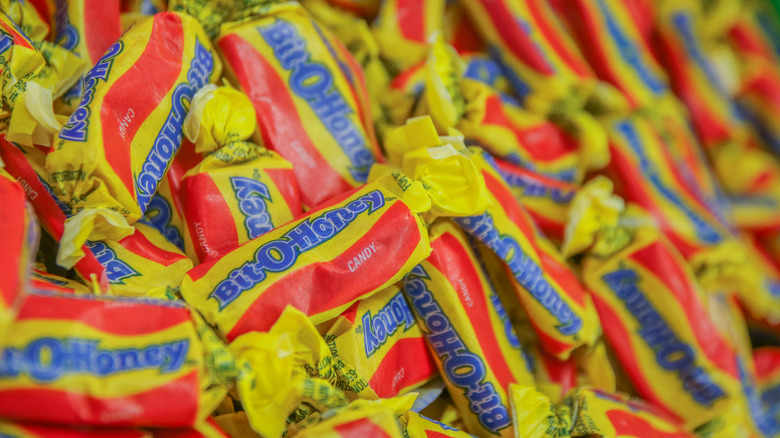
Every once in a while, indulging in a sticky, chewy treat like taffy just hits the spot. For decades, Bit-O-Honey was a popular go-to option. Originally sold in bar form, the candy was created in 1924 and sold in the form of six taffy pieces, with divots between sections, similar to a chocolate bar. The soft taffy stood out amongst a market which, at the time, was largely filled with hard candies. The Bit-O-Honey taffies, which are honey-flavored, are laced with bits of roasted almond and have egg whites in the mix for a chewier consistency. The taffy uses real honey for its flavoring, and even added a honey bee to its branding in the 1970s.
Although the vintage candy started off in bar form, Bit-O-Honey is more commonly found in individually wrapped pieces, making it a quick, accessible snack that you can keep in your purse to satisfy any unexpected sugar craving. Nowadays, you are more likely to see candies like Laffy Taffy or Airheads in a Halloween candy assortment, but Bit-O-Honey has remained in production for a reason. The taffy is a solid, flavorful candy that has satisfied consumers and shifting palettes for over one hundred years. You can still find Bit-O-Honey at online retailers like Amazon or specialized candy shops.