

10 Foods Gordon Ramsay Doesn't Touch
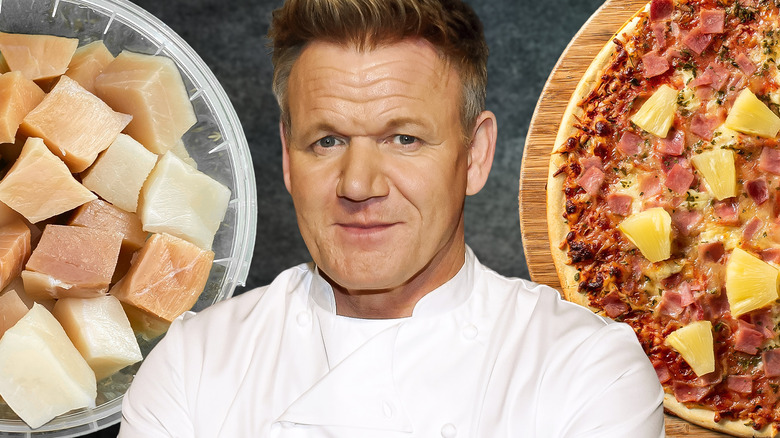
Arguably the most opinionated member of the celebrity chef world, Gordon Ramsay is known for his brutal remarks in the kitchen, delivering many an iconic insult during his television shows throughout the years (remember the "idiot sandwich" incident?). If there's one thing that gets Ramsay riled up, it's bad food, and you can certainly count on him to let you know when something isn't to his taste. He's previously expressed his disdain for various Halloween candies and the overuse of truffle oil, but there are also several foods that Ramsay simply refuses to eat altogether.
There are some foods on this list that most of us would agree aren't particularly appetizing, whilst others are a little more controversial. Sure, an in-flight meal probably isn't going to be the best dinner of your life, but what's wrong with sampling the "soup of the day" at your local restaurant? And, is pineapple on pizza really that bad? Well, Gordon Ramsay has offered his opinion on all of these subjects. So, let's find out exactly which foods he refuses to touch, and why he deems them so awful.
Deep-fried turkey
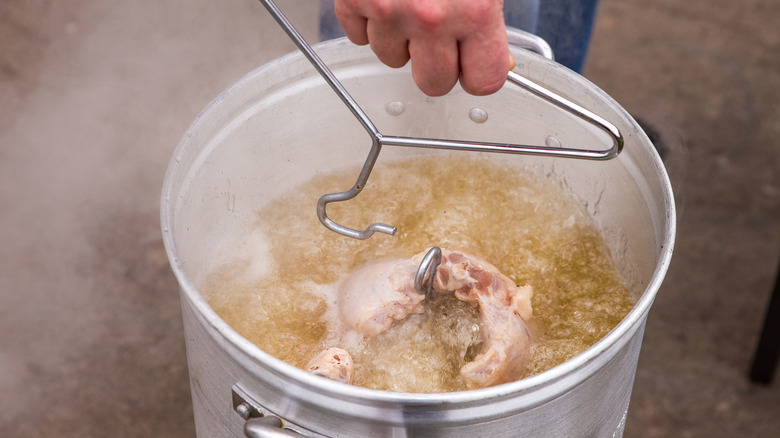
Gordon Ramsay isn't opposed to eating turkey, but there's one cooking method he refuses to get on board with. According to the chef, deep-frying is the worst way to prepare the bird, despite this technique being incredibly popular throughout the Southern states of America. In an episode of The Late Show with Stephen Colbert, Ramsay speaks of his experience attending a friend's Thanksgiving celebration. "He started going to the garage for the preparation of the lunch. I said 'where are we going?', and there's this big vat", he explained. "He wheeled this big bird down and deep fat fried this thing, and it was f***ing disgusting." Claiming that deep-frying is a recipe for "dry turkey", Ramsay goes on to explain that roasting is his preferred method. He's all for incorporating a herbed butter, spread under the bird's skin, adding bacon on top, and serving the roasted meat with a creamy chicken gravy.
Despite the chef's clear hatred of deep-fried turkey, it remains a favorite for many during the holiday season. Allegedly, this technique originated in the 1980s, when home cooks in Louisiana discovered that portable crawfish boiler rigs were the perfect tool for cooking the birds. These large containers are still used today, with the metal vat heated over a burner and attached to a gas tank. Many claim that this method yields a more tender, moist result than roasting, due to the shorter cooking time. Martha Stewart is even a fan of deep-fried turkey, with her recipe calling for a fragrant Creole spice rub.
Plane food
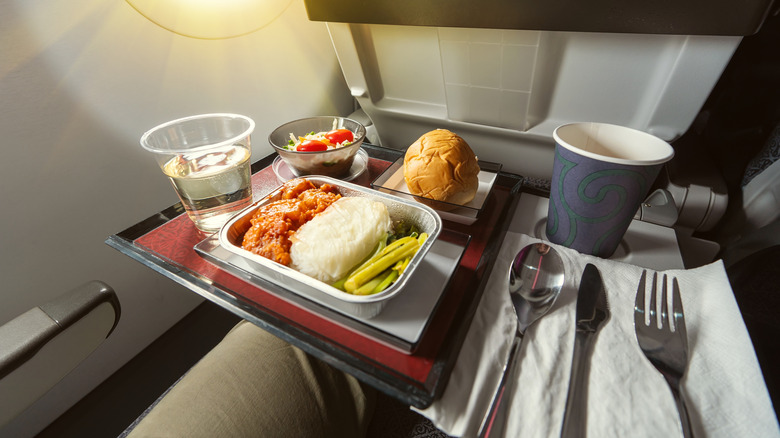
In a 2017 interview with Refinery29, Ramsay boldly proclaimed his loathing for plane food, explaining that he'd always rather eat pre-flight than accept an airline's culinary offerings. The chef claimed to have some inside knowledge on the origins of such in-flight meals. "There's no f***ing way I eat on planes... I worked for airlines for ten years, so I know where the food's been and where it goes, and how long it took before it got on board", he said. Ramsay is likely referring to the mass-produced nature of the meals, which tends to occur in large-scale facilities close to the airport. American Airlines, for example, produces over 15,000 meals per day at its largest hub at Dallas Fort Worth International Airport, Texas. The meals aren't necessarily prepared all that close to the time of consumption, either, with reports revealing some in-flight meals have previously been frozen for up to a month.
Ramsay might not be a fan, but we reckon there's something rather exciting about waiting to receive your airplane meal. Perhaps it's the not quite knowing what you're about to get, or the way each element requires unboxing or unwrapping. Sure, it might be hit and miss, and the quality of the food likely isn't going to match that of your favorite restaurant back on land, but we'd certainly rather sample what's on offer than go hungry on a long-haul flight.
Shark fin soup
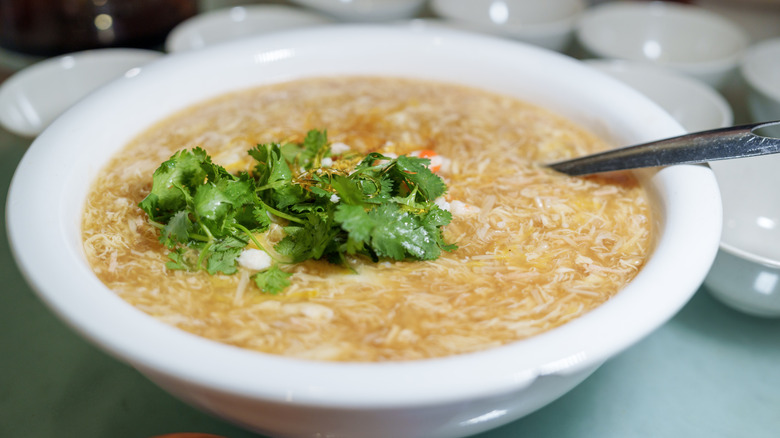
Shark fin soup has had a huge amount of media attention over the years. This controversial dish originates in China, where it's been considered a delicacy for over 2000 years. High demand results in the death of over 70 million sharks each year, with many of these being endangered species. Whilst the trade of shark fins is illegal in the U.S, Canada, and the UK, it's still largely unregulated across much of Asia. The dish is especially popular in Hong Kong and Indonesia, and consuming it is thought to provide a range of health benefits, from improving skin quality to lowering cholesterol and fighting cancer.
When filming his 2011 documentary "Shark Bait", Gordon Ramsay travelled to Taiwan, where he saw firsthand how popular shark fin soup is amongst locals. Going behind the scenes at a fine dining restaurant, he learnt of the mind-blowing prices that diners were willing to pay for such a seemingly simple soup, with bowls serving the largest fins costing over 100 dollars. When Ramsay tucked into a piece of fin from his steaming bowlful, he was not at all impressed. "It tastes of nothing", he said, noting that the brothy base would be better off paired with a more flavorful variety of meat, such as chicken, pork belly, or duck. "The one item that's spoiling that is the shark fin", was his conclusion, much to the joy of shark conservationists, we imagine.
Pineapple on pizza
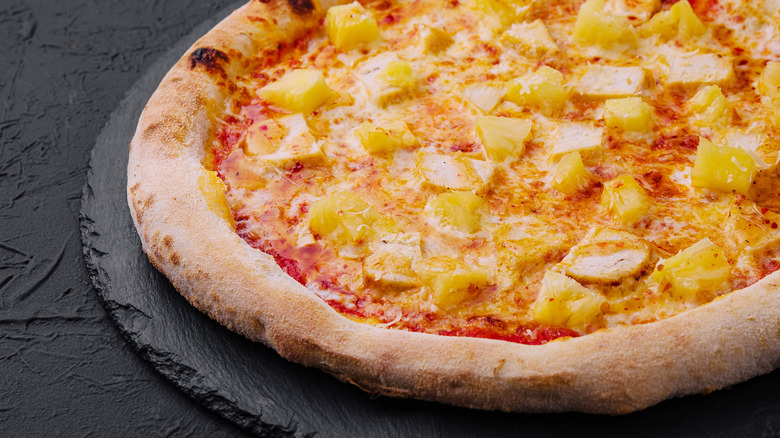
It's the age old debate. Pineapple on pizza — are you in, or are you disgusted? Well, it's no surprise that Gordon Ramsay has some thoughts on this matter. And Hawaiian pizza lovers are about to be disappointed, because the chef is very much in the anti-pineapple camp. In a 2017 episode of The Nightly Show, whilst calling to order pizza in front of the live audience, Ramsay was quick to remark after an audience member put forward the suggestion of pineapple. In the chef words, "You don't put pineapple on a f***ing pizza!". Instead, he opted for two, pineapple-free classics — margherita and pepperoni. He later turned to X to remind his followers of his pizza preferences, stating plainly, "Pineapple does not go on top of pizza".
However, there are plenty of foodies who would disagree with Ramsay's stance on the pineapple debate, and fellow celebrity chef Alton Brown is one of them. Just days after Ramsay shared his views on X, Brown offered his thoughts, posting, "If I want pineapple on my pizza, I'll by God have it". In an interview with People, Brown elaborated, "I don't want people saying what should or should not be on a pizza," confirming his view that, "you put anything on a pizza you damn well feel like." And, there's certainly an strong argument behind the sweet-salty combo, with pineapple featuring in a variety of other popular savory dishes, such as sweet and sour chicken and a tangy pineapple salsa.
Ready meals
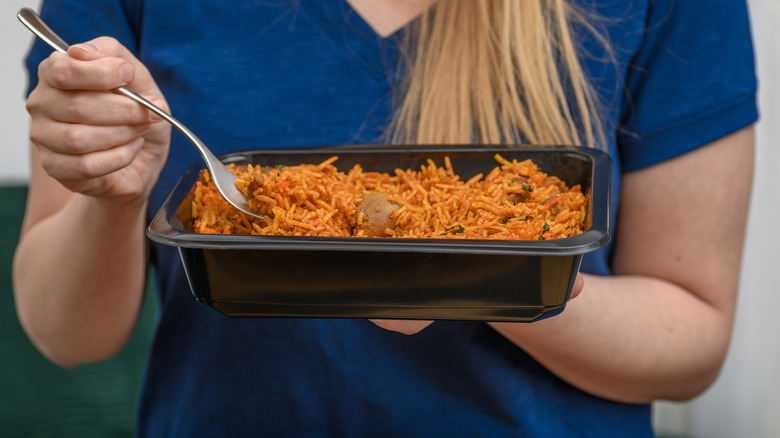
When Bon Appetit asked Gordon Ramsay if there was a food he wouldn't eat, the chef's response was, "Any ready meal [frozen meal]". Highlighting how quick and easy it can be to prepare a meal from scratch (take a stir-fry, for example), he argued that ready meals "all taste exactly the same". These prepared meals are certainly convenient, typically requiring just a few minutes in the microwave, but they're often laden with salt, fat, and preservatives. Ready meals also tend to have a lower nutritional quality when compared to their fresh counterparts.
After hearing Ramsay express his dislike for ready meals, fans were shocked when the chef launched his own range of frozen meals in Walmart in 2023. Uproar ensued online, with one X user simply writing, "Respect lowered", and others branding the chef a sellout. The range includes some of his alleged favorite dishes, such as lasagna and Shepherd's pie, but the reviews have been less than glowing. Ramsay's Parmesan Risotto has been described as overly salty with an overwhelming flavor of Parmesan, and the Lemon Caper Chicken was deemed rubbery and stringy. One reviewer even claimed that the frozen mac and cheese was the worst they'd eaten in a long time. With Ramsay usually known for his refined approach and use of high-quality ingredients in his cooking, it does make you wonder how much input he really had into the creation of these frozen meals, or whether he's even sampled them himself.
Overcooked food
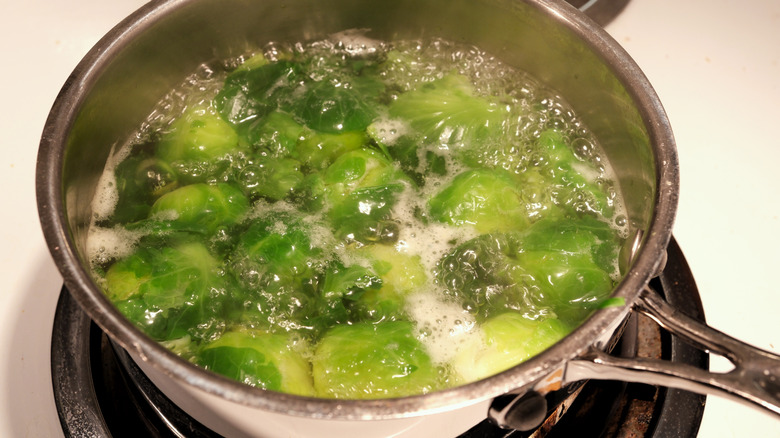
In a 2015 Reddit AMA, Gordon Ramsay was asked, "Is there any food that you won't even try?". And his response might surprise you. The chef's non-negotiable is not specific food itself, but rather centred around the way it's been cooked. After explaining he'd be happy to try pretty much anything, including "a beating cobra heart from a snake in Cambodia, or a deep-fried tarantula", he goes on to say, "The only thing I draw the line at . . . is eating overcooked food." One example Ramsay provides is overcooked sprouts, describing their smell as "disgusting". And, he's got a point. Overcooking sprouts is a no go. Thanks to the presence of compounds in the veggies called glucosinolates, large amounts of sulphur are released when the sprouts are cooked for too long. We recommend roasting them for around 30 minutes for the best results.
There are plenty of other foods that become dramatically less appealing when overcooked, too, from poached eggs with disappointingly solid yolks, to meat that's dry and tough. One of the best ways to prevent this is by setting a timer that goes off around five to 10 minutes before your food's intended cooking time is up. That way, you can assess doneness and pop it back in the oven or continue cooking it on the stovetop if needed.
Chocolate with bacon
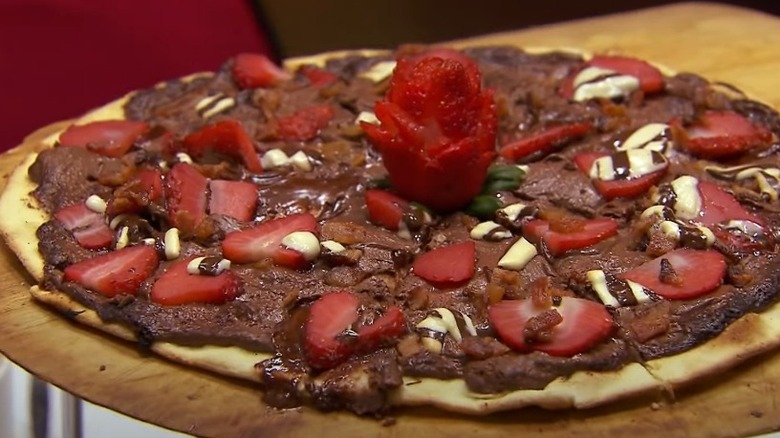
Yes, we might have recently sung the praises of the chocolate-bacon combo, but Gordon Ramsay certainly does not agree with this pairing. In a 2017 episode of his popular show Hotel Hell, he's served a dessert pizza, topped with white and dark chocolate, sliced strawberries, and bacon. Before Ramsay has even picked up a slice, things aren't looking good. "I've never seen anything so f***ing unappetizing as a dessert in all my life", he says. And, after tucking in, the inevitable disgust ensues. The chef is seen spitting out the pizza, before exclaiming "f*** me!", in true Ramsay style.
So, why choose to combine these two ingredients in the first place? Well, theoretically, it's a brilliant idea. Sweet and salty foods have long been matched up to create a deliciously balanced final dish. Think salted caramel sauce, chocolate-covered pretzels, or watermelon-feta salad. Furthermore, the contrast of bacon's crunch, and chocolate's smooth, decadent richness seems like a wonderful blend of textures. Some recipes simply recommend frying up strips of bacon, and dipping them in melted chocolate, whilst others adorn each piece with chopped nuts, or incorporate spices like cinnamon or chili powder for an extra element of flavor. Don't knock it 'til you've tried it, we'd say!
Soup of the day
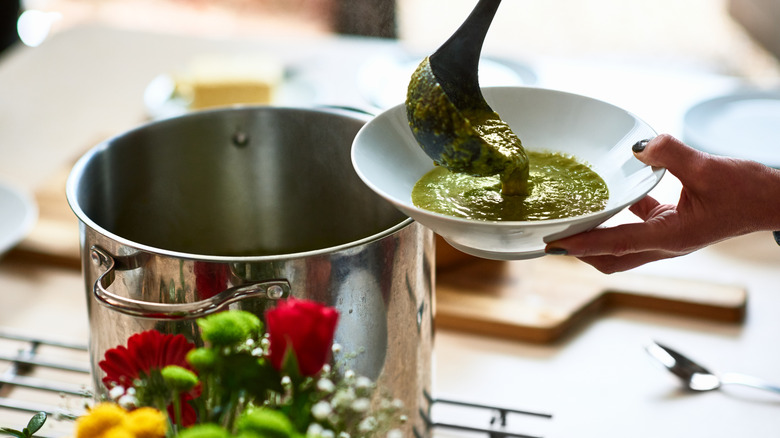
Soup might seem like a safe bet if you're in the mood for something light and nourishing, and many pubs, cafes, and restaurants share a common menu item — soup of the day. This refers to a soup recipe that's been chosen by the chef on that specific day, which should theoretically be switched up relatively frequently. The soup could be anything from a hearty chicken and vegetable, to a vibrant pea and ham. Gordon Ramsay, however, has some qualms about this concept. When Town & Country asked the chef what you should never order at a restaurant, he replied, "Ask what yesterday's soup du jour was before today's special. It may be the case that it's the soup du month".
It seems Ramsay was implying that the soup du jour (French for soup of the day), is not quite the freshly made dish it's marketed as. But is this really the case? The concept of soup of the day was born from a need to use up leftover ingredients in restaurant kitchens, with meats and veggies that hadn't been used up the day before being transformed into a soup dish. In some cases, this undeniably economical approach does indeed mean the chef is whipping up an altogether different batch daily. But, many restaurants are not following this process, instead serving the same batch for multiple days in a row. This is demonstrated in an episode of Kitchen Nightmares, when a waitress admits to Ramsay that jalapeño corn chowder has been the soup of the day all week.
Foams
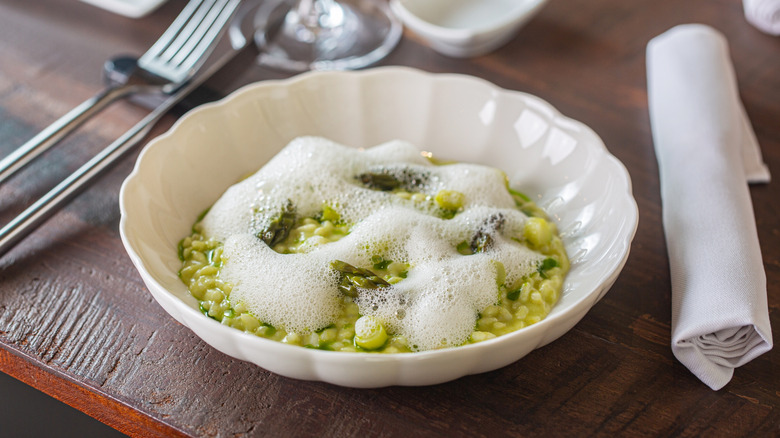
Another gem to come from one of Gordon Ramsay's Reddit AMAs is his take on foams. Yep, we're talking the slightly questionable-looking frothy dollops you often see spooned atop a gourmet-style dish. Foams are not something Ramsay likes to incorporate into his dishes. When questioned on food trends he didn't expect to last, Ramsay made his opinion clear. "I think foam should be used for shaving, not to go on top of food. Because when a foam hits a plate, unless you've eaten it within 3 or 4 seconds, at the end it looks like sort of toxic scum on a stagnant pool." However, the chef did admit to using foams in the 90s, when they first became trendy, but can't believe they've remained so popular. "We need to get rid of the foam, and keep foam for shaving", he says.
Foams are essentially liquids that have been aerated to give them a light, bubbly texture. These are often made from stocks, sauces, or juices, which are stabilized with a fatty substance called lecithin, which helps the foam to hold its shape. Foams can even be frozen to create a solid yet ultra-light addition to a dish, or dehydrated, which yields a meringue-like result. Texture-wise, they're certainly unique, but perhaps simply beaten by a good old sauce or dressing.
Hákarl
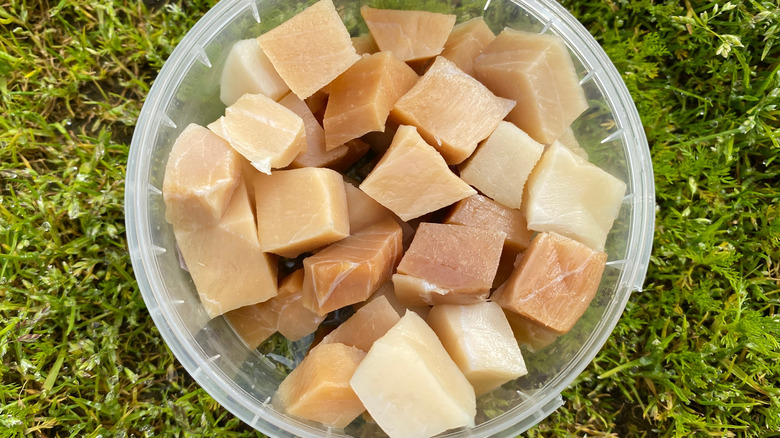
Hákarl is an Icelandic delicacy, made from rotten shark meat that's been left to ferment underground for up to 12 weeks. It has a pungent, ammonia-like smell, and a flavor that's been likened to both stinky cheese and urine, thanks to the meat's high urea content. This makes you wonder why on earth anyone is eating hákarl, but its a food that's deeply rooted in Icelandic culture, thought to date back to the Viking era. The shark meat can be found in grocery stores throughout the country, and is often consumed during Iceland's Þorrablót festival, alongside other delights like boiled sheep's head and ram's testicles.
When filming in Iceland for the television series "Uncharted," Gordon Ramsay was brave enough to sample some hákarl. And, understandably, the chef had his reservations. After psyching himself up, Ramsay pops the piece of hákarl into his mouth, washing it down with a clear liquid that's likely Brennivín (a type of schnapps). However, it's mere seconds before he spits everything out. Seemingly speechless and traumatized by the ordeal, the chef finally says, "My nose got all fizzy", and promptly refuses a second try.
Amazingly, others have had a more pleasant experience with hákarl. For example, chef Andrew Zimmern describes it as "sweet, nutty ... only faintly fishy". However, it seems that most side with Ramsay, including Anthony Bourdain, who once said the fermented meat was "the single worst, most disgusting, and terrible tasting thing" he'd ever eaten.