

16 Creative Add-Ins For A Brunch-Worthy Mimosa
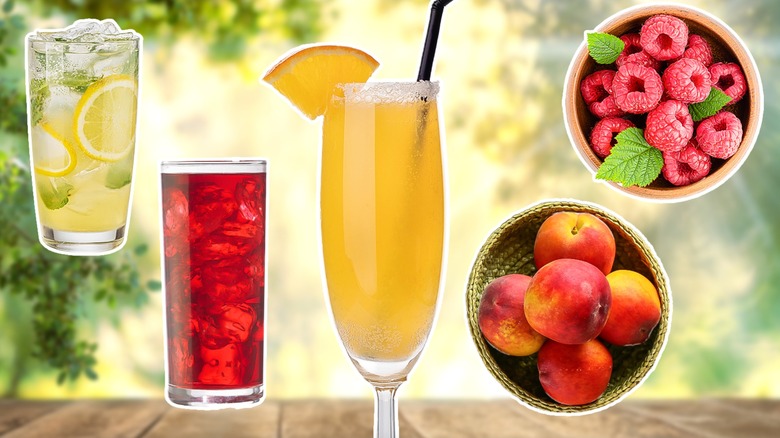
If you're going out for brunch, you are almost guaranteed to find mimosas on the menu. The deliciously simple combination of orange juice and champagne has become synonymous with the meal, providing a totally acceptable (and celebrated) excuse to enjoy a tipple before noon. Legend has it that film director Alfred Hitchcock is responsible for the drink, having introduced this Americanized version of Britain's Buck's fizz to luncheon guests as a hangover cure. While this origin story is disputed, there is no arguing with the fact that it is the overwhelming beverage of choice at brunches around the nation, with the possible exception of the Bloody Mary.
Given this ubiquity, it is possible to get a little bored with the standard recipe and want to jazz things up a bit. Luckily, it's easily done. With just two ingredients, there is plenty of room for added complexity. That said, there is one thing to keep in mind. As cocktail creator and sommelier Lucas Huff told us, "It all comes back to the wine. The world of sparkling wine is incredibly diverse, offering a wide spectrum of flavors. Always taste the wine first, and build your mix-ins around it." Most importantly, he added, "Always keep it fizzy." That is, after all, the best part of a mimosa.
1. Cranberry juice
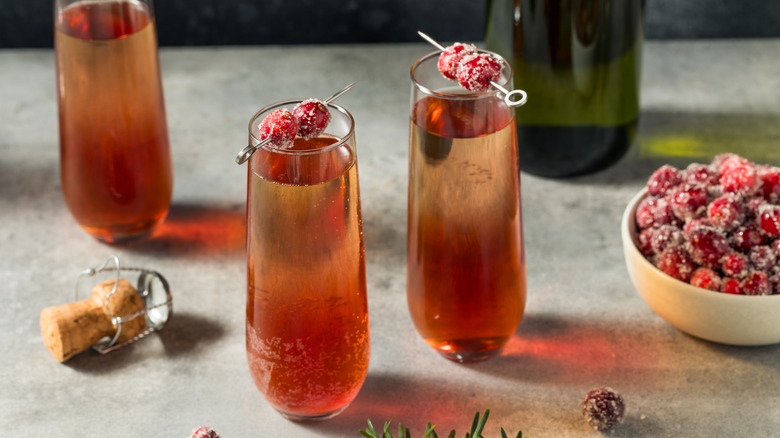
One of the easiest ways to upgrade a mimosa is to add a different kind of juice. Orange juice is citrusy, but it is often sweeter than it is tart. If you prefer the latter flavor profile, cranberry juice makes for a delicious option. In fact, it's so popular that it constitutes its own cocktail. Called a "poinsettia" after the bright red flowering plant that is a popular Christmastime decoration, it is gorgeous to look at as well as drink.
To make a poinsettia cocktail, simply mix your sparkling wine of choice with cranberry juice. Many recipes also call for a bit of sweet liqueur to counteract the sharpness of the cranberry, but make sure to check the sweetness of the cranberry juice first to avoid overdoing it. Orange flavored liqueurs, such as Cointreau and Grand Marnier, are popular options and will help maintain the citrus taste of the classic mimosa recipe.
2. Apple juice or cider
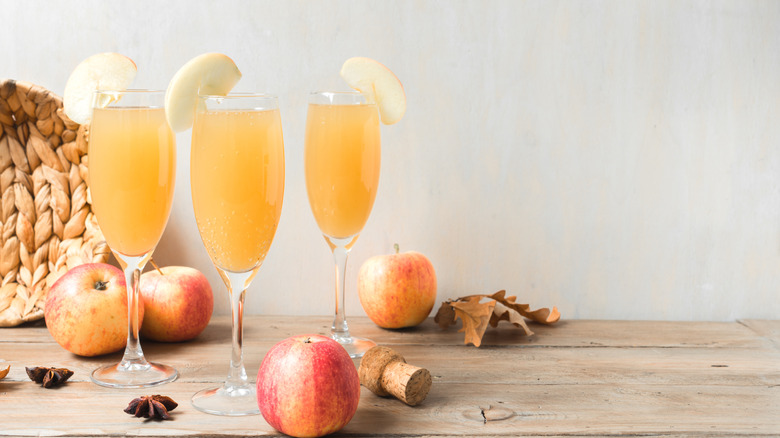
If you're looking to change your mimosas with the seasons, fall is the perfect time to swap the orange juice for apple juice or cider. Apple juice is an easy one-to-one swap with orange, while cider will help add a touch of warming spices that will get you feeling even more in love with sweater weather. If you want to go the extra mile (and make your house the best-smelling place on the block), you can make your own cider from scratch.
Lucas Huff has another option. Instead of using alcohol-free apple juice or cider in place of orange juice, he does the opposite. "I love using hard cider in place of sparkling wine this time of year," he told us. "Golden State Cider makes some great options that really shine in a mimosa twist." With this option, you get to keep the orange juice that is so central to a classic mimosa and get the apple as well. It's a have your cake and eat it scenario.
3. Lemonade
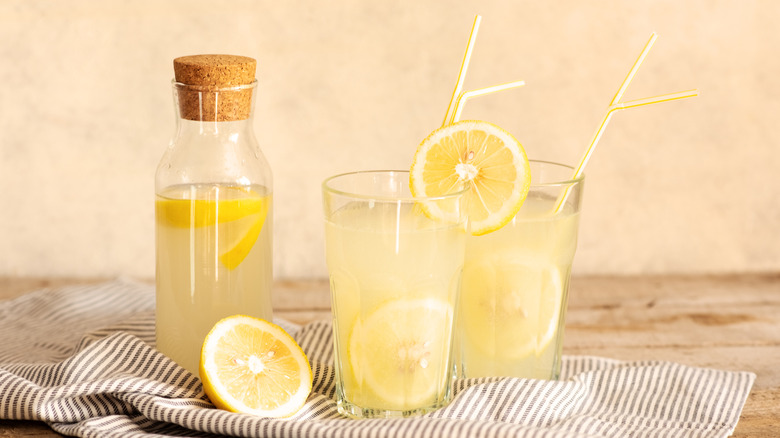
To preserve the citrusy profile of a classic mimosa while elevating it from a brunch cocktail to an anytime cocktail, look no further than lemonade. It's an addition that is better suited to breezy summer days than chilly winter ones, but in truth, lemonade is delicious at any time of year. To keep things simple, you can use store-bought lemonade, but because not all lemonades are created equal, it's best to either choose one you know you like or bring home a few options. Since you're only working with two ingredients, it's worth making sure they're top quality.
For this reason, it's hard to go wrong with homemade lemonade. This might be daunting if you don't have a juicer, but our recipe is simple, straightforward, and only takes 10 minutes from start to finish, with nothing more high-tech than a hand juicer. Nothing beats freshly squeezed citrus juice, and that zingy flavor will match perfectly with the fizz of your sparkling wine.
4. Floral liqueur
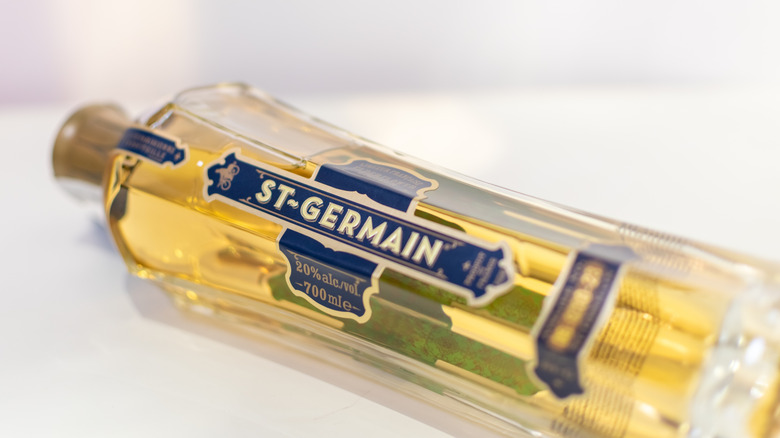
When we asked bartender, mixologist, and educator Lynnette Marrero about her favorite mimosa add-ins, she said that elevated liqueurs are her preference. Not only do they add an extra kick of alcohol, but their intense flavors also add an efficient injection of intricacy into the classic cocktail without stripping it of its original formula. It is also a broad enough category to include something for everyone.
You might want to steer clear of coffee liqueurs rather than try to capture all the brunch beverages in a single drink, and chocolate liqueurs probably won't pair well with the citrus or bubbles either. Fruity and floral liqueurs are your best bet. One flavor that Marrero pointed to in particular was elderflower, which falls squarely in the latter category. Sweet, fragrant, and distinctive, elderflower liqueur, such as St. Germain, is one of the quickest ways to elevate the brunch-time cocktail. You can even skip the orange juice if you want to heighten its impact.
5. Peaches
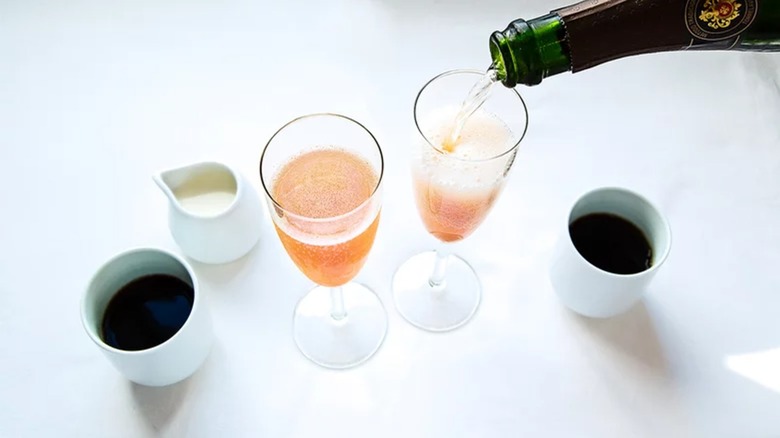
For a summery spin on the mimosa, why not add peaches? It is, after all, the formula behind the Bellini cocktail. Created by Giuseppe Cipriani, a bartender and restaurateur in Venice in the late 1940s, the drink is made of two parts prosecco to one part peach purée. If you don't want to lose the distinctive flavor of a mimosa, you're in luck, because peach and orange taste delicious together. Simply do half peach purée and half orange juice.
If you want to try something truly different, use fresh peaches and grill them before puréeing them. This will add a light smokiness to your brunch cocktail, and, with the addition of a little freshly-squeezed lemon juice, will yield an unforgettable drink with very little effort. All you need are four ingredients and 15 minutes and you'll have a showstopping cocktail that could just as easily be served at a fancy dinner party as a Sunday brunch.
6. Tropical fruit
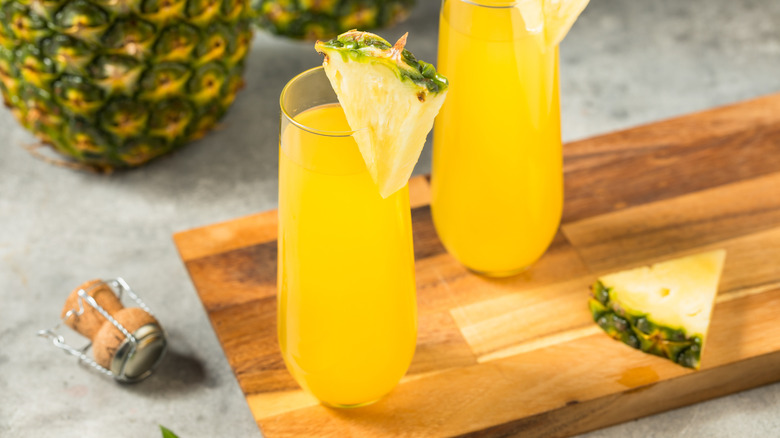
What better way to kick off your lazy Sunday than with a mimosa laced with tropical fruit? Lucas Huff says that this is one of his favorite variations on the cocktail, singling out mango and pineapple juice in particular. Keep in mind that different juices bring their own levels of sugar to the table. Pineapple brings significantly more tartness than mango, which is so sweet you might need to dial back the amount of juice you use. Huff also noted that you can always keep half the orange juice and supplement it with tropical fruit juice.
He also had a word of advice about ensuring that all the ingredients in the mimosa — not just the fruit juice — are harmonious and complementary. "One thing to stay conscious of is the flavor profile of the sparkling wine or Champagne," he explained. "For higher-acid wines, go with sweeter juices; for lower-acid wines, opt for less sweet and more tart juices to balance things out." In the end, your choice of juice might be dictated more by the type of wine you have than anything else.
7. Blue curaçao
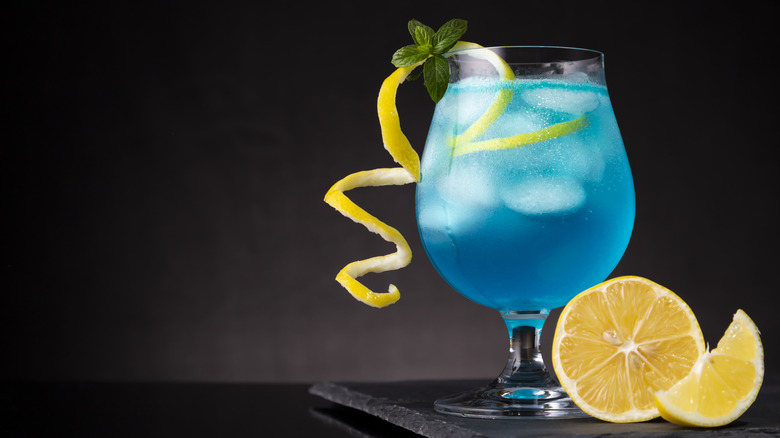
Is a mimosa truly a mimosa if it's a completely different color? We should probably leave that one to the philosophers, but if you are not put off by an electric blue mimosa, allow us to introduce you to the so-called Tiffany variety of this brunchtime classic. Made with blue curaçao and lemon juice rather than orange juice, they are certainly a departure from the cheerful orange color and flavor profile of a standard mimosa, but the fizzy citrus elements remain intact.
More importantly, perhaps, is the fact that the orange taste still shines through, thanks to the blue curaçao. Despite its color, the liqueur is made with bitter oranges, specifically the laraha variety, which was grown on the Caribbean island of Curaçao. When and why the liqueur became blue when, like many orange liqueurs, it is naturally colorless, is unclear. Some claim it dates back to the 1920s when the Dutch brand Bols began to produce a blue version of the spirit, though whether it was the first (and again, why they chose to do so) has yet to be determined. Luckily, you don't need to know the historical ins and outs of the product in order to enjoy it in your mimosa.
8. Maraschino cherries
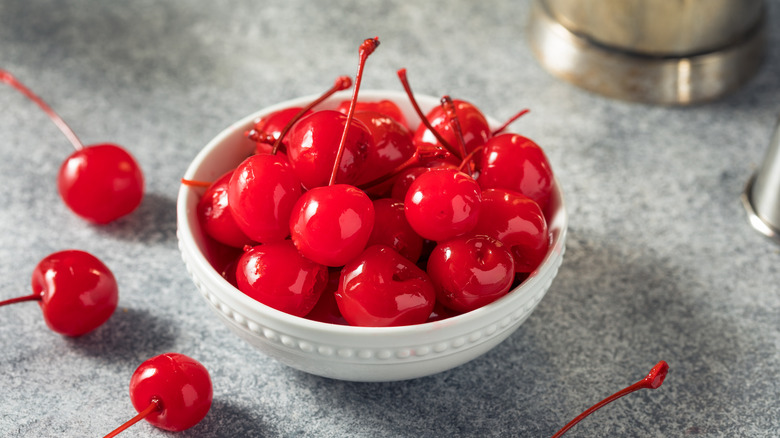
Maraschino cherries have been brightening our cocktails since 1905, when the Luxardo distillery began steeping the ruby-red fruit in sugar and Marasca cherry juice. However, it wasn't until an American scientist at Oregon State University began experimenting with brine and calcium salts in the Prohibition Era that we got those neon-red morsels of sweetness that are now a must-have ingredient behind the bar.
There are many ways to use this cocktail stalwart, but one of the most minimalist and striking when it comes to mimosas is to simply drop one into the bottom of each champagne flute. Instead of turning the entire drink red, which might create cognitive dissonance between its appearance and orange flavor, it simply provides a pop of color at the bottom and a tiny mouthful of sweetness. Alternatively, you can embrace the color-changing abilities of maraschino cherry syrup by adding a splash of it to your recipe. It will make the drink sweeter, but it won't overpower the citrus if you only use a small amount.
9. Grenadine
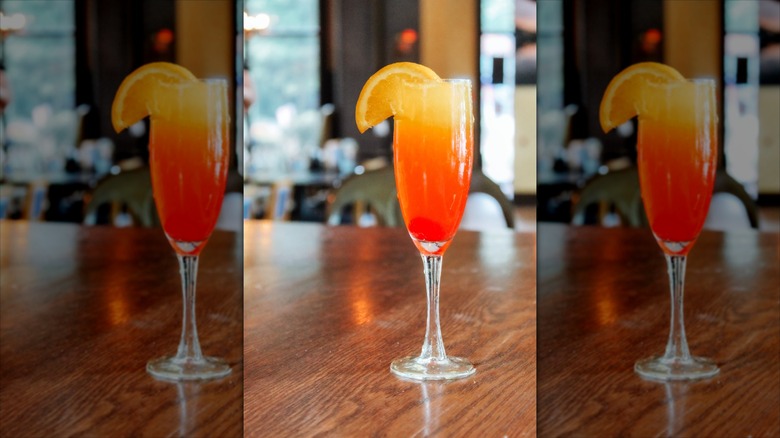
Grenadine and maraschino cherry syrup are easy to mix up due to their similar hues, but where maraschino syrup is sweet and fruity, grenadine is sweet and sour, thanks to its base ingredient, pomegranate. If you want to add an extra tinge of color to your mimosa but don't want to double down on the sweetness of the orange juice, grenadine is one of the best options out there. It will dial up the tartness and add some additional flavor intensity alongside that glorious red hue.
There are several options when adding this ingredient to a mimosa. You can opt for the tequila sunrise route, in which you pour the grenadine into the glass first in order to create a gradual change in color from bottom to top. Or, you can mix it until the colors are seamlessly blended, creating a bright orange drink not unlike the color of a cloudy Aperol spritz.
10. Orange liqueur
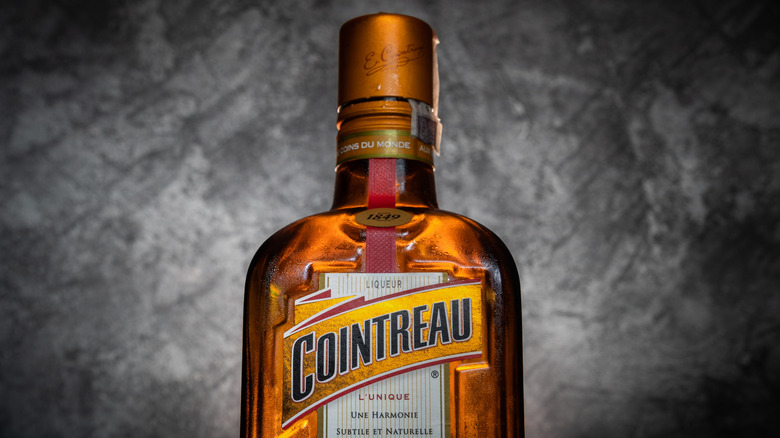
While many of the mimosa add-in options involve demoting the orange juice in favor of other flavors, one option is perfect for those who love the classic mimosa ingredient combination but want to change things up a little. Orange liqueur not only keeps the flavor profile intact, but intensifies it, dialing up the citrus and its sweetness to create a more powerful cocktail than your average mimosa. In fact, depending on how much liqueur you add, you might need to serve your cocktail in smaller portions to avoid an afternoon slump.
Cointreau is an excellent option to start with. The French spirit that has been on store shelves since 1849 and is the cornerstone of many popular cocktails, including the Cosmopolitan. Made of sweet and bitter orange peels and containing a high 40% alcohol by volume, it is tart and powerful, ideal for adding in small quantities for maximum effect. If you want something that brings new flavors to the table, Grand Marnier, which is made with cognac, will add a nutty, woody element and slightly darker hue as well.
11. Cucumber and dill
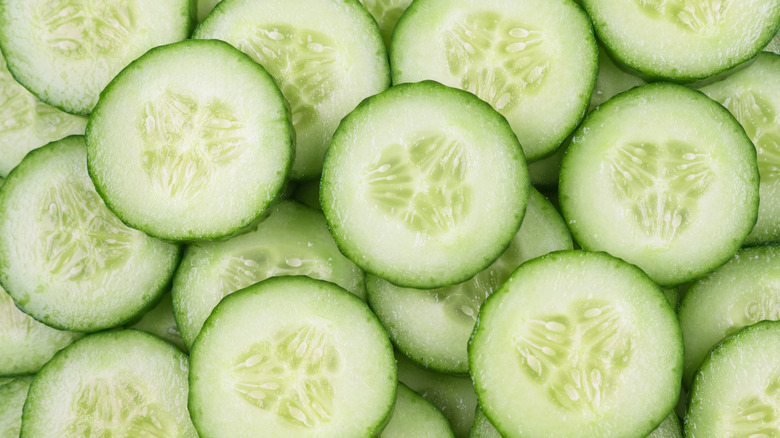
Bloody Marys don't have to be the only savory cocktail on the brunch menu. When we asked Lucas Huff whether he had any go-to mimosa recipes that weren't defined by their sweetness, he was enthusiastic. "There are so many fun savory variations!" he said, "One of my favorites is a cucumber dill mimosa — made with fresh-pressed cucumber juice, dill-infused simple syrup, a touch of lemon, and sparkling wine."
Not only does this cocktail sound incredibly refreshing (cucumber inevitably brings the relaxation of a spa day), but it is also pretty straightforward. Don't be intimidated by the dill-infused simple syrup. It's easy to make and you'll be able to use it in all manner of recipes later. Plus, this refreshing, aromatic combination of flavors is perfect for a late morning or early afternoon drink. Neither too heavy nor too sweet, it will give you a breezy start to the day.
12. Bourbon
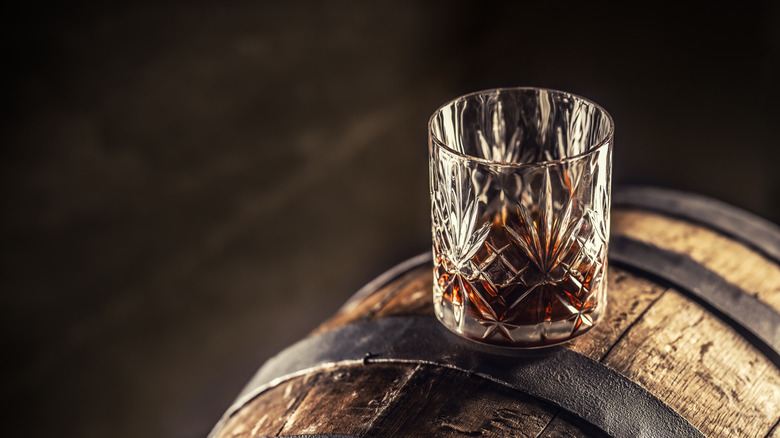
And speaking of additional sources of alcohol, let's consider a more left-field option. You might not find bourbon and sparkling wine thrown together on every cocktail menu, but it's a combination worth considering. Both the French 95 and Seelbach cocktails rely on this unlikely match made in heaven, allowing the brightness of the effervescent wine to be darkened and complexified by the sweet, smoky bourbon.
When it comes to mimosas, bear in mind that adding bourbon to your morning/early afternoon cocktail is going to make it significantly stronger than the standard formula. Even if you're only adding a hint of bourbon, there will be an unmistakable kick. To ensure that the bourbon and orange aren't fighting each other, dial back on the juice and add a few dashes of bitters to lean into the bourbon cocktail-ification of the brunch special. This variation won't be for everyone, but if you get the balance just right, it will hit the spot for those who love barrel-aged liquor.
13. Tequila and lime juice
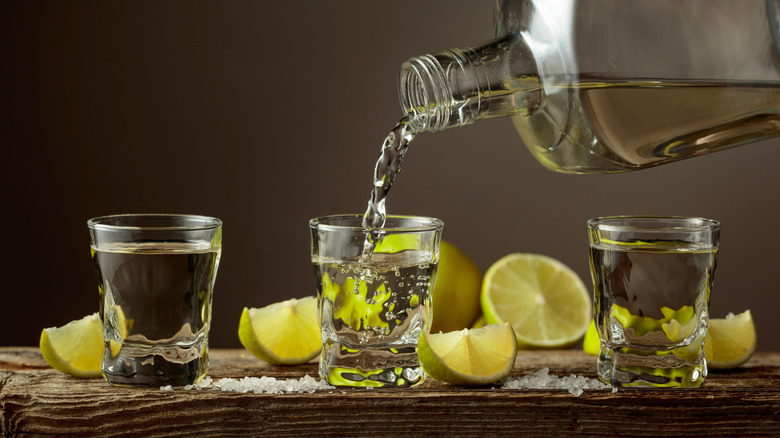
Have you ever wished you could break open a bottle of tequila around 11 a.m. and start making margaritas? Just us? Well, for whatever reason, mimosas seem to have a universal seal of approval as a brunch drink while margaritas remain somewhat less common at that time of day. One way to skirt around the issue without raising eyebrows or disappointing mimosa enthusiasts is to cleverly combine the drinks into one delicious cocktail. Sure, it'll be lighter and a little fizzier than your standard marg, but that just means you won't be limited to a single glass.
Mimosa margaritas are the best of both worlds because you don't have to substitute the orange juice altogether or force the tequila to play second fiddle to the wine. Tequila is plenty strong enough to hold its own and lime juice, thanks to being a fellow citrus fruit, blends beautifully with the orange juice. You can play up the margarita angle by salting the rims of your glasses, or lean into the mimosa angle by serving them in champagne flutes.
14. Fresh fruit
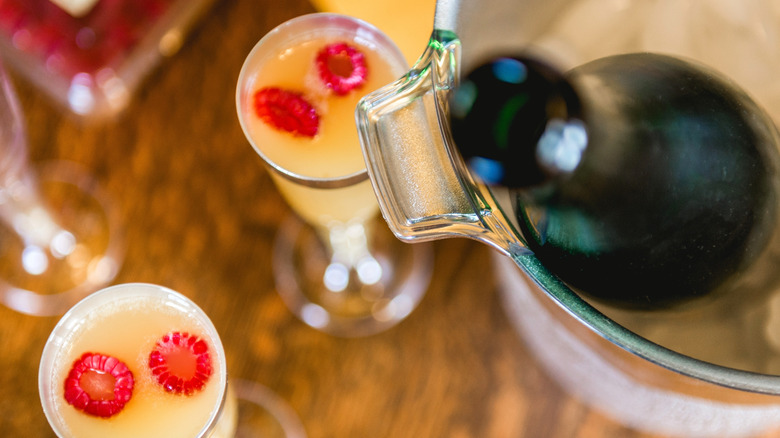
When you think of the perfect, Pinterest-worthy brunch spread, what do you see? Mimosas, of course, but also waffles, coffee, poached eggs, maybe some bacon and Bloody Marys, and fresh fruit. Luxurious and nutritious at the same time, fresh fruit is one of the easiest and most visually appealing cornerstones of a brunch menu, and you can do more with it than simply toss it into a decorative bowl and hope your guests get to it before the flies do. Mimosas are already based around a fruit and there are plenty of other champagne cocktails — such as Bellinis and Kir royales — that are based around fresh fruit or fruit juice, so it makes sense that doubling down on the trend would be delicious.
The most famous fresh fruit-filled cocktails are the Pimm's cup and sangria, both of which call for a base liquor (Pimm's and red wine, respectively) and lots of fruit. You can do the same with mimosas, slicing berries, apples, or whatever you have in your fridge and adding them to the finished cocktail. If you want to make the drink a little stronger, you can take a page out of one of the common playbooks for sangria by adding an additional liqueur, such as Grand Marnier or Cointreau.
15. Lillet Blanc
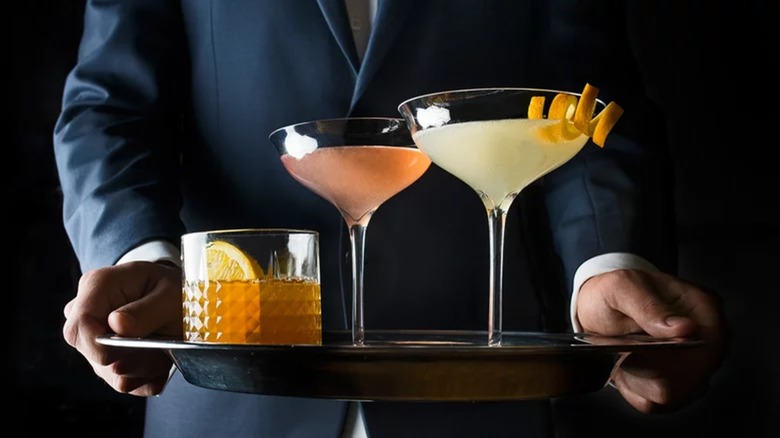
If you're looking for an extra sophisticated spin on a mimosa, a white mimosa with Lillet Blanc is hard to beat. Lillet is a French company that makes the eponymous aperitif. The first version of the drink, Kina Lillet, contained enough quinine to give it a distinctly bitter taste, while the newer version, Lillet Blanc, is less bitter and significantly lighter-bodied than the original. It is a blend of 85% Sémillon, a type of floral, citrussy grape, and Sauvignon Blanc, alongside 15% fruit liqueur. The latter component is made by macerating sweet oranges, bitter oranges, green oranges, and quinine in brandy for several months and then aging them in oak casks. As you can imagine, when used in place of orange juice, Lillet Blanc makes for a heady, intense cocktail.
Our recipe replaces the fresh orange juice with Cointreau and lemon juice, making the finished product something almost entirely removed from a classic mimosa. However, the fizziness of the sparkling wine gives it a familiar mouthfeel, and the subtle blend of aromatic flavors might make you forget the standard mimosa altogether. Don't say we didn't warn you.
16. Baking spices
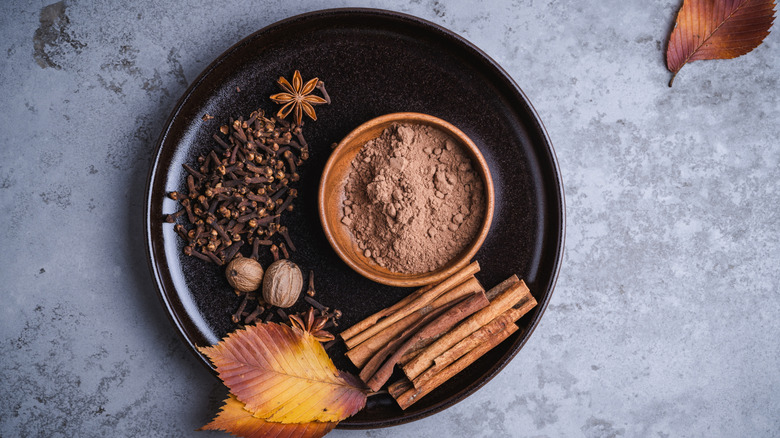
Brunch is often associated with sun-dappled outdoor dining, replete with dewy summer berries. However, there is no need to deprive yourself of this indulgent meal just because the seasons change. In fact, most of us could use a little more joy when the days start to shorten and the temperature dips below t-shirt weather. In this part of the year, that brightly flavored orange juice mimosa might not hit the spot the same way it did in 72 degrees Fahrenheit and when the sun was shining.
Lucas Huff has the solution. When fall rolls around, he suggests adding baking spices like cinnamon, clove, and nutmeg to your mimosa, as well as pumpkin and fresh herbs. "These pair especially well with grower's Champagne that has brioche or yeasty qualities," he explained. No matter what type of wine you're using, it's worth adapting your mimosa recipe for the season, if only to revitalize your appreciation for this timeless and infinitely adaptable classic.