

10 Tips For Making The Best Savory Pancakes
We may receive a commission on purchases made from links.
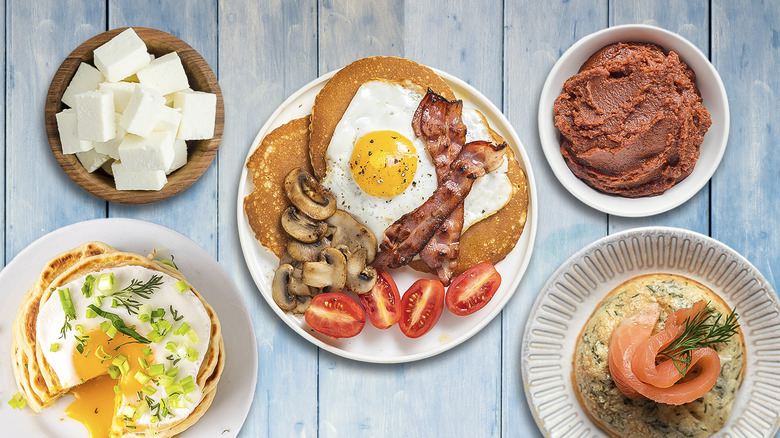
Everyone loves pancakes. They are the ultimate brunch food, the easiest way to surprise someone in the morning, and the ultimate breakfast-for-dinner treat. Fluffy, sticky, loaded with fruits, nuts, berries, and bananas. Topped with syrups, whipped cream, cinnamon, and chocolate chips. There are endless ways to stuff and dress up pancakes, but the ultimate out-of-the-box way to enjoy this classic breakfast food, is by making it savory.
Savory pancakes can be just as big of a hit in your household and take little creativity to make shine. If you're unsure of what to add to the batter, channel your inner omelet making skills. Not sure what to put on top? Choose a cuisine from another part of the world you admire and gather inspiration from its savory sauces and toppings. However, there are plenty of other tips for making the best savory pancakes, and I'm about to give you the full run-down.
As a chef and recipe designer, I'm always looking for ways to make breakfast more interesting. And as someone who prefers a savory breakfast to a sweet one, savory pancakes are a fantastic way to honor brunch tradition while fulfilling a craving. These veggie and cheese filled pancakes are a go-to in my household, so I've made all the mistakes and uncovered all the secrets for you. From what ingredients to use, to how to prepare them, to how to enhance texture, it's a rollercoaster of culinary creativity. This is one of those not-so-precise recipes where you can have a little fun, so grab your spatula and let's get to work.
1. Use chickpea flour
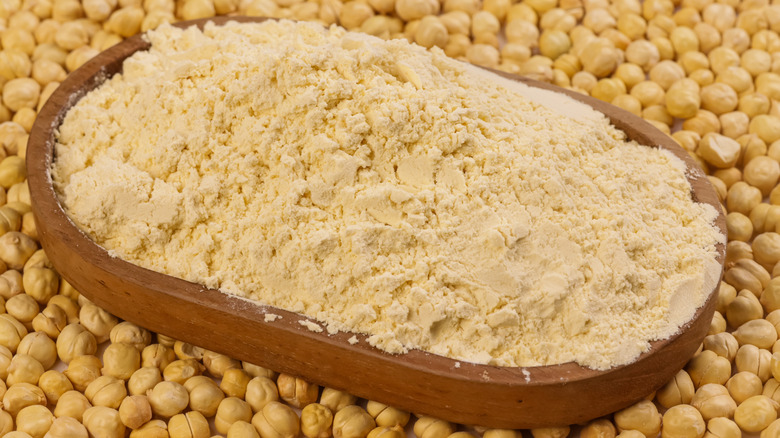
There are plenty of different flours you can use to create a savory pancake, some being whole wheat, buckwheat, all-purpose flour, and oat flour. Your selection should be based on desired outcome of flavor, texture, and of course any allergies or sensitivities, particularly those to gluten. My favorite flour to use for savory pancakes, hands-down, is chickpea flour. If you've never worked with this incredible flour, it's about time you grabbed a bag, usually found in the Bob's Red Mill area of the baking aisle, or online. Uncooked, it's incredibly bitter (so don't go tasting your batter), but it has a super fine grain mouthfeel, resulting in ultra fluffy and light pancakes.
Chickpea flour is made from chickpeas, so it's loaded with nutritional benefits, including fiber and protein. Don't worry, it doesn't taste anything like chickpeas, but instead has a pleasing nutty and neutral flavor. In addition, it is ultra starchy so it acts as its own binder, aka no eggs needed. This makes it easy to use, opens the doors for multiple diet restrictions (as it's also gluten free) and has that airy texture.
To use chickpea flour for savory pancakes, simply mix it with baking soda, your favorite spices, a few minced or shredded veggies, salt, oil, and a liquid like milk or water. For a coarser mouthfeel consider adding some Fonio into the mix, an African grain with a similar texture to grits. First time using chickpea flour? Don't feel intimidated, and instead follow a savory chickpea pancake recipe.
2. Grate your vegetables
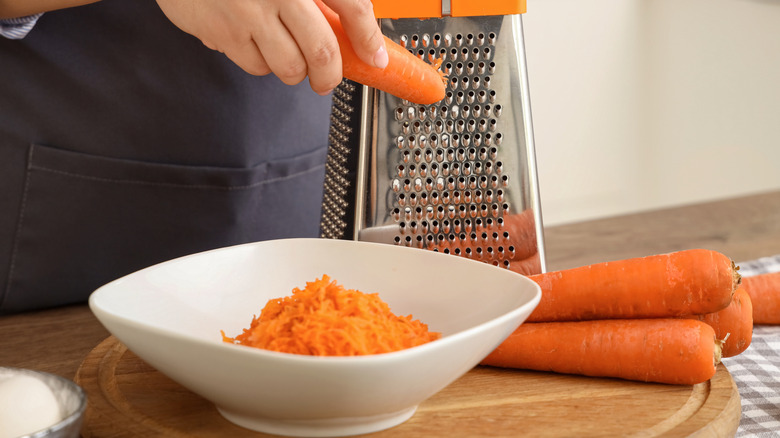
Just like sweet pancakes welcome berries, bananas, nuts, and more right into the batter, savory pancakes fair well with mix-ins. Vegetables, in particular, can be enjoyed folded into the batter, but there are certain methods that consistently work better than others. Large chunks of vegetables tend to undercook and inhibit the batter from holding together easily. Instead, consider shredding the vegetables, mincing them, or my favorite method: grating them with a cheese grater.
Like grating vegetables into salads, you'll want to watch those knuckles, along with selecting more solid produce that's easy to grasp. Consider using zucchini for moisture retention (just like in zucchini bread), carrots for a little chewy texture and sweetness, beets for a bold coloring and natural sugars, cabbage — which goes almost undetected — or sweet potato for a creamy mouthfeel.
If you do go the route of using chickpea flour as your base, feel comfortable adding quite a hearty amount of vegetables, if desired, without the pancakes falling apart. For your standard flour and egg mix, which can be more delicate, you can use up to a 1:1 ratio of vegetables to batter. Tired of hand grating? One of the absolute best uses for your food processor is to add that grating attachment and let the engine do the work for you. Juicier vegetables like onions, peppers, and celery should be minced with a sharp knife, instead of grated, to prevent losing all of those flavorful juices during the grating process and ending up with a pile of mush.
3. Explore the spice rack
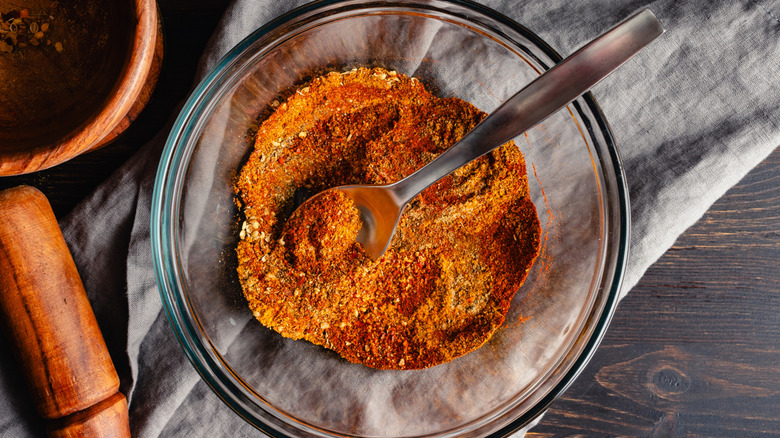
While you might use cinnamon, cardamom, nutmeg, or even ginger in your sweet pancakes, savory pancakes have a much wider range. Any savory spice can make an appearance, also depending on the theme you've selected for your savory pancake. Look to cuisines from around the world for inspiration and to narrow your scope to create a cohesive meal. For a Greek theme, you may consider garlic powder, onion powder, paprika, and dill or oregano. You'd load the savory flapjacks up with olives, feta, and zucchini, and might top it with tzatziki and a drizzle of extra virgin olive oil. For a Mexican-inspired take, you might explore cumin, paprika, garlic powder, chili powder, and perhaps a hint of cayenne.
For a standard savory pancake, consider using a base of garlic powder, onion powder, salt, pepper, and dried chives. This will help to create balance, boost the savory aspect of the dish, and not go too far out of the box for anyone who isn't into experimental eating. Consider using a homemade spice blend for an easy flavor boost, or even mincing some fresh herbs to mix into the batter and reserving some to sprinkle on top. Whatever the case, I can think of few dishes where just salt and pepper cut it, and pancakes are a blank canvas that's meant to be spiced up. Flours tend to be neutral, but your savory pancakes shouldn't be.
4. Use umami alternatives to salt
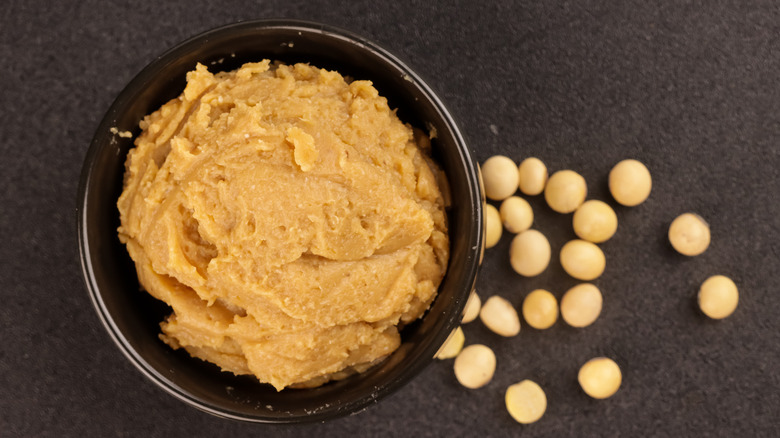
Instead of loading your dish with salt, consider using miso or soy sauce, which are pretty salty themselves, but also deliver a strong umami flavor, enhancing your savory pancakes. Umami is one of the most pleasurable flavors out there; it's meaty, deeply savory, and does wonders for adding depth to recipes. Many umami foods not found in nature are very salty — like soy sauce, tomato paste, miso, and other bottled or canned ingredients with strong umami notes — which is why people get confused about the difference between salty and umami flavors. Of course, feel free to use both your umami ingredient and salt, but perhaps start with light amounts of each, as you can always sprinkle salt on top if needed.
Miso is generally chunky and should be melted or whisked into the wet mix to ensure even distribution. The darker the miso, the stronger the flavor. If you're new to miso, start with a lighter color, as it can be an acquired taste. As for soy sauce or tamari (gluten-free Japanese soy sauce), you can replace about 1 teaspoon of salt with 2 teaspoons of soy sauce or tamari.
5. Add a hint of sweetness
Life is all about balance, especially when it comes to cooking. I find that any recipe that holds a balance of four key flavors never leaves you wondering what's missing after a taste test. Those four include something salty, something acidic, something fatty, and something sweet. This goes for both sweet and savory recipes, which is why you might find yourself adding salt to brownies, or honey to your meat marinade. With savory pancakes, the fat comes from the oil, the salt comes from either salt or a salty umami substitute, and the acidity comes from a splash of apple cider vinegar, certain veggie mix-ins, or the tangy sauce you're using to adorn the cakes.
Just a tiny little pinch of sugar can bring the perfect balance to your savory dish. The sweetness can come from a variety of ingredients, but in a savory dish you'll want to be sure it doesn't overpower the savory notes. I like to use this as an opportunity to add some flavor, so I generally steer towards the direction of sweeteners for cooking that aren't sugar.
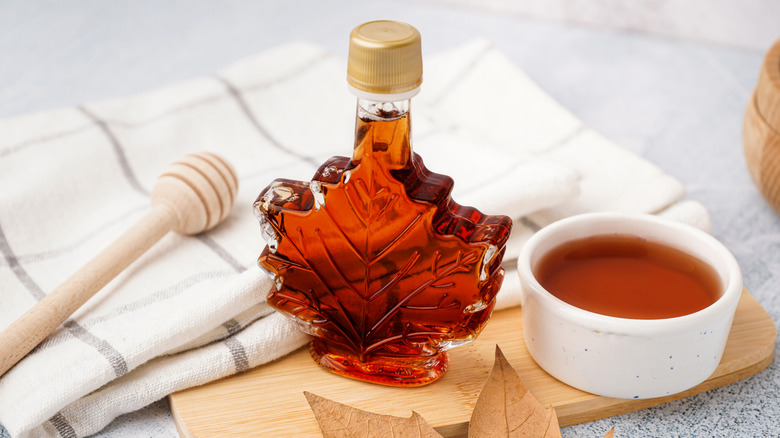
It may be my Vermont roots, but I've found that maple syrup usually makes the perfect smokey addition to savory pancake batter. Just a small drizzle will do the trick, about ¼ a tablespoon per batch. You'll hardly taste it, but it works with those other ingredients to bring an unforgettable flavor to life. Aside from maple syrup, consider date syrup, a whole-food alternative that has a similar caramel-like flavoring that won't overpower your dish.
6. Be conscious of the oil you fry in
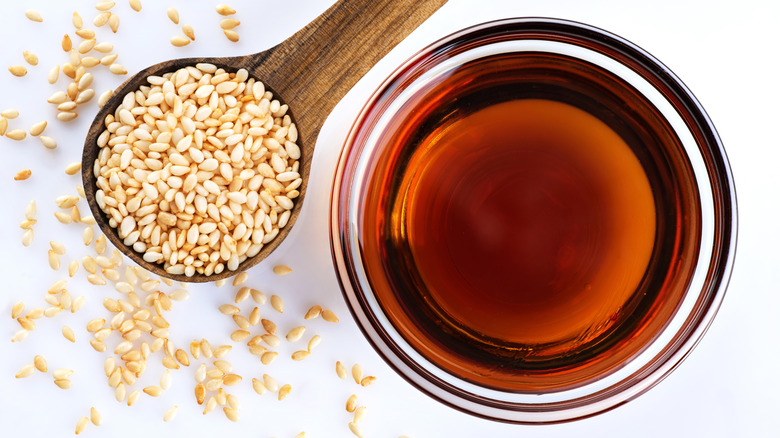
Every ingredient of a recipe is there to contribute, whether it's taking center stage or acting as a backup dancer. Even the oil you fry in can contribute to the overall flavor of the dish. Choosing a flavorful oil will bring additional pizzazz, while consciously selecting a neutral oil can make room for other ingredients to shine. Consider mixing two oils together to provide a more mellow version of a strong oil, or vice versa. For a neutral oil, spring for your basic vegetable oil, avocado oil, olive oil, or refined coconut oil. When you're ready to boost the flavor, consider sesame, peanut, or extra virgin olive oil.
For a veggie-heavy Asian scallion pancake type batter, use a strongly nutty oil like sesame. It's extremely rich, tasting like toasted sesame seeds, along with slightly bitter undertones and a pleasing aroma that will waft throughout your kitchen. Extra virgin olive oil is one of my favorites, as it's deeply rich, slightly fruity, with a hint of grassy bitterness. Overall, a rich and nutty flavored type of oil tends to pair well with savory pancakes, no matter what the additional ingredients may be.
7. Don't forego toppings
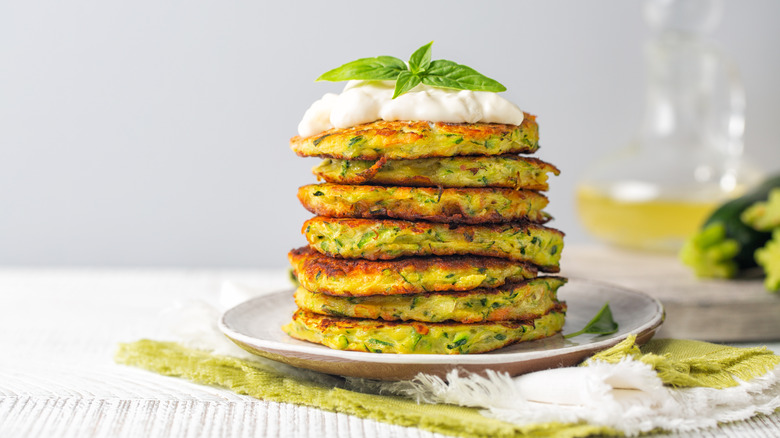
What do all of our favorite foods have in common? Tacos, sundaes, burgers, nachos, bloody Marys, and waffles all need toppings in order to thrive. Both sweet and savory pancakes are no exception. In particular, savory pancake toppings have tragically gone overlooked, so let's discuss what toppings can make these recipes shine.
Even if you've included something chewy in your pancakes, I like to reserve some textured ingredients for the top. Consider some crispy cooked meat or sliced mushrooms to add umami flavors and a meaty texture. Pancakes are delicate, and this will provide contrast which creates a more complex mouthfeel. Caramelized onions are sweet, melt-in-your mouth, and almost always pair well with savory dishes. Stack a little pile on your pancake stack.
Next, we're going to talk about raw produce. The vegetables in the pancakes will be mildly cooked and relatively soft, so it's nice to add a fresh crunch as a topping. Consider diced red pepper, celery, raw sweet onions, green onion, cucumber, or crispy lettuce. Refreshing ingredients, like diced fresh tomato, can add some additional moisture content and create contrast with the warm cooked pancake. The easiest topping to add to your savory pancake is avocado; spread it on, stack on slices, dice it, or mash it. Don't forget to season your avocado and add something crunchy like toasted seeds for additional texture. Last but not least, fresh herbs can make a welcome appearance. Mince them up, stem and all, so you won't be picking long strands out of your teeth.
8. It's all about the sauce
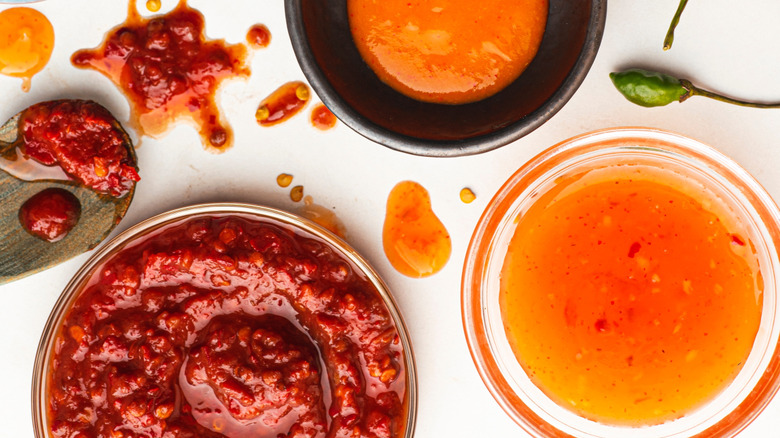
In addition to crispy, crunchy toppings, you'll want to consider adding a sauce. It can be a drizzle, dipping sauce, oil-based sauce, or spread. This will help to balance the base of the pancakes with some moisture and an easily distributed burst of additional flavor. This could be sour cream, chipotle aioli, guacamole, feta spread, extra virgin olive oil, hot sauce, barbecue sauce, or really any of your favorites. Personally, I like something with a little kick. Some more unique sauces that are always a hit at my house are B***hin' Sauce, chimichurri, zhug, crunchy chili sauce, and miso dressing.
For a thinner and starchier pancake, similar to a scallion pancake, that can easily be eaten with your hands, consider a dipping sauce. Perhaps a thin soy-based sauce could do the trick, or even a creamy peanut or tahini sauce. If the pancake itself is heavy, spring for a lighter or more refreshing sauce, perhaps a tzatziki or citrus-based sauce. For a lighter pancake, consider nut and seed butters, or an oil or mayonnaise based sauce.
When choosing a sauce, it's important to contribute to the cohesion of the dish, so stay on theme, and if you're unsure about which direction to take, select something neutral, or use the internet to help you out. Sauces boost the flavor of every meal, and they shouldn't be left out. You wouldn't forget butter or maple syrup on your sweet pancakes, would you?
9. Cheese is a welcome ingredient
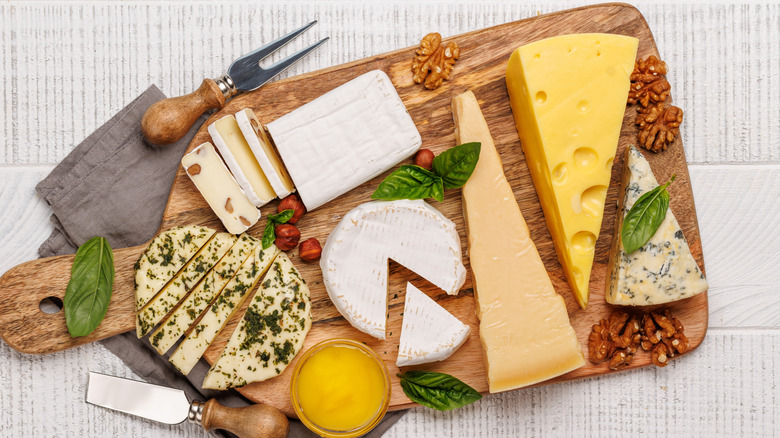
Although I've spent much of my life working with vegan and dairy-free recipes, I've never been able to fully stay away from cheese. It's allure is powerful, and it can be added to both sweet and savory dishes in a wide range of ways. There are endless types of cheese out there, so consider choosing your cheese first, then basing the rest of your ingredients around it.
For savory pancakes, the options remain endless. Harder cheeses can be grated and mixed right into the batter, just like you might do in scrambled eggs. It can also be melted on top, similar to an omelette or grilled cheese sandwich. I'm drawn to sharp aged cheddar cheese in this capacity, but depending on the seasonings and fillings in your pancakes, you could consider anything from parmesan to gorgonzola.
After your pancakes are cooked, cheese can be sprinkled or spread on top. Goat cheese and walnuts would be a welcome crumble over a zucchini and onion pancake, perhaps drizzled with an extra virgin olive oil and balsamic reduction. Or go with something stronger, like blue cheese with arugula, to top a pancetta stuffed pancake. Brie can be spread with onion jam over a thyme-spiced herby, savory pancake. Cheese also opens the door to introduce some sweeter ingredients to your savory pancakes to add balance. Dried fruit, sweet drizzles, and jams can be added in moderation alongside cheese without flipping (no pun intended) your savory pancake into a sweet one.
10. Pre-cook meats
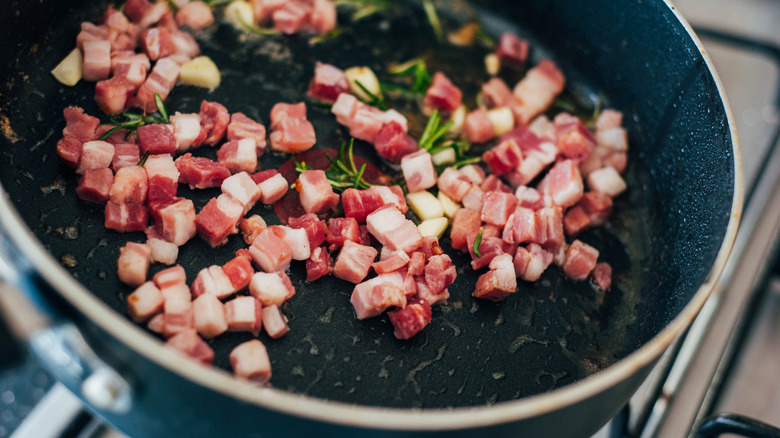
Why have a side of bacon when you can just toss it all together in a batter? The trick with adding meat to savory pancakes is that it's essential to pre-cook your meat fillings, like you would an omelette. This ensures that you won't be consuming any raw meat and helps the meat reach that pleasing, chewy texture by crisping up first all on its own. This is something you can certainly prep ahead of time and refrigerate.
Pork tends to be a popular savory breakfast pancake addition, typically in the form of bacon, pancetta, or chopped ham. Other meats can certainly be included, but tend to make a better topping than filling. For instance, a chive pancake could be topped with horseradish sauce and thinly sliced steak. An onion and hot pepper loaded pancake could hold a pile of shredded ancho chicken. A barbecue-themed smoked paprika pancake would gladly carry a load of bourbon barrel smoked pulled pork and sour cream.
In general, these meats should be seasoned and cooked on their own before they are ready to fuse with a savory pancake. Be sure to base your alternative ingredients around the meat, as it typically steals the show, and be conscious of the spices you use to enhance the overall flavor. Meat is often dense and chewy, so consider some crisp or refreshing toppings to create balance.