

17 Absolute Best Tips And Hacks For Growing The Juiciest Tomatoes
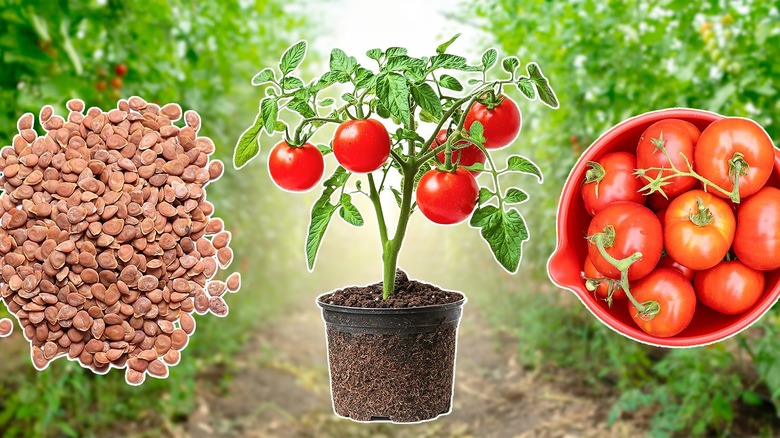
There is intense satisfaction in picking your own tomatoes and immediately using them in your cooking. They will be much juicier and fuller in flavor than what you will buy from a store. However, you can only get tomatoes to their peak juiciness by following the right steps. Once you're comfortable with the process, tomatoes get easy to grow. To get to that point, you need to know what the needs of the plant are and what can prevent it from reaching its full potential. That's where I can help.
I have been growing tomatoes for many years now and run my own gardening business. This includes selling tomato plants to happy customers and advising them on getting the same success as I do with my own tomatoes. It's hard to go wrong with tomatoes, but there are clever tricks that can turn a decent harvest into a fantastic one. Here are 17 tips and tricks that will help you grow juicy tomatoes.
Know your determinates from your indeterminates
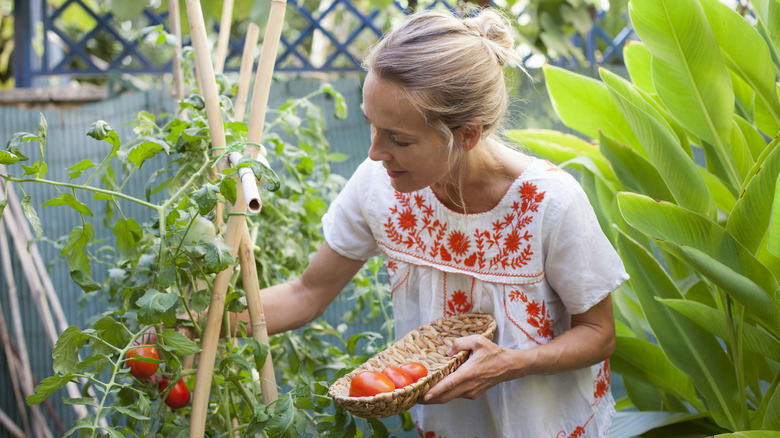
Determinate tomatoes are bushy and don't need support. Indeterminate tomatoes grow tall and require support. Knowing which type you have is key to giving it the right growing needs. One key mistake people make is sowing their tomato seeds without looking at the packet. You need to know the variety you are planting, and what its specific needs are. For example, to get the juiciest tomatoes, indeterminate tomatoes need support, to have their suckers pruned, and plenty of airflow.
It's not enough to just plant your tomatoes and hope for the best, as you won't get the juiciest results. Indeterminates are by far my favorite tomatoes to grow for one key reason. These tomato varieties will continue to grow fruit throughout the growing season, determinates won't. Due to this, you can continue to pick your fruit without harvesting them all at once. If you didn't know this and chose a determinate variety, you may be disappointed.
Experiment with variety

While tomatoes can be separated into the above categories, there are a huge number of varieties in each one. You first need to ask yourself what size tomato you want. After that, if you are looking for any particular taste. For example, beefsteak tomatoes can grow to be very large and will have a rich, meaty flavor. Moneymakers grow to medium size and have a well-balanced, classic taste. Due to this rich variety, I'd recommend growing a few different varieties when you are first growing tomatoes.
This will allow you to get experience with their different needs and see which one you prefer to grow. You don't want to put all of that time and effort into growing a tomato that isn't suited to your tastes. It will also increase your odds of getting the juiciest tomatoes the first time as you're spreading your bets. Once you find your perfect variety, that's the one you can always grow.
Shake your seedlings when indoors

The best place to start off seedlings is indoors, where it is safe and warm. This controlled environment is great for germination and seedling success, but it doesn't prepare them for life outdoors. Plants respond to their environment and the challenges they face. With the challenge of wind, they will grow stronger stems to cope with this. Without any wind, they will grow weaker stems, but this can be an issue when it comes to planting them outside.
Due to this, it's a good idea to imitate this wind. For me, all I like to do is brush my hand over them a few times whenever I check them. I've seen others use little desk fans for this. Whatever method you use, you want the tomato seedlings to get used to movement. This will make the hardening-off process less of a shock. This leads us nicely on to the next point.
Harden off your seedlings
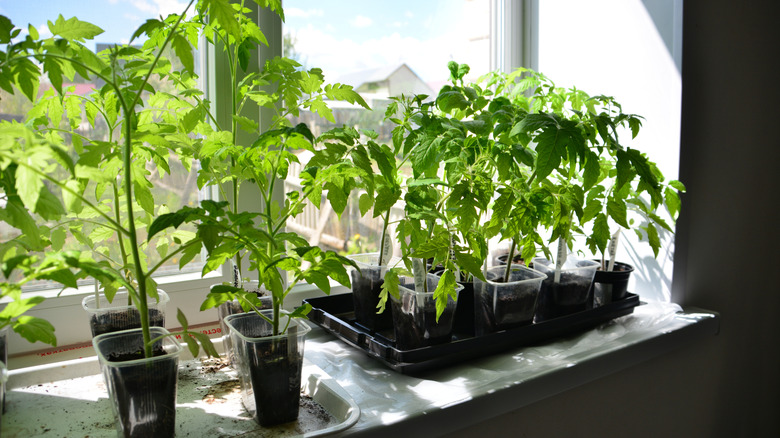
The controlled environment for seedlings includes not being exposed to temperature changes or weather extremes. You need to gradually get your seedlings used to this. For me, this process starts with putting my seedlings outside on a warm, calm day. This is a first baby step. If they are on a windowsill, I'll also place them next an open window. Eventually, you can start exposing them to the outside for longer periods and when the weather isn't ideal.
You want them to be able to recover from the shock, so keep them inside overnight the first few times you do this. Once you decide to keep them outside for good, keep an eye on them. If they show signs of wilting or stress, bring them back in until they recover. You don't have to be overly careful with this, but skipping this step can lead to seedling death.
Plant them as deep as possible
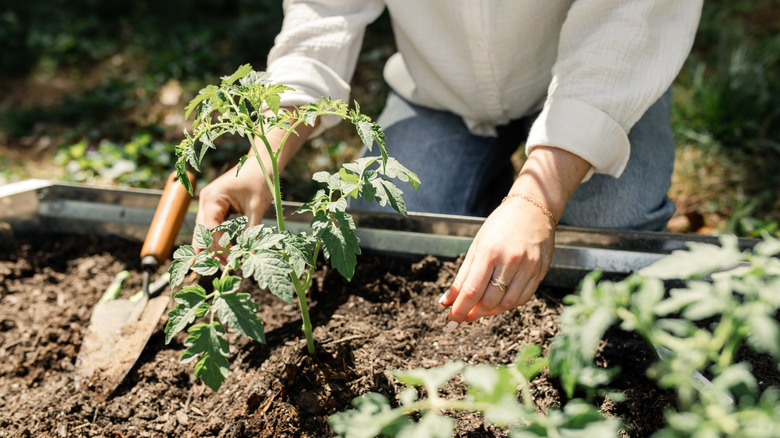
A strong root system will equal a strong plant. Roots are not only important for water absorption. They will also help to soak up nutrients and provide a stable foundation for the plant. This is where I unveil the tomato plants' magic trick. They can grow roots from anywhere on their stem. This means the deeper you bury them, the more roots they will grow.
Of course, there is a limit to this, as you don't want to snip off too many leaves. I'll plant them anywhere between a third and halfway up from their existing base. This will help the plant to grow stronger and bigger. This will then allow it to continuously feed its fruit for the biggest and juiciest tomatoes possible. It will also protect them from wind damage. There is a line of thinking that you should plant your tomatoes on the side for the same reason, but I've always found this to be making your life needlessly more difficult. Just plant them deeply.
Feed them with bone meal and tomato feed
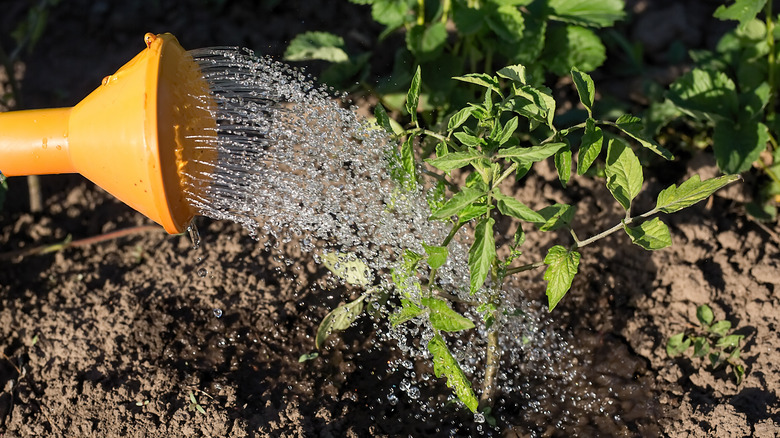
When planting your tomato, it's a great idea to put bone meal into your hole before placing the plant. This kickstarts them off with plenty of nutrients, but also the minerals they need. For example, bone meal will include calcium that can help to prevent blossom end rot, which is a common but curable problem. Once the plant is in the ground, you want to provide it with a weekly tomato-specific feed. Some fertilizers are ideal for general growth, but tomato feed is specifically curated for flowering and fruiting plants.
If you use general fertilizer, you may get lush leaves, but the tomatoes won't be as big as they could be. Tomato feed will give your plant the specific nutrients it needs to prioritize fruit growth. If you are growing other fruit and vegetables, such as brassicas, they will need a different type of feed. If you don't use fertilizers at all, you'll still get fresh tomatoes, but they won't reach their potential.
Plant with plenty of compost
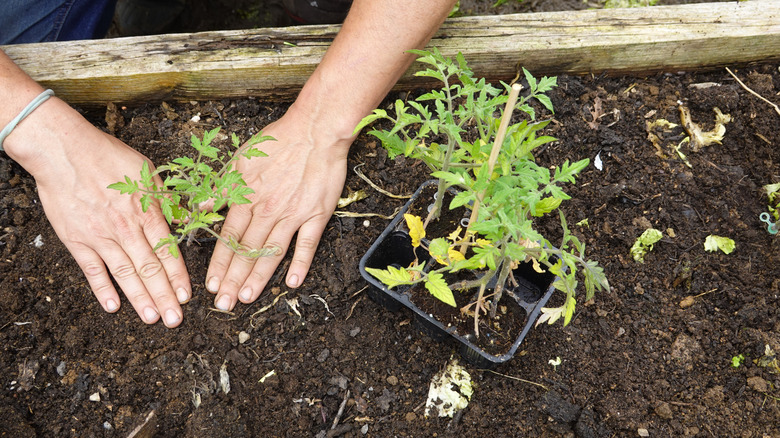
The specific advice here will depend on where you are planting your tomatoes. If you're placing them in a pot, it should be full of compost anyway. You should be using a pot that is at least 15 inches wide to cope with both the heavy needs of a tomato plant, as well as how top-heavy they can get. If you're planting them on the ground, you want them to be surrounded by plenty of healthy soil as using poor quality soil is a common mistake.
If you're simply transferring the plant from a small seedling pot into the ground, you're not going to get the best results. Soil of poor quality is usually too loose, like sand, or too heavy if it contains clay. It will also be light in color as opposed to compost, which is usually much darker. If you think you have poor-quality soil, then the best idea is to dig a larger hole and fill it with good compost. This will not only be good for nutrient retention but also for drainage.
Water deeply, not just frequently

If you water a plant for a few seconds, the top inch or so of soil will get wet. This isn't a problem for shallow-rooted plants, but for tomatoes, you want the water to get much deeper. The soil may look moist, but at the roots, it will still be dry. Exactly how long you should water depends on many factors, such as climate and plant size. However, if your plant's soil is drying up a day after watering, it's a sign you're not watering deeply enough.
You don't want to keep your plant flooded, but it should be consistently moist. At least 30 seconds of watering is required, but that is a very rough guide. Keep a mental note of how quickly your plant dries out and then adjust your watering accordingly. In hot spells, your plant will need to be watered every day for maximum growth. And as I said, add feed to your watering schedule once per week.
Use mulch to retain moisture
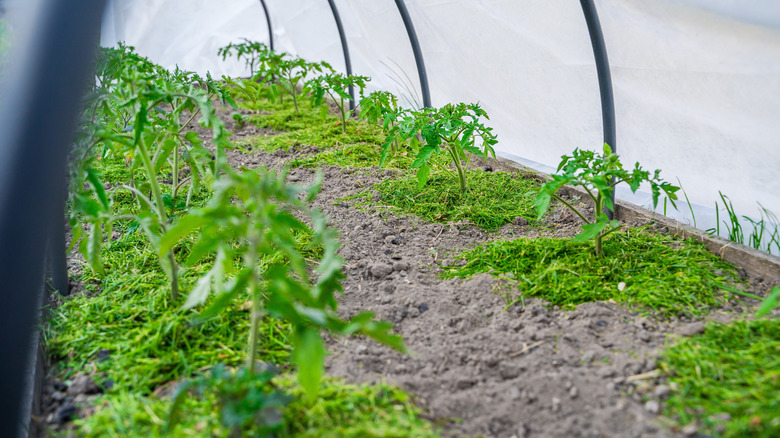
Mulch is a term for material that you spread around a plant for it to retain moisture. You have quite a few options for this. If you care about the aesthetic, you can go for bark or decorative pebbles. If you don't care about how it looks too much, you can opt for black plastic sheeting, grass clippings, or any other green waste. These are only a few options, as you can use more or less anything that covers the soil. One of the more imaginative options is to use pistachio shells, which double up as a form of pest control.
The point of this mulch is that it helps to prevent evaporation. This helps to keep the plant moist so it's constantly getting the nutrients it needs for full growth. If you've ever planted tomatoes before, you'll be surprised by just how quickly they can suck up moisture. As soon as they run out of water, they'll start to wilt. Mulch can help prevent this.
Give them as much sun as you can
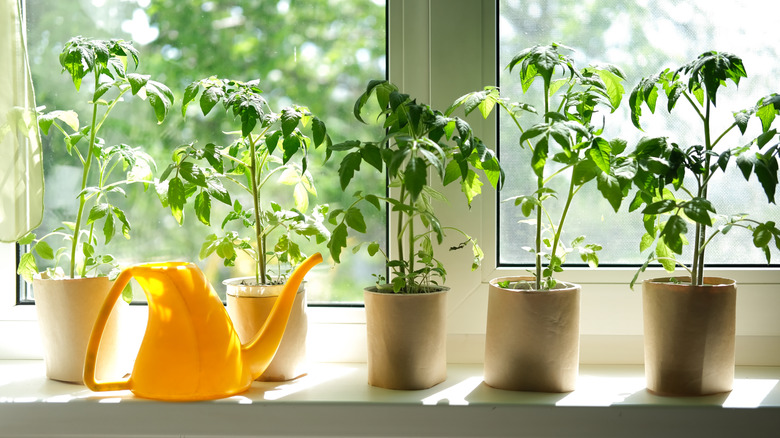
Tomato plants are extremely greedy. Not only do they constantly need moisture, but they'll want all of the day's sun. Without enough sun, your tomatoes won't be as big, and they'll be undersized. Due to this, you want to place your tomato plants in the sunniest spot in your garden. This is generally close to the south-facing side, but there are other factors that can affect this.
A good beginner tip is to track the sunlight in your garden throughout the day. If that sounds like too much effort, you can go out at midday, as that's when the sun will be highest in the sky. This will allow you to see where the shadows are and the areas getting full sun. Tomatoes will grow best when given six to eight hours of sunlight per day. Without this, they will still grow healthy and produce fruit. However, the end results simply won't be as impressive.
Give them plenty of personal space

There are a few reasons why tomatoes need plenty of space. The first is that good airflow will help to prevent disease and ensure the plant is heated evenly. When tomato plants are too close, the air can become too stagnant and humid. Then there is the issue of nutrients. As I've mentioned a few times, tomatoes are heavy feeders. With plants, you need to worry about what's happening below ground as much as you do above ground.
Tomato roots will spread out, and if there is another plant nearby, it will start competing for nutrients. This is especially true if planted next to another tomato plant. This competition will lead to stunted growth for both plants and, as a result, smaller tomatoes. Due to this, tomatoes should be planted at least 20 inches away from any other plant. This is less important if they are in their own pot, but you still want to be sure it's getting enough airflow.
Give indeterminates early support

The exact size intermediate tomatoes can get to can vary from one variety to the next, but it can be up to 6 feet. To get them anywhere near that height, they need support. This can be done in a few different ways. My personal favorite is to use a bamboo cane, but any similar pole-like structure can work for this purpose. You can get a store-bought tomato cage or make one yourself. The same applies to a trellis support.
This support needs to be deep into the ground or have a stable base to support the weight of the plant. Whatever you use, it's important to note that tomato plants don't attach themselves to supports as other vines do. This means you will need to gently tie them to the support with string or twine. As the plant grows, you need to check these attachment points to ensure they aren't too tight and strangling the plant.
Pinch out indeterminate suckers
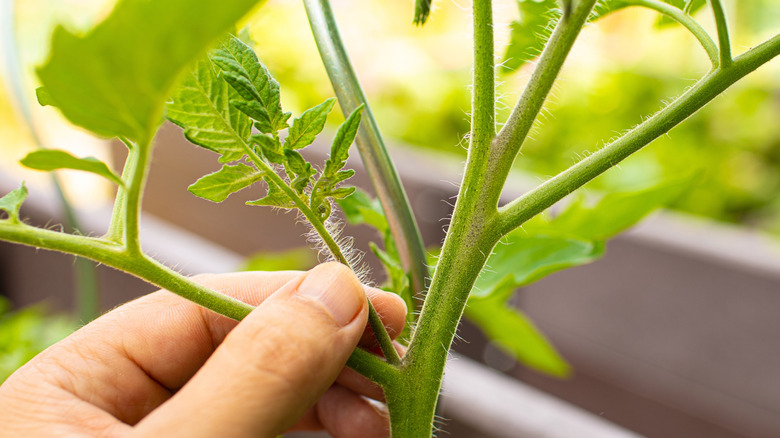
If you have an indeterminate tomato, you need to remove the suckers. Most tomato branches will grow at a near 90-degree angle from the stem. Suckers will grow out of where the branch and stem meet at a near 45-degree angle. Fruit will grow from these suckers, but we don't want this. The plant will essentially try to do too much at once. Instead, you want it to divert its resources to the tomatoes already growing. As you can continually harvest intermediates, this doesn't matter. Pruning or pinching out these suckers will lead to bigger tomatoes.
As determinate varieties are a fixed size with one harvest, you want to keep the suckers on, as otherwise you'll be reducing the tomatoes you can harvest. These suckers do have a trick up their sleeves. If you take them off and replant them, they will grow roots and develop into another tomato plant. You want to wait for them to be about 5 inches long to survive this process.
Remove the lower leaves
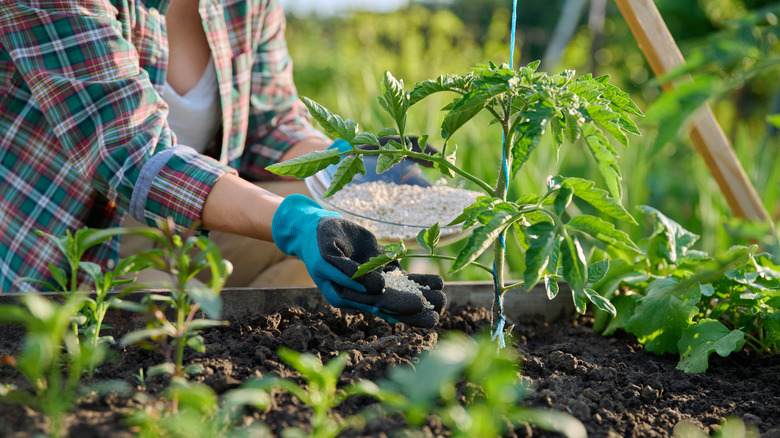
It can seem counterintuitive to remove leaves. We all learned in school that this is how plants get energy through photosynthesis. For tomato plants, removing these leaves gives you a lot more pros than cons. As we've just seen, this is partly a way to give them more air circulation. More importantly, it reduces the chance of disease. It may seem stupid, but you don't want tomato leaves to be wet, as this will give fungal spores a chance to germinate.
Of course, this can't be helped with the rain, but with good airflow, rain doesn't stay on a leaf for long. One way moisture can stay on a lead for a long time is if it's in contact with the ground. The disease will quickly lead to a ruined crop. It's for this reason that you also want to water your tomato plants at the base, and not over the leaves.
Give them some helpful plant friends
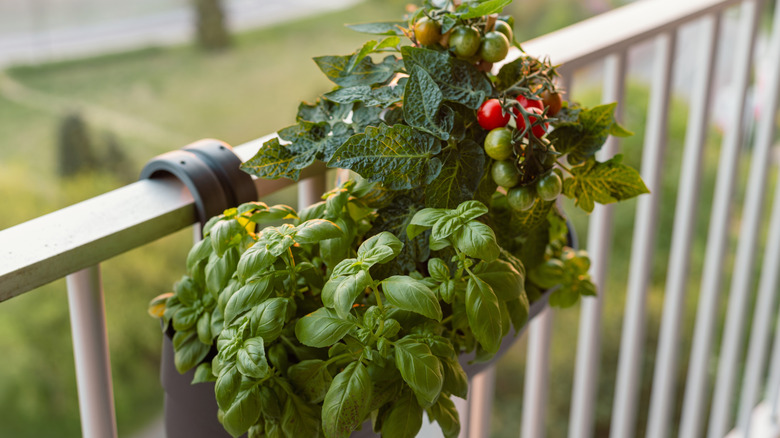
Placing a helpful friend near your plant can avoid problems. For tomatoes, that is most famously basil. Plenty of humans love the smell of basil, but thankfully for us, many pests don't. They will help to deter aphids and whiteflies, which can be an annoying problem. It's also thought that basil can improve the flavor of your tomatoes, but I'm not personally convinced of that.
Chives, garlic, and marigolds can also be great for similar reasons. In contrast, there are plenty of other plants that you should avoid. This is mainly due to them either competing for resources, attracting pests, or making the plant more prone to disease. Other plants, such as sunflowers, can release harmful chemicals. Having the right plants around your tomato can be the difference between a plentiful harvest and a disappointing one.
Check on them often

Tomato plants are quite resilient but can be vulnerable to a wide range of issues. Due to this, you want to give them a quick check over every time you water them. You want to look for any signs of pests, discoloration, imperfect tomato growth, or wilting. If you spot an issue early, it can be easy to take care of. For example, a sunken black spot on the bottom of tomatoes is called blossom end rot. This can be easily solved by regular watering and adding calcium.
If you don't spot an issue early, it can become harder to deal with and spread to neighboring plants. Another example is aphids. If you spot a few, they can usually be removed with a soapy water spray. However, with an infestation, you may need a more robust insecticide with repeated treatments until you get it under control. Frequent checks can prevent big headaches.
Pick them at the right time

There actually isn't one set time to pick your tomatoes. It is often said that you should pick them as soon as they start to change color, called the "breaker" stage. Here they'll stop being fully green and show signs of yellow, pink, or red. This gives you peace of mind that there'll be no damage to the fruit, and they can then fully ripen indoors until they are uniformly red. Personally, I don't like doing this as you're giving yourself extra steps. Instead, I like to pick them just before they turn fully red. Here you're getting the most flavor and picking them when they're just about ready to eat. It's important to point out that not all tomato varieties ripen red, so double-check this.
When I pick tomatoes can change. If any part of the plant is showing signs of disease or pests, or there will be bad weather, I will pick the healthy tomatoes early to protect them. Once the time is right, pick them in the morning and keep them at room temperature until they are ripe. A cardboard box or paper bag is best for storage as it helps contain the gas required for ripening, but doesn't have the mold or condensation issues that can happen with a sealed container. Once ripe, you can refrigerate them.