

15 Food Myths So Wrong, They're Kind Of Iconic
The internet is a wonderful place, full of life hacks, tricks to save time and money, and more cat videos than anyone ever thought possible. Along with all those things, there's also a lot of misinformation out there, too. Misinformation and myths are certainly nothing new, but thanks to the internet, false facts can spread faster than ever. Let's see what we can do to clear up some of the food myths we hear all the time.
Some myths legitimately sound like they could be true, but that's what makes them spread and remain a part of our collective consciousness. Others, well, we kind of want them to be true. Who doesn't want the confirmed existence of miracle, cure-all superfoods, or a foolproof way to tell whether or not food has gone bad?
Unfortunately, things usually aren't as simple as we might like to believe, so with that in mind, let's clear some things up. Who knows? You might end up learning some facts to bring up the next time someone at the table orders a classic surf 'n' turf, or the next time someone breaks out the menu at the local Chinese restaurant. Maybe it might even save you from a nasty case of food poisoning.
1. Coconut oil is a miraculous superfood
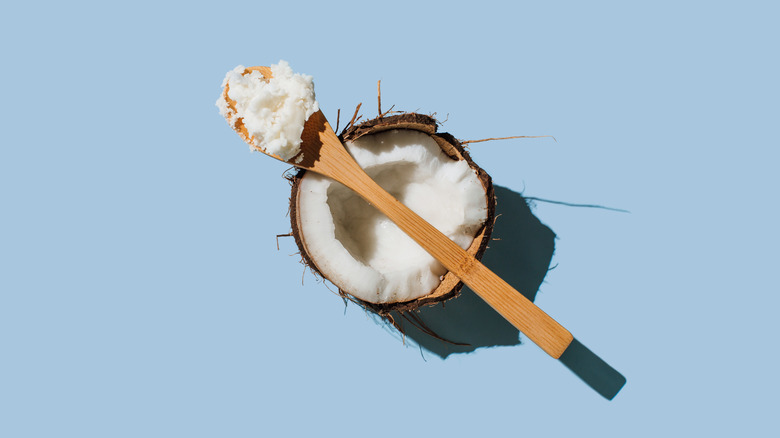
It's true that there are a lot of great uses for coconut oil, but what about all the hype? It's been claimed to have miraculous powers, lauded for doing everything from speeding up a person's metabolism to being a heart-healthy cooking oil, and some claims even credit it with improving brain function. All of that wrapped up in a versatile cooking oil might seem like it's too good to be true — and it is.
There are so many claims that debunking them all would take a while, but let's examine a few. First, scientific research has found no proof that coconut oil has any impact on metabolism. What's more, instead of being heart-healthy, it contains a high percentage of the same saturated fats that have been linked to raising cholesterol.
Coconut oil became touted as such a miracle superfood because of the spread of half-truths, including research done on a type of coconut oil that's vastly different to what's at the store. Studies done on groups of people who include coconut as a regular part of their diet have other variables that can impact health and longevity, and the bottom line is that while it'd be brilliant if we could draw a direct line between coconuts and a long and healthy life, it's just not that simple.
2. Food is definitely safe to eat if it doesn't smell or look off

We've all been there: We're hungry, poking around in the fridge, and stumble across some leftovers that were pretty darn good the first time around. But ... when did we make that chili? How long has that soup been sitting there? Give it a sniff, and if it smells ok, it's fine ... right? Not so fast.
Improperly prepared or stored food can harbor illness-causing bacteria while still looking and smelling perfectly fine. Some of the biggest offenders, like the botulism-causing Clostridium botulinum, aren't only odorless and invisible, but they're tasteless. The same goes for Salmonella, Listeria, and E. coli, and the problem is that the microbes that make you sick aren't the same ones that make food spoil. On the flip side, there are some foods you can safely eat even after they've developed mold. Bottom line? There's no shortcut to food safety, so cook your foods properly and label those leftovers.
3. MSG is unhealthy and very, very bad
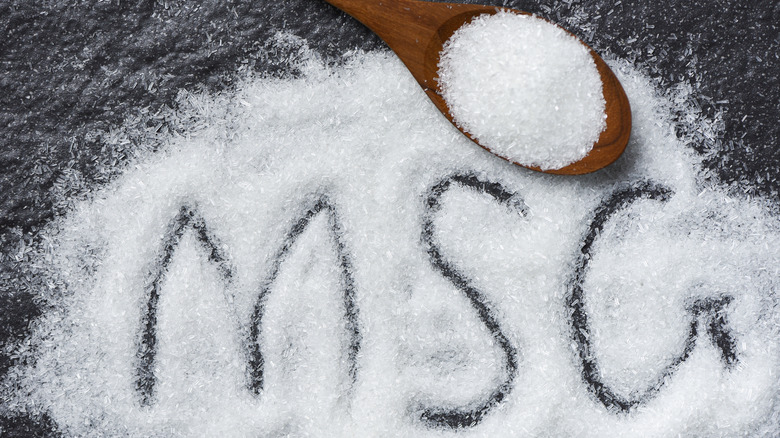
Few ingredients have been as widely condemned as monosodium glutamate, better known as MSG. There's no shortage of claims, from it being blamed for headaches and exhaustion to vague ideas about it just being unhealthy. Absolutely none of this is true, and in fact, if you regularly eat foods like tomatoes and mushrooms, you're eating MSG all the time. Whether it's added to your favorite Asian dishes or you're getting it from that roasted Caprese sandwich you had for lunch, it's the same thing.
Why all these claims about MSG surfaced in the first place is a strange story rooted in racist ideas that Asian cookbook authors are working diligently to overturn. Asian immigrants have long been the target of racist attitudes and even official legislation, going back to the 19th century. MSG entered the picture in 1968, and all it took was a single letter to kick off widespread condemnation of this perfectly ordinary seasoning. Myths were furthered by flawed studies and the coining of phrases like "Chinese Restaurant Syndrome," with current science saying that only a very small percentage of people are actually sensitive to MSG, in the same way people have allergies.
Why do so many claim to be impacted by it? It's thought to have something to do with what's called the "nocebo effect." In a nutshell, you feel bad because you think you're going to feel bad.
4. Kentucky Fried Chicken became KFC because of mutant chickens
We all have that one friend, family member, neighbor, coworker, or vaguely familiar acquaintance who believes everything they read on the internet, and this falls into that category. Fortunately, the next time Aunt Loretta comes over for dinner and starts spouting utter nonsense, you'll have the answers. In short, no, Kentucky Fried Chicken did not shorten its name to KFC because it's serving mutant birds that can't legally be described as chicken.
That doesn't need any more explanation, but there's another part to the story that involves the name change coming because the company wanted to appear healthier by dropping "Fried" from the name. That was technically the reason given, but it wasn't the whole truth. Kentucky Fried Chicken opened in 1952, became KFC in 1991, and that's important. The change came the year after the state of Kentucky decided to trademark its name, and switching to KFC was the company's way of responding to demands for licensing fees.
5. Canned and frozen fruit and veg is less nutritious than fresh
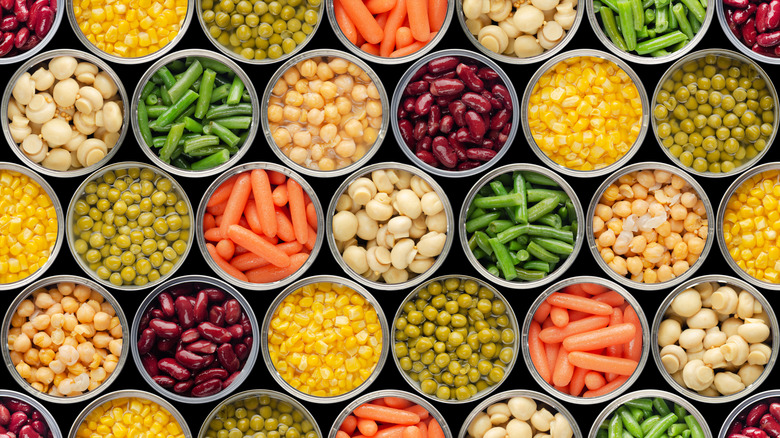
Frozen and particularly canned foods have a bit of a reputation as somehow being less nutritious than the fresh versions, but the truth is, there are a number of easy-to-use, long-lasting, and perfectly nutritious canned goods that you should definitely keep stocked in your pantry. In fact, it's entirely possible that there are more vitamins, minerals, and nutrients packed into those canned and frozen foods than in the fresh stuff you pick up at the grocery store.
Fruits and vegetables start to lose nutrients after they're harvested: No longer getting nutrients from the plant, tree, roots, and sun, fruits and veg essentially start consuming their own vitamin stores. Studies, including one from the University of California, Davis, found that a week after spinach is picked, it'll have no vitamin C left (via the BBC). The freezing and canning processes help slow or even halt that loss. Of course, experts also stress that you'll need to keep an eye on the sodium and sugar content of individual brands.
6. Lobsters can't feel pain
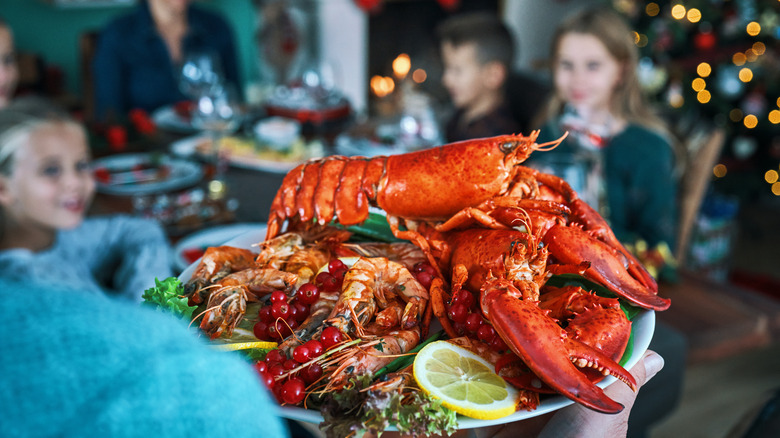
It's often been said that you shouldn't worry about boiling lobsters alive, because they can't feel pain. Still, if you feel a little squeamish about the whole idea, it turns out that you have a good reason to be. Determining pain in any creature — including humans — is tricky, because everyone experiences it differently. We rely on communication to transmit information on the presence of pain, and since lobsters can't talk, well, it's tricky. Science has told us some things, though, including the fact that lobsters do possess biological components that serve primarily to transmit sensations of pain.
There are also behavioral clues. Scientists note that lobsters will actively try to escape that boiling water, and they'll struggle so much and so terribly that it's impossible for some to watch. A 2021 study done in the U.K. compiled data from 300 studies and looked at how various animals — including lobsters, squid, and crabs — feel pain. London School of Economics and Political Science professor, Dr. Jonathan Birch, summarized by saying, "There's evidence that a lobster will carry on living for two to three minutes when it's dropped into a pan of boiling water, and that the nervous system response carries on very intensely during that time, just as it would with you or me or a cat or a dog or any animal dropped into a pan of boiling water," (via NPR).
7. Unopened mussels are bad
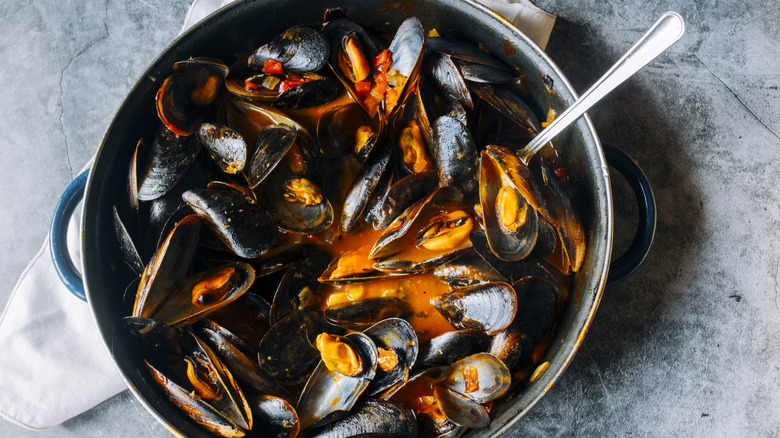
This one is for seafood lovers who've thrown away countless mussels after they haven't opened during the cooking process. We hate to break it to you, but there's a good chance that you've been throwing away perfectly safe mussels, as the rule about not eating closed mussels is a little complicated.
The idea that unopened mussels are dead and unsafe to eat goes back to the 1970s, but in 2004, a study funded by Seafood Services Australia found that there are a number of factors that influence the opening and closing of mussel shells. That includes the strength of the mussels' muscles and a reaction to stress and danger. The study even confirmed that when dead mussels are cooked, they'll open, too. The study also found that anyone who removes mussels from the heat as soon as they open might actually be dangerously undercooking them. Findings led to new advice: Go through a batch of mussels and remove questionable ones before they're cooked, and no longer rely on this now-debunked bit of cooking wisdom.
8. You should wash meat and poultry before cooking
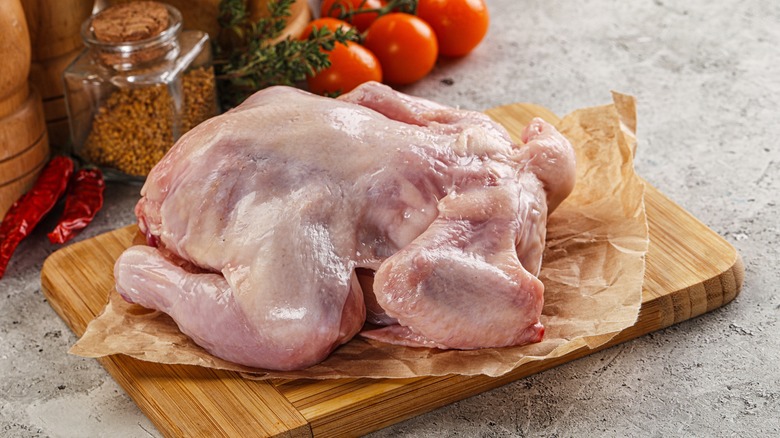
One of the first things that anyone learns when they step into the kitchen is that it's incredibly important to cook meat to the correct temperature — especially with poultry. That's to make sure you're killing off any potentially harmful bacteria, but you're also likely to hear tips on the importance of washing your hands and your work area to keep those same microbes from spreading. Advice about washing the meat itself kind of makes sense, then, but this is a step that's not only unnecessary but potentially dangerous.
That's according to the USDA, which has done extensive research to determine that you don't need to rinse meat to get rid of bacteria, because that's what the cooking process does perfectly well. In addition, you're actually increasing your risk of food poisoning by rinsing meat, because of the potential for splashing and cross-contamination — it's also worth noting that this applies not only to poultry, but all types of meat, as well as eggs.
9. McDonald's food is so full of chemicals that it doesn't spoil or rot
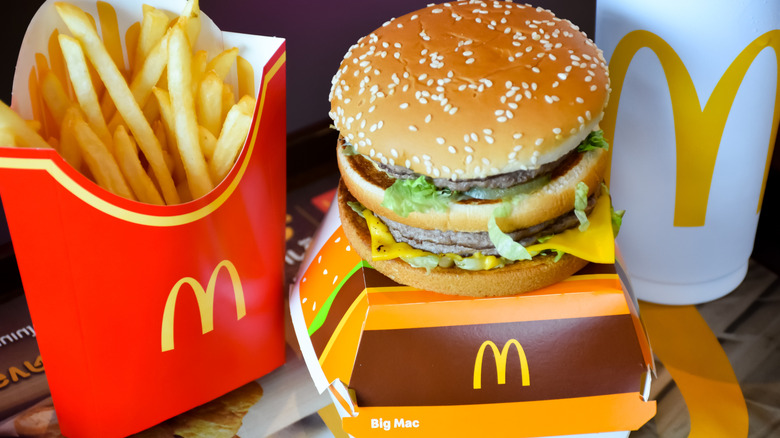
Every so often, someone will take to social media with photos and so-called proof that fast food — usually McDonald's, in particular — is so full of unnatural ingredients that it doesn't mold or decompose. The truth is, there's just a little bit of science going on here.
In addition to the fearmongering posts, you'll also find a ton of more scientific experiments done on other burgers, including homemade ones, and salt-free ones. When prepared in a similar way, homemade, all-beef patties behave the same way, and the theory is simply the fact that there isn't enough moisture left after cooking to support mold growth and rot. Thin patties with a lot of surface area are subjected to extremely high cooking temperatures, and those elements simply act together to create an environment where microbes aren't going to thrive. Add in ingredients like salt and seasoning, and that burger patty is even less mold-friendly. Now you know!
10. Searing meat seals in juices
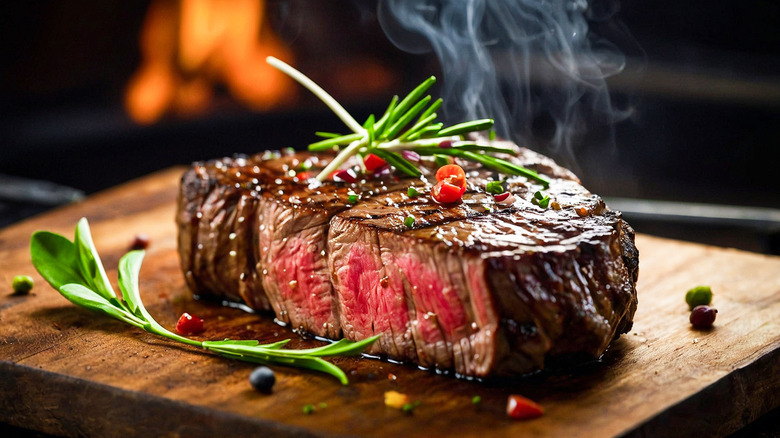
Here's another cooking myth that's hung around much longer than it probably should — the idea that if you sear a piece of meat, it'll lock in the juices. When we say it's been around for longer than it should be, that's not an exaggeration, either. The concept has been found in writings from Ancient Greece!
It seems to make sense, and while it's entirely possible to see where this one might logically seem legit, countless experiments have been done to prove it's completely false. High heat draws moisture to the surface, pulls it out of the meat, and actually makes it less juicy. There's a caveat here, and while that sounds like it's the opposite of what you'd want to do, there's another reason you should keep doing it. Searing is more accurately associated with the Maillard reaction, which is a chemical process that gives steak that deliciously flavorful char on the outside. It's also what improves things like texture, aroma, and taste, so don't stop searing.
11. British food is bland and boring
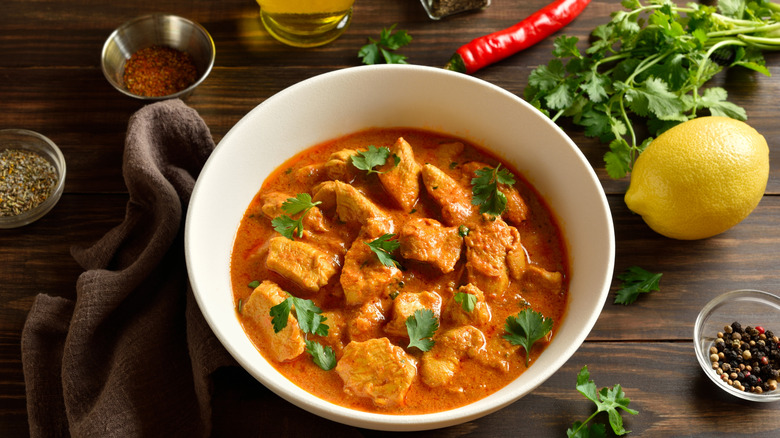
British food still has a reputation as being boring, boiled, and pretty tasteless, and if you believe that's the case, you've clearly never had a deliciously comforting shepherd's pie or been served a real order of fish and chips. The truth is that it's down to a combination of factors, including climate, the inaccessibility of many fruits and spices, and a whole section of history defined by mass industrialization and the need to feed many people very affordably. This all meant that Britain leaned heavily on dishes that are perhaps uncomplicated, but are instead hearty and filling. Today, food in the U.K. continues to be heavily influenced by the cuisine of nations the Empire colonized, particularly India.
Britain's national dish is chicken tikka masala, and the nation's cuisine has morphed into a fusion of hot and hearty classic meals alongside the spices and flavors of India. Today, you'll find all different types of curry on menus across the UK. So why the bad reputation? That's largely traced back to World War II, when American GIs were stationed in a Britain that was laboring under extreme rationing. Meals were less-than-great, and the image stuck.
12. The five-second rule

It's always tough to be confronted with unnecessary food waste, but sometimes, it's better to throw something away than risk getting sick. The five-second rule is often quoted — and sometimes, it's shouted during a mad scramble to grab that dropped cookie before the dog can get it — as a guideline suggesting bacteria and other microbes can't attach themselves to food in the first five seconds. Unfortunately, this one's been debunked.
Research has found that the longer food is on a surface, the more bacteria will be transferred, that much is true. However, contamination can happen instantly, particularly when you're talking about foods with a high moisture content and surfaces like tile and wood. That said, what are the chances that you'll actually get food poisoning from a piece of dropped food? That depends. Some researchers say healthy adults will probably be fine, while others point out that your floors inevitably harbor all kinds of bacteria. If you wouldn't lick your floor, maybe err on the side of caution.
13. Oil in pasta water prevents sticking
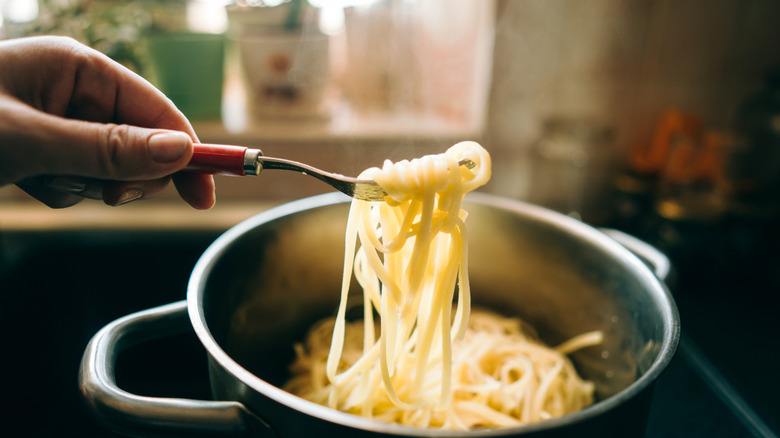
Let's say you're whipping up some garlic shrimp pasta with tomato sauce for dinner. Something's just not quite right, though. It doesn't look like it did in the picture, and you followed the directions to the letter. Except, you made your pasta like you always do — not according to the directions — and you've added some oil to keep the noodles from clumping. There's your problem.
This oft-repeated myth absolutely doesn't work, and it's sabotaging your pasta dishes. You've heard that old saying about two people who get along like oil and water, right? That comes from the idea that oil and water don't mix at all, and whatever you add to your pasta water is just going to float. It will, however, end up on your drained pasta, and that's going to repel something else: Your sauce. Skip the oil, use salt, and your entire dish will come out better.
14. Food should always cool before putting leftovers in the fridge
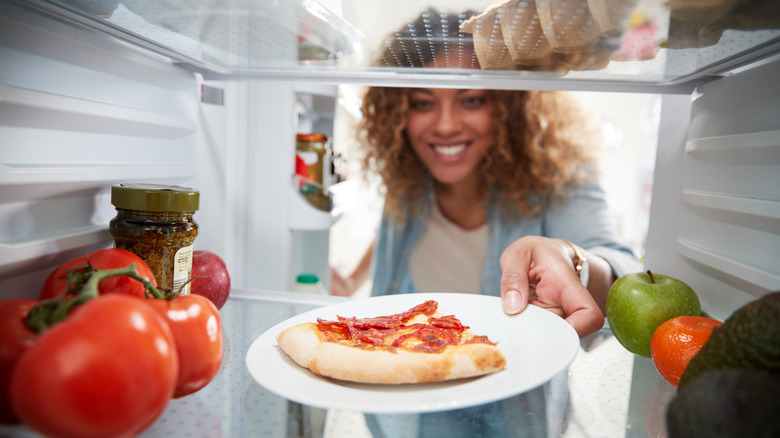
Here's another bit of cooking wisdom that's been passed down through the generations, and that's the idea that you should always allow leftovers to cool before packaging them up and putting them in the fridge. Today, though, experts recommend that instead of letting food sit out to potentially reach the temperatures that bacteria thrive in, you should put those leftovers right in the fridge. Make sure you're not over-filling your fridge and package large leftovers — like casseroles — into smaller portions, and it'll be much safer.
So, why do we believe we can't? The idea goes back to the time when fridges were cooled not by electricity, but by ice that could be melted by hot foods. There is a caveat, though — if you're freezing leftovers, you shouldn't go directly from hot to frozen. That can ruin the texture of those leftovers, so in that case, go from hot to fridge and then package things for the freezer.
15. You should always skip daily specials, without question

Anthony Bourdain had a lot of thoughts about what to avoid ordering at restaurants, and he famously supported an old bit of wisdom that suggested daily specials should be avoided because they're probably made as a last-ditch effort to sell ingredients left from previous days. However, not only did Bourdain also say later that chefs and restaurants were getting away from this practice, but plenty of other chefs are saying that you might want to give those specials another look.
When we, here at Tasting Table, wanted to find out what industry insiders had to say about the myths surrounding daily specials, we spoke with Grove Bay Hospitality Group CEO and co-founder Francesco Balli. He confirmed that today, daily specials provide chefs with the opportunity to create dishes that might use ingredients that are seasonal or have limited availability, and specials might also be a test-run to see how well new dishes are received by customers. And yes, daily specials remain a way to minimize food waste, but remember that food safety is still an important part of any restaurant's practices and reputation. You might actually be missing out on an amazing meal.