

10 Absolute Best Gardening Tips For Beginners
We may receive a commission on purchases made from links.
Growing your own fruit, vegetables, and even herbs is incredibly rewarding, whether you're giving part of your yard over to a garden, opting to invest in a greenhouse, or turning your back porch, balcony, or even kitchen into a place for container growing or an herb garden. There are a number of easy-to-grow fruits and vegetables that beginner gardeners will find easy to manage, but even a garden filled with the most forgiving plants can end in sadness and failure if you overlook some of the basics.
But don't worry: It's easy to set yourself up for success. Because everyone's growing conditions and planting needs are a little different, we're going to talk about some of the things that should be on your radar when you're first starting out in gardening. They're things that will apply down the road, too, and eventually, you'll find they become second nature. (See what we did there?)
One of the most important things to remember is that you should go into gardening after a little research and after laying some groundwork that will set you up for success in the future. That means not just picking out the seed packs that look like they'd be fun or interesting, but deciding what's going to thrive in your conditions, and laying out your garden carefully. Here's what you should keep in mind.
Don't underestimate the importance of soil quality

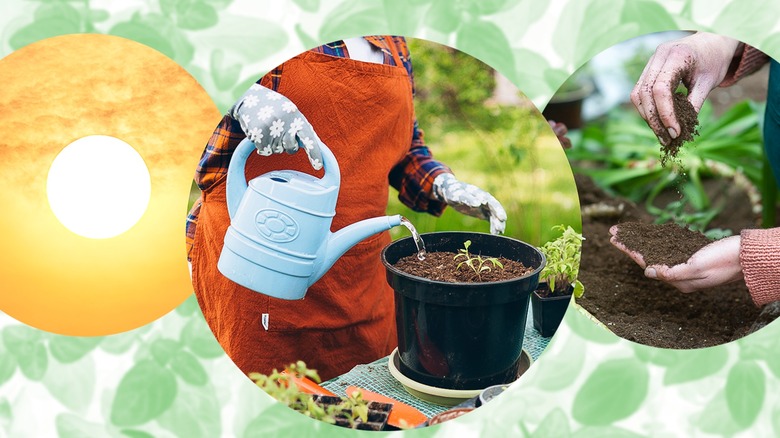
It's definitely possible to grow a vegetable garden on a budget, and it can be a great way to save money in the long run. One thing that you shouldn't compromise on is the quality of your soil, though, and it makes sense: That's where your plants are going to be getting a huge portion of their nutrients. If you have no idea where you're starting, the good news is that you can very easily test a soil sample to see what nutrients are there and what's lacking.
Sounds complicated, expensive, and time-consuming? It's not. You can order a test kit online, take your samples, and get your results right away. Kits like this Rapitest Soil Test Kit are available on Amazon. It'll give you an idea of how much nitrogen, phosphorus, and potash is in your soil, and it also comes with guidelines on what the numbers mean, and what you'll need to add in order to get your soil to a place where it's a healthy growing environment for the specific plants you've selected.
Keep in mind that it's not only about nutrients, because garden soil is an entire ecosystem. Healthy soil will have worms that aerate the roots of your plants, it'll be full of microbes that break down nutrients so plants can use them, and it'll discourage things like pests, erosion, moisture loss, and you'll even have fewer weeds.
Spend some time watching the sun
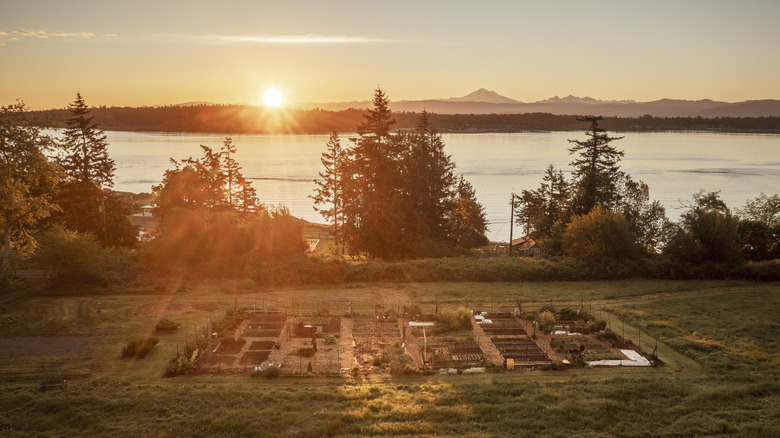
Lessons about photosynthesis and how plants turn sunlight into energy are basic concepts taught in most biology classes, but in case it's been a while, here's a very brief refresher. Different plants need different amounts of sunlight to thrive, because they're turning that sunlight into food. Sunlight in any given spot changes not only over the course of the day — with areas in the afternoon sunlight being subjected to the brightest, hottest temperatures — but with the season, too. You can move houseplants, but a vegetable garden? Not so much.
That's why it's important to take some time to watch just where the sun and shadows fall in the areas you're thinking about planting your gardens. There are some vegetables that need a lot of sunlight to thrive, and we're talking at least six to eight hours a day. Those are veggies like cucumbers, beans, peas, and peppers, so if any of those are on your list, you should find the sunniest spots possible.
If you're looking at growing in an area that gets less sun, that's absolutely fine. You'll just have to adjust expectations for what you're growing, and opt for less high-maintenance plants. Many herbs love less sun, and we're generally talking about four hours or less. Leafy greens can also thrive in lower-light areas, but you should also keep in mind that shady areas may need some extra TLC in the form of added mulch and extra water.
There are some plants you shouldn't grow together
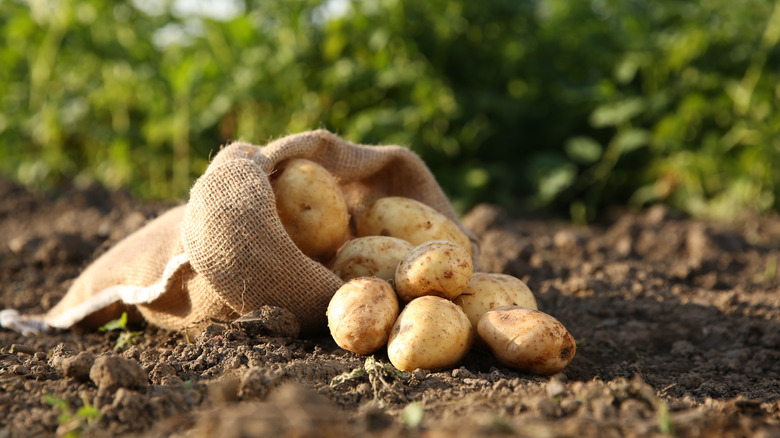
When it comes to laying out just what you're going to plant where, there are a few more things to consider. Some vegetables should never be planted next to each other, for some surprising reasons. Let's start with pairings like tomatoes and potatoes, as well as lettuce and celery. Both partners in those couples are susceptible to the same pests, so planting them together is kind of like setting up a 24-hour diner with a massive, flashing, "Eat at Joe's!" sign in your garden. Pests will show up, thrive, and spread.
There are other problem pairings, too. Plants that rely on access to high amounts of the same soil nutrients will compete for resources, and there won't be any winners. Those are things like potatoes and zucchini, and broccoli and strawberries. Sure, you might think you can just fertilize more, but why start problems that are easily avoided?
You should also keep in mind that some plants release compounds or even gases as they grow, and that makes them unsuitable for growing alongside other plants that are sensitive to those things. One of the biggest offenders here is fennel, which is brilliant for pest control and attracting pollinators, but also releases a chemical that will inhibit growth in plants like tomatoes, peppers, and carrots. Finally, keep in mind that some veggies can cross-pollinate each other, so keep those pumpkins and summer squash far away from each other.
Some combinations work well together — and a few flowers can help veggies grow
Laying out your garden is a bit like a puzzle, but it's not all bad news. Some vegetables not only can be grown next to each other, but should be. It's called companion planting, and one of the biggest benefits to this is that you'll find some plants repel pests that target others, making them perfect for each other. Sometimes, one plant will attract beneficial bugs — like pollinators or pest-fighters, like ladybugs — to a companion plant to thrive even more.
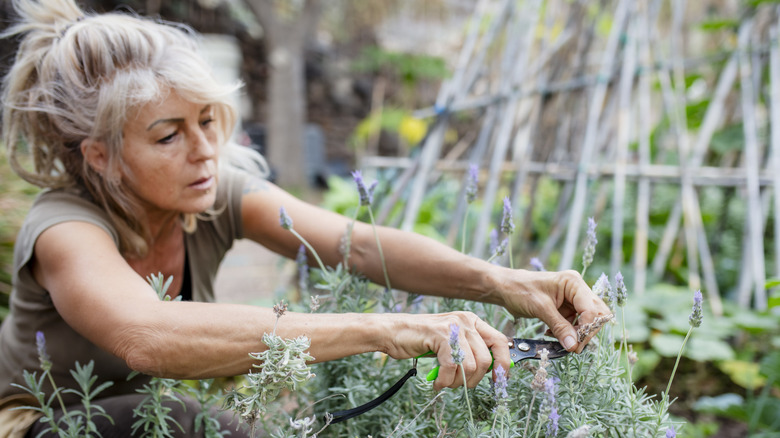
Even though you might want to focus on growing fruits, vegetables, and herbs, remember that there are some very practical reasons for adding flowers to your veggie gardens, too. Strongly scented flowers can attract those beneficial bugs we mentioned while repelling pests, and some all-natural pest control can be the key to success. Flowers like lavender, borage, English marigolds, and pansies can all add to the health of a thriving vegetable garden.
You might be tempted to make a separate herb garden for things like mint, thyme, and rosemary, but planting these herbs alongside veggies can also be incredibly helpful for the same reasons. Finally, members of the allium family — including onions and garlic — can have the same pest-repelling properties, and gardens will work the best when you allow nature to work for you, not against you.
Keep updated on shifting growing seasons and hardiness zones
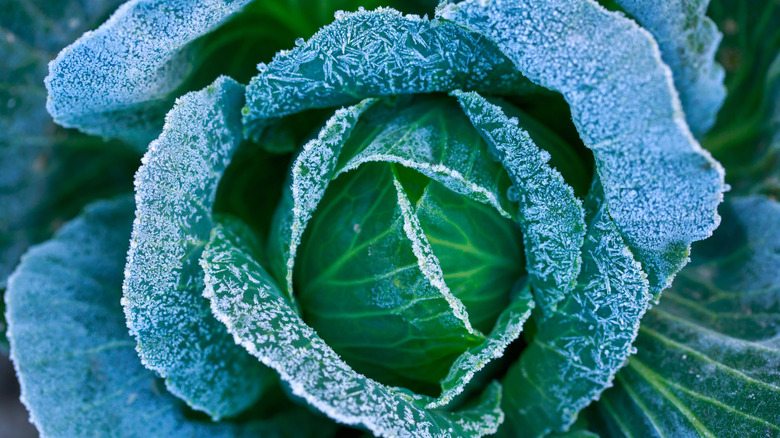
You might notice that many plants are assigned hardiness zones, and that's an indicator of which areas they'll grow best in. Some of the biggest concerns are temperatures and frosts, which can kill delicate seedlings in the spring, and ruin even the best-laid plans. For Zone 1, think of Alaska. Zone 11 covers the hottest areas of Florida and California, and everything else is in between.
Each zone is then broken down into sub-zones, and the USDA has a nifty tool that allows you to enter your ZIP code and find your zone. A single state can have several different growing zones, and knowing which you're in will give you a good idea of what you can grow and when it's safe to plant outside. And it's a huge difference: Zone 10 can support citrus fruits, while root veg will thrive in Zone 3.
There's one more footnote to this, and that's the fact that these zones are always changing. The USDA regularly updates the Plant Hardiness Zone Map, and over the course of the last few decades, warmer zones have been creeping farther north. That's a huge deal when you're trying to decide what to plant, so it never hurts to check every year.
Learn how to prune correctly for serious growth
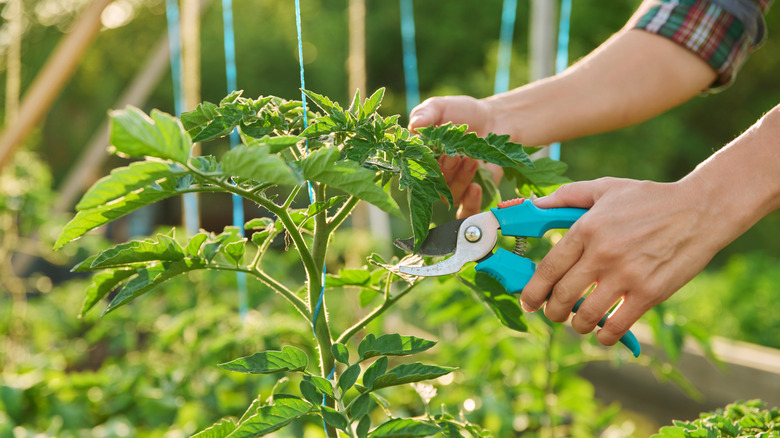
Pruning might seem a little counterproductive, but it's absolutely key to maintaining the health of your garden. That's especially true for vertical gardens, which do save space but can be incredibly high-maintenance for this reason. Different plants have different needs when it comes to pruning, but let's talk about why you'll need to do it.
One of the biggest reasons is air flow. If your tomatoes and cucumbers, for example, are allowed to grow wild, the interior of the plant will become starved for sunlight while (probably) collecting moisture. That leads to things like rot and mildew, which obviously aren't good. Plants that grow low — like zucchini — can also be susceptible to this, and when leaves start to die without being removed, that can facilitate rot that easily spreads, and make it the perfect environment for pests. Pruning damaged or diseased leaves can help stop little problems before they become big ones, and it can also be used to encourage either the growth of more leaves or more flowers, blossoms, and ultimately, fruits and veg.
Reading up on how to prune the plants you've decided to grow is key, as there are different guidelines as to how much you can remove from a plant, and where the best places to cut are. In some cases, plants that develop suckers can be pruned and turned into whole new plants, which is a brilliant way to expand your garden during a long growing season.
Read up on the difference between compost and fertilizer

Composting is a great way to turn some of those kitchen scraps into something useful, but if you're planning on composting, you should definitely read up on it. The mold and bacteria on leftover bread makes it a great addition to compost, but used cooking oil can cause all kinds of problems when it's added to compost. The point of adding compost to a garden is to help maintain soil health, and on the surface, that seems like the same thing that fertilizer is for. They're not exactly the same, though.
In a nutshell, fertilizer adds nutrients and minerals to your garden, while compost adds those things as well as helpful microbes, bacteria, and fungi. Whether or not you can rely entirely on one or the other depends on your particular environment. In some cases, you'll read that a large composting program means you don't need to fertilize at all, while other experts will recommend using both.
It all comes down to your soil health and what you're growing. Some plants need more nutrients than others, and in some cases, you might not be able to make or source enough compost to supply your plants with the levels of nutrients they need. You'll also need to take into account the fact that compost releases nutrients at a much slower rate, which can be great long-term, but cause plants to struggle in the short-term.
Decide what you're starting ahead of time and indoors
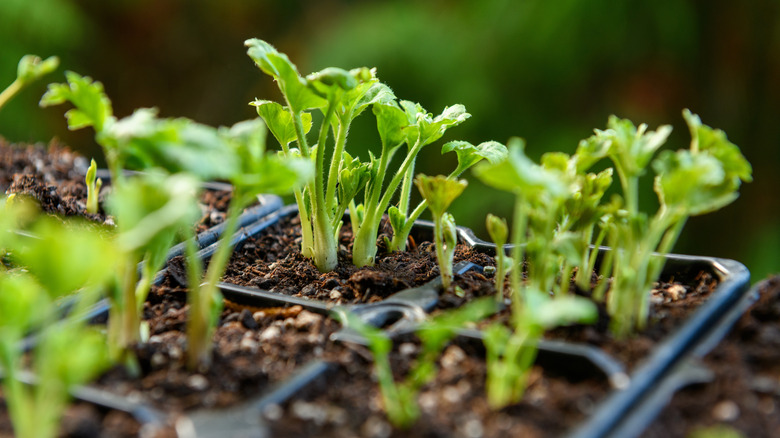
Once you know what growing and hardiness zone you're in, start planning. You can lay out your garden, get an idea of what you want to include, and for some plants, you should definitely invest in everything you need to give you plants an indoor head start. The good news is that it's both easy and affordable: Seed-starting trays are available on Amazon. (Try this five-pack of MIXC Seedling Trays. One pack will give you space to start 200 plants.)
Starting seeds in trays ahead of time is crucial, especially for those plants that need a longer growing season than what you might have. That includes popular garden plants like tomatoes, peppers, peas, and zucchini, but that's by no means an exhaustive list.
Different plants grow at different rates, of course, and just how long you should plan to have your seedlings in trays does vary. Celery, for instance, might take up to 12 weeks before it's ready to go in the garden, while cucumbers might be ready to go in as little as three weeks. Remember, too, that planning for transplanting outdoors isn't just about the air temperature, but the soil temperature as well. That's especially important for places that have cold winters, as you're going to want to let the soil get warm enough to encourage your plants' development. (That's generally at least 40 Fahrenheit, but again, that varies by plant.)
Pay as much attention to the weeds as to the plants you want
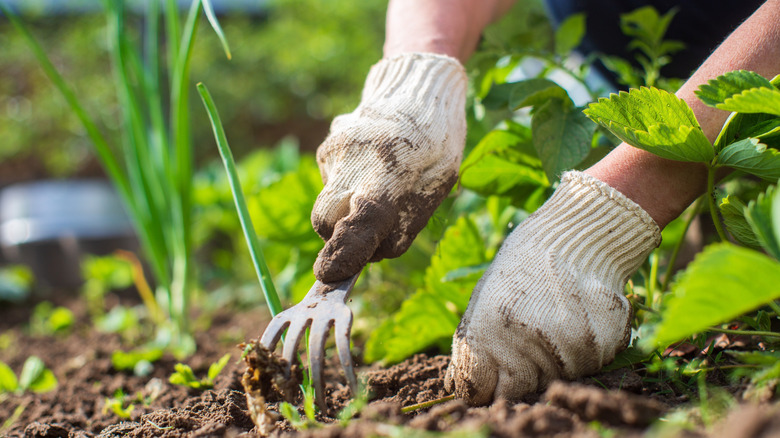
Weeds are very obviously bad, and you should pay them serious attention. Every time you go out to check on your garden, it's a great idea to spend a little time weeding. Pull them as they appear, and you won't have a little inconvenience escalate into a massive chore. Also, leaving weeds will encourage them to spread quickly, especially considering some produce a ton of seeds that are almost supernaturally resilient.
Small, new weeds are also easier to pull by hand, and don't forget to invest in a set of durable work gloves (like these HANDLANDY utility gloves). Weeding by hand isn't always possible, though, and there's a reason for that old saying about things growing like weeds.
Weeds can have roots that grow deep, so investing in a claw cultivator (like this Fiskars cultivator) is an investment that's well worth it. Do any major weeding after a heavy rain for looser soil, or if you're planning on taking an afternoon or evening to tend the garden, water thoroughly a few hours in advance. No one likes to weed, but just think of it as spending some quality time outdoors. (Pro tip: This is also a great time to check our plants for any signs of disease, dying leaves, or problems you might miss with just a casual glance.)
Spacing is incredibly important in more ways than one
We totally get it: Planting seeds or little seedlings and leaving all that empty space might seem like a waste, but it's incredibly important to follow spacing guidelines when laying out your garden. Those seedlings are going to grow quickly, and making sure adult plants have enough space means they'll have room to stretch and proper air flow around them. And some need a lot of space: Tomato plants should be 2 feet apart at the minimum, and the same goes for zucchini.
Guidelines for how far apart rows of plants need to be are important, too. Even relatively small things like radishes need space, and some of the guidelines aren't necessarily intuitive. Carrots might not seem like they could be planted fairly close, but rows should be 12 to 18 inches apart.
When you think of spacing, don't just think of it in a physical sense, either. Succession planting is a great way to ensure you have fresh veg over the course of months, instead of getting overwhelmed with a single harvest. Let's take loose-leaf lettuce as an example. These lettuces can be harvested multiple times and will continue to regrow, but there are only so many salads you can eat in a day. Plant one section of seeds, wait a few weeks, and then plant another section. They'll mature in a staggered pattern that can be harvested pretty continuously, and you'll always have greens for your favorite summer salads.