

13 Parts Of Fruits And Vegetables You Might Not Know You Can Eat
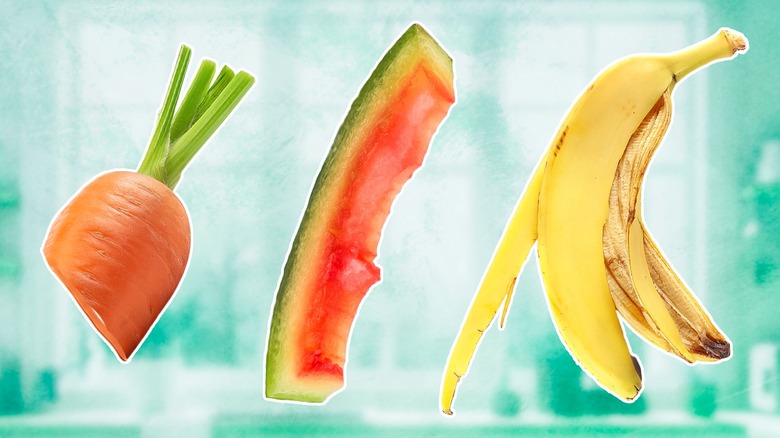
Each year, the average American throws away roughly 325 pounds of food. If you're not shocked by this statistic, you may want to rethink how you handle food waste in your house. Perhaps you have every intention of enjoying that bunch of spinach in the back of your fridge, or those frozen leftovers. You might even be throwing away perfectly usable food scraps into the trash whilst prepping produce without
It's common to throw away parts of fruits and veggies deemed unusable, like carrot tops and mushroom stems. But did you know most of these toss-away items are healthy, delicious, and can be used in your next recipe? As a plant-based recipe designer and chef (who's also as a toddler mom), I'm aware that prepping these scraps takes time and energy. However, the more you take advantage of the food you already have, the less time you will spend shopping — and the more money you'll ultimately save.
It's a give-and-take, but reducing food waste and experimenting with a few new recipes might be worth your while. Now kick that waste bin to the side and let's get cooking. Here are 13 parts of fruits and vegetables you didn't know you could eat, and how to use them.
Carrot tops
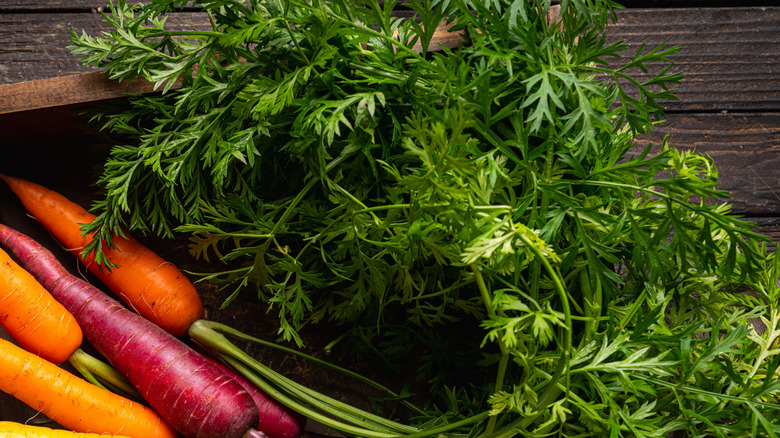
While grabbing a bunch of carrots at the store, I noticed that next to the pile of produce, the farm had provided a bin for folks to throw away the carrot tops. I was shocked to see every single person twist off those carrot tops and drop them into the bin without a second thought. I guess they could've likely tossed them into a compost at home, but it was clear none of them had heard of the wonders of carrot top pesto.
Carrot greens have a fresh, carrot-like flavor that's very grassy, and almost hints at parsley. The leaves texture is feathery, but more robust than lettuce. Because of its desirable flavor, which does hold a slight bitterness, it can be chopped up and added to a salad to help balance a sweet dressing. In addition, it can be added to soups, especially those featuring carrots or other root vegetables.
I personally like to mince carrot greens, especially if they're being used raw, as they can be strong or chewy. But the real star of the show is carrot top pesto. Use carrot tops in place of basil (or in addition to basil) and chop away with your food processor. Enjoy this nutrient-dense spread or sauce and avoid tossing those highly desirable carrot tops.
Citrus peels
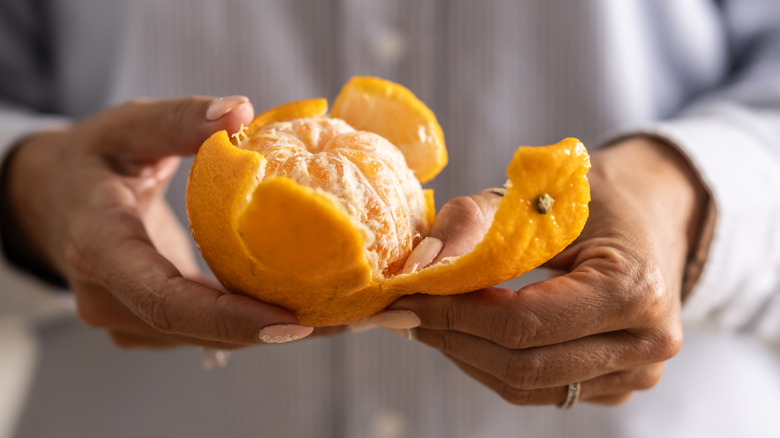
It feels so second nature to just throw away citrus peels. But whether you're squeezing juice from a lemon or lime, spooning out pulp from a grapefruit, or peeling an orange, you should be saving those peels. There are endless ways to use citrus peels in a non-edible way, but I'll be discussing all the tasty ways to repurpose those peels for your consumption.
First, you've likely heard of the viral lemonade made with whole lemons. Just drop your full lemons into the blender along with water and sugar, or a sweetener of your choosing. Some folks like to strain the pulp, but I would argue that doing so would remove some high nutritional value from the drink. Citrus peels are linked to oral health, heart health, and heightened immunity (among other potential benefits), so if you like a thick lemonade with a bitter and fragrant finish, don't strain it.
Try using a whole orange in your food processor along with cranberries and a sweetener to make a raw cranberry relish next Thanksgiving. You can even save those peels to blend into smoothies to give them a health boost and thicken the texture. Those with a sweet tooth should consider candying citrus peels.
Beet greens
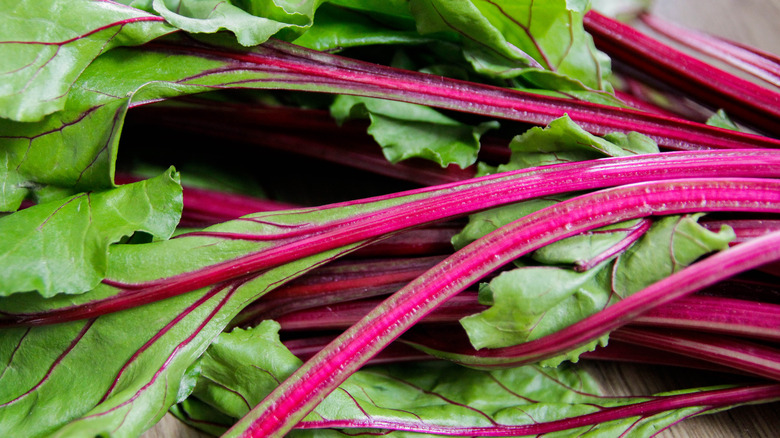
Yes: Pre-cooked beets are much easier to handle, plus you don't have to worry about getting caught literally red-handed. Unfortunately, canned or pre-made beets will have you missing out on the lovely beet greens that often come attached to farm-grown or local beets. There's a reason they sell them stem and all, and it's because those beet greens can make the perfect side-dish for your dinner
As we know, beets can get pretty dirty, and so can their greens, so you'll want to give them a solid wash. I like to cut the stems out and slice them into bite-sized pieces, then cut the greens into long strips, or chop them roughly. Add them to a hot pan with oil, garlic, salt, and finish with some lemon juice. You'll want to add the stems first to allow them time to break down under the heat.
Although not as hearty as collard greens, beet greens can be seasoned and cooked in a similar manner. Beet greens taste earthy and have a mellow sweetness, similar to beets themselves. You can also save the raw greens to blend into your morning smoothies.
Mushroom stems
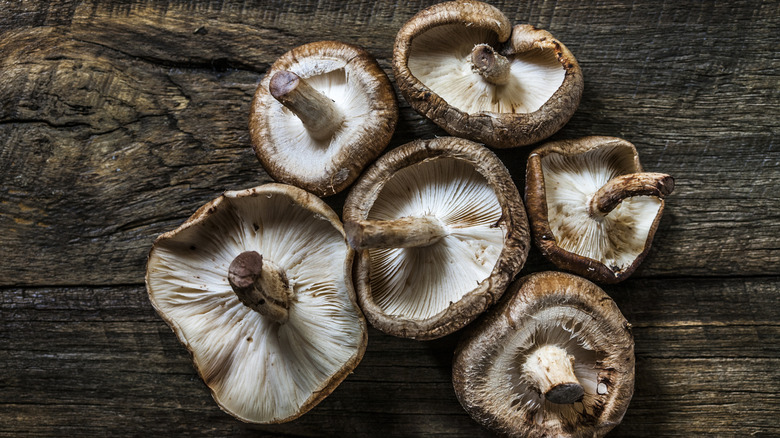
Why are we throwing away mushroom stems? Although slightly more fibrous than the caps, mushroom stems are flavorful, meaty, and delicious. Personally, the extra chewiness is appealing to me if they're cut the right way, and why waste something edible? Some people believe that mushroom stems can make you sick, but mushroom varieties you can buy at your local grocery store are safe to consume — top to bottom.
Some folks don't enjoy the stem of a shiitake mushroom because of its chewy texture. However, I really enjoy cutting the stems up into small pieces, cooking them along with the tops, and adding them to my dish for varied texture. You can also mince portobello stems and use them in your stuffing, along with the gills for stuffed mushrooms. If the texture isn't for you, then save them to make broth with.
Mushrooms that you forage in the woods are another story. Unless you have been trained or thoroughly studied how to identify mushrooms in the wild, steer clear of stems, tops, and all because some mushroom varieties can be deadly.
Calyx
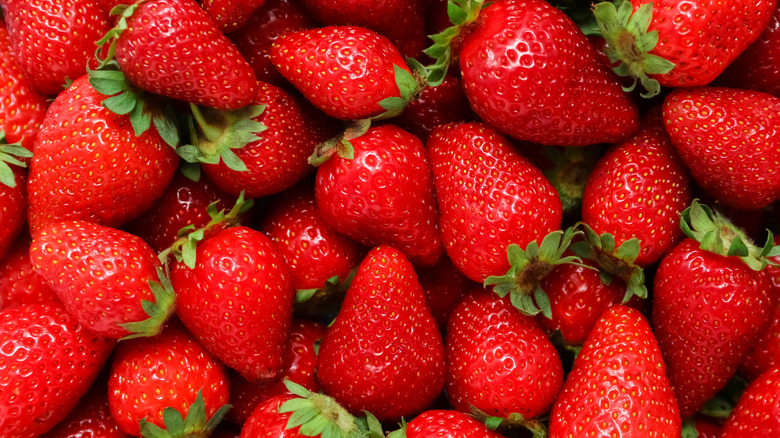
Anyone with children knows only ½ of a strawberry tends to get eaten if there's a green leafy on top. Even some adults take one big bite and are done, leaving plenty of fruit behind along with the very edible green stem called a calyx.
Now, I understand why people aren't munching down those green stems, as they are very grassy and can sometimes be a little tough. Admittedly, I eat them right along with the rest of my strawberry because I don't have to deal with finding a place to throw out the stem after, so it's a good thing they're so healthy.
In addition to eating them along with the whole strawberry, you can try blending them into your smoothies. It will give you those leafy-green nutrients you're craving, along with a subtle grassy and sweet flavor. You can also use use strawberry tops along with sugar and vinegar to make a fruity, homemade sweet vinegar for salad dressing.
Watermelon rinds
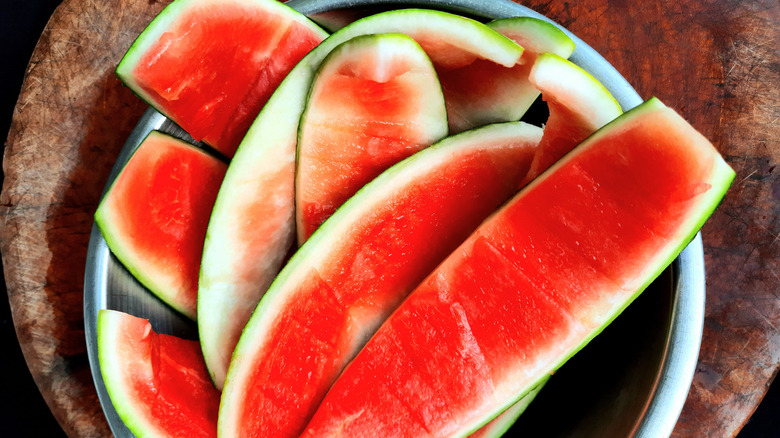
When purchasing a watermelon, much of what you're paying for is the rind, so let's not let it end up in the compost pile or dumpster. In other words, stop throwing out your watermelon rinds.
Did you know those rinds can be pickled for the ultimate salad topper or palate cleanser? You can also add these sweet and tangy rinds to a charcuterie board or blend them into a refreshing cocktail. I like to add them to my vegan sushi, as the appearance resembles that of fish, and it pairs well with avocado and cucumber.
You'll still want to remove that tough green skin with a sharp knife or peeler. Then, use standard pickling practice with sugar or maple syrup, and lemon or citrus of your choice, to simmer and seal those bad boys for later consumption. Pickled watermelon rind can be fairly straightforward to make, and since you'll likely be making it in bulk, it's a fantastic gift to send home with guests after a summertime garden party or a moonlit dinner on the deck.
Banana peels
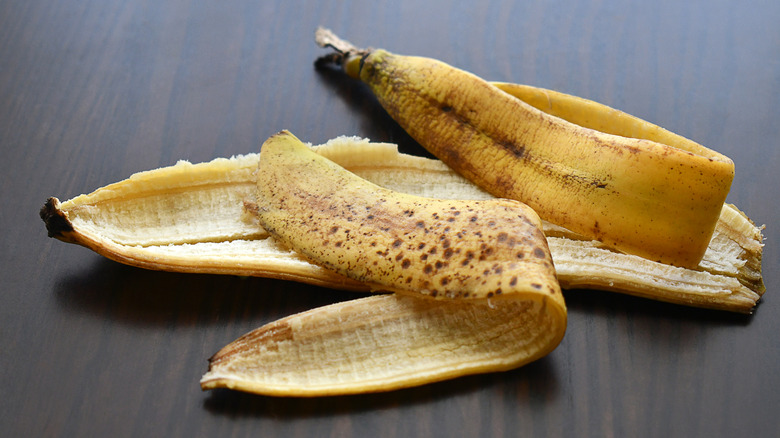
Banana peels are perhaps one of my favorite scrappy foods to save from the trash bin. They are a prebiotic and incredible for your digestive health. In addition, they have the best texture (once they're properly cooked, of course), and really sop up sauces and spices.
Typically, I use banana peels to make a version of pulled pork, which is coincidentally very similar to a Brazilian dish that uses banana peels in the best possible way. Start by washing the banana in the sink before you peel it. Select bananas that are yellow but not spotted, and don't forget to freeze the insides or make banana bread with the fruit. Use a spoon to gently scrape the inside of the banana peel to remove that sticky white layer.
Once the peel is thin, clean, and yellow, use a fork to shred the peel by scraping it against a cutting board and running the fork from top to bottom of the peel. Do this until you have many long strands, and toss them in a pan with hot oil. Once they begin to crisp, add your spices and sauces, and enjoy chewy, plant-based pulled pork. You could also forgo the shredding for a vegan bacon substitute.
Herb stems
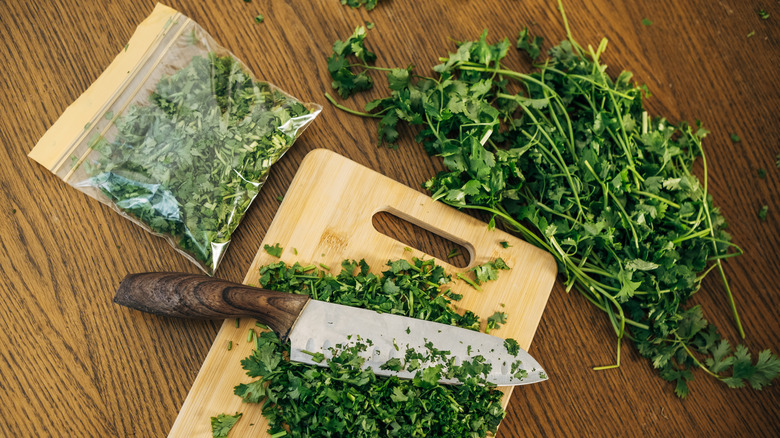
Why are we throwing out herb stems? Yes, the leaves are flavorful and delicate, but the stems are nothing to cast aside without a second thought. They're typically crunchy, watery, grassy, and hold the flavor of the leaves in a slightly diluted concentration. Some stems, like that of rosemary, are too woody to consume. But others, like parsley or cilantro, are meant to be eaten.
Pluck your leaves off, and then mince the stems. Honestly, if you're in a pinch for time, you can just mince your leaves and stems together, as well. Unless you're really going for the delicate texture of leaves, these stems can be added to avocado toast, tacos, nachos, and salads. Garnish just about anything with herb stems, or save them for your homemade salad dressing. I love to use minced herb stems in my chickpea salad or soups. Just be absolutely sure those herbs got a solid wash, as there's nothing worse than gritty greens.
Date pits
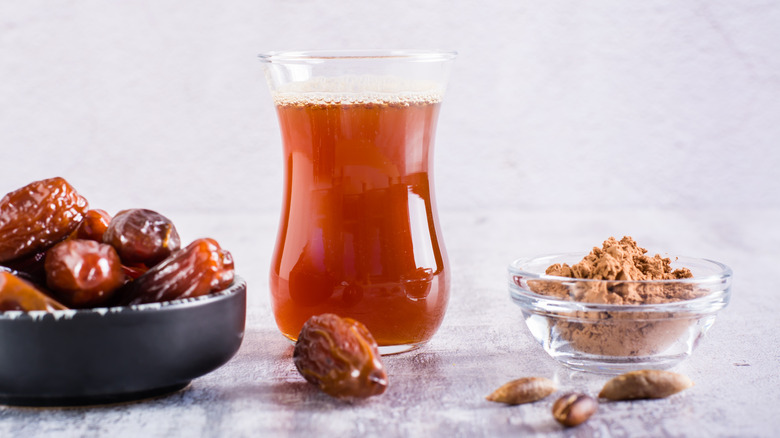
If you're like me, a single full cup of coffee might put you over the edge when it comes to caffeine. If so, you've likely dabbled in coffee substitutes. Of course, this also leads to the question of how you're supposed to start your day without a smoky hot cup of comfort. Well, try using date pits instead of coffee beans. Purchase dates with pits, and use them for homemade granola bars, snacks, smoothies, or date syrup. But instead of tossing the pits, save them.
Start by cleaning the pits, drying them, and slow roasting them. Grind them up, then brew them like you would coffee. Roasted date seed coffee is full of unexpected nutrients with zero caffeine, as they're loaded with antioxidants and promote healthful gut support. Date pit coffee has a similar roasted flavor, with undertones of caramel sweetness, and depth reminiscent of unsweetened chocolate. Dress it up however you would coffee, with cream, non-dairy milk, sugar, or maple syrup. Enjoy it iced in the summer, and hot in the winter. Feel good about not letting a single scrap go to waste, and of course, saving a bundle on decaf coffee grounds.
Veggie peels, skins, stems, and scraps
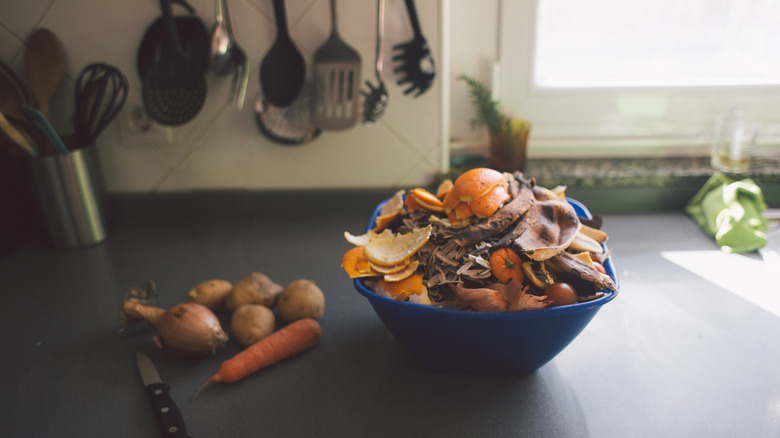
Making your own vegetable broth might seem like a pain, yet if you do it right, it can be quick and painless. Your first hurdle might be that no matter how many veggies you eat in a day, you don't feel as though you have enough scraps at one given time. Well, there's a seamless way to save scraps over time: Storing them in the freezer. Each time you clean up from prepping your meal, add more and more scraps to your container and store it deep in the freezer.
Once it's full, you'll be good to go on your broth-making journey. Just about any vegetable scrap can be used to make vegetable stock from scratch. Pepper, eggplant, mushroom, and tomato stems. Onion, garlic, zucchini, sweet potato, and winter squash skins and peels. Even seeds, leaves, shreds, and roots can go right into the pot. Double-check that everything has been scrubbed thoroughly, and let it all simmer for as long as humanly possible. Add herbs, spices, salt, miso, and any other flavors you desire. Add chicken or beef bones or a meatier flavor.
Pumpkin seeds
The moment the first leaf turns red in the fall, it's time to whip out those winter squash recipes. Acorn, buttercup, delicata, and hubbard are some of my absolute favorites, but let's not forget about pumpkins. All of these come with seeds, too, and while it's easier to just toss those pumpkin seeds away along with the guts, once you hear the alternative, you'll be hooked.
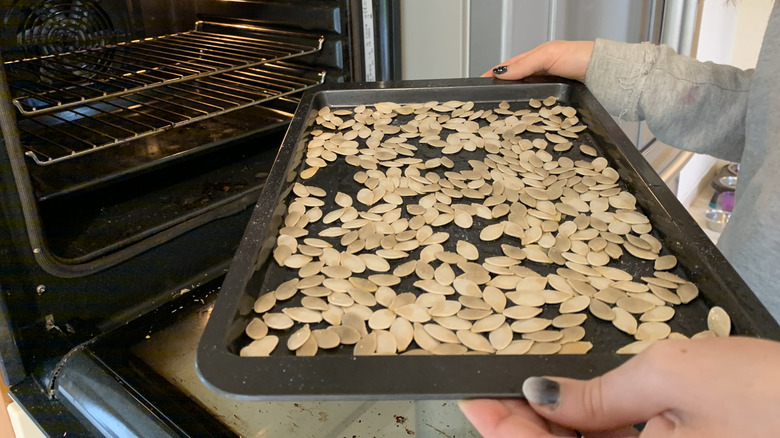
Pumpkin seeds are one of those foods you need to stop throwing out ASAP. After all, you can instead prep them to make edible pumpkin seeds. You can flavor them however you want (think popcorn flavorings), but I like to go with a savory and sweet combination. A little sugar, salt, and garlic powder never hurt, or you could go all in on your sweet tooth and try a brown sugar cinnamon pumpkin seed snack. You can use the oven or air fryer to achieve a perfect crisp, and enjoy pumpkin seeds for snacking, toss them over a salad, or grind them into a plant-based meat alternative. The options are endless, so don't feed you seeds to the worms.
Pulp from juicing produce
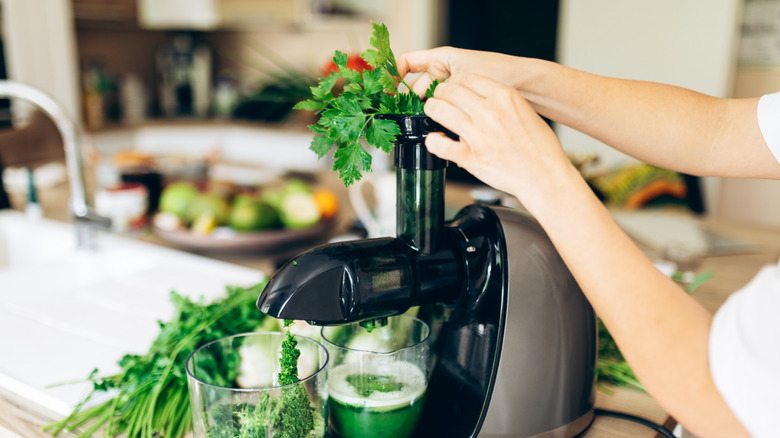
Have you gotten into juicing lately? I went through a heavy juicing phase myself, and being part of a CSA only added fuel to the flavorful fire. While I have few regrets, I wish I'd learned about repurposing pulp from juicing earlier in the game.
This pulp can be used in so many ways — my absolute favorite is to use it in veggie burgers — but the fun doesn't end there. You can also add the pulp to smoothies and baked goods like muffins. Essentially, the pulp is fiber, and it can add bulk to your recipe, with subtle notes of veggie flavors and sweetness.
It works well in a veggie burger because it adds to the chewy texture that's somehow reminiscent of meat. You could pay for some ultra-processed meat knockoff at the store, or use your juicing pulp to make fiber-filled, flavorful veggie burgers with just the right amount of chewiness. This is why you need to stop throwing out your pulp right away and repurpose it in a way that highlights its appeal.
Pumpkin and sweet potato leaves
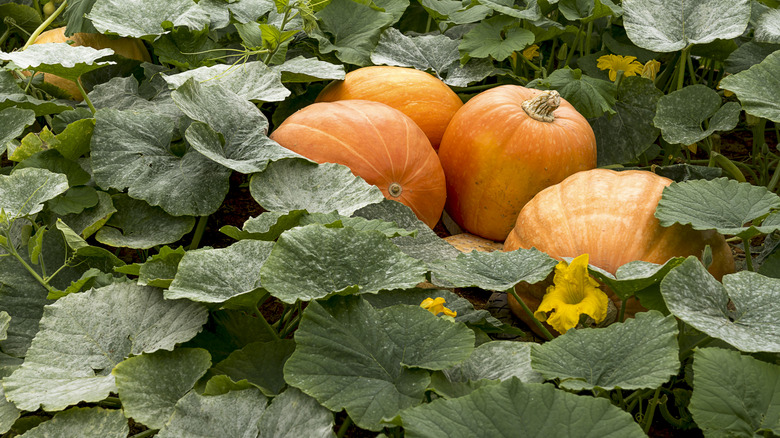
If you grow a pumpkin patch or sweet potatoes during the year, then it's likely you'll pick your harvest — then let the rest of the plant become fertilizer. Now, this is fine. But perhaps I might interest you in a tasty alternative. And if you weren't aware that pumpkin and sweet potato leaves are edible, you're not alone. Although tougher than your average salad green, these leaves can be cooked and enjoyed, and are loaded with nutrients.
Personally, I like to cut dark leafy greens into ribbons before cooking them. Bunch your leaves up into a stack, and then use a long, sharp knife to cut them into strips. Simmer the strips in a hot pan, or add them towards the end of cooking. Consider using them along with other robust ingredients, and be sure not to overcrowd the pan. Although slightly sweet, pumpkin leaves taste a bit like a hearty, cruciferous-like spinach. For those who find kale too bitter, give pumpkin leaves a try, as they are more mellow and palatable to those who are sensitive.