

4 Countertop Styles That Make Kitchens Look Twice As Expensive
Designing a kitchen usually involves three interconnected things: a lot of decisions, a lot of money, and — as a result of those two — a lot of stress. In any construction or remodeling project, the goal is to make decisions that reduce expenses and worry, though usually the opposite happens. Every call you take sends cost and project timelines skyrocketing. As always, Tasting Table is here to help.
One of the many ways to refresh your kitchen is to change the countertops, so Tasting Table quizzed Kerrie Kelly — CEO and creative director of Kerrie Kelly Studio — on what styles could make kitchens look twice as expensive. She insisted that you don't have to spend through your nose to give your kitchen a luxurious finish.
"One of the biggest misconceptions about creating a high-end kitchen is that every material needs to be expensive. The most beautiful spaces are often the result of thoughtful editing, good proportions, and a cohesive palette," said Kelly. She recommended investing in "a well-executed, affordable countertop with beautiful lighting and hardware," rather than overspending.
Kelly went on to explain that luxury is less about price and more about how everything comes together, noting that an expensive surface shouldn't compromise the rest of the room. Speaking of price tags, the numbers mentioned below represent approximate installation costs per square foot. Actual cost will vary based on several factors, from region and material to fabrication and edge detail.
Marble-look laminate
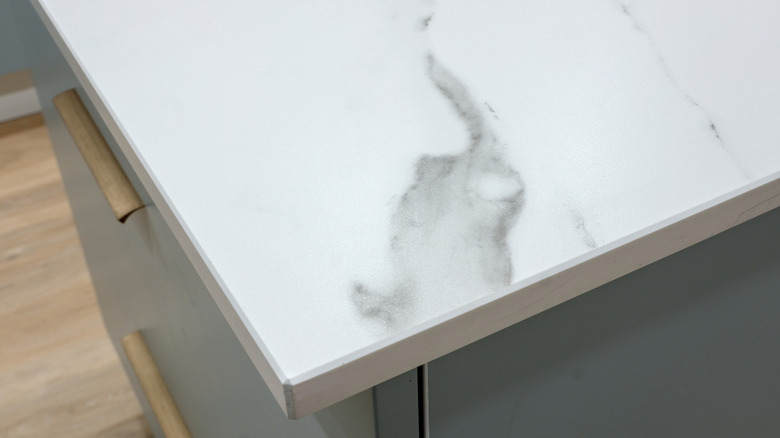
If you're looking to get the same visual impact but for a better price, forget real marble and spare your wallet with an alternative that avoids the hassle of upkeep: marble-look laminate. "Today's marble-look laminates have come a long way from the countertops many of us remember. Sophisticated veining, softer finishes, and more realistic patterns can capture the elegance of natural marble without the cost or maintenance," Kerrie Kelly said. This material costs between $25 to $60 per square foot installed.
Kelly recommended using marble-look laminate in classic white kitchens, transitional spaces, and smaller kitchens. While it can look stunning, there are some drawbacks. "I would be cautious about laminate in kitchens where homeowners expect to place hot cookware directly on the surface or want the long-term scratch and heat resistance of stone," she explained. "It's also less convincing when the edge detailing exposes the material's construction."
The marble-look laminates that work best are those with a restrained marble pattern, instead of dramatic veining. "Pair it with warm wood accents, beautiful cabinet hardware, and a simple backsplash," she suggested. "I also recommend a clean, understated edge profile to help the material feel more sophisticated."
Solid-surface countertops in warm whites or soft neutrals
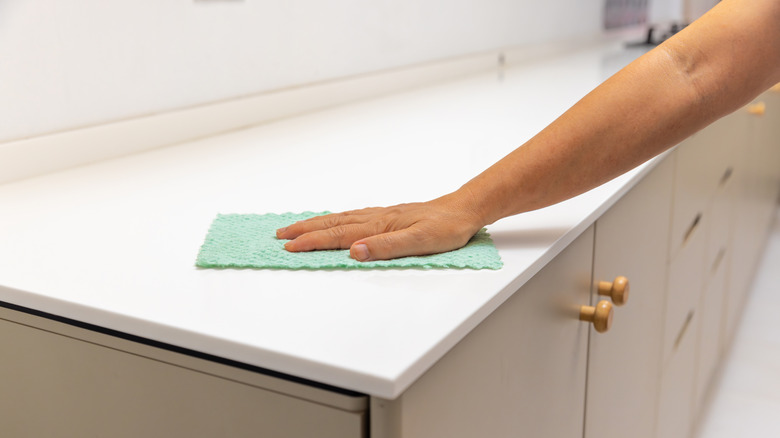
Solid-surface countertops are usually made by combining mineral dust with acrylic, resins, and pigments. "There's something inherently elegant about a quiet, seamless surface. Solid-surface materials can create a beautifully tailored appearance, particularly when paired with integrated sinks and minimal detailing," Kerrie Kelly said, adding that these work beautifully in contemporary, Scandinavian-inspired, minimalist, and transitional kitchens. These can cost approximately $50 to $100 per square foot installed.
Solid-surface countertops are a superior alternative to laminates, though there are some drawbacks. They can scratch easily, are vulnerable to damage from hot cookware, which may not be ideal for homeowners seeking the highest level of heat resistance, noted Kelly. "Those who prefer the natural variation of stone may also find it too uniform," she added.
Kelly recommended choosing warm whites or creamy neutrals instead of a stark white finish. The kind of environment you place the material in makes a difference too. She particularly likes solid-surface countertops in kitchens where the cabinets or backsplashes are the focal point. Kelly also suggested, "Add natural wood, textured tile, and sculptural lighting to create a space that feels layered and inviting."
Entry-level quartz in a honed-look or subtle stone pattern
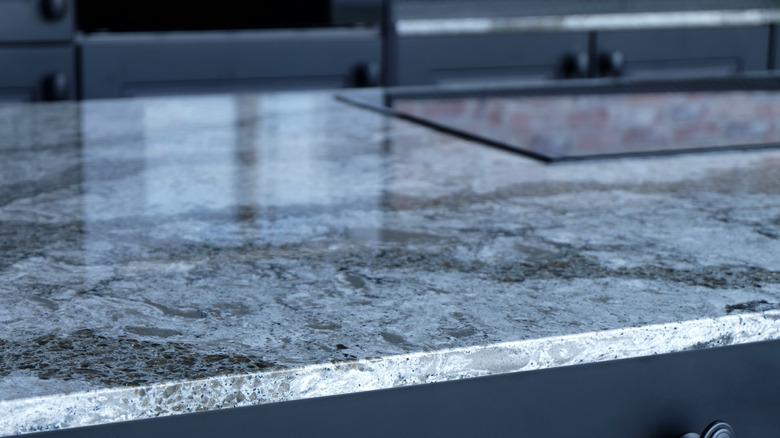
Quartz countertops are graded on different parameters, from thickness and hues to the ratio of natural minerals to resin. High-quality varieties have more stone and less resin, while the opposite is true of more affordable options. But even entry-level quartz, the lowest of three categories, can appear pretty luxrious if you know how to use it. "Quartz can deliver the refined appearance of natural stone with consistent color and patterning. I particularly love quieter designs with subtle movement because they allow the entire kitchen to feel intentional rather than overly decorated," Kerrie Kelly said.
Quartz can cost around $55 to $100 per square foot installed, but there are some cons of quartz countertops, and they will force you to change some kitchen habits — mainly, not placing hot cookware directly on them. But the material also has a lot of pros. "Quartz is incredibly versatile, making it a beautiful choice for transitional, contemporary, and traditional kitchens," she explained.
Kelly noted that soft white, warm gray, and limestone-inspired patterns go well with painted or natural wood cabinetry. She also suggested pairing the subtle veining with richly colored cabinetry, interesting hardware, or a statement light fixture. "I often tell homeowners that the most sophisticated kitchens don't require every surface to make a statement," she said.
Butcher block in a natural wood finish
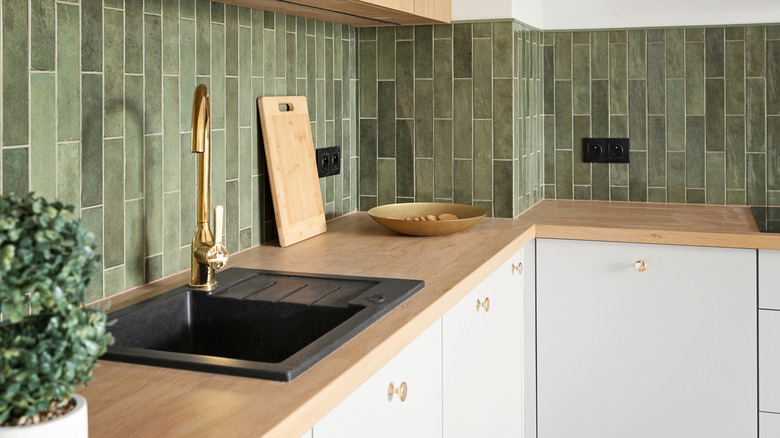
Few things whisper luxury like a wood-finished room, and this isn't just true of stately living areas or elegant studies. Using a butcher block in a natural wood finish adds a lot of character to a kitchen as well. "Natural wood brings warmth, character, and an unmistakable sense of craftsmanship to a kitchen" said Kerrie Kelly. She added, "A beautifully finished butcher-block countertop can feel like custom millwork, especially when the wood tone complements the cabinetry." Kelly's not alone in her opinion — other experts feel this kitchen design trend is on its way back too.
Kelly insisted that the material goes with different design styles, stating that "butcher block is especially appealing in cottage, farmhouse, traditional, and organic contemporary kitchens." She added, "It can also be a wonderful way to soften a modern kitchen with otherwise sleek materials." Kelly did warn against overusing it, though, recommending that it be used as a contrasting island surface or in a dedicated baking or prep area, rather than throughout the entire space. She also suggested pairing it with painted cabinetry, unlacquered brass or matte black hardware, and simple ceramics. Butcher blocks can cost approximately $40 to $100 per square foot installed, depending on wood species, thickness, and fabrication.
According to Kelly, the biggest drawback of a butcher block countertop is that it requires care and protection — not just from high temperatures, but also from moisture and staining. "I would be thoughtful about using it around a heavily used sink, particularly for homeowners who prefer a very low-maintenance surface," she said.