

The Golden Era For 10 Major Restaurant Chains
We can't all stay on top forever. It's just a fact of life. Take boy bands, for example. There was a time when we were all falling over ourselves for the latest *NSYNC or Backstreet Boys hit. Okay, not everyone, but a heck of a lot of teenage girls were. Tamagotchis and Furbies had their moment in the late 1990s and early 2000s, and in the early 2010s, anyone and everyone was attempting to twerk. The same applies to restaurant chains — they have their glory days, but then they have to fight to stay relevant. Just like the cool gang at high school.
Here, we're taking a look back at the golden eras for many of America's most beloved restaurant chains. We're revisiting the OG days of TGI Fridays, the bargain baskets of Applebee's, the epic rise and fall of Hooters, and many more familiar favorites. If you ever listened to *NSYNC while gearing up for a night out at Olive Garden in the 2000s, or kissed your Furby goodbye before heading out for a family meal at Pizza Hut in the late 1990s, this heavy dose of nostalgia is for you.
TGI Fridays: The 1960s, 1970s, and 1980s
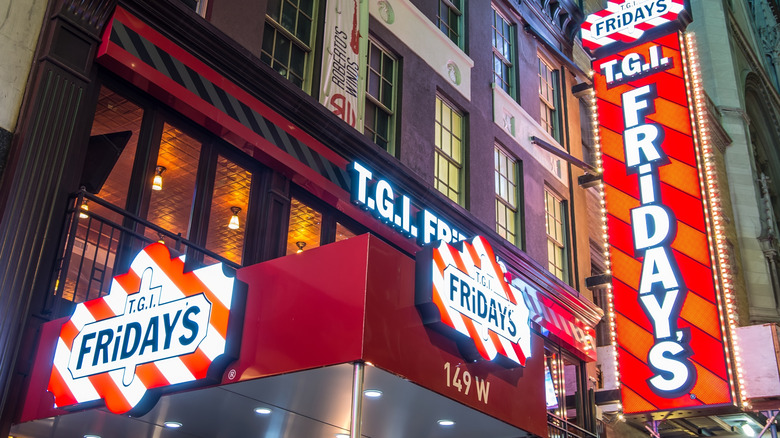
It might not seem like it now, with its dwindling number of restaurants (there are fewer than 80 left in the U.S.), but TGI Fridays was once a pioneer. In the 1960s, it started as a safe, welcoming bar for single women to date in New York City. That might not sound pioneering to a modern consumer, but at the time, spaces like these were hard to come by. That original bar evolved into a destination, and that destination became a chain. Everyone wanted a piece of the action (and an expertly crafted cocktail). Throughout the late 1960s, 1970s, and 1980s, TGI Fridays, which had more than 100 restaurants by the early 1980s, was cool and fun, with an outstanding reputation for service and a hip clientele of young singles.
TGI Fridays kept growing, but many who loved it from the beginning felt that it had lost its way after the 1980s. It became less about creating a safe, fun space for singles to date and more about catering to families with low-budget food. "Used to love the place," said one Redditor in r/The1980s subreddit. "Then around 2000, [it] just went to hell." TGI Fridays stuck around through the 2010s, but its restaurants began to decline, and in 2024, it filed for Chapter 11 bankruptcy. Still, it hasn't given up hope of reclaiming its golden era. In January 2026, leadership announced plans to expand TGI Fridays to more than 1,000 locations worldwide by 2030.
Long John Silver's: The 1980s
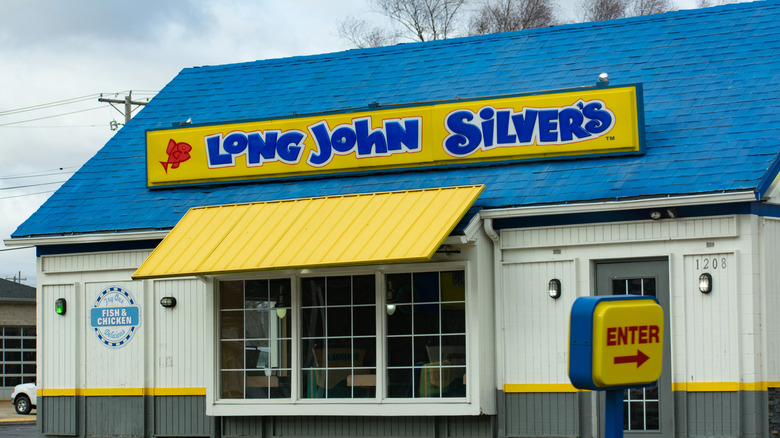
In 1969, two restaurant veterans, Warren W. Rosenthal and James Patterson, spotted a gap in the restaurant industry: fast seafood. So, Long John Silver's was founded in Lexington, Kentucky, and it was a hit. By the end of the 1970s, there were 1,000 Long John Silver's, and the stage was set for the chain's golden era: the 1980s. People loved Long John Silver's for its affordable food, of course, but also its fun, nautical theme and comfortable booths designed for sitting in for hours with friends and family. "Loved smelling like twine and malty oil after a solid dine-in session," reminisced one Redditor in r/GenX. "Plus you couldn't beat the free paper hat!" Another added: "When it was my turn to pick where we were going to eat dinner, I would always pick [Long John Silver's]. I loved that place in the '70s and '80s."
Unfortunately, things started to go downhill in the 1990s. Long John Silver's grappled with competition from other fast food giants, changing customer tastes, and unstable leadership. Things went from bad to worse, and in 1998, it filed for Chapter 11 bankruptcy. The chain continued operating over the following decades, although its footprint shrank considerably. In May 2026, one Long John Silver's franchisee filed for Chapter 7 bankruptcy after closing its Mall of America location. By September 2026, the chain had just under 500 locations across the U.S.
Pizza Hut: The 1980s and 1990s
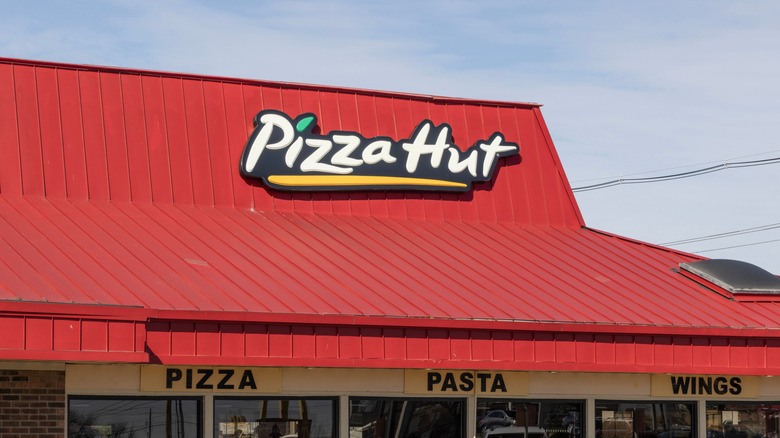
Most can agree that the golden era for Pizza Hut was the 1980s and 1990s. Founded in Wichita, Kansas, in the late 1950s, the chain spent the following decades expanding across the U.S. and internationally, and by the 1990s, it was the biggest name in pizza, with more than 10,000 locations worldwide.
With its all-you-can-eat buffets, red roofs, and vinyl booths, a meal out at the Hut in the 1980s and 1990s was an accessible treat for couples, friends, and families everywhere. "Pizza Hut was THE place to go for birthdays as a kid," recalls one Redditor in the r/AskAnAmerican subreddit. "It was always a momentous occasion for my family." Another chimed in: "1980s Pizza Hut was the best," before adding, "I'll never forget the red glasses and the crushed red pepper on every table."
Pizza Hut, of course, is not what it once was. Things started to turn for the chain in the 2000s; it failed to innovate, struggled to keep up with changing customer preferences, and was ultimately outpaced by its biggest competitor, Domino's. Today, it has nearly 20,000 locations, but they are under threat.
In February 2026, Pizza Hut announced plans to close 250 underperforming U.S. restaurants. That June, parent company Yum! Brands announced plans to sell the chain in two deals worth a combined $2.7 billion, including a sale to private equity firm LongRange Capital. Both transactions were completed by September.
Applebee's: The 1990s
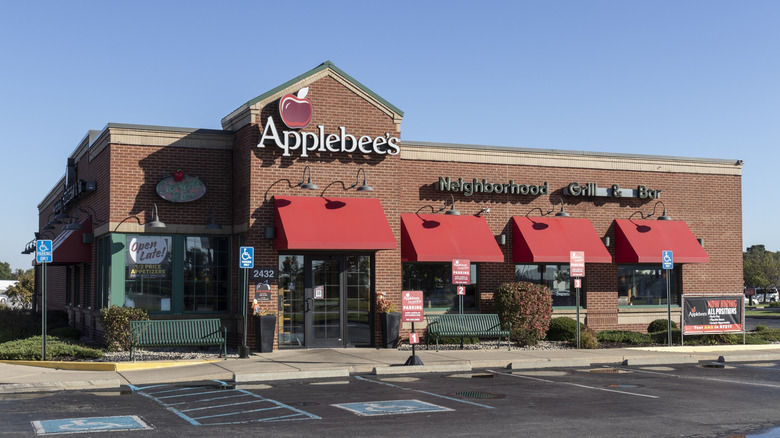
To give you an idea of just how successful Applebee's was in the 1990s, here's a fact: The chain started the decade with around 100 restaurants, and by the time the millennium rolled around, it had 1,000 worldwide. The key to the chain's success was simple: It met people where they were at, and did it well. In the late 1980s and 1990s, people had a bit of money to burn on dining out, but they needed somewhere affordable and accessible to do it. Alongside Pizza Hut, Applebee's (founded in 1980 in Atlanta, Georgia) was perfectly placed to ride a new casual dining wave.
At the Neighborhood Grill & Bar, you could sit and enjoy a decent burger and fries with friends for less than $5, or share a Riblet Basket or chicken fingers without breaking the bank. "Riblet Basket was undefeated in '92," declared one Redditor in the r/90s subreddit. Another added: "I would love to go back and eat the 1992 chicken finger basket."
Applebee's held on to relevance throughout the 2000s, but after failing to modernize and appeal to younger generations, it started to struggle in the 2010s. It chose to prioritize health-conscious diners, but it wasn't enough to keep up the growth, and in 2017, it closed dozens of locations across the U.S. There was a brief resurgence under new ownership in 2018, but additional closures followed in the mid-2020s. In March 2026, an Applebee's franchisee operating 53 restaurants across Florida, Georgia, and Alabama filed for Chapter 11 bankruptcy.
Chuck E. Cheese: The 1990s and early 2000s
"The '90s [were] the golden era of Chuck E Cheeses," reads one Reddit post with nearly 200 upvotes in r/nostalgia. And, well, they took the words right out of our mouths. The chain was founded in 1977 as Chuck E. Cheese's Pizza Time Theatre in San Jose, California, but then a heck of a lot of stuff happened (long story short, it involved bankruptcy and an acquisition by a rival company). It would later become known as simply Chuck E. Cheese.
Alongside its new name, the chain got a complete overhaul in the late 1980s and early 1990s, with better animatronics, a new look, and a different mascot design. For the kids of the 1990s, it was a dream birthday party location. "It was like the only era when anyone actually went," added another Redditor. "I'm being hyperbolic, but I mean really ..." Of course, that is a slight exaggeration. In the mid-2000s, Chuck E. Cheese had 500 locations, so clearly, families were still going. But by the 2010s, the chain was indeed struggling. In 2020, it filed for bankruptcy.
Chuck E. Cheese's financial struggles were, of course, compounded by the pandemic, but it seems that the chain also failed to adequately modernize and keep up with the competition. That said, it has managed to keep most of its footprint, and in September 2026, it had just over 460 locations.
Chili's: The 1990s and 2000s
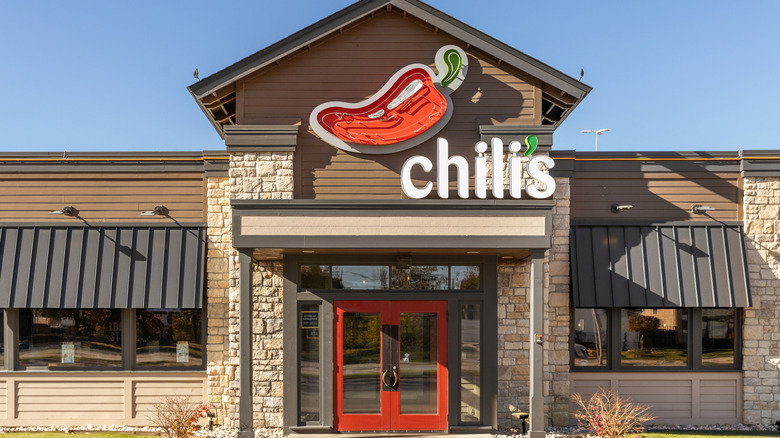
In the mid-1970s, the first Chili's opened in Dallas, Texas, and right away, people loved it. By the early 1980s, there were more than 20 Chili's restaurants, which specialized in relatively affordable margaritas, tacos, fajitas, and other Tex-Mex favorites. Again, it was a success story for the casual dining era, bolstered by smart marketing. Need we remind you of the absurdly catchy Baby Back Ribs jingle, which catapulted the chain to nationwide icon status in the 1990s?
That success continued into the 2000s, when it used to welcome more than 5,000 diners every single week. But in the 2010s, things started to get tricky. Ahem, in r/Chilis, one Redditor and former employee puts it like this: "The whole Chili's brand nuked itself from orbit in the 2010's." In the post, which has more than 110 likes, they explain their view that the chain lost its identity in this decade, changing too much of the menu and chasing the wrong trends.
In the mid-2020s, Chili's started to experience a resurgence. And it might be to do with former employees. The CEO, Kevin Hochman, appointed in 2022, makes a point of listening to managers' suggestions on how to make day-to-day operations run better. But also, the chain has gone back to the golden era of the 1990s for inspiration. Case in point: In 2026, it brought back a new version of that iconic Baby Back Ribs jingle with the help of Lizzo.
Hooters: The late 2000s
Hooters shouldn't have worked. Back in the early 1980s, it was incorporated on April Fool's Day, for a start. But even if you're not superstitious, you can probably admit that the fact that none of its six founders had any experience in the restaurant industry sounds like bad luck. Still, it did work. Pretty well, actually. People enjoyed the concept (fried food served by women in tight shorts), and the chain continued to grow rapidly throughout the 1980s and 1990s. By 1996, there were nearly 200 Hooters locations across the U.S., and by the end of the 2000s, there were almost 400. In 2008, it turned over more than $1 billion in sales.
But in the 2010s, Hooters struggled to find its place. Sales declined significantly, and they kept declining. It faced all of the problems that other casual dining chains faced during this time, against the backdrop of a major cultural shift. In 2017, the Me Too movement rose to prominence, and many started to question if Hooters was still relevant. This wasn't helped by the chain's history of controversial lawsuits, including some revolving around sexual harassment. In 2025, Hooters filed for bankruptcy. And in 2026, it revealed plans to rebrand with a more family-friendly image.
Red Lobster: The 2000s and early 2010s
Red Lobster opened in Lakeland, Florida, in the late 1960s. The town was an interesting choice, given it was nowhere near the coast, but it worked. People wanted more seafood options, regardless of where they were, and so, boosted by its acquisition by General Mills in 1970, Red Lobster grew rapidly. By the turn of the century, it had more than 650 locations across North America, and by 2003, then owned by Darden Restaurants, it was the biggest seafood chain in the country and had turned over around $2.4 billion in annual sales.
Many people have fond memories of visiting Red Lobster in the 2000s. "We used to beg my dad to take us there and sometimes he actually did it (heck yeah popcorn shrimp!)," recalled one Redditor in r/GenX. "Mom and I went for all you can eat crab legs around 2002. It's where I discovered my love for crab."
Red Lobster kept growing in the early 2010s and closed out 2013 with more than 700 restaurants. But then things started to go downhill. In 2014, it was sold to private equity, and the chain quickly got into major debt. And it just kept spiraling. Remember the infamous endless shrimp deal in 2023, which offered unlimited shrimp for $20 per customer? Yeah, that made the financial situation worse. In 2024, Red Lobster filed for bankruptcy, and in 2026, it closed dozens of underperforming locations. In July 2026, Red Lobster's restaurant count stood at less than 500.
Chipotle: The 2000s and early-to-mid 2010s
Throughout the 1970s and 1980s, Tex-Mex became increasingly popular, and so by the 1990s, the cuisine was firmly in the mainstream. This was the decade that saw the first Chipotle open in Denver, but unlike Chili's, the chain was all about the burrito. At first, people weren't sure about this unfamiliar Mexican-inspired dish, but the food, made fresh with good-quality ingredients, spoke for itself, and customers started to flood in.
Fast food giant McDonald's had been watching; it invested in the chain and helped turn the brand into a nationwide juggernaut with nearly 600 locations by the mid-2000s. "I feel bad for the younger crowd that never got to experience 2000s Chipotle," reads one Reddit post with 2,400 upvotes. "I would get Chipotle two or three times a week back then," one commenter agreed. Even after Chipotle parted with McDonald's in 2006, the growth just kept coming. By 2014, Chipotle had around 1,800 locations.
But then came 2015, and the Tex-Mex chain was suddenly at the root of multiple foodborne illness outbreaks. Unsurprisingly, sales plummeted. Chipotle rode out the storm, but in the 2020s, it continued to struggle, and many agree that the chain is simply not what it once was. One Reddit post with more than 2,000 upvotes calls out shrinking portion sizes, skyrocketing prices, and "dull" stores, for example. "Chipotle from the 2000s would not let today's Chipotle sit at the same table," it reads.
Olive Garden: The 2000s and 2010s
General Mills (yes, as in, the cereal giant) founded Olive Garden in the 1980s, and pretty quickly, the concept was a hit. Immediately, Americans loved the Tuscan courtyard vibe, the comforting Italian-American-style cuisine, and the reasonable prices. Queues started to form, and new locations opened up to cater to the demand. By 2002, nearly 3 million Americans were dining at hundreds of Olive Garden locations every week. By 2007, there were more than 600 restaurants across the U.S. and Canada, and annual turnover had exceeded $2.6 billion.
"I remember being in college and feeling so fancy going to Olive Garden with my friends," said one Redditor in r/2000sNostalgia. "In a city filled with amazing Italian restaurants, lol. But we did have fun." Another added: "2000s Olive Garden was peak Olive Garden." Olive Garden held strong through most of the 2010s and has been repeatedly voted as one of America's top casual dining chains. In the mid-2020s, though, Olive Garden struggled with declining sales. According to customer complaints, food quality has taken a nosedive, while prices have surged and portions have shrunk.