

Ask Your Butcher These 7 Questions Before Buying Prime Rib
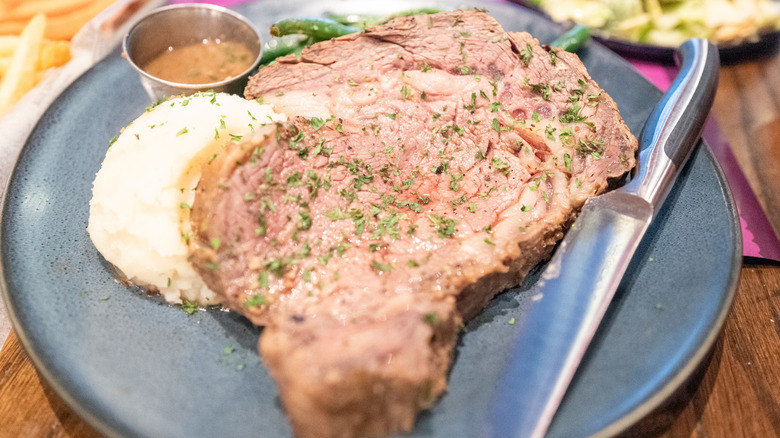
Want to tuck into a delicious, fatty bit of prime rib but don't know what to ask your butcher? Tasting Table spoke with Chris DeLisle of Chris Cooking Nashville, author of the cookbook "Eat Your Meat, Love Your Life," who shared the seven questions you should ask next time you're at the butcher shop. Paired with the tips you need to make the absolute best prime rib, you and your guests are practically guaranteed a meal that's well worth the price and prep.
"The butcher should help you buy the roast you want to eat. At this price, you should leave knowing why that particular piece is worth bringing home," said DeLisle. That means keeping an eye on your roast before bringing it home, being curious about where it comes from, and knowing whether you're getting your full due after it's been trimmed. Below are seven questions to have on hand before buying and cooking a big prime rib, giving you the most flavor and the best bargain.
'Can you show me the actual roast and walk me through why you would choose this one?'
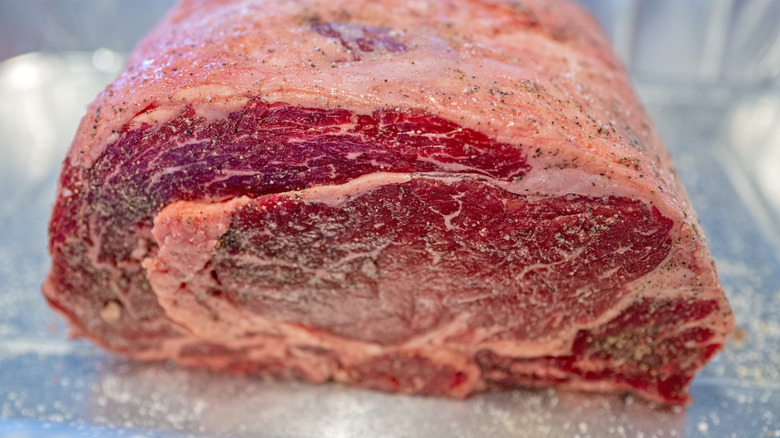
If you're worried about the cost of prime rib in 2026, test your butcher's knowledge of his wares. "A good butcher should be able to connect the price to something you can understand: marbling, trimming, aging, sourcing, or the part of the rib section you are buying," Chris DeLisle said. You should ask your butcher to explain why he picked the roast and for a glimpse at it to judge for yourself.
'Is this USDA Prime, or is 'prime rib' the name of the roast?'
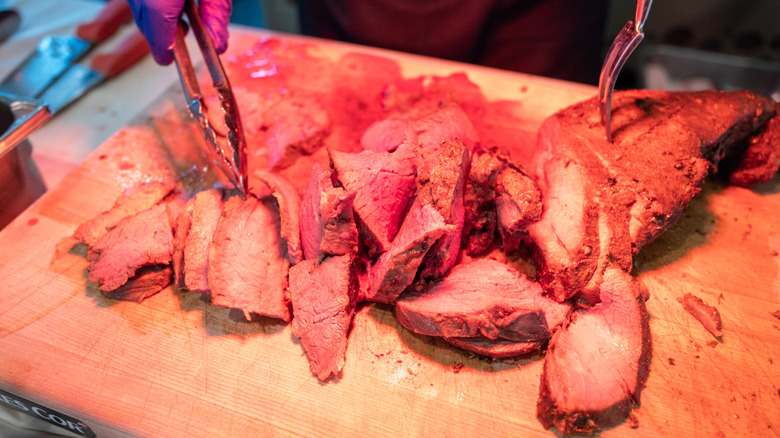
If you'd like to buy a USDA Prime grade rib roast, Chris DeLisle said your butcher should explain exactly what you're paying for. "A prime rib roast does not have to be USDA Prime grade. Ask what grade you are paying for, then look at the meat itself. Fine marbling within the muscle is different from a thick layer of fat around the outside," he explained.
'Can you show me the chuck-end and loin-end options?'
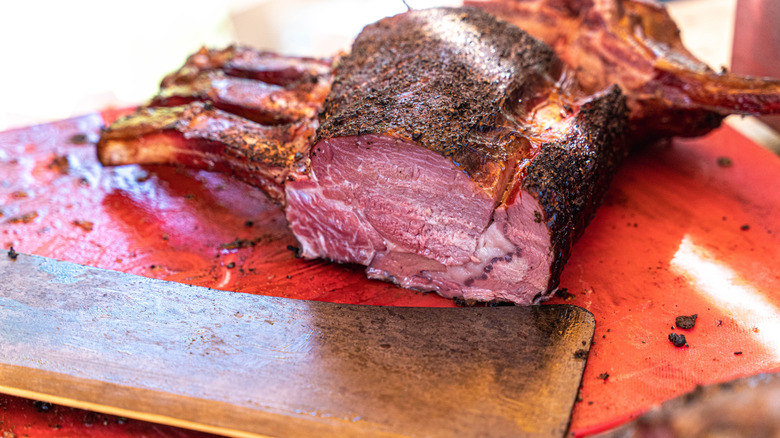
If you want a roast that leans toward the chuck or the loin side of the prime rib, Chris DeLisle noted they'll produce two different eating experiences. "For neat, consistent slices, I would discuss the loin end; for someone who especially loves the rich outer muscles, I would discuss the chuck end. Have the butcher point out those differences on the actual roast," he said. Whichever cut you pick, cut the rib bones away and tie your prime rib for a bone-in presentation with the most satisfying bite.
'How was it aged, for how long, and what flavor should I expect?'
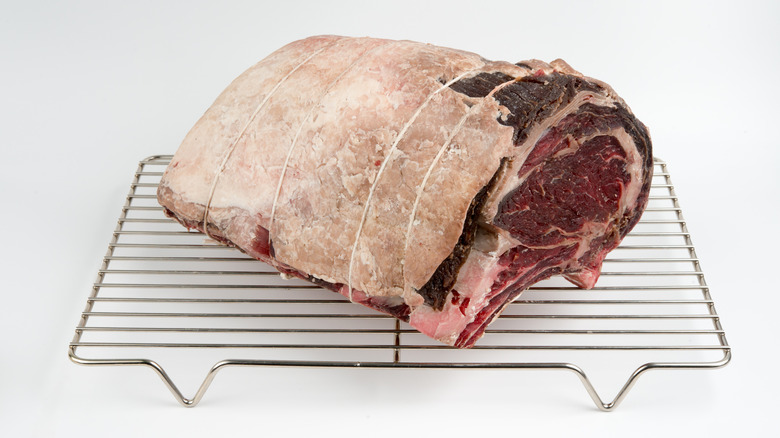
When it comes to the expensive process of dry aging prime rib versus wet aging, Chris DeLisle noted that the two methods produce different results. "Wet aging and dry aging can both improve tenderness. Dry aging can also develop a distinctive, concentrated flavor, but the result depends on the process," he said. DeLisle suggests asking the butcher to describe the cut. He noted that the flavor from dry aging may be too intense and unfamiliar for the average consumer, and therefore may not be worth the cost.
'What will this roast weigh after trimming, and how much do I need for my menu?'
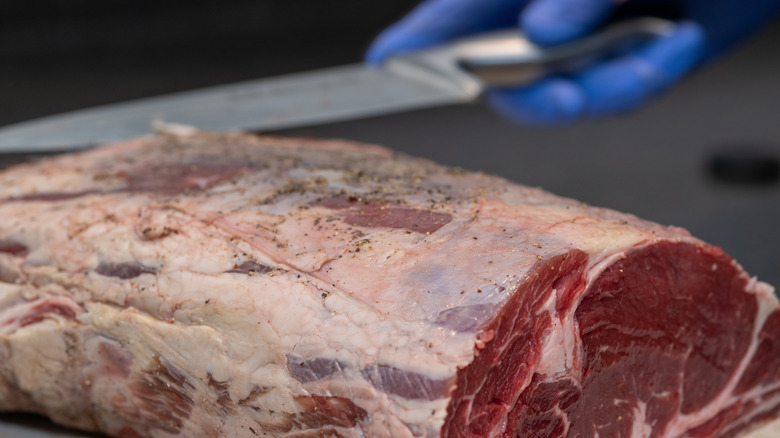
Getting a trimmed roast will change both the number of servings and how much meat stays on the bone. "Tell the butcher the number of guests, whether there are other proteins, and whether you want leftovers," Chris DeLisle suggested. He also said to ask if the price the butcher quotes you applies pre- or post-trimming, and suggested requesting it be tied into an even shape.
'Which farm or producer supplied it, and how were the cattle finished?'
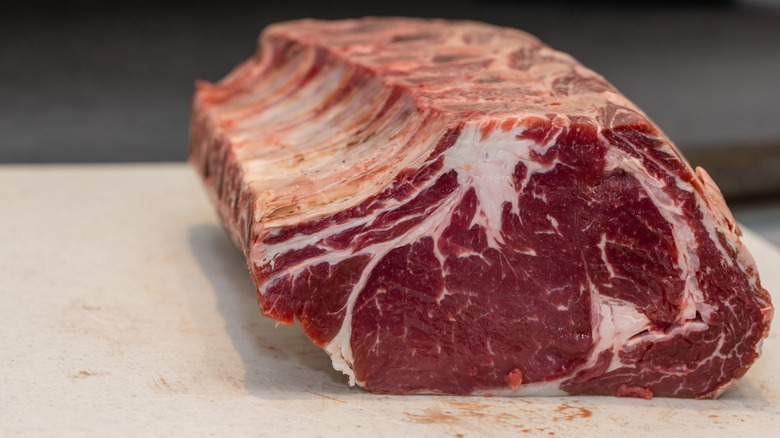
While a region or farm is not enough to determine the tenderness or flavor of your prime rib, Chris DeLisle said specific raising practices — like diet and genetics — could play a role. "I would ask: 'Which farm or producer supplied it, and how were the cattle finished?'" he said. "Origin gives you traceability and a way to buy something you enjoyed again. It can also help you investigate specific raising practices."
'What should I expect from this producer's beef when I cook it?'
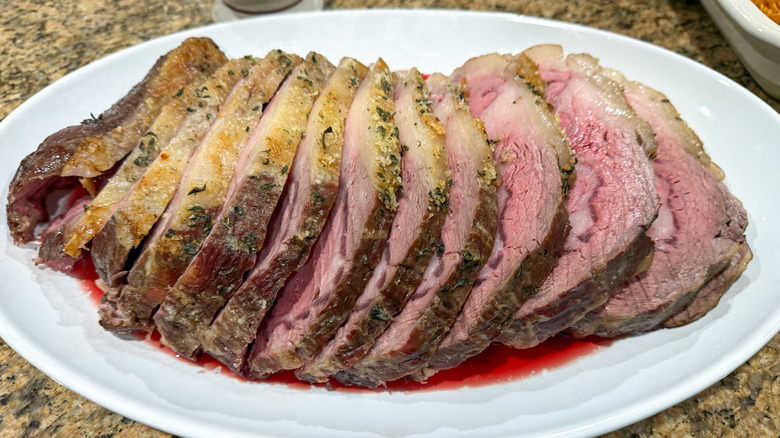
Chris DeLisle had one more question to pose to a butcher: "My follow-up would be: 'What should I expect from this producer's beef when I cook it?' I want the butcher to connect the sourcing story to the eating experience," he said. DeLisle's other suggested special requests included asking to keep the ribeye attached, arranging a pickup date close to the cooking date, and removing the chine bone, which could obstruct carving.